Artwork
Saint Bartholomew
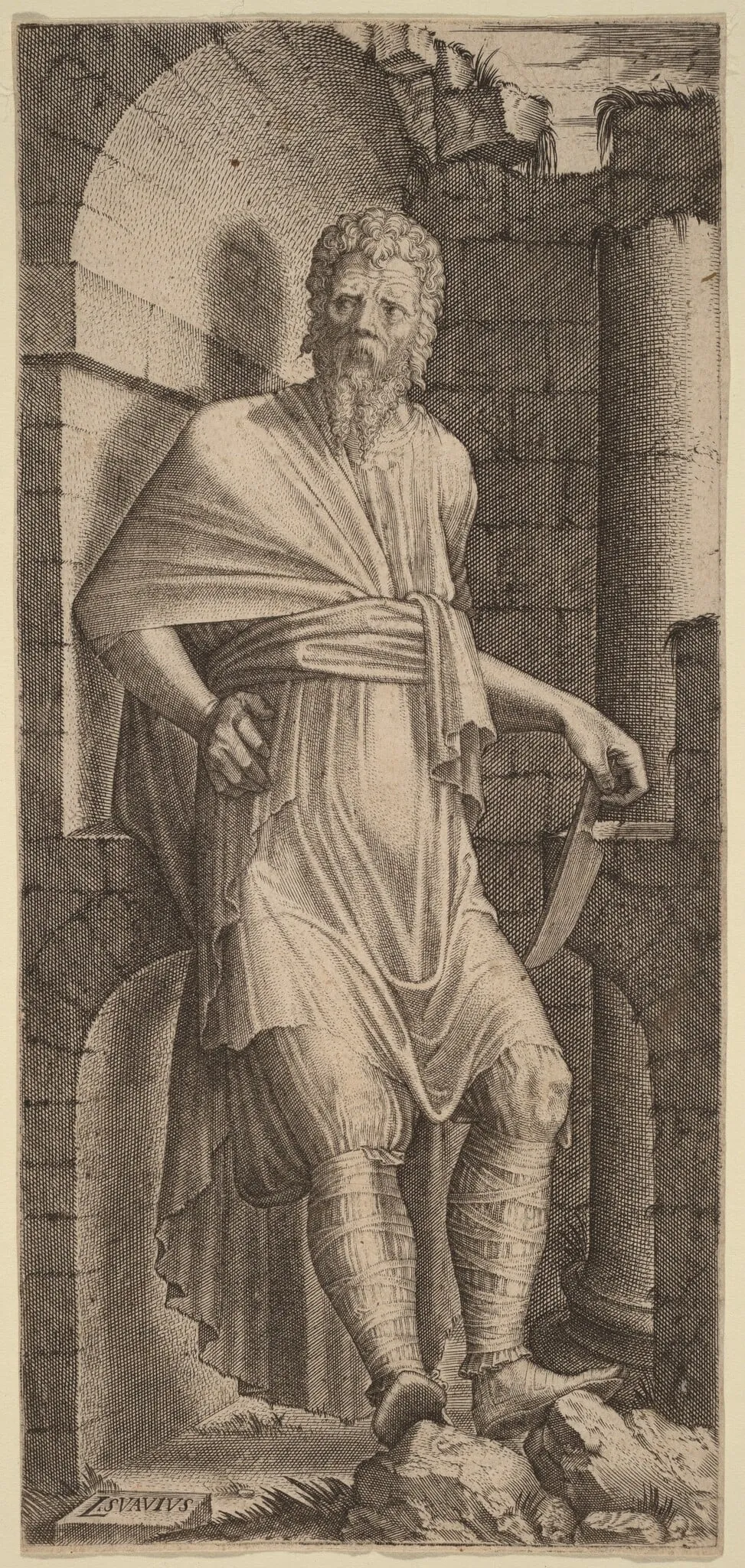
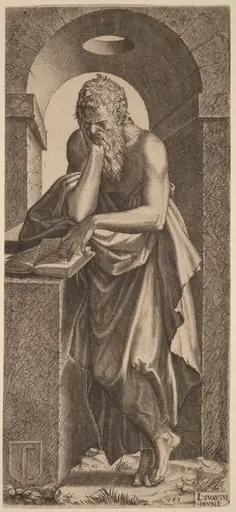
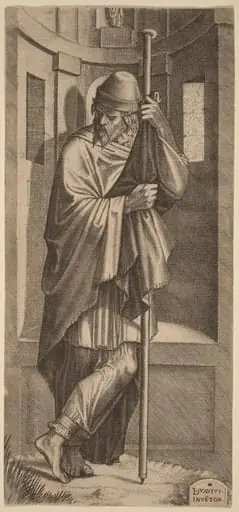
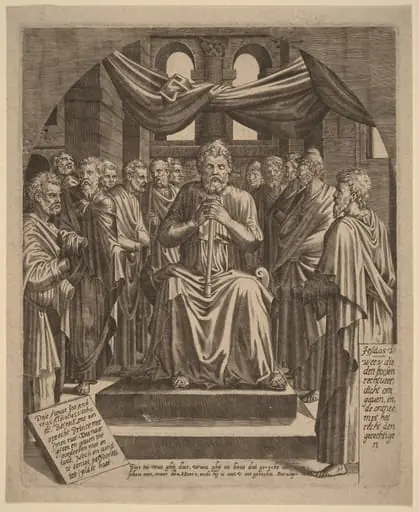
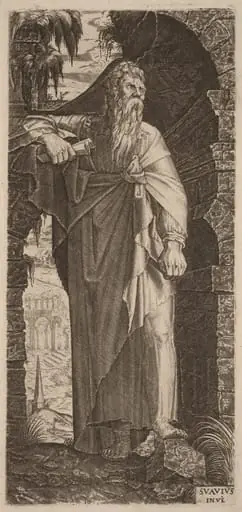
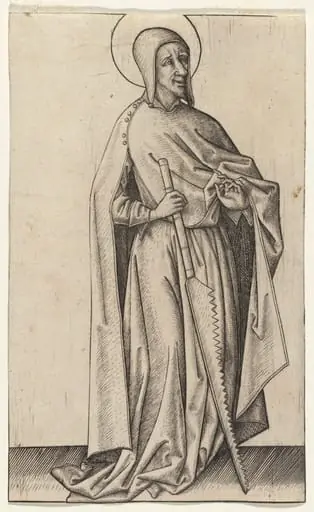
Saint Bartholomew is an ink print by the Renaissance artist Lambert Suavius. It dates from 1548 and is held in the collection of the National Gallery of Art.
About this work
Overview
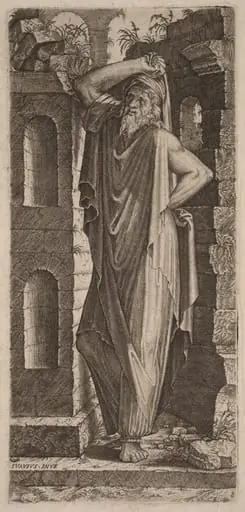
Lambert Suavius’s engraving of Saint Bartholomew dates from around 1548. Executed on laid paper, the print presents a solitary figure positioned before a modest stone arch. The composition is rendered entirely in line, without color, and measures a size typical for devotional prints of the mid‑sixteenth century.
Subject & Meaning
The central figure is identified as the apostle Bartholomew, recognizable by the knife he holds—a reference to his martyrdom by flaying. He is shown in a draped tunic, his beard and curls emphasizing his mature age. The pose, with the left hand on his hip, conveys a calm yet resolute demeanor, inviting contemplation of his sacrifice.
Technique & Style
Suavius employs fine cross‑hatching to model the folds of the tunic and the texture of the stone arch, creating subtle gradations of tone. The meticulous line work generates depth, while the restrained background focuses attention on the saint. The engraving reflects the Northern Renaissance’s emphasis on detailed surface treatment and precise draftsmanship.
History & Provenance
Created in the late Renaissance, the print was likely intended for private devotion or as part of a series of saintly images circulated among collectors. No specific ownership record precedes its appearance in modern collections, but its attribution to Suavius aligns with other mid‑sixteenth‑century works bearing his monogram.
Artist & collection