Artwork
Akbar Mounting his Horse; page from the Chester Beatty Akbar Nama (History of Akbar)
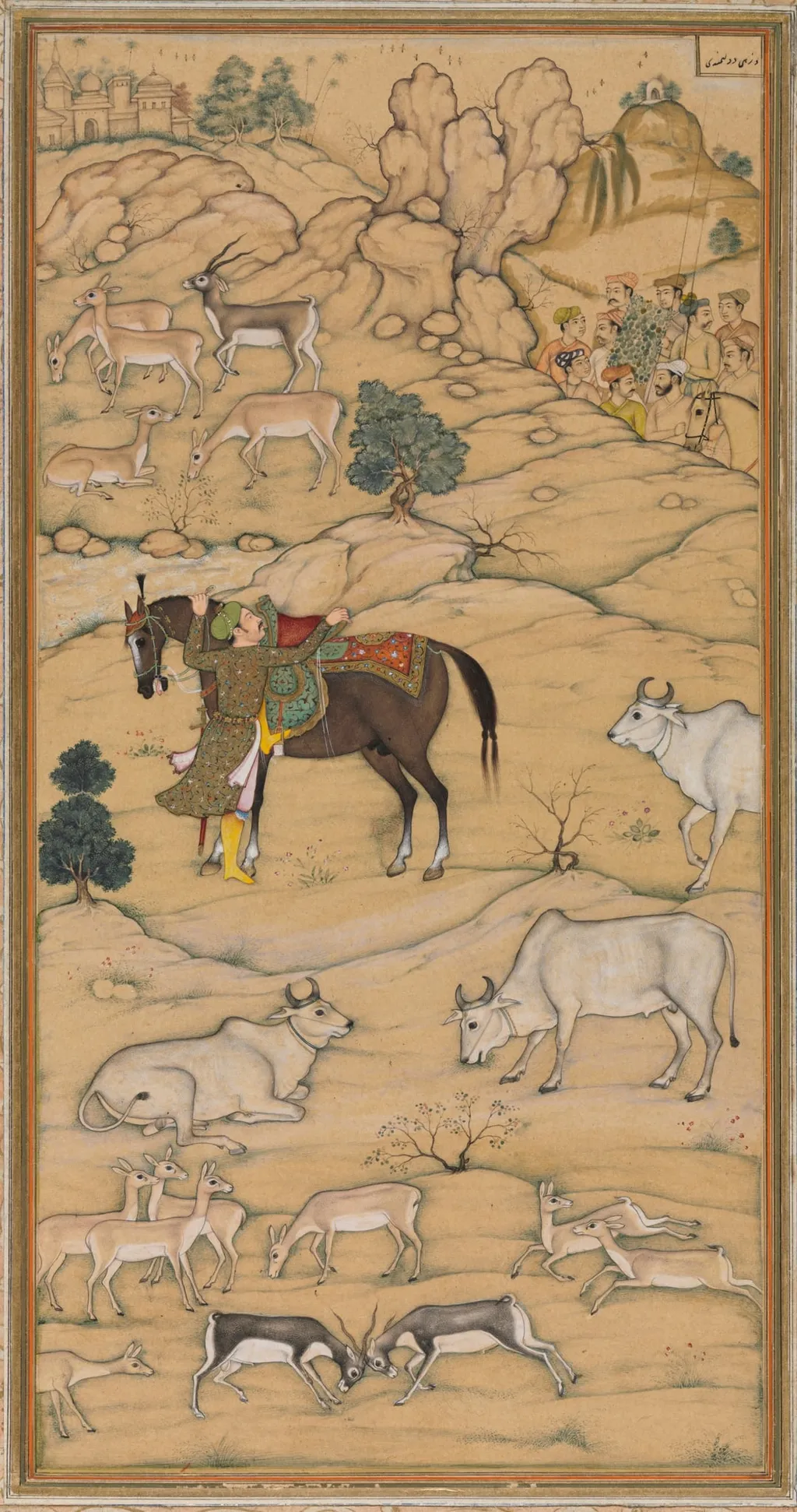
Akbar Mounting his Horse; page from the Chester Beatty Akbar Nama (History of Akbar) is an unspecified painting by the Baroque artist Sur Das Gujarati. It dates from 1606 and is held in the collection of the Cleveland Museum of Art.
About this work
The painting is done in a style that blends realism with decorative elements, with intricate details and patterns on the man's clothing and the horse's saddle.
This painting depicts a man in a colorful outfit mounting a brown horse. The scene is set in a rocky landscape with trees and animals, including deer and cows. The man wears a green hat, a green and gold coat, and yellow pants, and he holds the horse's reins in his left hand.
In the background, there are several people watching the scene, and a building can be seen in the distance. The painting is done in a style that blends realism with decorative elements, with intricate details and patterns on the man's clothing and the horse's saddle.
The painting is a beautiful example of Indian art from the 16th century, and it showcases the skill and craftsmanship of the artist, Sur Das Gujarati. To learn more about the art movement that influenced this painting, look up Baroque.
Overview
The work is a miniature painting from the Chester Beatty manuscript of the Akbar Nama, a 16th‑century illustrated history of the Mughal emperor Akbar. Executed by the artist Sur Das Gujarati, the image captures a moment of the ruler mounting his horse amid a stylised natural setting.
Subject & Meaning
The central figure, dressed in a vivid green hat, a green‑gold coat and yellow trousers, is shown stepping onto a brown horse, his left hand guiding the reins. Surrounding him are deer, cows and a rocky terrain, while onlookers and a distant building suggest a ceremonial or hunting scene, reflecting royal authority and the pageantry of court life.
Technique & Style
The miniature combines realistic observation of anatomy with decorative patterning typical of Mughal art. Fine brushwork renders the textures of the horse’s saddle and the intricate embroidery on the clothing, while the landscape is rendered with delicate lines and a muted palette that balances naturalism and ornament.
History & Provenance
The painting forms part of the Chester Beatty collection, assembled in the early 20th century from Persian and Indian manuscripts. The Akbar Nama itself was compiled under imperial patronage, and Sur Das Gujarati’s contribution marks the involvement of Gujarati artists in the Mughal workshop.
Context
Produced during Akbar’s reign, the image reflects the empire’s synthesis of Persian artistic conventions with Indian motifs. The inclusion of local fauna and the portrayal of the emperor in an active, martial pose align with contemporary narratives that emphasized his role as a warrior‑king and patron of the arts.
Legacy
As a representative example of Mughal miniature painting, the work illustrates the collaborative nature of imperial workshops and the diffusion of artistic techniques across regions. It continues to inform scholars of the visual culture that accompanied the written histories of Akbar’s rule.
Artist & collection
Artist
Sur Das Gujarati painted scenes from Mughal life and epic tales at the court of Akbar.

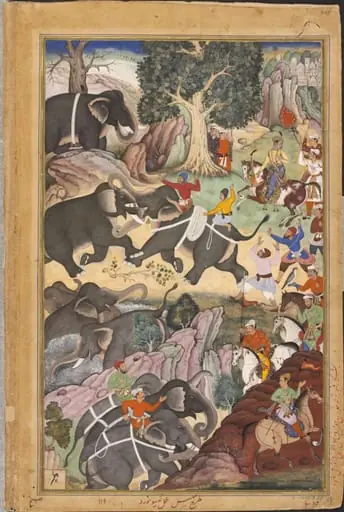 Akbar
Akbar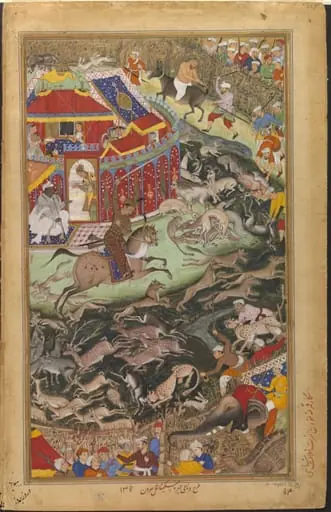 Akbar and Hamid Bakari
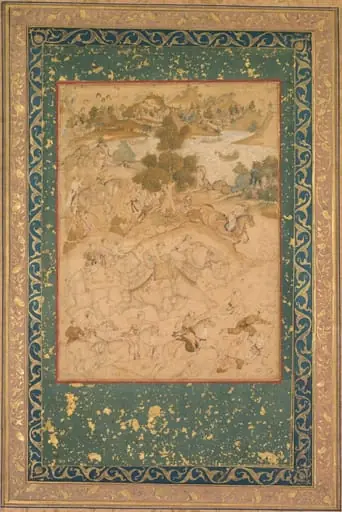 Akbar supervising the capture of wild elephants at Malwa in 1564, painting 90 from an Akbar-nama (Book of Akbar) of Abu’l Fazl (Indian 1551–1602)
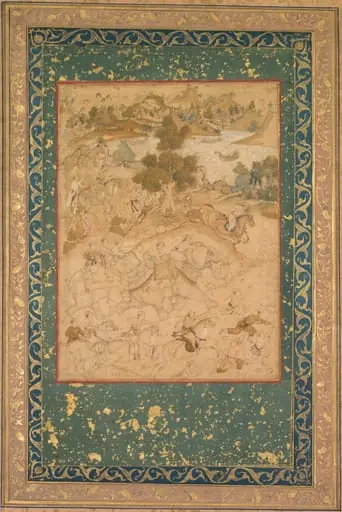 Akbar supervising the capture of wild elephants at Malwa in 1564, painting 90 from an Akbar-nama (Book of Akbar) of Abu’l Fazl (Indian 1551–1602)
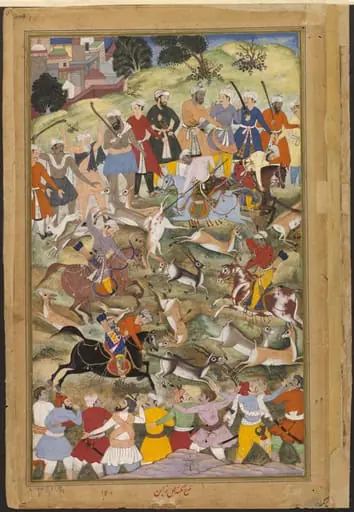 Akbar
Akbar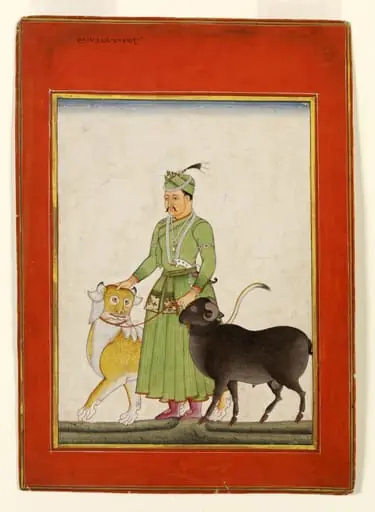 Emperor Akbar
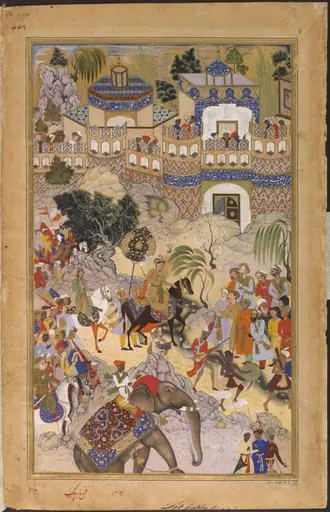 Akbar
Akbar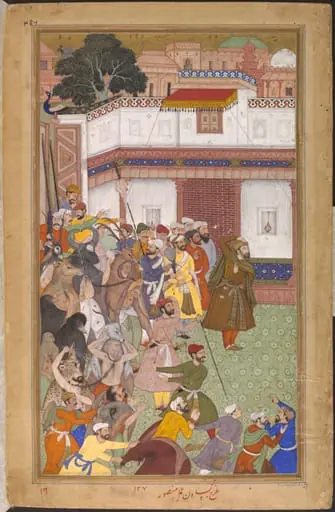 Husain Quli and Akbar
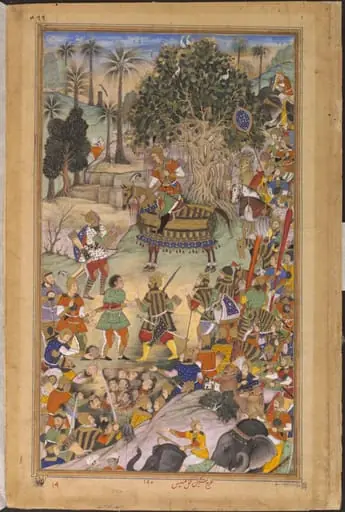 Muhammad Husain Mirza and Akbar
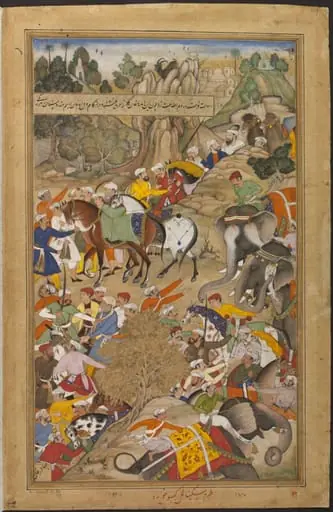 Khan Kilan