Artwork
Untitled
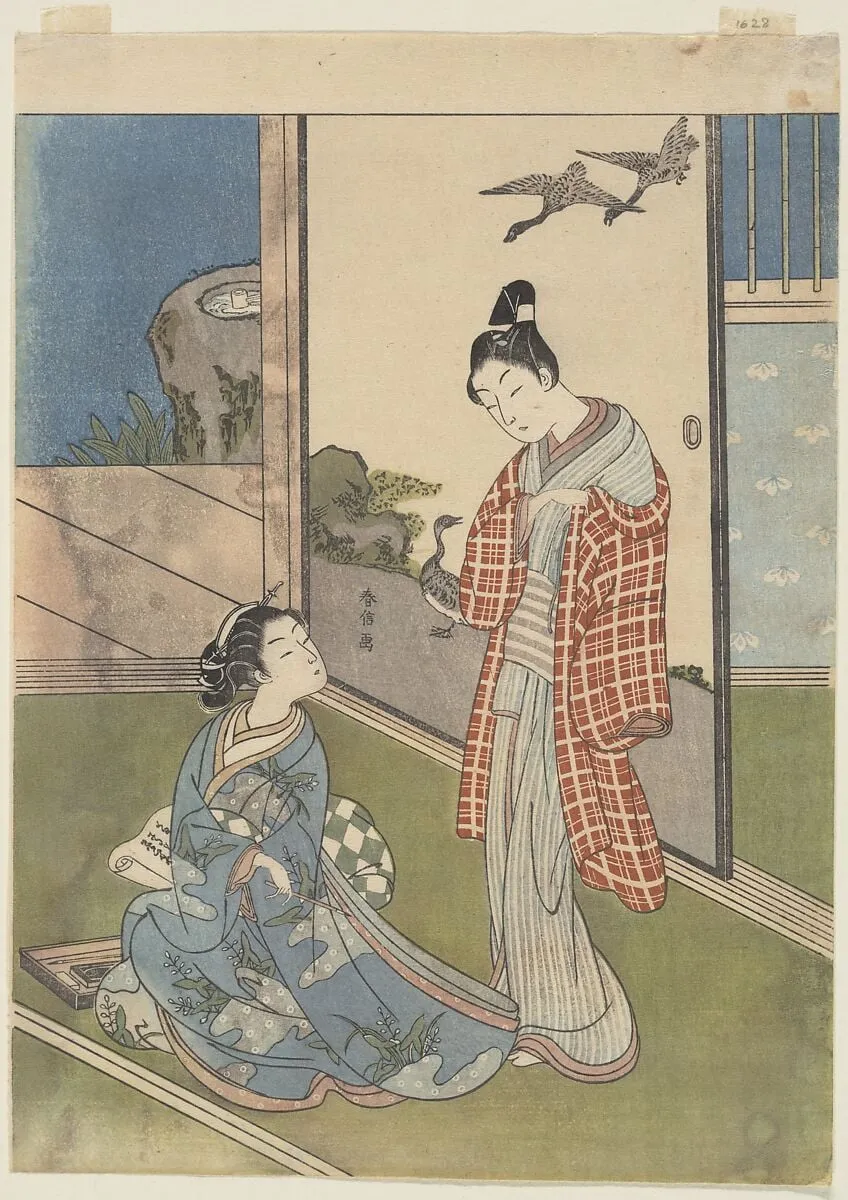
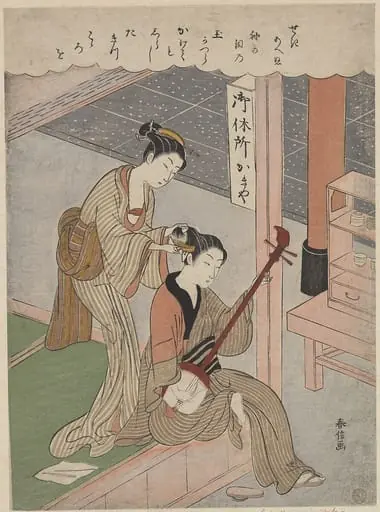
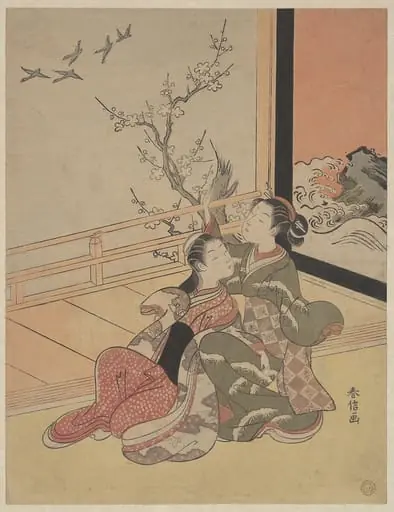
Untitled is an ink print by the Romanticist artist Suzuki Harunobu. It dates from 1767 and is held in the collection of the Metropolitan Museum of Art.
About this work
Overview
Created in 1767 by Suzuki Harunobu, this woodblock print presents a domestic scene rendered in ink and color on paper. The composition features two women in vivid kimono fabrics leaning over a stone water basin, while a man in dark attire observes from behind a sliding door. The work exemplifies early full‑color printing techniques that expanded the visual range of Japanese prints.
Subject & Meaning
The central focus is a chōzubachi, a stone basin traditionally used for ritual hand‑washing, suggesting a moment of private preparation or contemplation. The presence of the two women and the observing man hints at everyday interpersonal dynamics, capturing a fleeting, intimate exchange within a domestic interior.
Technique & Style
Harunobu employed the nascent nishiki‑e method, which allowed multiple woodblocks to be printed in successive colors, producing a soft, pastel palette. This multi‑color approach marked a departure from the earlier monochrome or limited‑color prints, enabling nuanced shading and a more naturalistic representation of fabrics and light.
History & Provenance
As one of the earliest examples of full‑color woodblock printing, the piece reflects the mid‑Edo period’s growing demand for richly colored images. While specific ownership records are scarce, the print has been documented in several museum collections that specialize in Japanese ukiyo‑e works.
Context
The depiction of ordinary domestic life aligns with the broader ukiyo‑e interest in everyday scenes, moving beyond the theatrical and mythological subjects that dominated earlier prints. Harunobu’s innovative use of color influenced subsequent artists, helping to establish nishiki‑e as a standard practice in Japanese printmaking.
Artist & collection

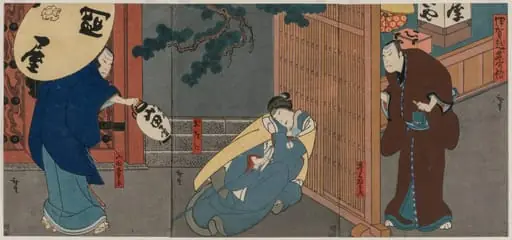 A Tale of Valor at Iga Pass
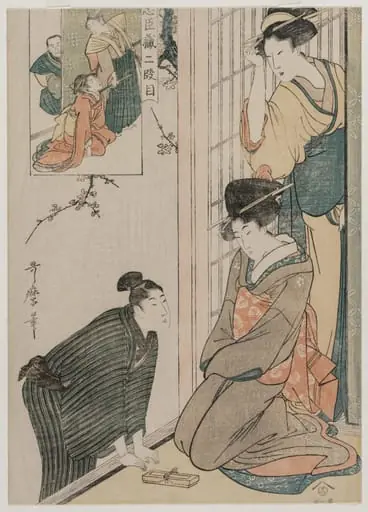 Chushingura: Act II of The Storehouse of Loyalty
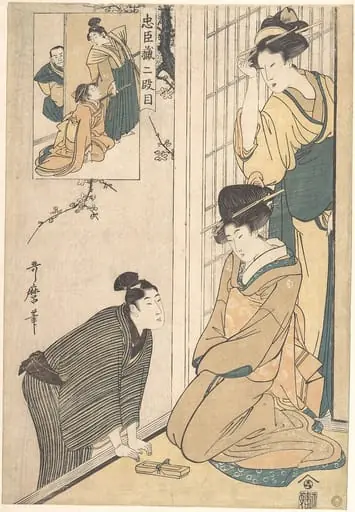 忠臣蔵二段目|A Young Man at the Side of a House
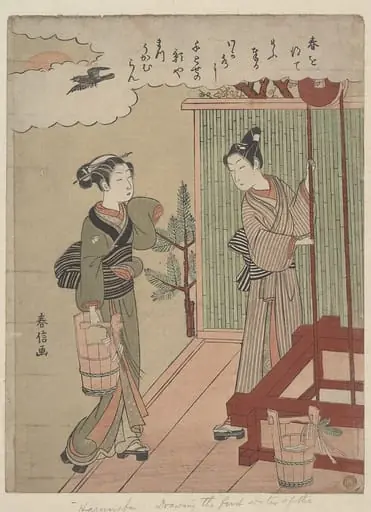 鈴木春信画 若水を汲む男女|Drawing the First Water of the New Year
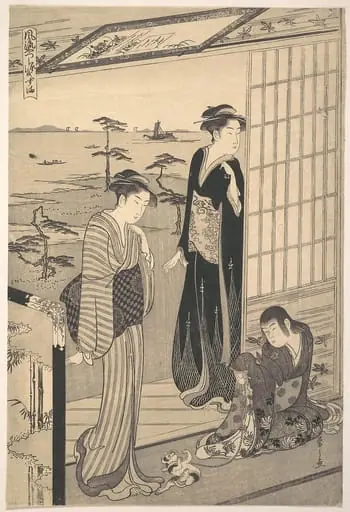 鳥文斎栄之画 「風流やつし源氏 須磨」|Genji in Exile at Suma, from the series Genji in Fashionable Modern Guise (Fūryū yatsushi Genji: Suma)
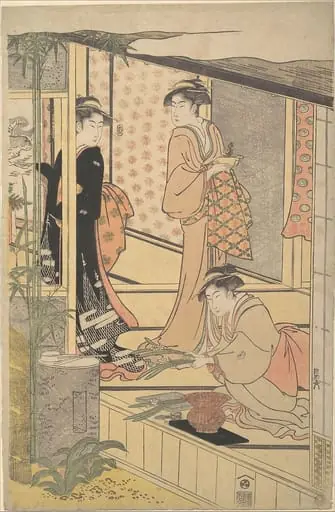 細田栄之画 正月準備|Preparing New Year Decorations
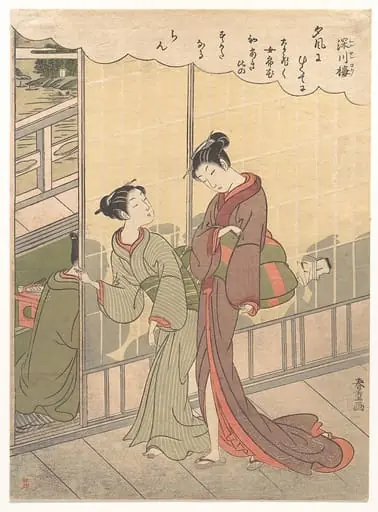 Untitled
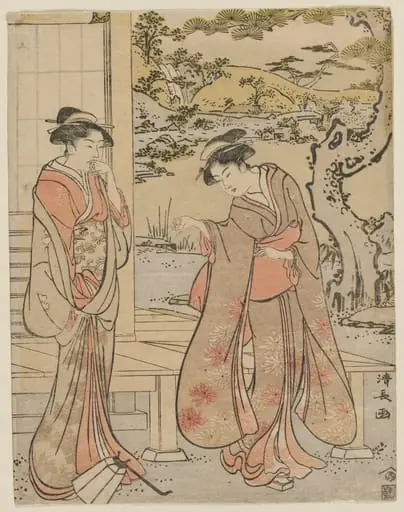 Woman Dropping a Lantern by a Porch
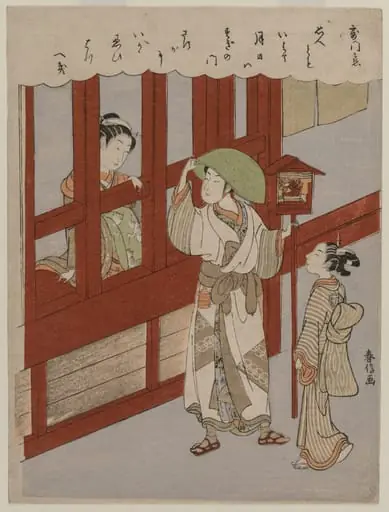 Love at the Brothel Gate
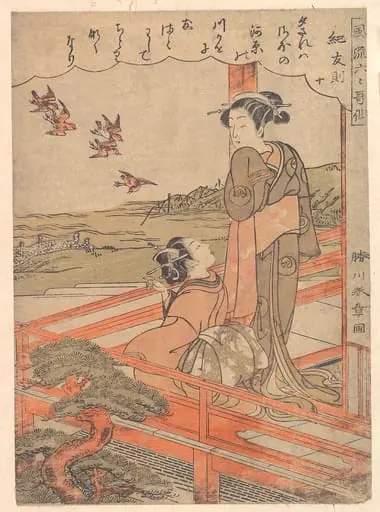 「風流六く歌仙紀友則 十」|“Two Young Women on a Verandah Watching Plovers,” from the series Stylish Six Poetic Immortals (Fūryū rokkasen: Ki no Tomonori, jū)
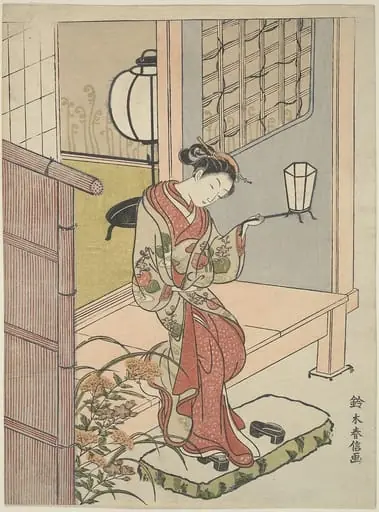 Untitled
 Untitled