Artwork
Untitled
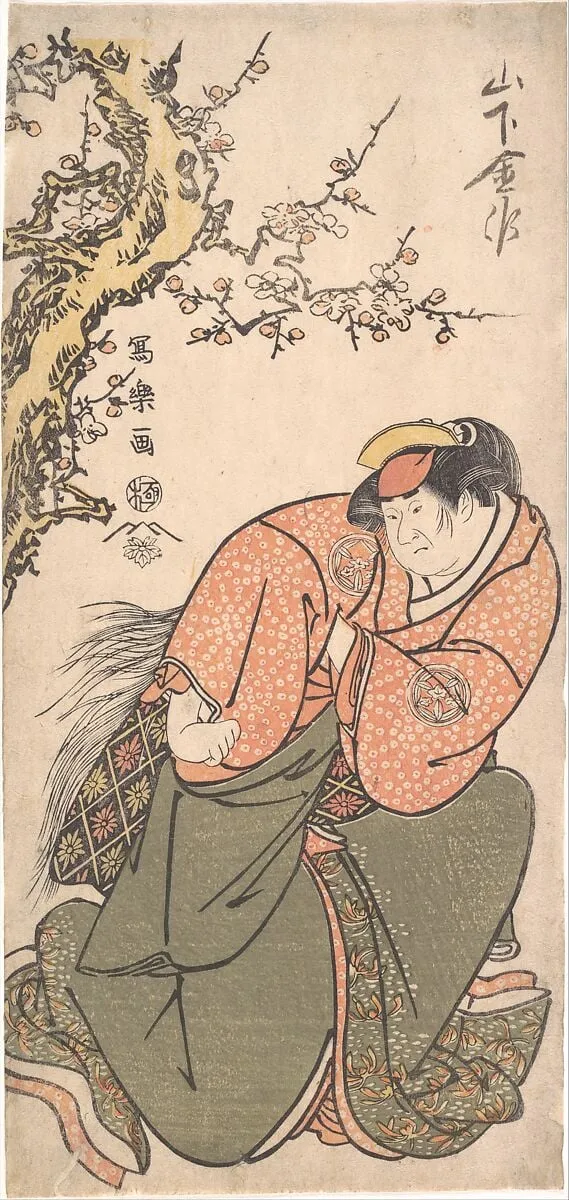
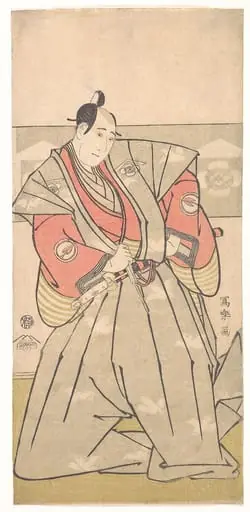
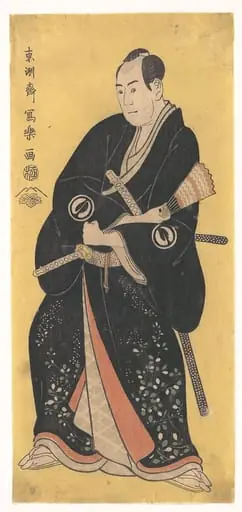
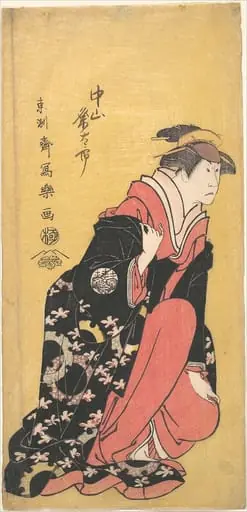
Untitled is an ink print by the Romanticist artist Tōshū. It dates from 1794 and is held in the collection of the Metropolitan Museum of Art.
About this work
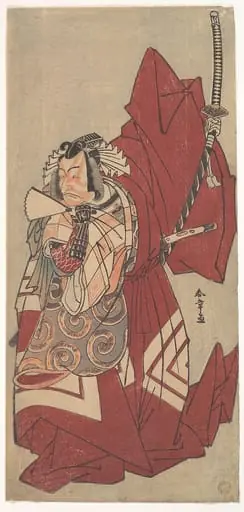
His robe swirls with bold red and black patterns, and his hands clutch a fan.
Here’s a man on stage, face half-lit, mouth open like he’s shouting. His robe swirls with bold red and black patterns, and his hands clutch a fan.
Sharaku made this in just ten months—1794 to 1795—then vanished. No one knows why. The print shows an actor mid-performance, but it’s not a flattering portrait. The exaggerated features feel almost modern, like a cartoon.
If you like this, look up *actors*. They’re everywhere in Sharaku’s work.
Overview
This woodblock print, untitled and likely a single sheet from a larger triptych, was produced in 1794 by the enigmatic Edo‑period artist Tōshūsai Sharaku. Executed with ink and color on paper, the image captures a theatrical figure in a moment of heightened expression, characteristic of Sharaku’s brief but intense period of activity.
Subject & Meaning
The composition presents a stage performer, identified as the kabuki actor Yamashita Kinsaku II, caught mid‑action. His face is half‑illuminated, mouth open as if delivering a shout, while his hands grip a fan. The dramatic pose and stylised features convey the intensity of the performance rather than a conventional likeness.
Technique & Style
Printed with traditional woodblock methods, the work combines black ink outlines with vivid red and black pigments that animate the actor’s robe. Sharaku’s handling of line and color emphasizes exaggerated facial proportions and dynamic movement, anticipating later caricatural approaches while remaining rooted in ukiyo‑e conventions.
History & Provenance
Created during Sharaku’s fleeting career, which spanned roughly ten months from 1794 to 1795, the print emerged at a time when the artist’s identity and motives remain obscure. After this period Sharaku disappeared from the record, leaving his works, including this piece, to circulate among collectors of ukiyo‑e prints.
Context
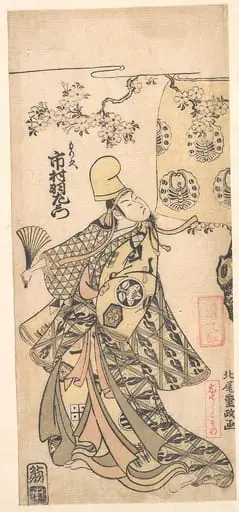
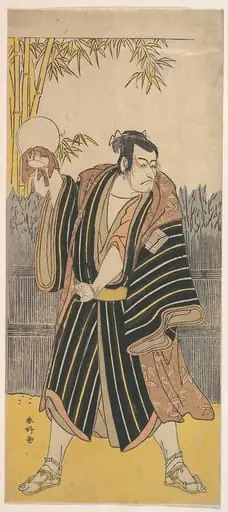
The image belongs to a broader body of Sharaku’s work that focuses on kabuki actors, a popular subject in late‑eighteenth‑century Japanese print culture. By portraying performers with stark, sometimes unflattering realism, Sharaku offered a counterpoint to the more idealised actor portraits prevalent among his contemporaries.
Artist & collection


 Untitled
 Untitled
 Untitled
 Untitled
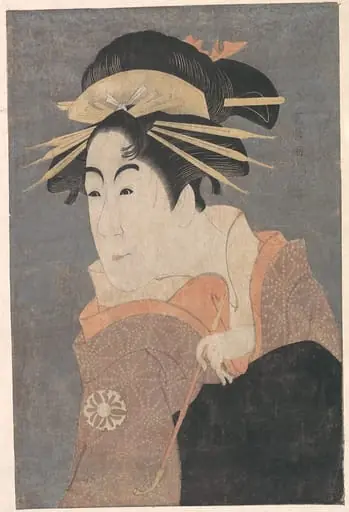
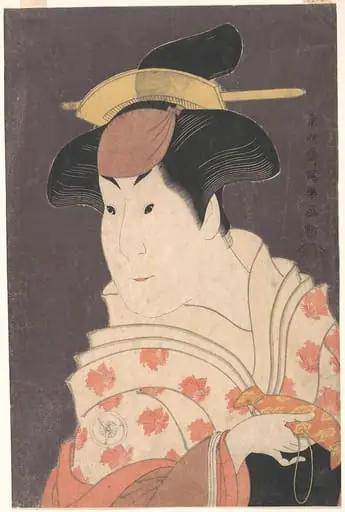 東洲斎写楽画 四代岩井半四郎の重の井 『恋女房染分手綱』|Iwai Hanshirō IV as Shigenoi in the Play "Koinyōbō Somewake Tazuna"
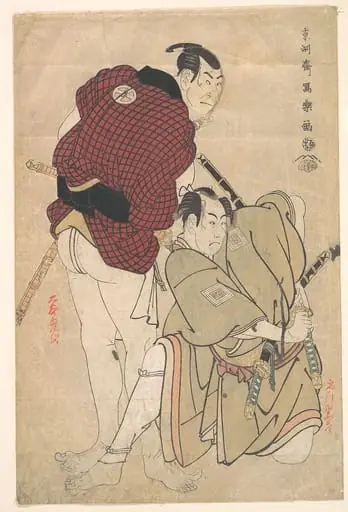
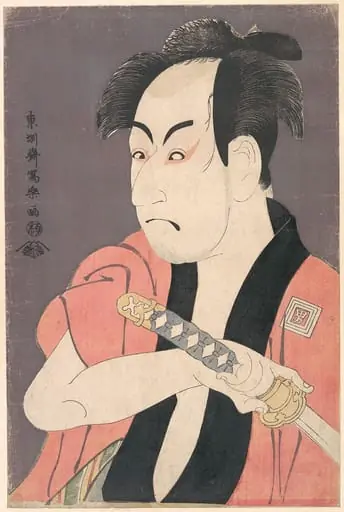 東洲斎写楽画 初代市川男女蔵の奴一平 『恋女房染分手綱』|Ichikawa Omezō I in the Role of Yakko Ippei from the Play "Koinyōbō somewake tazuna"
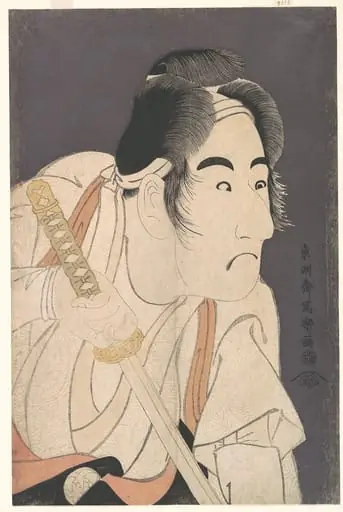 東洲斎写楽画 二世坂東三津五郎の石井源蔵 『花菖蒲文禄曽我』|Bandō Mitsugorō II as Ishii Genzō in the Play "Hana-ayame Bunroku Soga"
 Untitled
 Untitled
 Untitled
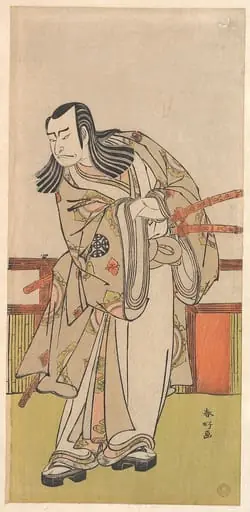
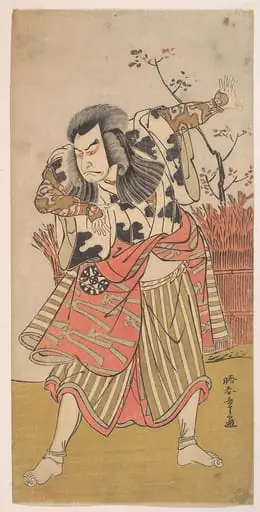
 勝川春好画 七代目片岡仁左衛門 五代目市川團十郎|Kabuki Actor Ichikawa Danjūrō V
 五代目市川団十郎|Kabuki Actor Ichikawa Danjūrō V in a Shibaraku (Stop Right There!) Role as Hannya no Gorō
 Untitled
 Untitled
 Untitled
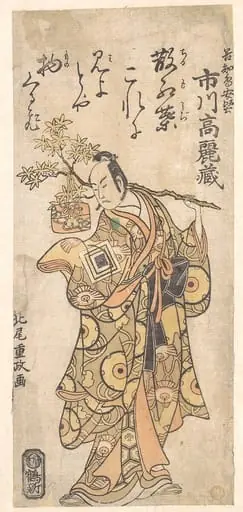
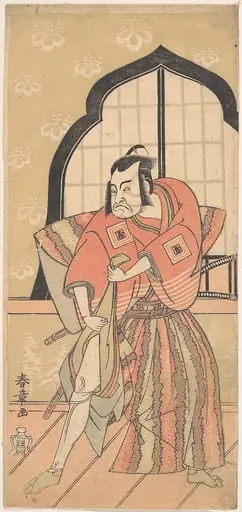 勝川春章画 三代目市川団蔵|Kabuki Actor Ichikawa Danzō III
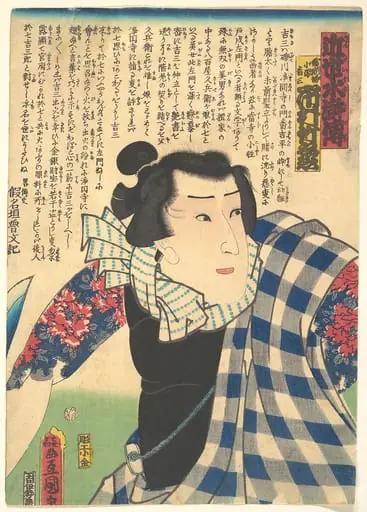 「湯灌場子僧吉三 市川竹之丞」(五代目) 「近世水滸伝」|Ichimura Takenojō V as Yukanba Kozō Kichiza, from A Modern Water Margin (Kinsei suikoden)
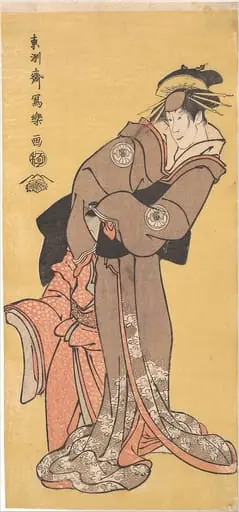 Untitled
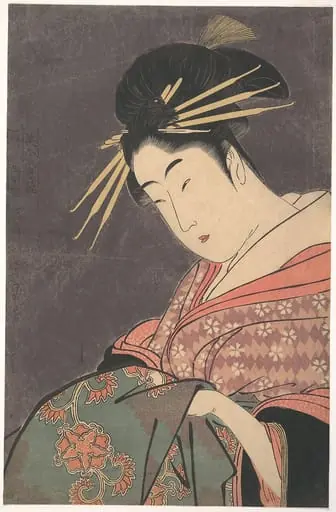 喜多川歌麿画 「美人気量競 五明楼 花扇」|“Hanaōgi of the Gomeirō,” from the series Comparing the Charms of Beauties (Bijin kiryō kurabe: Gomeirō Hanaōgi)