Artwork
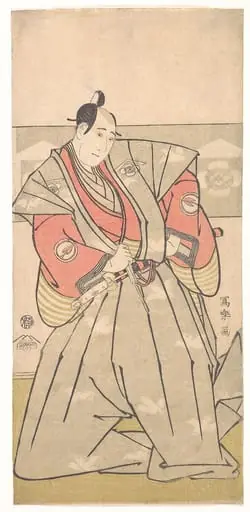
東洲斎写楽画 二世坂東三津五郎の石井源蔵 『花菖蒲文禄曽我』|Bandō Mitsugorō II as Ishii Genzō in the Play "Hana-ayame Bunroku Soga"
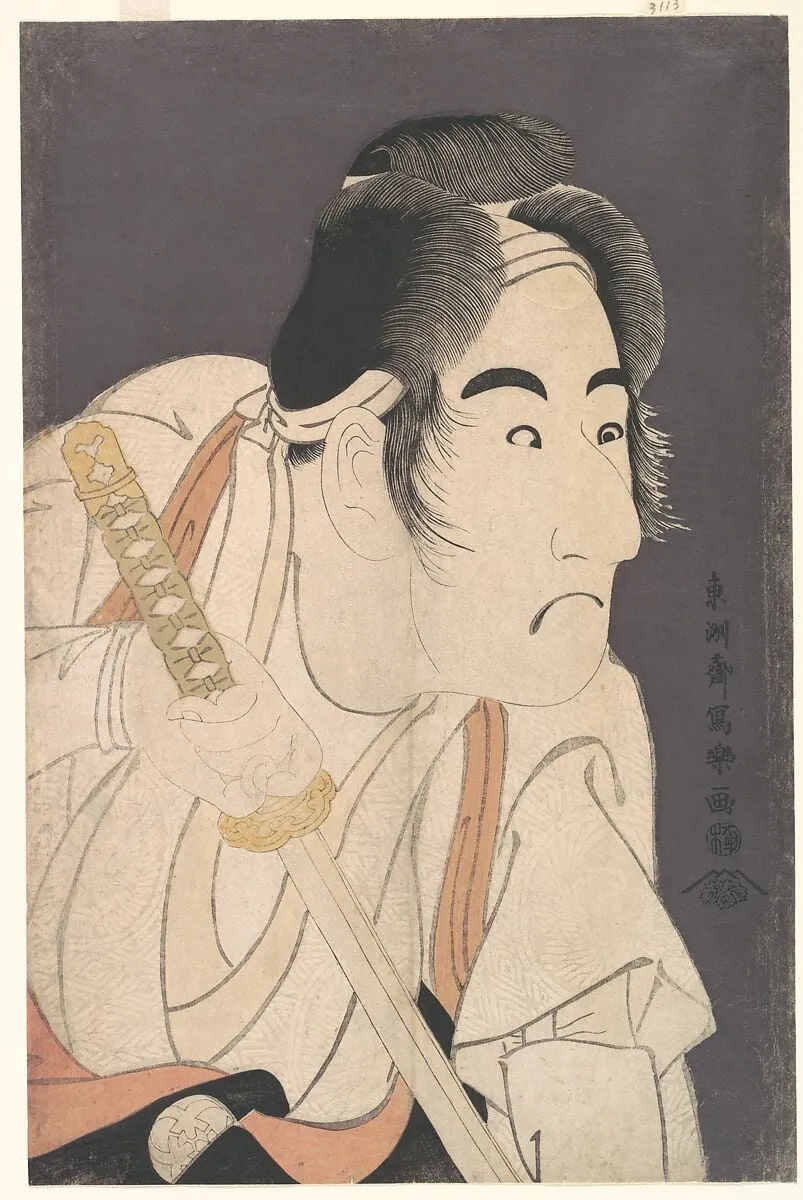
東洲斎写楽画 二世坂東三津五郎の石井源蔵 『花菖蒲文禄曽我』|Bandō Mitsugorō II as Ishii Genzō in the Play "Hana-ayame Bunroku Soga" is an ink print by the Romanticist artist Tōshū. It dates from 1794 and is held in the collection of the Metropolitan Museum of Art.
About this work
If you like bold faces, look up *men, swords, actors, japan, Bandō Mitsugorō II* for more prints like this.
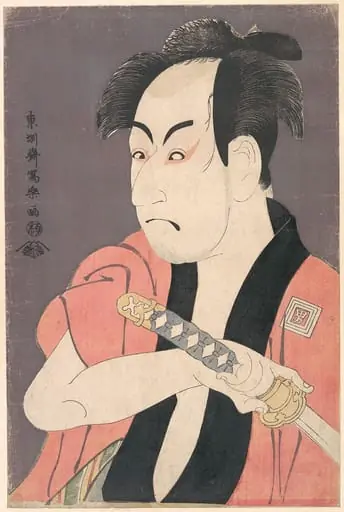
You see a man in a fierce pose, gripping a sword. His face is sharp, almost exaggerated—eyes wide, mouth tight. He wears a patterned robe and a headband, standing against a plain gray background.
This is an actor playing a role in an old Japanese play. Sharaku made these prints for only ten months in 1794, then vanished. No one knows why. The white mica powder in the ink makes the background shimmer, like a stage under lights.
If you like bold faces, look up *men, swords, actors, japan, Bandō Mitsugorō II* for more prints like this.
Overview
This woodblock print, executed around 1794, shows the kabuki actor Bandō Mitsugorō II in the role of Ishii Genzō from the play “Hana‑ayame Bunroku Soga.” The image captures the performer in a dramatic stance, clutching a sword, rendered with ink, color and a dusting of white mica on paper.
Subject & Meaning
The composition presents the actor’s character as a fierce samurai, his eyes widened and mouth set in tension, emphasizing the intensity of the theatrical moment. The patterned kimono and headband identify the specific role, while the sword serves as a visual shorthand for the character’s martial nature.
Technique & Style
Sharaku employed the ukiyo‑e woodblock method, combining line work with vivid pigments. A distinctive feature is the application of powdered white mica to the background, creating a subtle shimmer that suggests stage lighting and adds depth to the otherwise plain gray field.
History & Provenance
Created during Sharaku’s brief but prolific period of activity in 1794, the print belongs to a series of actor portraits that appeared for only ten months before the artist vanished from the record. The reasons for Sharaku’s sudden disappearance remain a matter of scholarly speculation.
Context
The portrait reflects the Edo‑period fascination with kabuki stars, whose likenesses were widely circulated as popular prints. Bandō Mitsugorō II was a leading figure of his time, and his portrayal by Sharaku contributes to our understanding of contemporary theatrical culture and its visual representation.
Legacy
Although Sharaku’s career was short, his striking, psychologically acute portraits have influenced subsequent generations of Japanese and Western artists. The use of mica to evoke a luminous stage backdrop continues to be noted as an innovative element of his printmaking.
Artist & collection


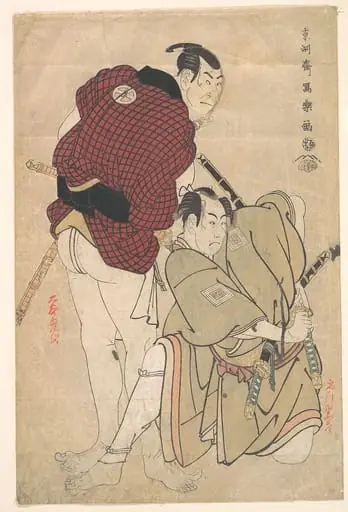
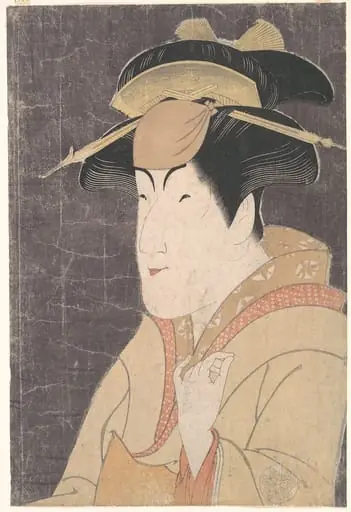
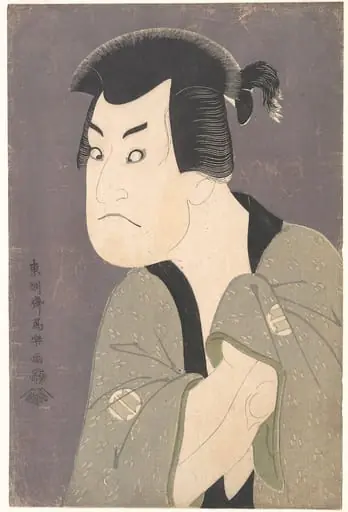 東洲斎写楽画 三世坂田半五郎の藤川水右衛門 『花菖蒲文禄曽我』|Sakata Hangorō III as Fujikawa Mizuemon in the Play "Hana Ayame Bunroku Soga"
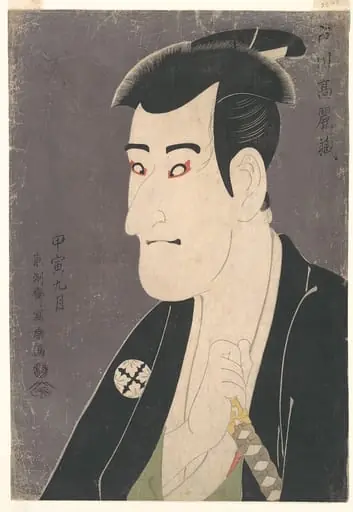 三代目市川高麗蔵の志賀大七|Kabuki Actor Ichikawa Komazō III as Shiga Daishichi in the Play A Medley of Tales of Revenge (Katakiuchi noriaibanashi)
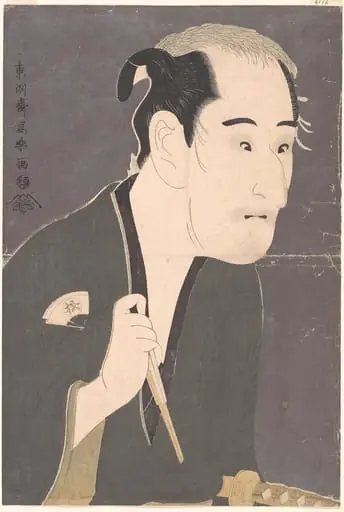 東洲斎写楽画 尾上松助の松下酒之進 『敵討乗合話』|Onoe Matsusuke I as Matsushita Mikinojō in the Play "Katakiuchi noriyaibanashi"
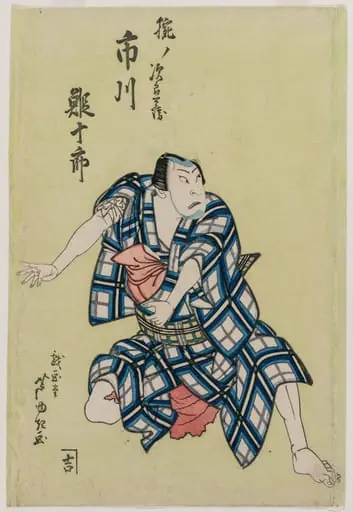 Ichikawa Ebijuro II as Ude no Jirobei
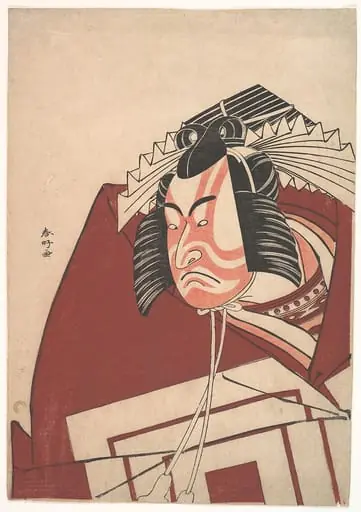 勝川春好画 二代目市川門之助|Ichikawa Monnosuke II in a Shibaraku Performance
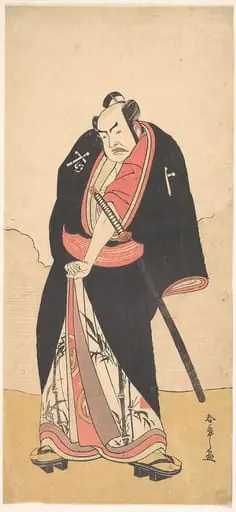 二代目中村助五郎|Kabuki Actor Nakamura Sukegorō II as Kaminari Shōkurō
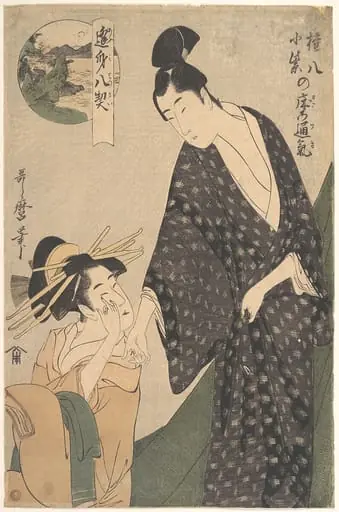 逢身八契 権八小紫の床の通気|Gonpachi ni Komurasaki no Toko no Tsuki