Artwork
Excise Office, Broad Street
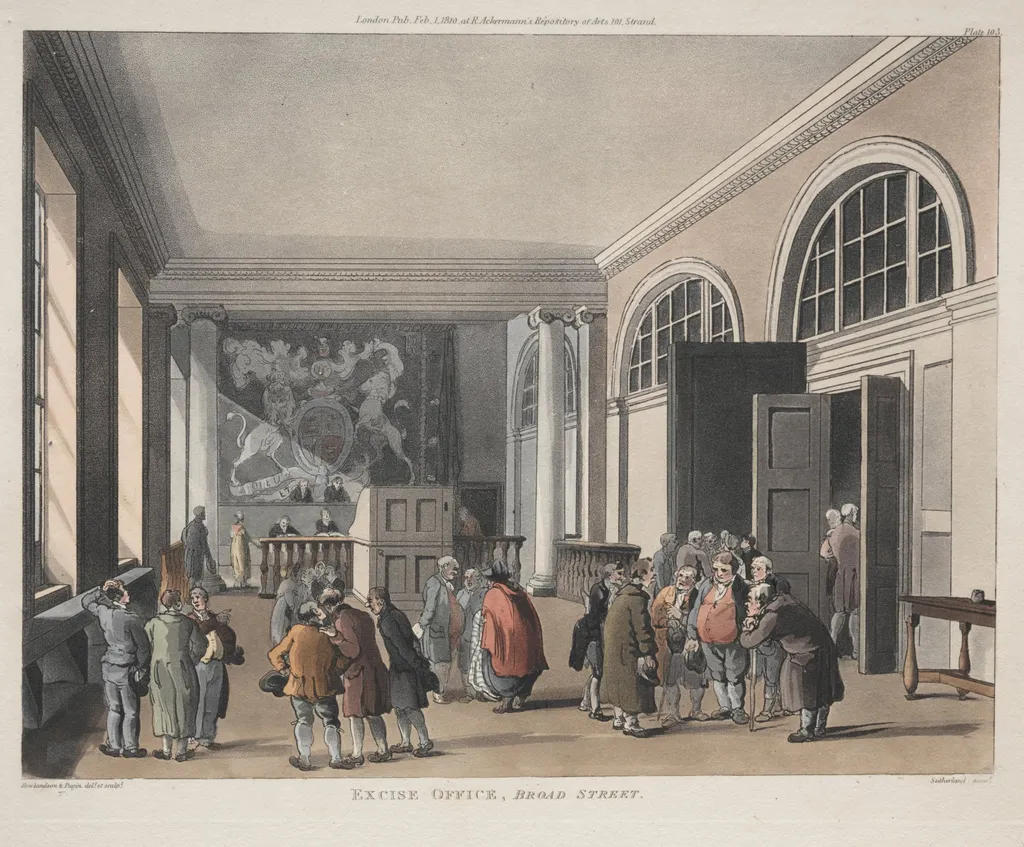
Excise Office, Broad Street is a print by the Romanticist artist Thomas Rowlandson. It dates from 1810 and is held in the collection of the Cleveland Museum of Art.
About this work
Overview
Created in 1810 by Thomas Rowlandson, *Excise Office, Broad Street* is a satirical print depicting the daily operations of a British government revenue office.
Created in 1810 by Thomas Rowlandson, *Excise Office, Broad Street* is a satirical print depicting the daily operations of a British government revenue office. Rowlandson, known for his keen eye for social behavior, rendered this scene with lively detail and subtle irony. The work belongs to a broader tradition of British graphic satire that used humor to critique institutional life during the late Georgian period.
Subject & Meaning
The scene portrays clerks, officials, and visitors in a crowded excise office, engaged in conversation, paperwork, and idle movement. The presence of a grand coat of arms on the wall contrasts with the chaotic, mundane activity below, suggesting a disconnect between official authority and everyday function. Rowlandson’s depiction gently mocks bureaucratic inefficiency without overt hostility, reflecting the public’s ambivalence toward state administration.
Technique & Style
Rowlandson employed pen and ink with wash to achieve a fluid, expressive line that captures motion and character. His figures are rendered with exaggerated postures and facial expressions, typical of caricature, yet grounded in observed reality. The composition is densely packed, guiding the viewer’s eye through layers of activity, while architectural elements like tall windows and high ceilings lend spatial depth and a sense of institutional scale.
History & Provenance
The print was produced during a period of expanding state bureaucracy in Britain, when excise duties played a key role in public finance. Rowlandson created it as a standalone satirical print, likely intended for sale to a middle-class audience interested in social commentary. It was not part of a published series but circulated independently, reflecting the growing market for graphic satire outside traditional publishing channels.
Context
This work emerged alongside other satirical prints that scrutinized public institutions, from Parliament to the military. While Romanticism emphasized emotion and nature, Rowlandson’s focus remained on urban life and institutional absurdity. His prints offered a counterpoint to idealized art, presenting the messy reality of civic administration during a time of war, taxation, and social change.
Legacy
Rowlandson’s *Excise Office, Broad Street* exemplifies the enduring power of visual satire in documenting institutional life. Though not widely exhibited in major collections at the time, it contributed to a visual language of bureaucratic critique that influenced later generations of illustrators and cartoonists. Its value lies in its unembellished observation of ordinary workspaces, preserving a slice of early 19th-century administrative culture.
Artist & collection
Artist
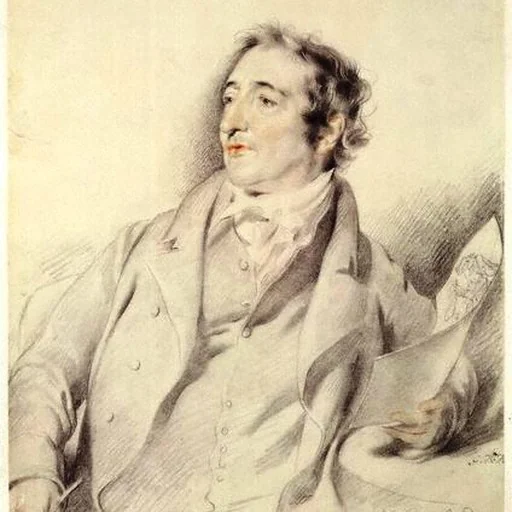
Thomas Rowlandson (; 13 July 1757 – 21 April 1827) was an English artist and caricaturist of the Georgian Era, noted for his political satire and social observation.

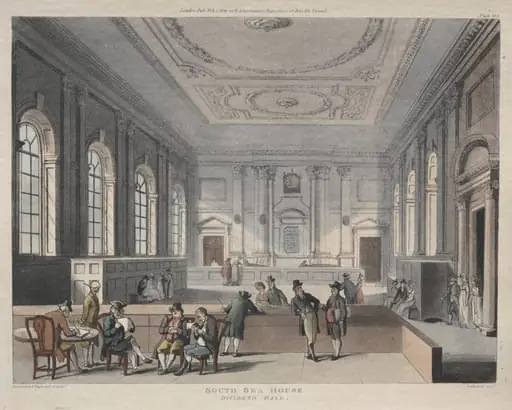 South Sea House, Dividend Hall
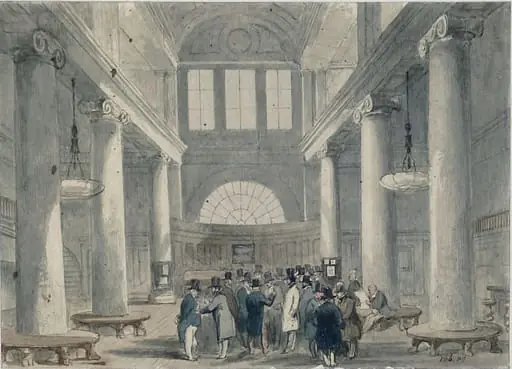 The interior of the old corn exchange, Mark Lane
 H Beard Print Collection
 Untitled
 Reception by the Doge of Foreign Ambassadors in the Sala del Collegio
 Le bal masqué - Fête donnée à l'occasion de la naissance de Monseigneur le Dauphin, 23 janvier 1782
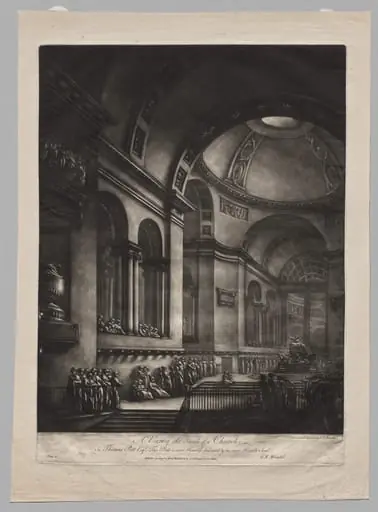 A View of the Inside of a Church
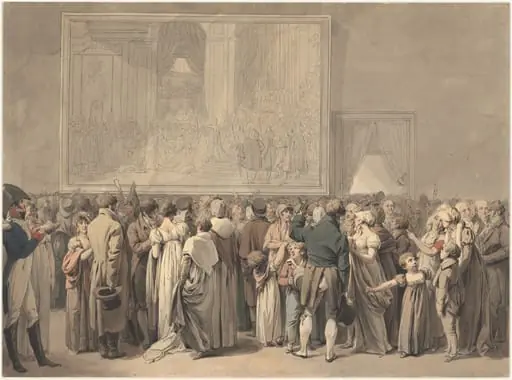 The Public in the Salon of the Louvre, Viewing the Painting of the "Sacre"
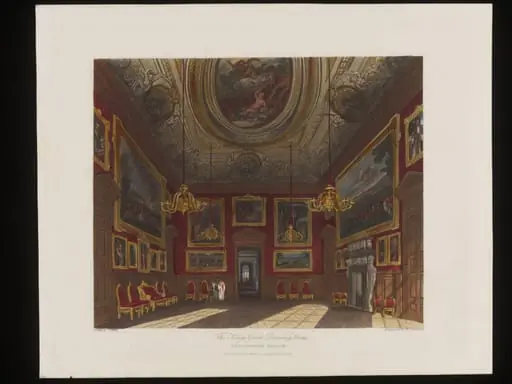 View of the King's Great Drawing Room
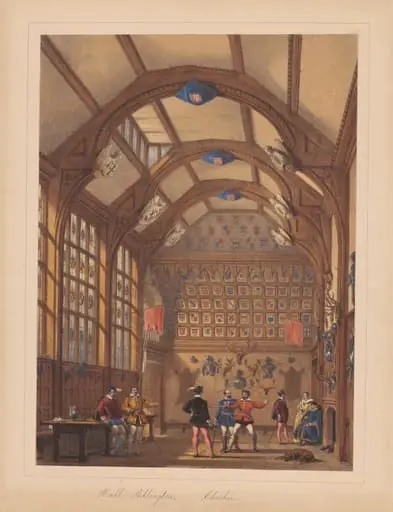 Hall, Adlington, Cheshire
 Whitehall, with the Banqueting House
 The Stage-coach, or the Country Inn Yard