Artwork
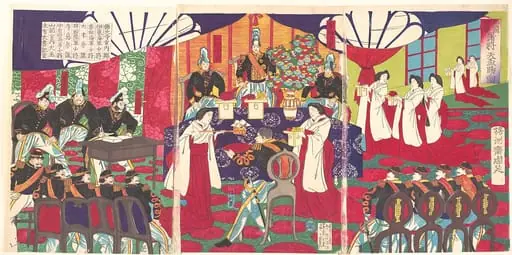
米国グラント氏御通行之繁栄|Splendor of the Procession of General Grant from America (Beikoku Guranto-shi go tsūkō no han'ei)
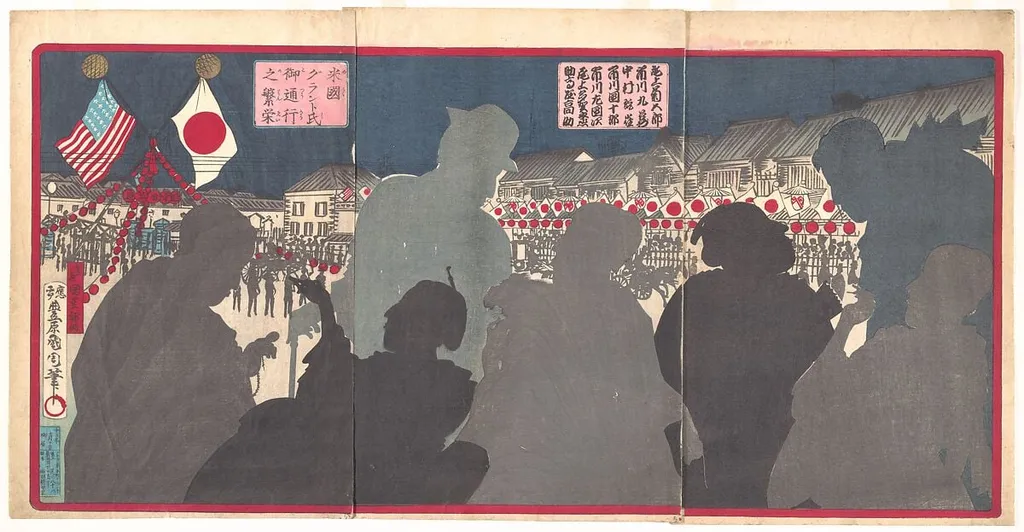
米国グラント氏御通行之繁栄|Splendor of the Procession of General Grant from America (Beikoku Guranto-shi go tsūkō no han'ei) is an ink print by the Impressionist artist Toyohara Kunichika. It dates from 1879 and is held in the collection of the Metropolitan Museum of Art.
About this work
Overview
Rendered in ink and color on paper, the work captures a moment of international diplomacy through the lens of Edo-period printmaking.
Created in 1879 by Toyohara Kunichika, this triptych woodblock print depicts the ceremonial procession of Ulysses S. Grant during his visit to Japan. Rendered in ink and color on paper, the work captures a moment of international diplomacy through the lens of Edo-period printmaking. It is part of the collection at The Metropolitan Museum of Art, where it stands as a rare visual record of 19th-century Japanese engagement with Western figures.
Subject & Meaning
The scene portrays General Grant as a dignified, shadowed figure flanked by attendants, his presence marked by symbolic flags: the American stars and stripes alongside Japan’s rising sun. The bustling street behind him, filled with onlookers and lantern-lit architecture, conveys public reverence and national pride. The composition frames Grant not as a conqueror but as a guest, reflecting Japan’s deliberate effort to project openness and cultural sophistication during its modernization.
Technique & Style
Kunichika employed bold outlines, flat planes of color, and simplified forms to convey motion and density within the crowd. Deep blues dominate the sky, contrasting with vivid red lanterns and banners that draw the eye. The figures are rendered with minimal detail, emphasizing their collective presence over individual identity. This stylistic choice aligns with ukiyo-e traditions while adapting to the demands of depicting a contemporary, foreign subject.
History & Provenance
The print was produced shortly after Grant’s 1879 tour of Japan, a diplomatic mission that symbolized growing ties between the U.S. and Meiji-era Japan. As a popular subject in print culture, Grant’s visit inspired multiple commercial depictions. This triptych was likely distributed as a commemorative item, circulating among urban audiences eager to witness global events through accessible art. Its preservation in the Met reflects its historical significance as a cultural artifact.
Context
In the late 1870s, Japan was actively redefining its global identity after centuries of isolation. The reception of Grant—a revered Civil War general and former U.S. president—was carefully staged to signal Japan’s alignment with Western powers. Kunichika’s depiction, while rooted in traditional print aesthetics, responded to new demands for visual narratives that bridged domestic and international themes, merging national pride with foreign admiration.
Legacy
The print remains a key example of how Japanese artists interpreted and mediated Western influence during the Meiji period. Unlike later, more overtly Westernized imagery, it retains the formal language of ukiyo-e while addressing contemporary geopolitics. It offers insight into how Japan visually negotiated modernity, using familiar artistic conventions to frame unfamiliar global figures with dignity and ceremony.
Artist & collection


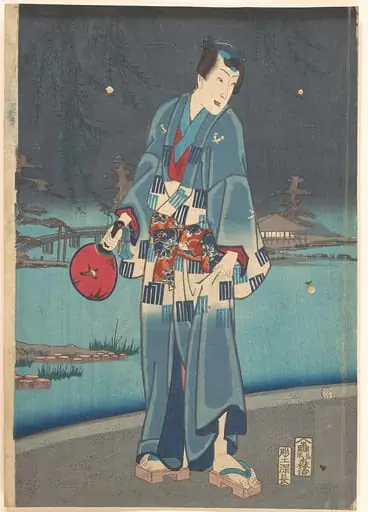 今様源氏紫絹蛍遊び|Modern Genji – Firefly Viewing (Imayō genji shiken hotaru asobi)
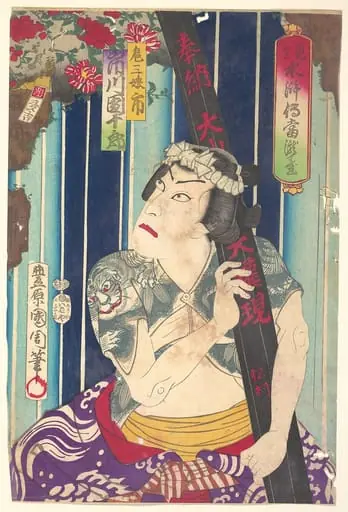
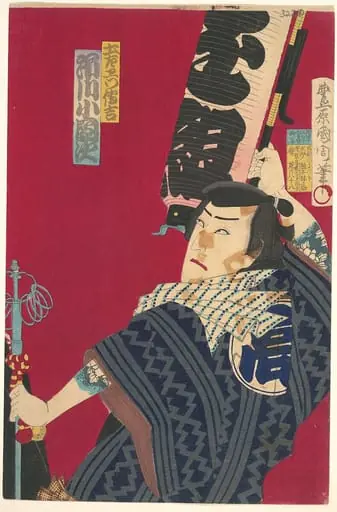 市川左小治 土左衛門伝吉|Ichikawa Sadanji as Dozaemon Denkichi in a Kabuki Play
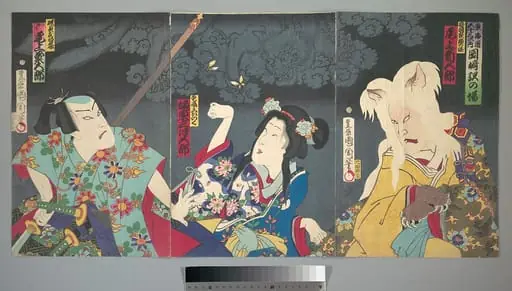 東海寄談音児館|Onoe Kikugorō V as Otowake Neko no ke (Right), Bandō Mitsugorō IV as Aishō Michinoku (Center), Onoe Kikugorō V as Isogai Mibunosuke (Left) in the Kabuki play Tōkai Kidan Nekomata Yashiki
 Untitled
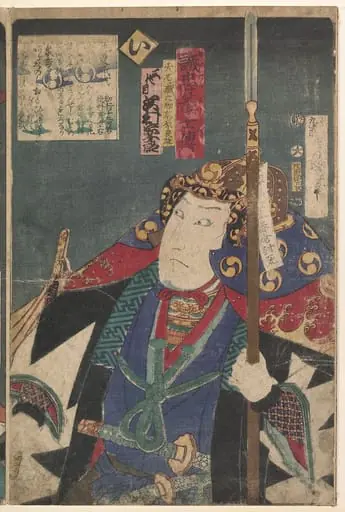 Untitled
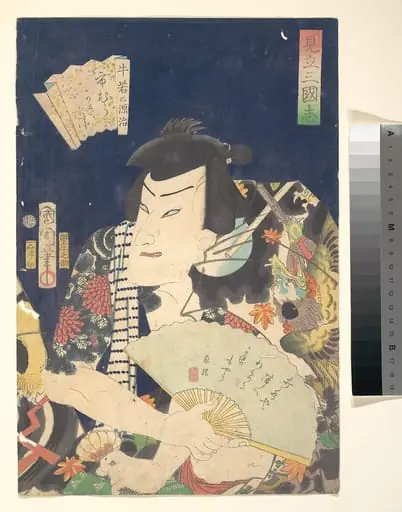 見立三国志 牛若の源治|Ichimura Kakitsu IV as Ushiwaka no Genji in the Kabuki play A Parody of the Romance of the Three Kingdoms (Mitate Sangokushi-Ushiwaka no Genji)
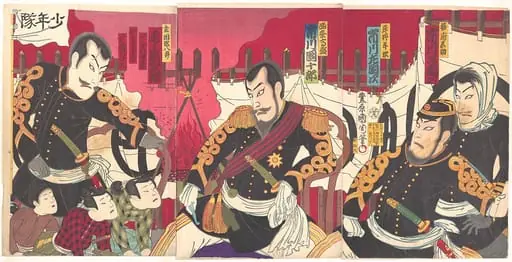 「摂府真助」「市川子團次」「岸野年秋 市川左團次」 「西条高盛 市川團十郎」 「倉田進八郎 尾上菊五郎」「正太郎 中村仲太郎」「孫市 尾上菊之介」「徳丸 市川幸作」西南雲晴朝東風|Ichikawa Kodanji as Seppu Shinsuke, Ichikawa Sadanji as Kishino Toshiaki, Ichikawa Danjūrō as Saijō Takamori, Onoe Kikugorō as Kurata Shinpachirō, Nakamura Chūtarō as Shōtarō, Onoe Kikunosuke as Magoichi, and Ichikawa Kōsaku as Tokumaru in the play Okige no kumo harau asa gochi
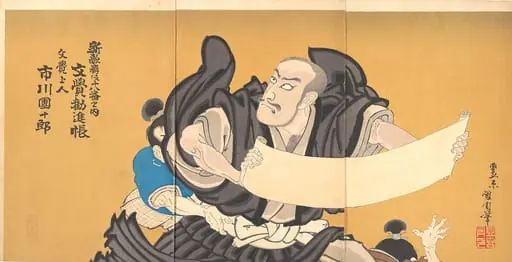 Untitled
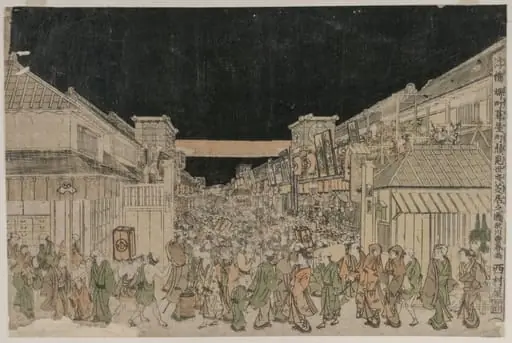 Night Scene, Street of Theatres
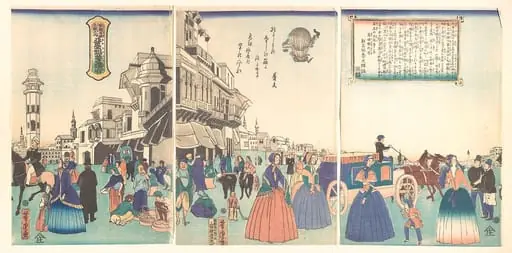 Amerika Washinton fu|City of Washington in America
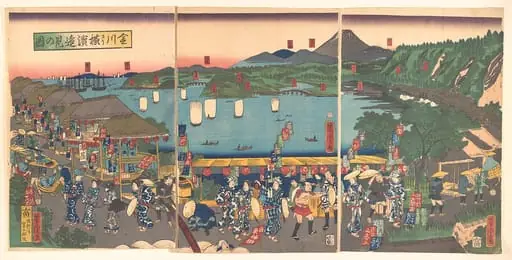 Kanagawa yōri Yokohama...ken no zu|A Distant View of Yokohama from Kanagawa
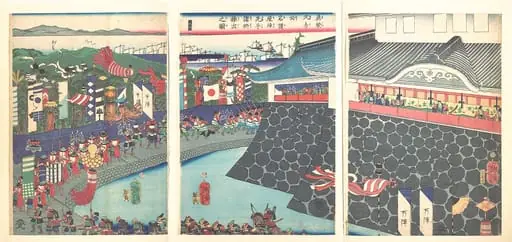 真柴秀吉公名護屋陣先手諸将繰出之図|Hideyoshi and His Troops Leaving Nagoya Camp (Mashiba Hideyoshi kō nagoya jin saki te no shoshō kuridashi no zu)
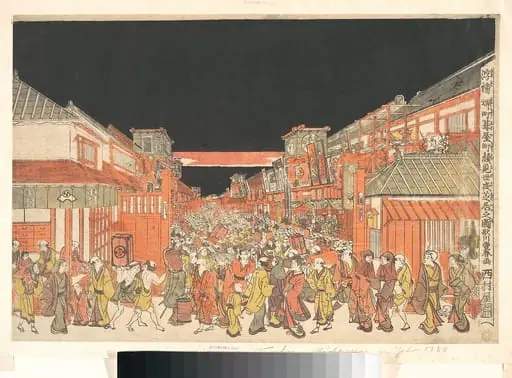 川豊春画 「浮絵境町葺屋町顔見世夜芝居之図」|Perspective Print (Uki-e) of the Theaters in Sakaichō and Fukiyachō on Opening Night
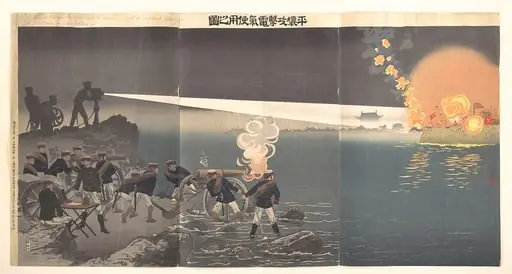 Untitled
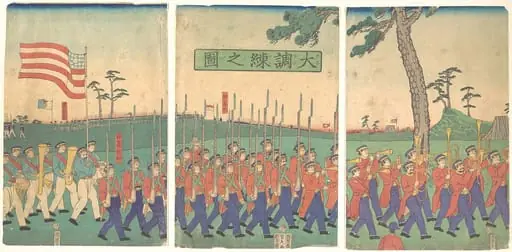 Uchoren no zu|Great Military Drill
 西国諸将鎮静天杯賜ル之図|Illustration of the Commanders who Pacified Western Japan, Receiving the Emperor's Gift Cups (Saigoku chinsei shoshō tenpai o tamawaru no zu)