Artwork
James I and Prince Henry Frederick
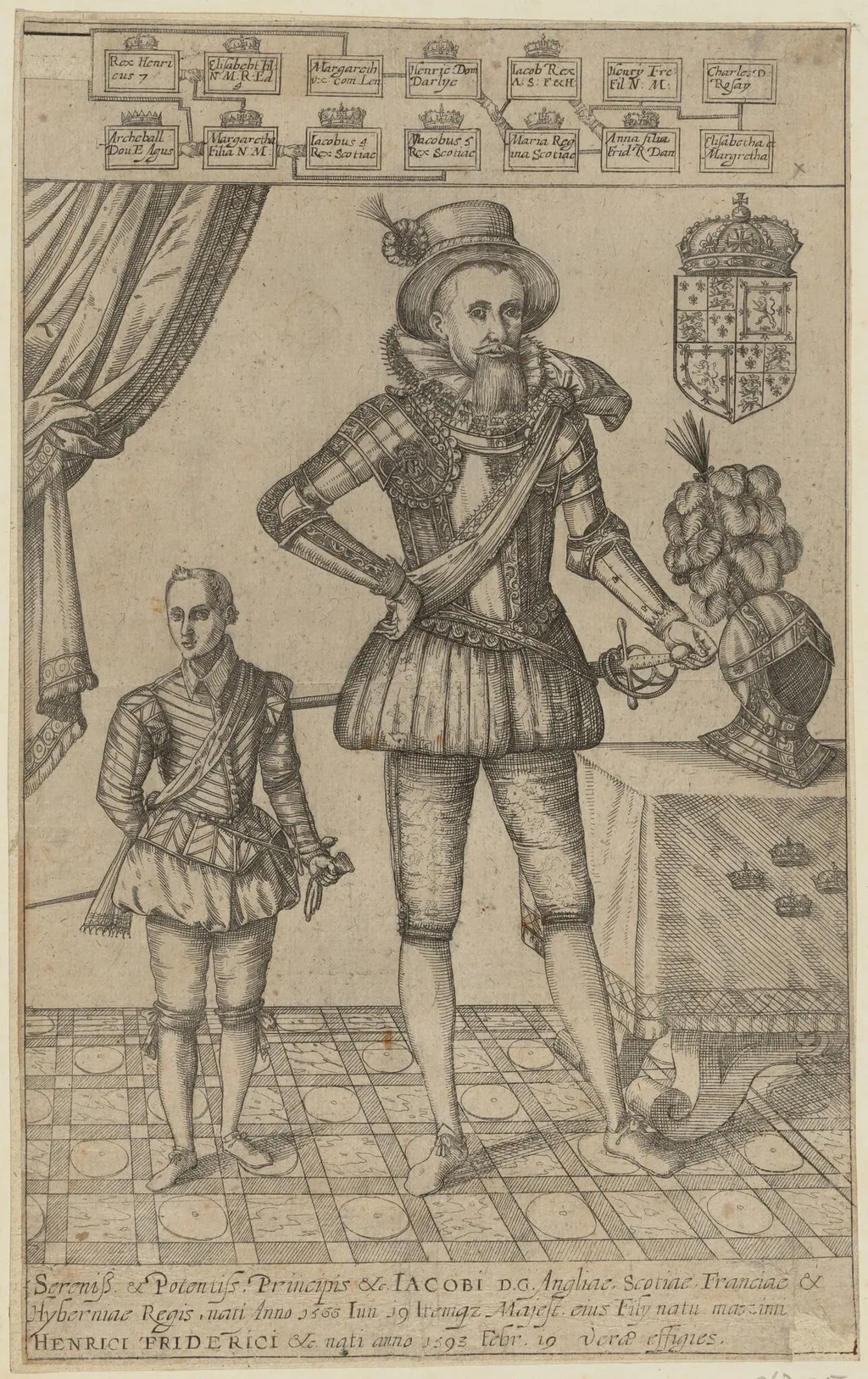
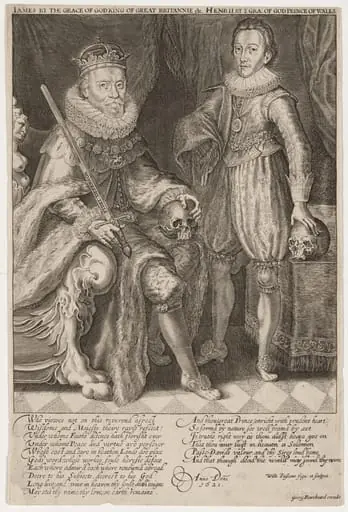
James I and Prince Henry Frederick is an ink print by the Romanticist artist Unknown 19th Century. It dates from 1850 and is held in the collection of the National Gallery of Art. This engraving depicts James I of England alongside his eldest son, Prince Henry Frederick.
About this work
Overview
The print was likely produced for distribution among courtiers and foreign dignitaries to affirm the Stuart monarchy’s legitimacy.
This engraving depicts James I of England alongside his eldest son, Prince Henry Frederick. Rendered in fine detail, the portrait emphasizes their royal status through elaborate armor and formal posture. The composition includes heraldic elements that reinforce lineage and authority, typical of early 17th-century dynastic imagery. The print was likely produced for distribution among courtiers and foreign dignitaries to affirm the Stuart monarchy’s legitimacy.
Subject & Meaning
James I, the taller figure, stands with a commanding posture, one hand resting on his hip and the other holding a symbolic object—possibly a scepter or orb—signifying sovereign power. Prince Henry, younger and more restrained, mirrors his father’s armor but with less ornamentation, suggesting his role as heir. The family tree and coat of arms visually anchor their claim to the throne, linking them to ancestral rulers and legitimizing their rule through genealogical continuity.
Technique & Style
The image is executed in fine-line engraving, a technique requiring precise incisions on a metal plate to create intricate textures. The armor’s surface is rendered with meticulous hatching to suggest metal sheen and joint articulation, while the family tree’s delicate lines convey genealogical complexity. The composition is symmetrical and formal, reflecting the conventions of court portraiture in Jacobean England, where clarity and hierarchy were prioritized over naturalism.
History & Provenance
Created during the early years of James I’s reign, the engraving likely originated from a royal workshop or commissioned printmaker in London. Such images were circulated to consolidate political authority after the Union of the Crowns in 1603. Surviving impressions are rare, with most held in institutional collections, including the British Museum and the Royal Collection, indicating its use as official state imagery.
Context
In the aftermath of Elizabeth I’s death, James I sought to stabilize his rule over a newly unified Britain. Visual propaganda, including engraved portraits, played a key role in asserting continuity with past monarchs and projecting dynastic strength. The inclusion of a family tree and heraldry aligns with broader European practices of using genealogical imagery to legitimize rule, especially among Protestant monarchies navigating religious and political tensions.
Legacy
This engraving contributes to a broader corpus of Jacobean portraiture that shaped public perception of the Stuart dynasty. While not widely reproduced today, it remains a valuable artifact for understanding how early modern rulers employed visual culture to communicate power. Its technical precision and symbolic content offer insight into the intersection of art, politics, and lineage in 17th-century England.
Artist & collection

Artist

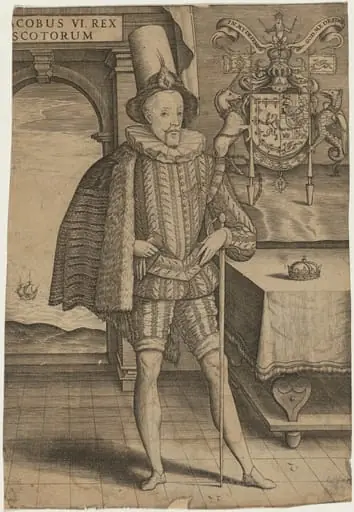 James I of England and James VI of Scotland
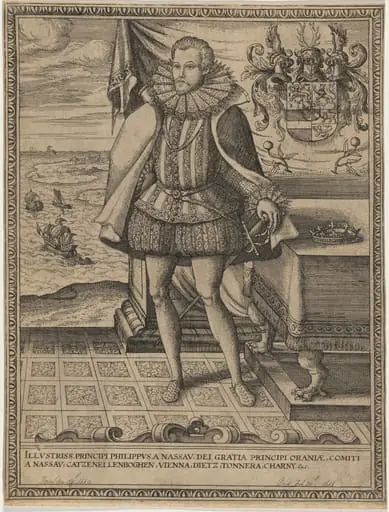 Philip William, Prince of Nassau
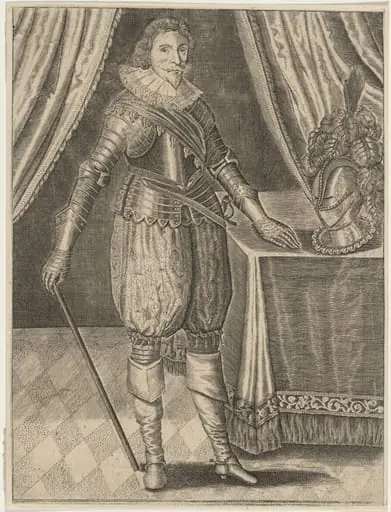 James, Second Marquis of Hamilton
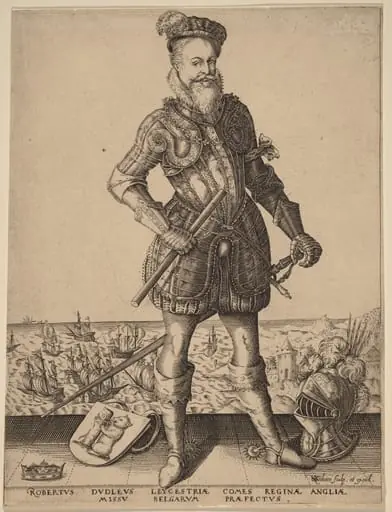 Robert Dudley, Earl of Leicester
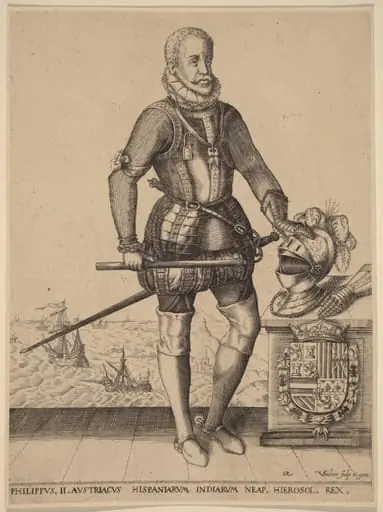 Philip II, King of Spain
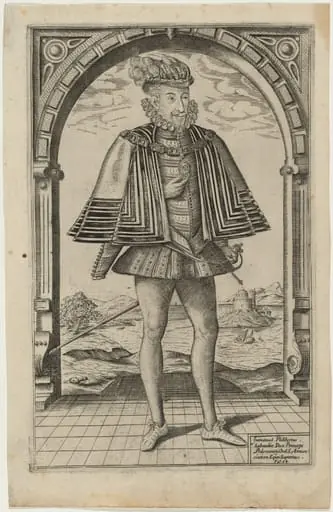 Emmanuel Philibert of Savoy
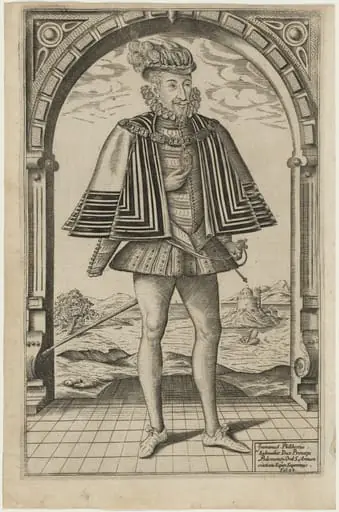 Emmanuel Philibert, Duke of Savoy
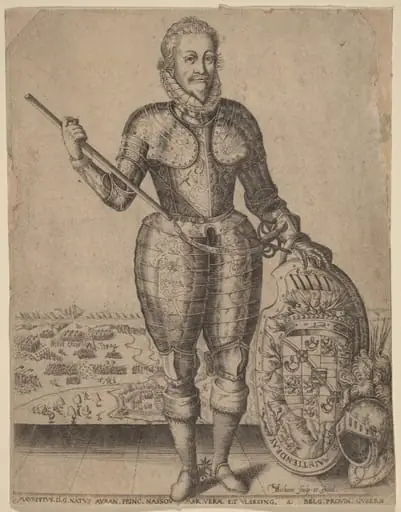 Maurice of Nassau, Prince of Orange
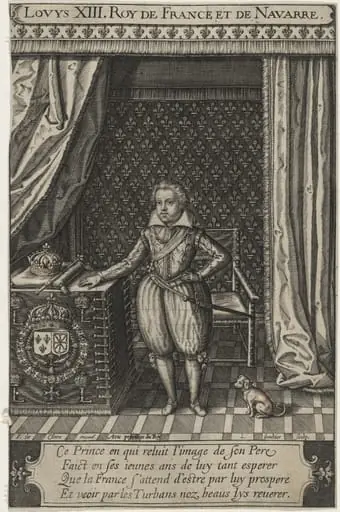 Louis XIII, King of France
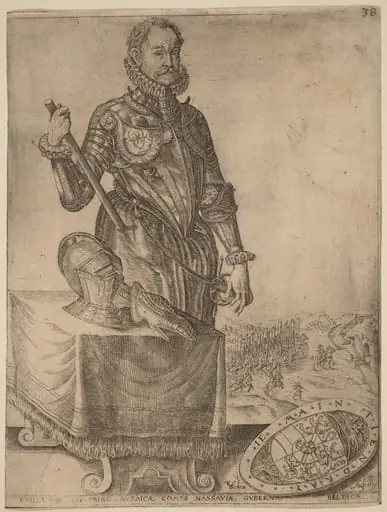 William of Nassau, Prince of Orange
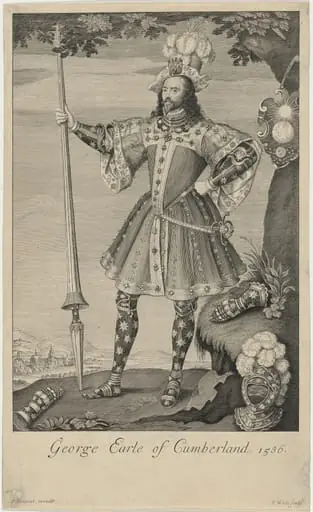 George, Earl of Cumberland
 James I, King of England and Charles, Prince of Wales