Artwork
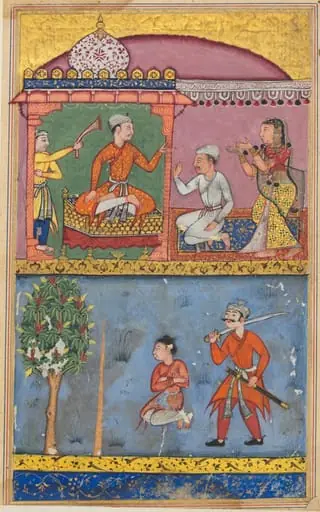
A traveler persuades Lorik to return home (top); Chanda objects (bottom), from a Chandayana (Story of Chanda)
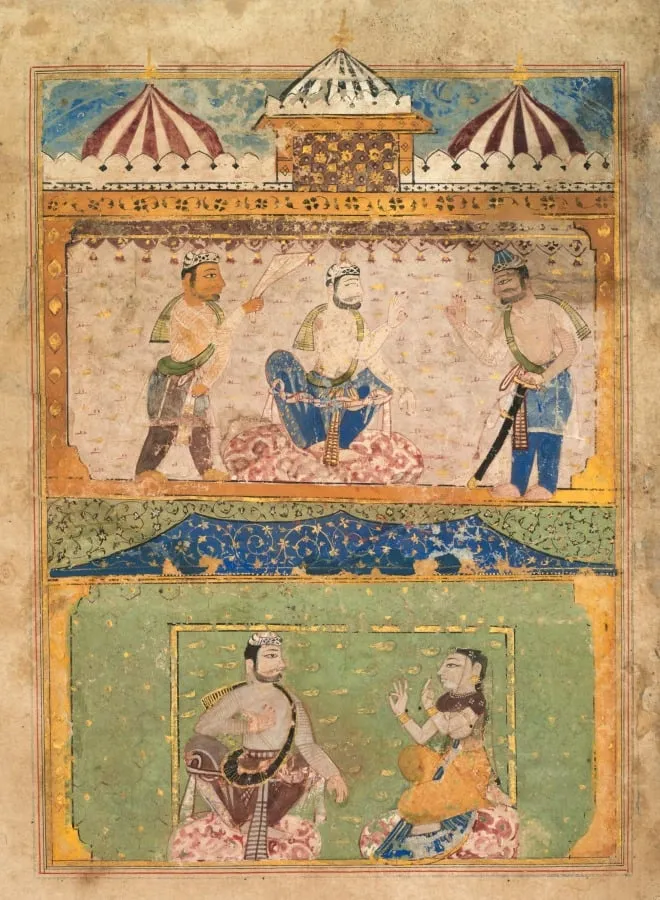
A traveler persuades Lorik to return home (top); Chanda objects (bottom), from a Chandayana (Story of Chanda) is an unspecified painting by the Mughal Painting artist Unknown. It dates from 1540 and is held in the collection of the Cleveland Museum of Art. This painting illustrates two scenes from the Chandayana, a 16th-century Indian romance rooted in Sufi tradition.
About this work
Overview
The upper register shows a traveler urging Lorik to return home, while the lower depicts Chanda, the central female figure, raising her hand in objection.
This painting illustrates two scenes from the Chandayana, a 16th-century Indian romance rooted in Sufi tradition. The upper register shows a traveler urging Lorik to return home, while the lower depicts Chanda, the central female figure, raising her hand in objection. Executed in a pre-Mughal style, the work belongs to a now-dispersed manuscript that reflects regional artistic conventions of northern India, blending local narrative forms with Persian visual elements.
Subject & Meaning
The Chandayana recounts the emotional conflict between Chanda and Lorik, framed as an allegory of divine longing in Sufi thought. Chanda’s resistance symbolizes the soul’s reluctance to surrender to spiritual union, while the traveler represents divine summons. The dual scenes capture tension between duty and desire, common in Sufi poetry, where earthly love mirrors the soul’s yearning for the divine.
Technique & Style
The composition divides space into horizontal registers, a hallmark of pre-Mughal Indian painting. Figures are rendered in profile with stylized gestures to convey emotion, while delicate vine patterns and rich Persian-inspired pigments adorn the background. The flatness of the planes and lack of perspective emphasize symbolic narrative over naturalism, aligning with regional manuscript traditions before the Mughal era’s spatial innovations.
History & Provenance
The painting originates from a manuscript of the Chandayana produced in northern India during the early 1500s, likely under a regional sultanate court. The manuscript was later dispersed, with individual folios entering private and institutional collections. Its survival offers rare insight into the visual culture of pre-Mughal Indo-Persian manuscript painting, bridging local storytelling and imported aesthetics.
Context
This work emerged during a period when Islamic courts in India fostered hybrid artistic traditions. Persian literary themes and decorative motifs merged with indigenous Indian styles, particularly in regions like the Deccan and Punjab. The Chandayana, though rooted in local folklore, was adapted into Sufi poetic circles, making it a cultural bridge between popular narrative and mystical expression.
Legacy
The painting’s stylistic features—flat registers, profiled figures, and ornamental detail—directly influenced early Mughal illustration, especially under Humayun and Akbar. Though the Chandayana manuscript itself is fragmented, its visual language helped shape the narrative conventions of later imperial painting, preserving regional techniques within a broader Indo-Islamic artistic lineage.
Artist & collection

 Domestic Scene
 Giacomo and Cardinal Marco, investing Andrea, Abbot of San Zeno, with his Benefice
 The Nymph of Fontainebleau
 Portrait of a Woman
 Madonna and Child with Saints in the Enclosed Garden
 Venus and Minerva
 Family Group of Four on Sofa
 Wall painting from Room H of the Villa of P. Fannius Synistor at Boscoreale
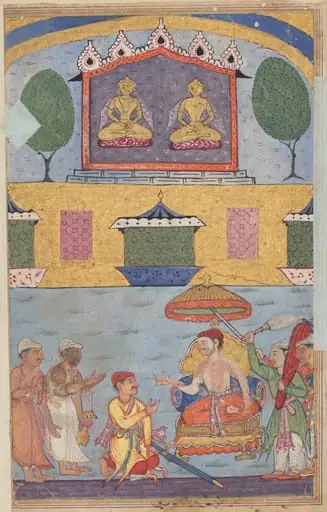 The goldsmith and the carpenter inform the king of a dream in which the golden images plan to desert the city for lack of worshippers, from a Tuti-nama (Tales of a Parrot): Third Night
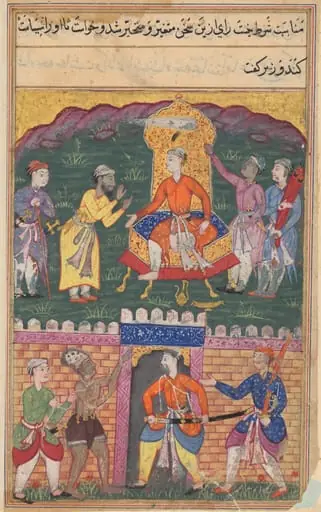 The vizier dissuades the king of Bahilistan from executing the dervish who asks for his daughter’s hand in marriage, from a Tuti-nama (Tales of a Parrot): Seventh Night
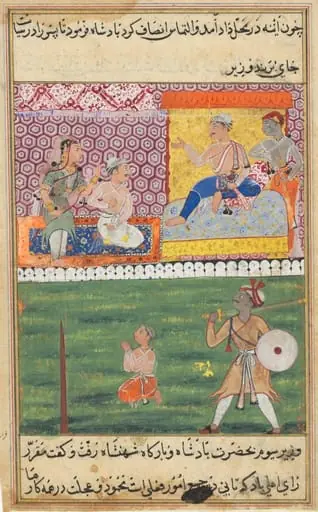 The handmaiden again appeals for justice and the prince is led to the place of execution for the third time, from a Tuti-nama (Tales of a Parrot): Eighth Night
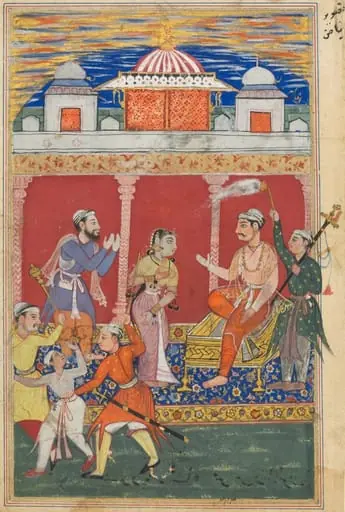 The prince’s ordeal continues, he is ordered away to be executed for the fifth time, from a Tuti-nama (Tales of a Parrot): Eighth Night
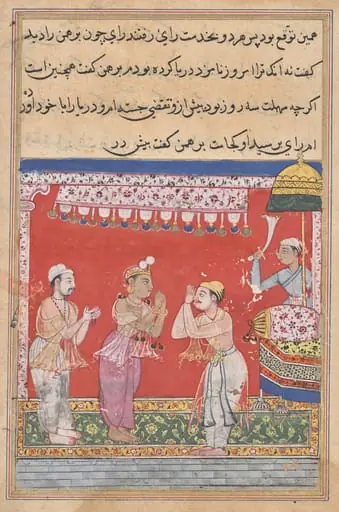 The king of the Ocean, having assumed human form, arrives at the court of the Raja, from a Tuti-nama (Tales of a Parrot): Eleventh Night
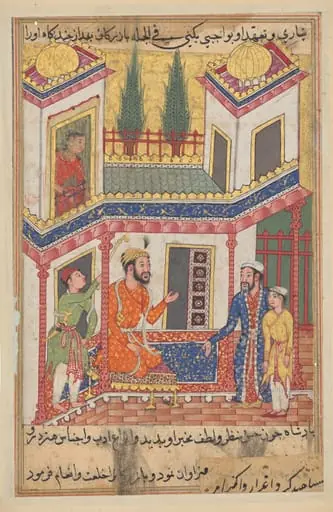 The merchant returns bringing a young slave who is really the son of the princess of Rum, now married to the king, from a Tuti-nama (Tales of a Parrot): Fiftieth Night
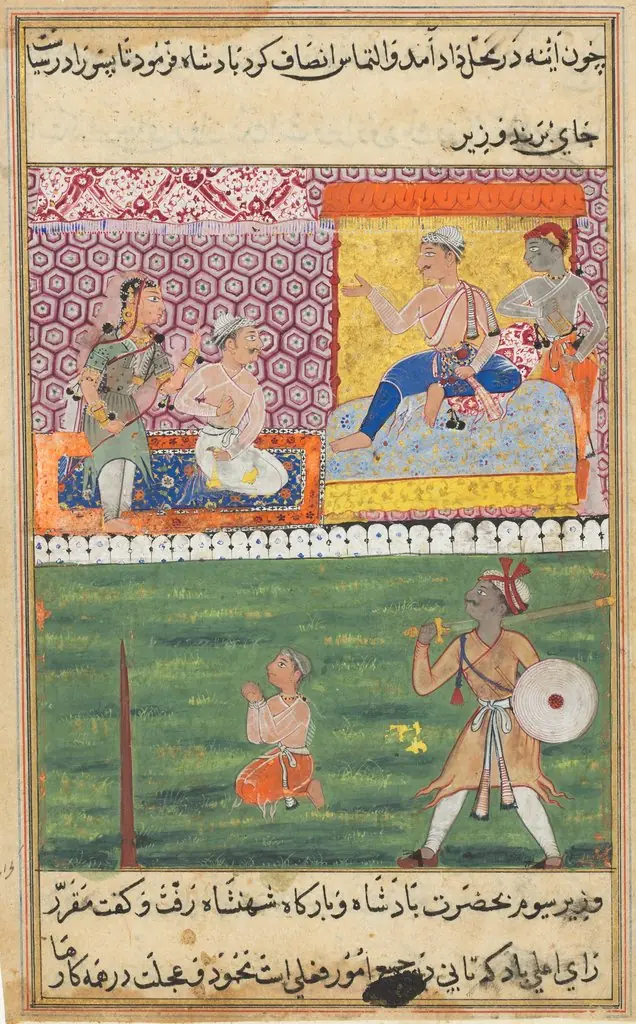 The handmaiden again appeals for justice and the prince is led to the place of execution for the third time, from a Tuti-nama (Tales of a Parrot): Eighth Night
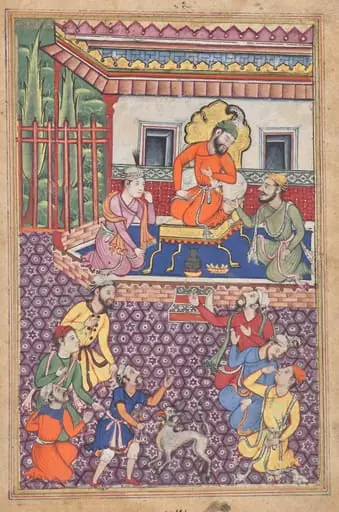 The court of the Raja of Ujjain, from a Tuti-nama (Tales of a Parrot): Forty-sixth Night
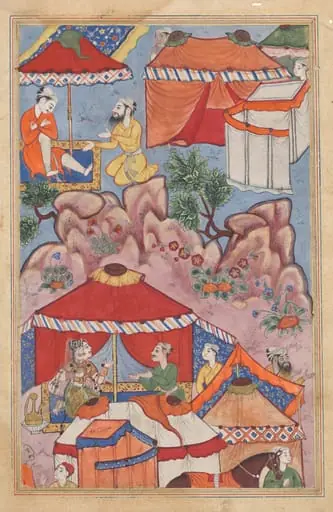 Bashir confides his love for Habbaza to an Arab friend, and sends him to her with a message, from a Tuti-nama (Tales of a Parrot): Twenty-fourth Night
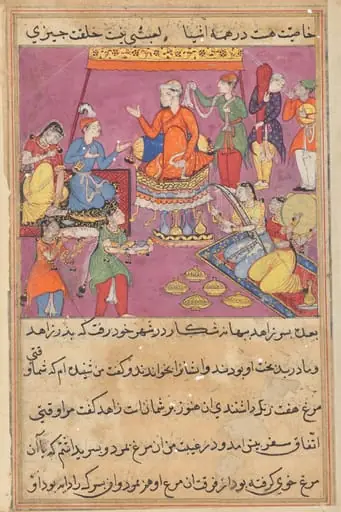 The king gives his daughter in marriage to the pious man’s son, from a Tuti-nama (Tales of a Parrot): Fifty-second Night
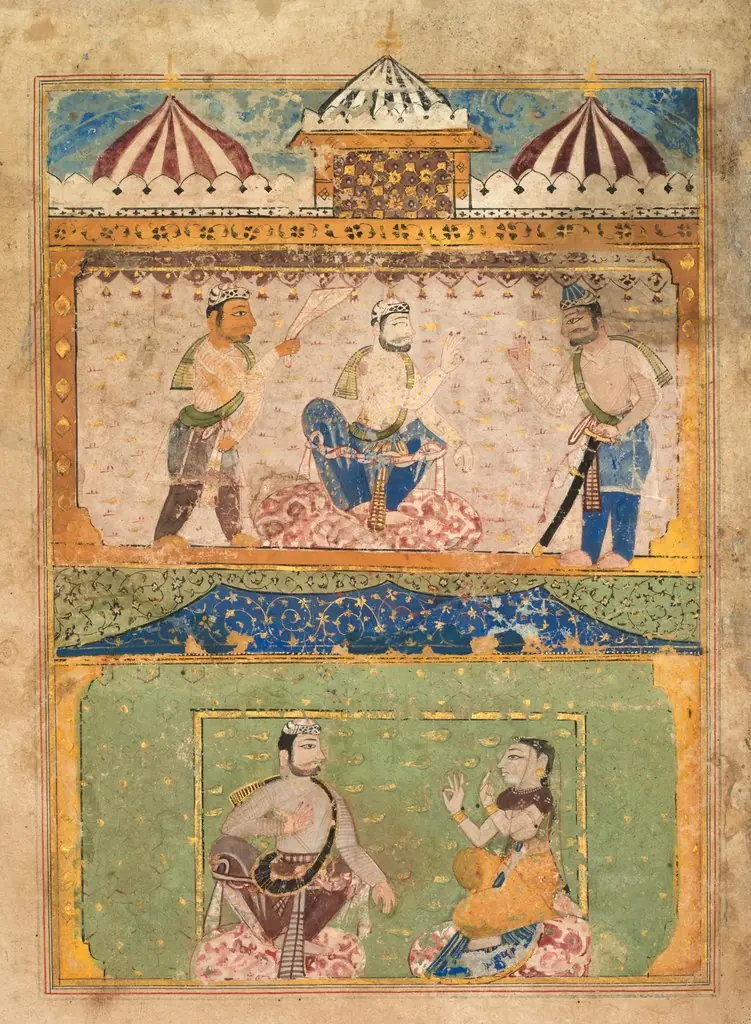 A Traveler Persuades Lorik to Return Home (top); Chanda Objects (bottom), from a Chandayana (Story of Chanda)
 The handmaiden appeals for justice and the prince is taken to the execution site for the fourth time, from a Tuti-nama (Tales of a Parrot): Eighth Night