Artwork
One of three views of the Golden Temple
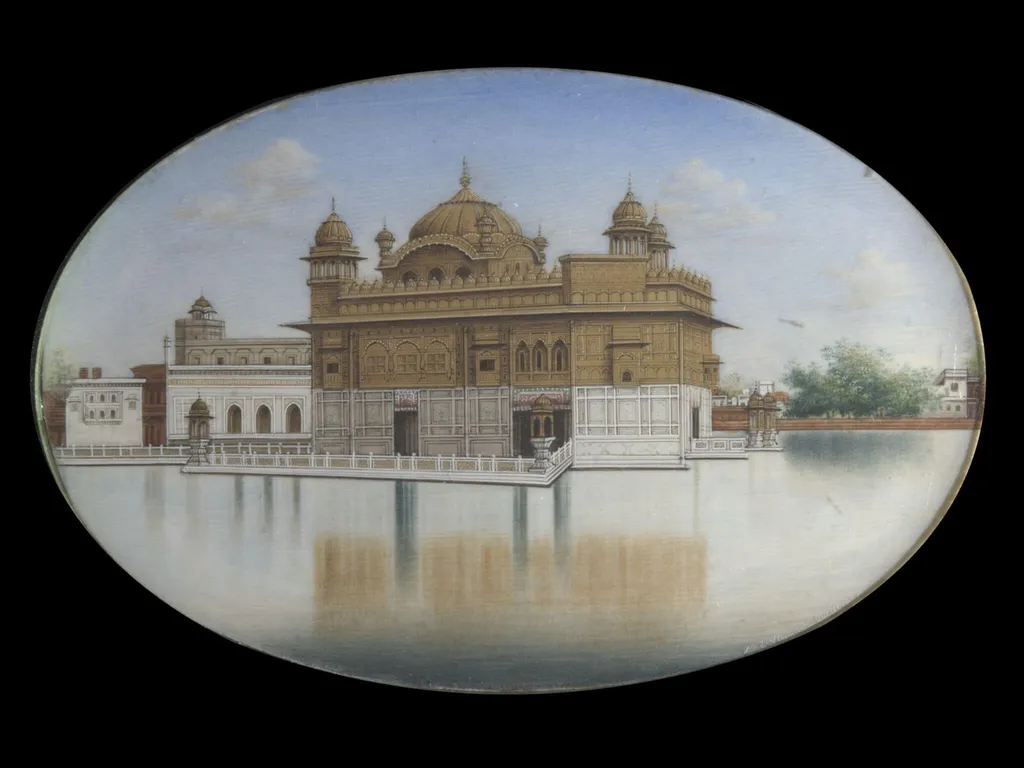
One of three views of the Golden Temple is a paint painting by the Impressionist artist Unknown. It dates from 1860 and is held in the collection of the Victoria and Albert Museum.
About this work
The sky above is soft blue with a few clouds, and the building’s reflection ripples on the surface below.
This painting shows a grand golden building with domes and arches sitting in calm water. The sky above is soft blue with a few clouds, and the building’s reflection ripples on the surface below. Trees and smaller structures appear in the background, framing the scene.
The artist focused on light and detail, especially the way the gold shines against the water. The painting looks like it was made around 1860, showing a famous temple.
Next, check out the Victoria and Albert Museum to see more works like this.
Overview
This 1860 painting captures one of three known views of the Golden Temple in Amritsar, rendered with careful attention to architectural detail and atmospheric effects. Executed in watercolor or gouache, it presents the sacred structure as a luminous presence amid still water and soft sky. The work entered the Victoria and Albert Museum’s collection through separate donations by Dr. W.L. Hildburgh and Mrs. E.M. Craig Waller, reflecting its significance to 19th-century collectors of South Asian art.
Subject & Meaning
The Golden Temple, or Harmandir Sahib, is the holiest site in Sikhism. This depiction emphasizes its serene isolation on the sacred pool, reinforcing its spiritual symbolism as a divine refuge. The calm waters mirror the building’s form, suggesting harmony between the earthly and the eternal. Surrounding trees and modest structures frame the temple without distraction, directing focus to its sacred geometry and luminous surface.
Technique & Style
The artist employed fine brushwork to render the temple’s gilded surfaces, capturing how light catches the metal cladding and reflects subtly in the water. Soft washes of blue and white suggest a hazy, tranquil sky, while delicate outlines define distant trees and ancillary buildings. The composition balances precision with atmospheric mood, characteristic of colonial-era Indian topographical painting that merged European techniques with local subject matter.
History & Provenance
Created around 1860, the painting was likely produced for a British audience interested in India’s religious architecture. It was later acquired by Dr. W.L. Hildburgh and Mrs. E.M. Craig Waller, who each contributed parts of their collections to the Victoria and Albert Museum. Their donations helped preserve a visual record of Sikh sacred sites during a period of increasing colonial documentation and cultural interest.
Context
In mid-19th century India, British officials and travelers commissioned artworks to document religious and architectural landmarks. This painting aligns with a broader trend of topographical art that sought to record and classify India’s cultural heritage. While not overtly political, such works contributed to the colonial archive, preserving images of sites that remained central to local devotion despite foreign administrative control.
Legacy
As one of only three known painted views of the Golden Temple from this period, the work serves as a rare visual document of the temple’s appearance before modern renovations. It remains a key reference for scholars studying 19th-century representations of Sikh sacred space and the intersection of colonial aesthetics with indigenous religious identity.
Artist & collection

 Domestic Scene
 Giacomo and Cardinal Marco, investing Andrea, Abbot of San Zeno, with his Benefice
 The Nymph of Fontainebleau
 Portrait of a Woman
 Madonna and Child with Saints in the Enclosed Garden
 Venus and Minerva
 Family Group of Four on Sofa
 Wall painting from Room H of the Villa of P. Fannius Synistor at Boscoreale
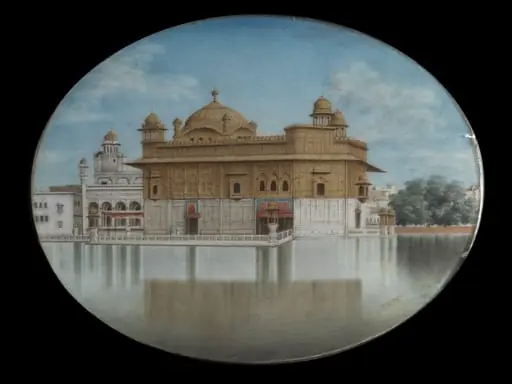 One of Sixteen views of monuments in Delhi, Agra, Amritsar, Lucknow and South India.
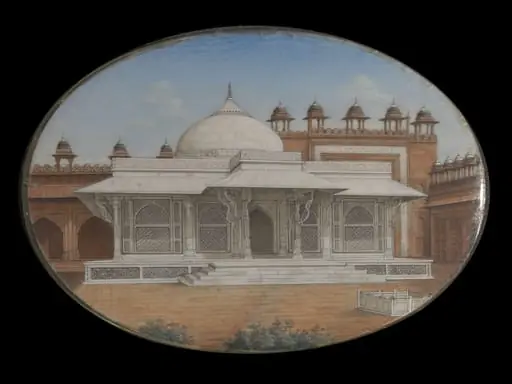 Tomb of Salim Christi
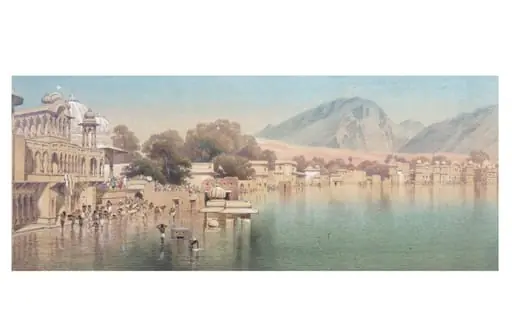 View of Pushkar Lake and the bathing ghats, near Ajmer
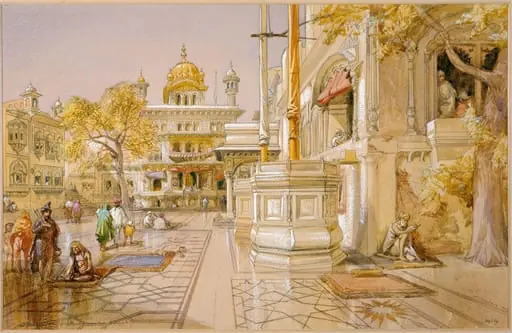 Akal Boonga at the Golden temple. Umritsar. Punjaub
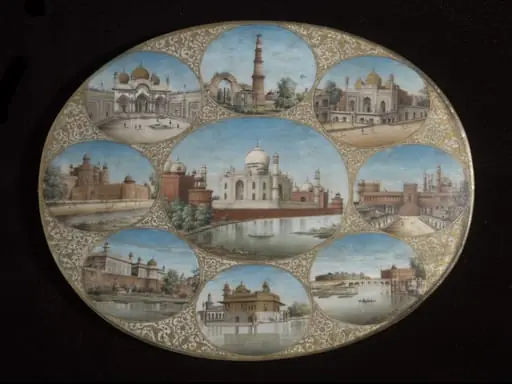 The Taj Mahal, Agra, in a gilt frame surrounded by eight smaller views.
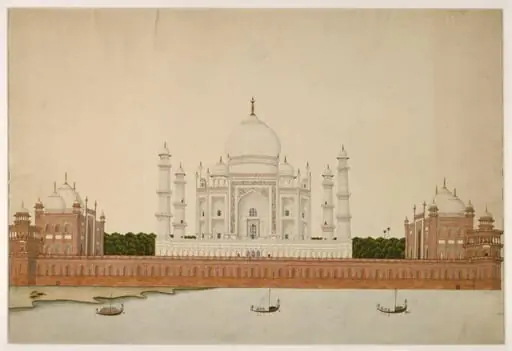 The Taj Mahal
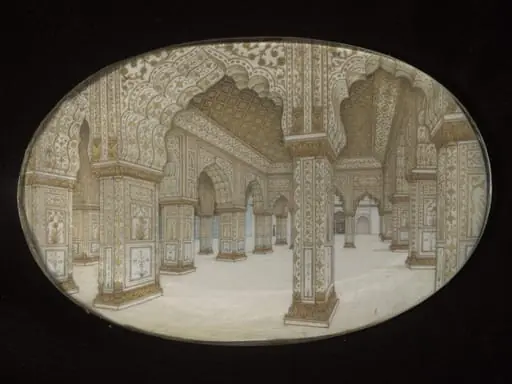 Interior of a Mughal Palace.
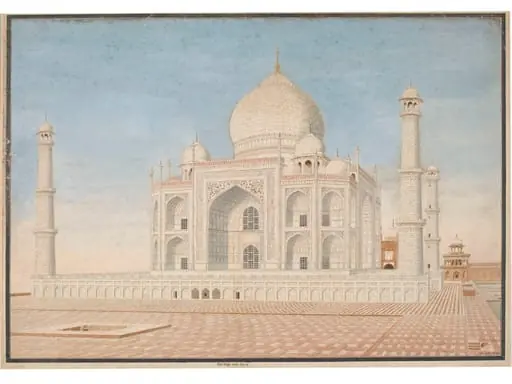 Elevation of the east side of the Taj Mahal, Agra, with part of the surrounding tiled terrace and water-tank in the foreground.
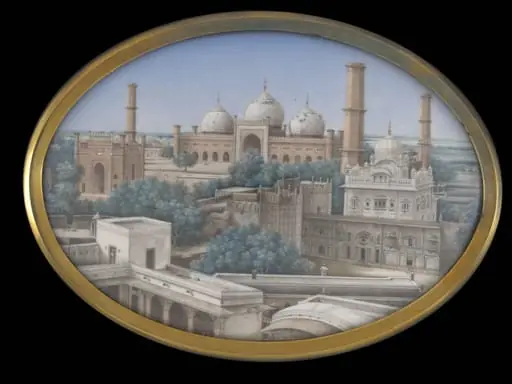 The Jami Masjid, Lahore
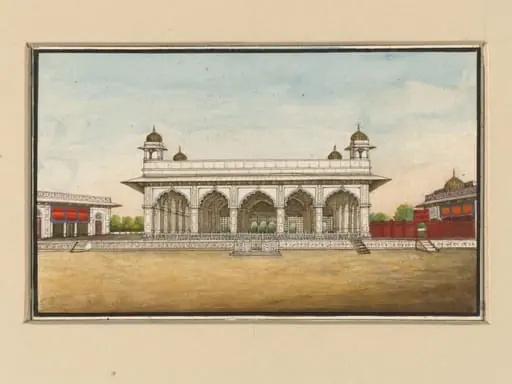 One of four drawings of Mughal architecture.