Artwork
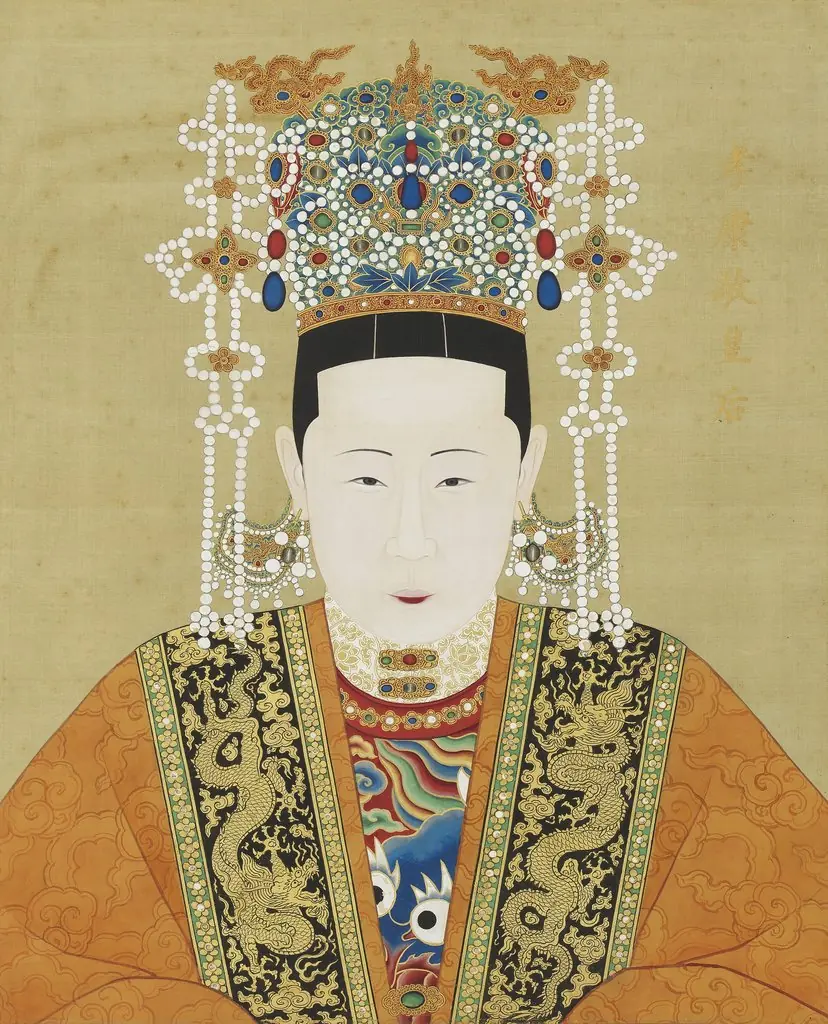
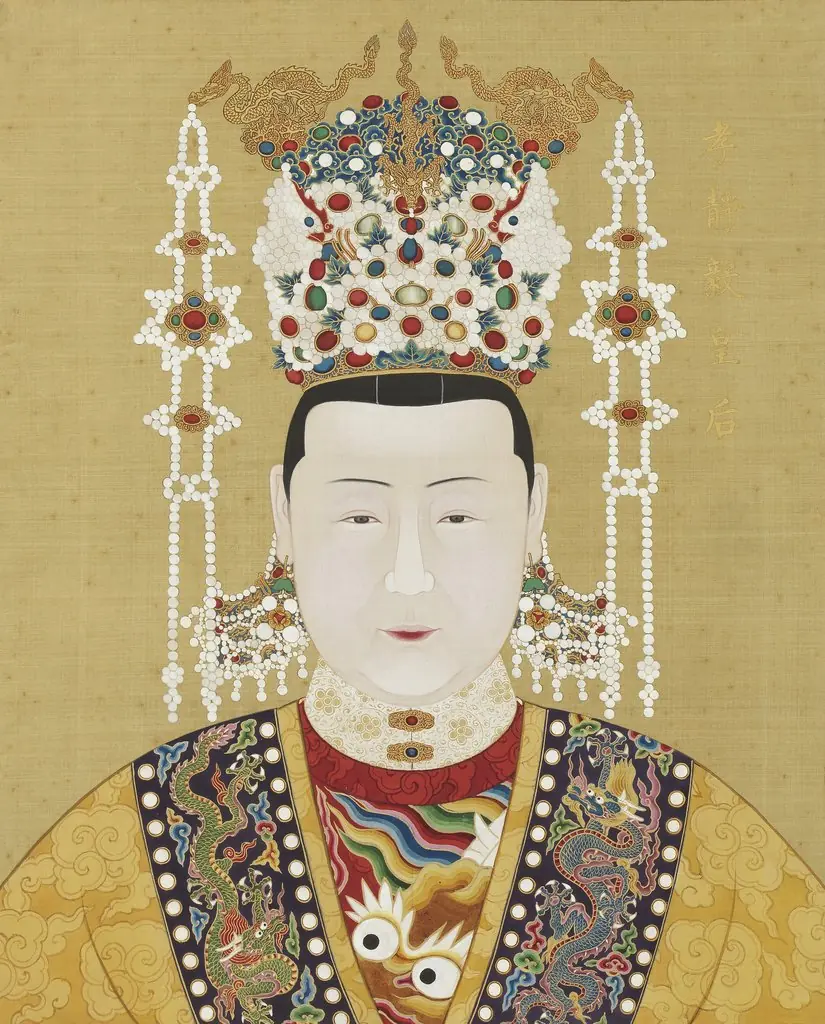
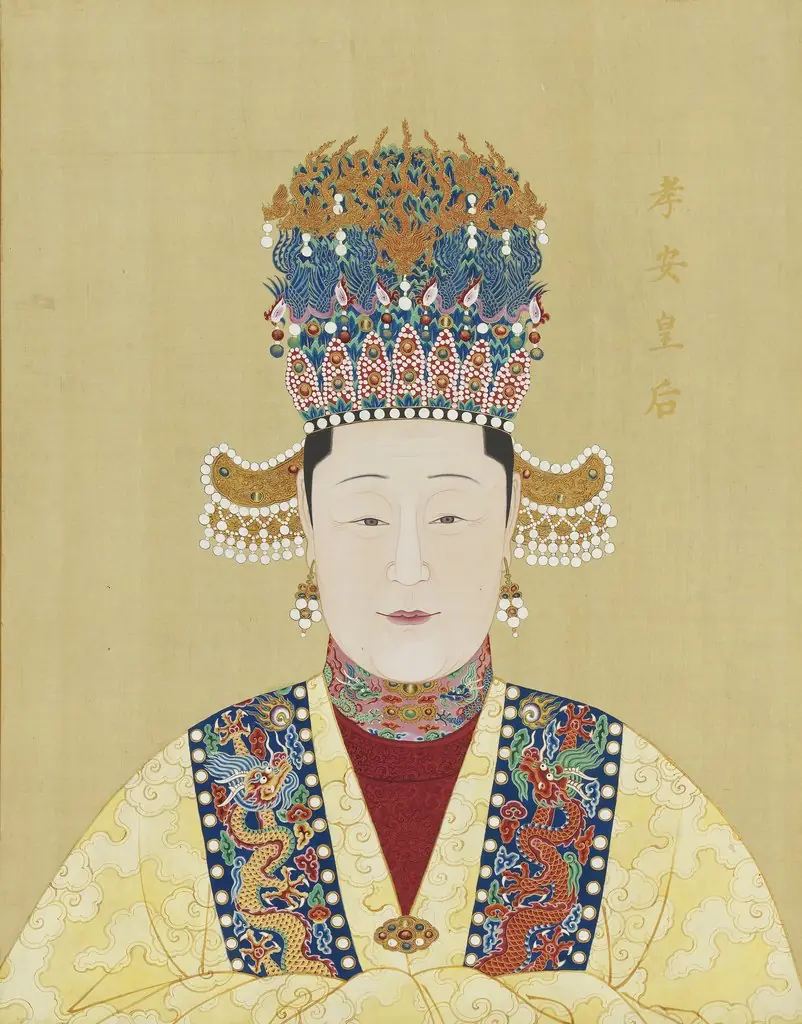
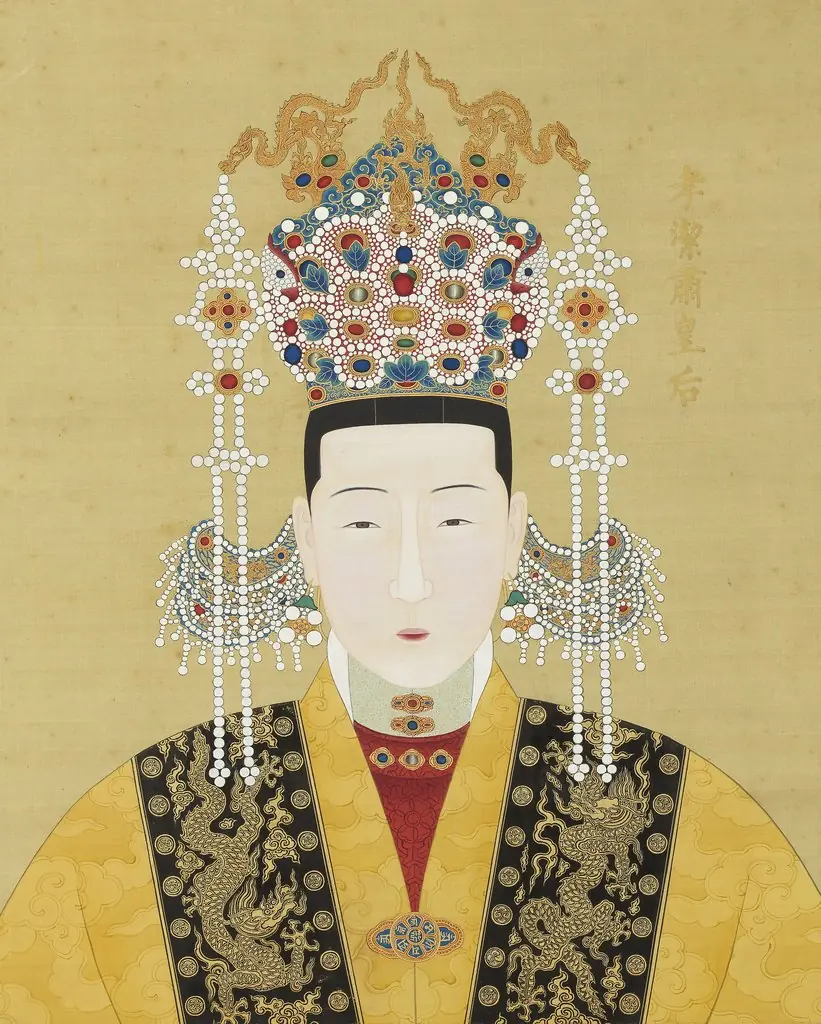
明代帝后半身像册(一)-孝贞纯皇后
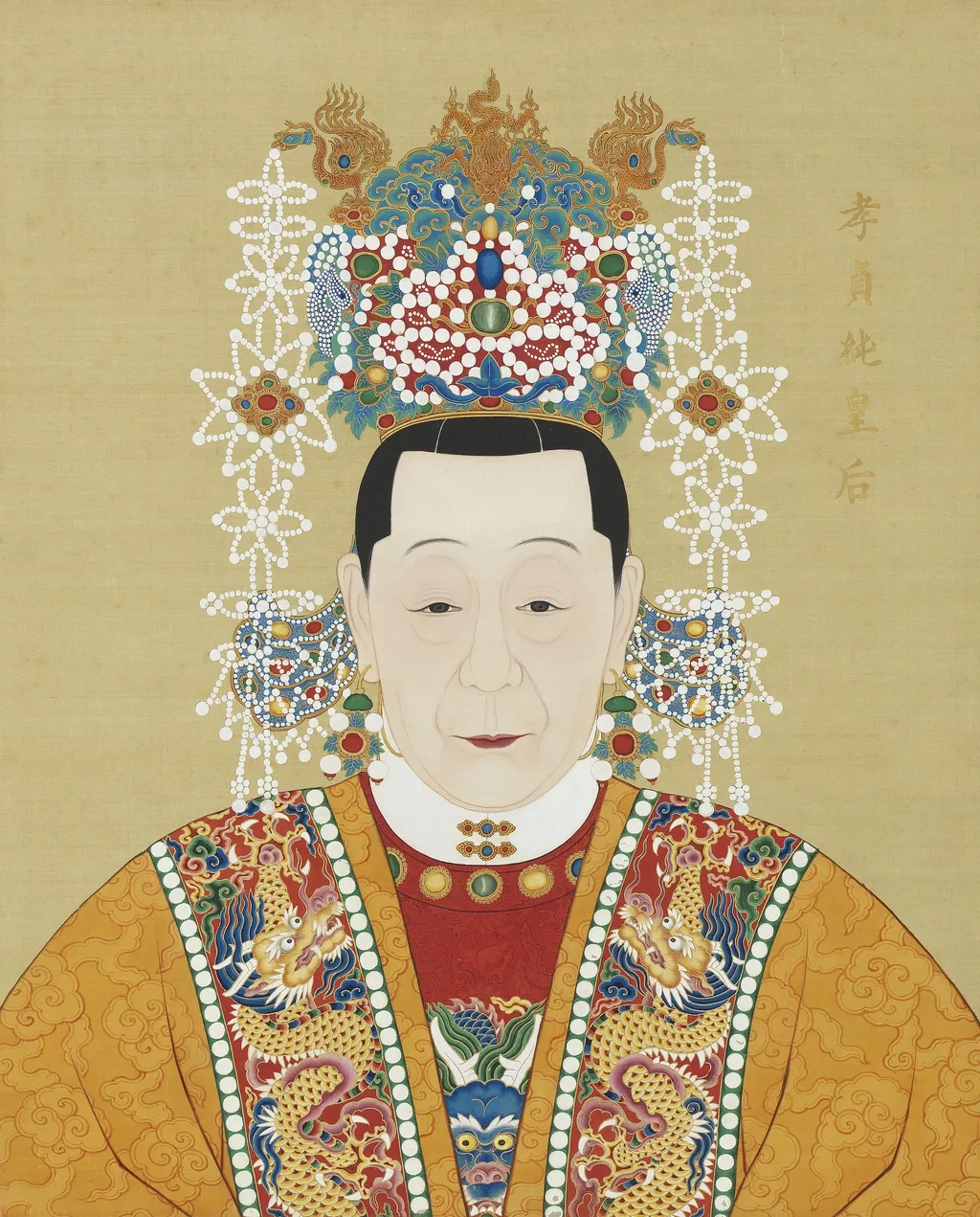
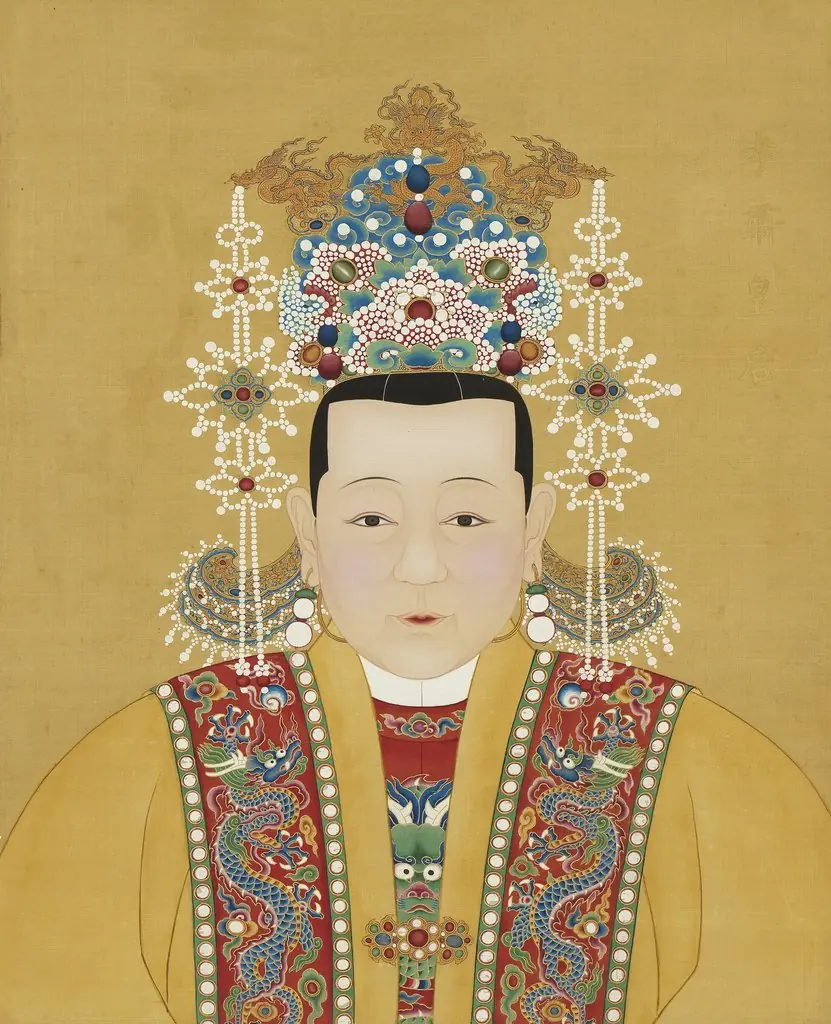
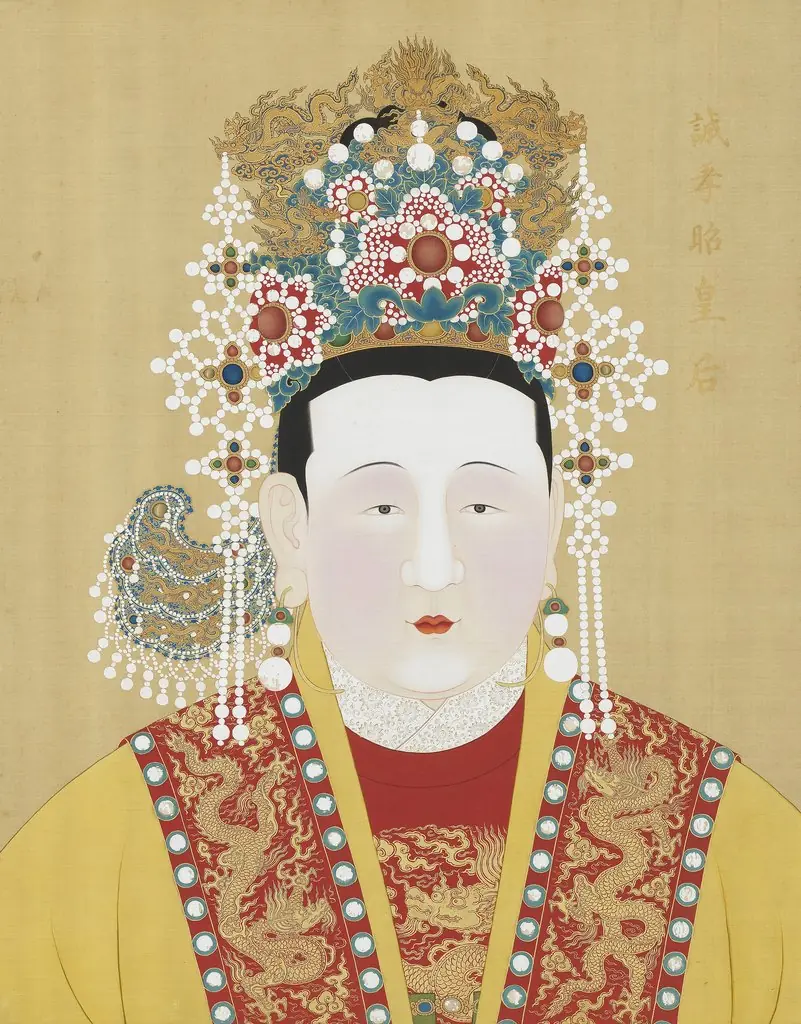
明代帝后半身像册(一)-孝贞纯皇后 is an unspecified painting by Unknown. It dates from 1850 and is held in the collection of the National Palace Museum. This half‑length portrait from the Ming dynasty depicts Empress Xiaozhenchun, an imperial consort, rendered on silk.
About this work
Overview
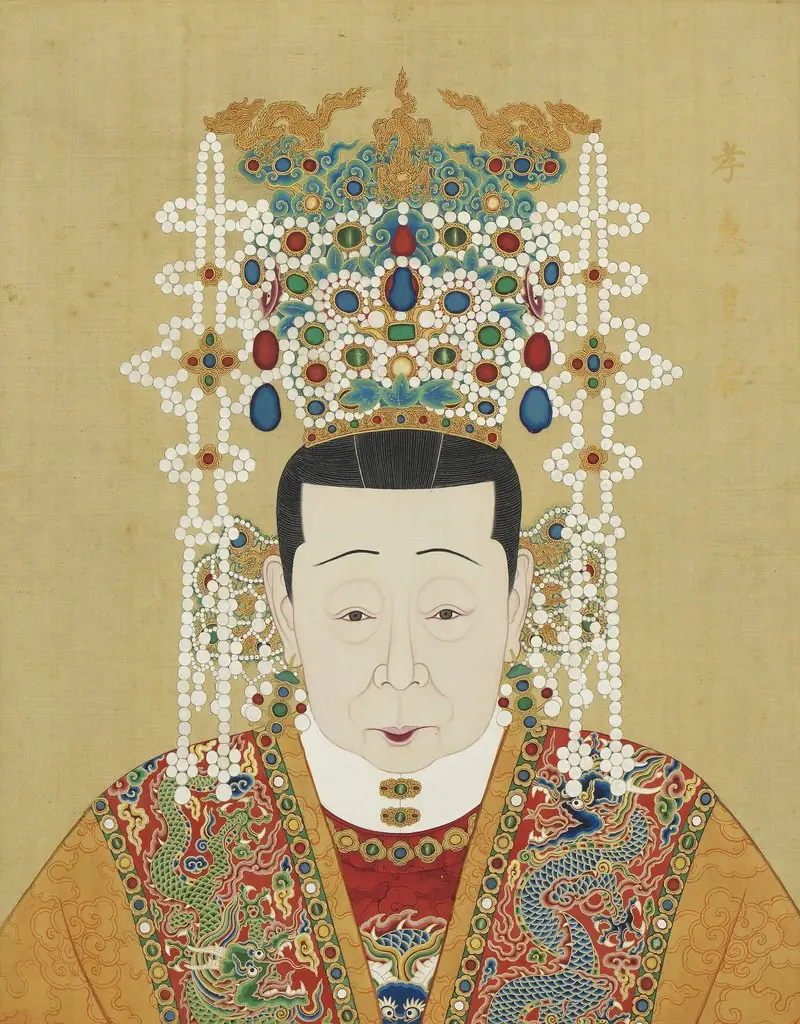
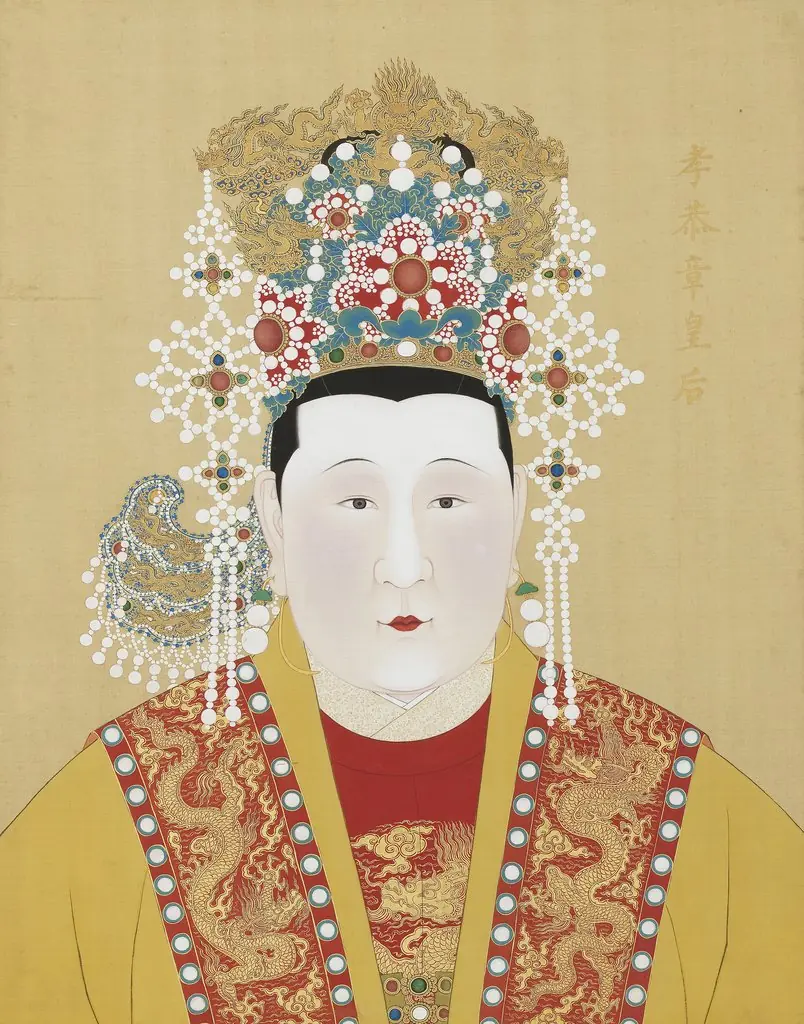
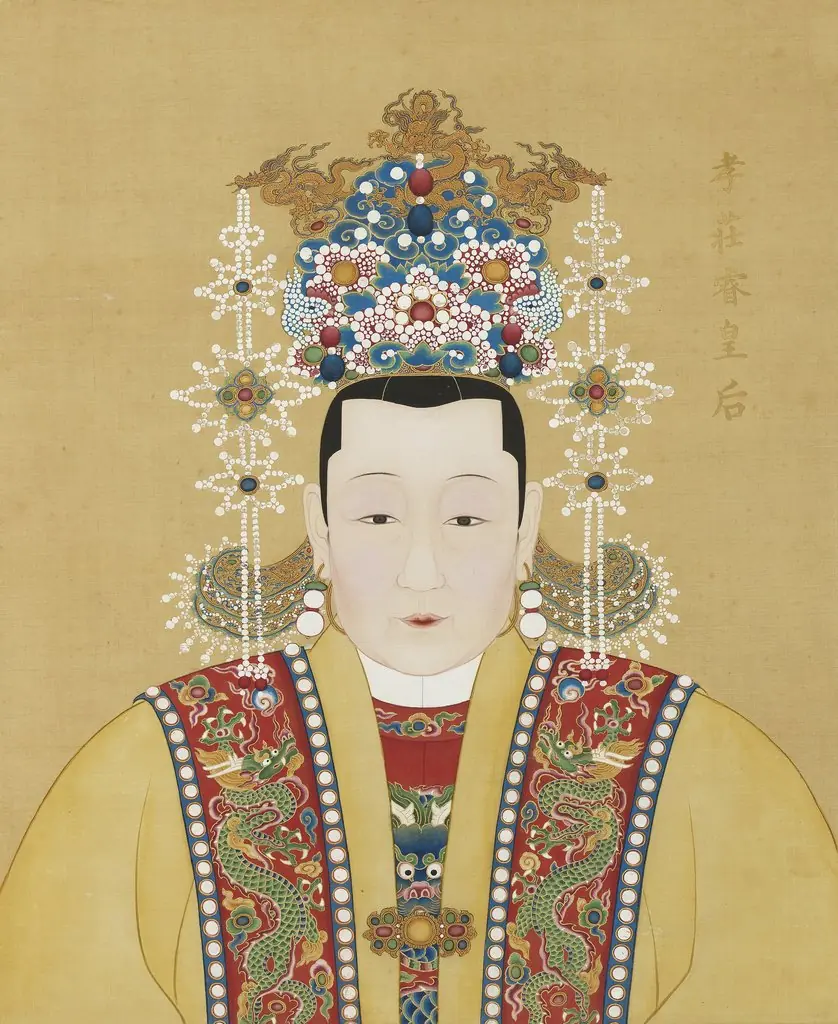
This half‑length portrait from the Ming dynasty depicts Empress Xiaozhenchun, an imperial consort, rendered on silk. She is shown seated, facing the viewer, with a richly decorated crown and a dragon‑embellished robe against a pale background. Inscribed characters appear on the right side of the composition, identifying the sitter.
Subject & Meaning
The portrait serves as a formal representation of the empress’s status within the court, emphasizing her authority and virtue through the use of imperial symbols such as the dragon motifs on her garment and the elaborate headdress. The direct gaze reinforces her dignified presence and the ceremonial role she occupied.
Technique & Style
Executed with fine brushwork, the painting displays meticulous detailing of facial features and textile patterns. The crown is painted in multiple hues, each layer carefully applied to convey texture and opulence. The background’s muted tone allows the vivid colors of the attire to dominate, a common approach in court portraiture of the period.
History & Provenance
Created during the Ming era, the work is part of a series of half‑length portraits of imperial family members. It entered the collection of the National Palace Museum in Taipei, where it remains on display as part of the museum’s holdings of Chinese court art.
Context
Portraits of this type were produced to document the lineage and hierarchy of the imperial household, often used in ancestral rites and as visual records for succession. The inclusion of dragons and specific regalia aligns with the codified dress codes that distinguished the empress from other consorts.
Artist & collection

 Domestic Scene
 Giacomo and Cardinal Marco, investing Andrea, Abbot of San Zeno, with his Benefice
 The Nymph of Fontainebleau
 Portrait of a Woman
 Madonna and Child with Saints in the Enclosed Garden
 Venus and Minerva
 Family Group of Four on Sofa
 Wall painting from Room H of the Villa of P. Fannius Synistor at Boscoreale