Artwork
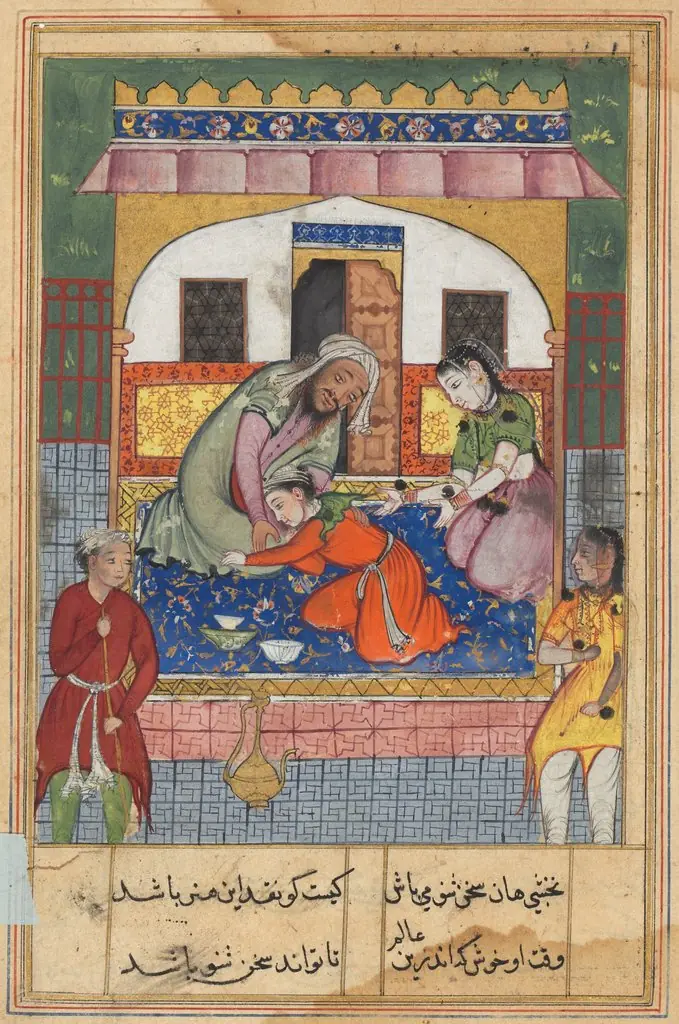
Shahr-Arai and her husband adopt her lover as a brother in the family, from a Tuti-nama (Tales of a Parrot): Fortieth Night
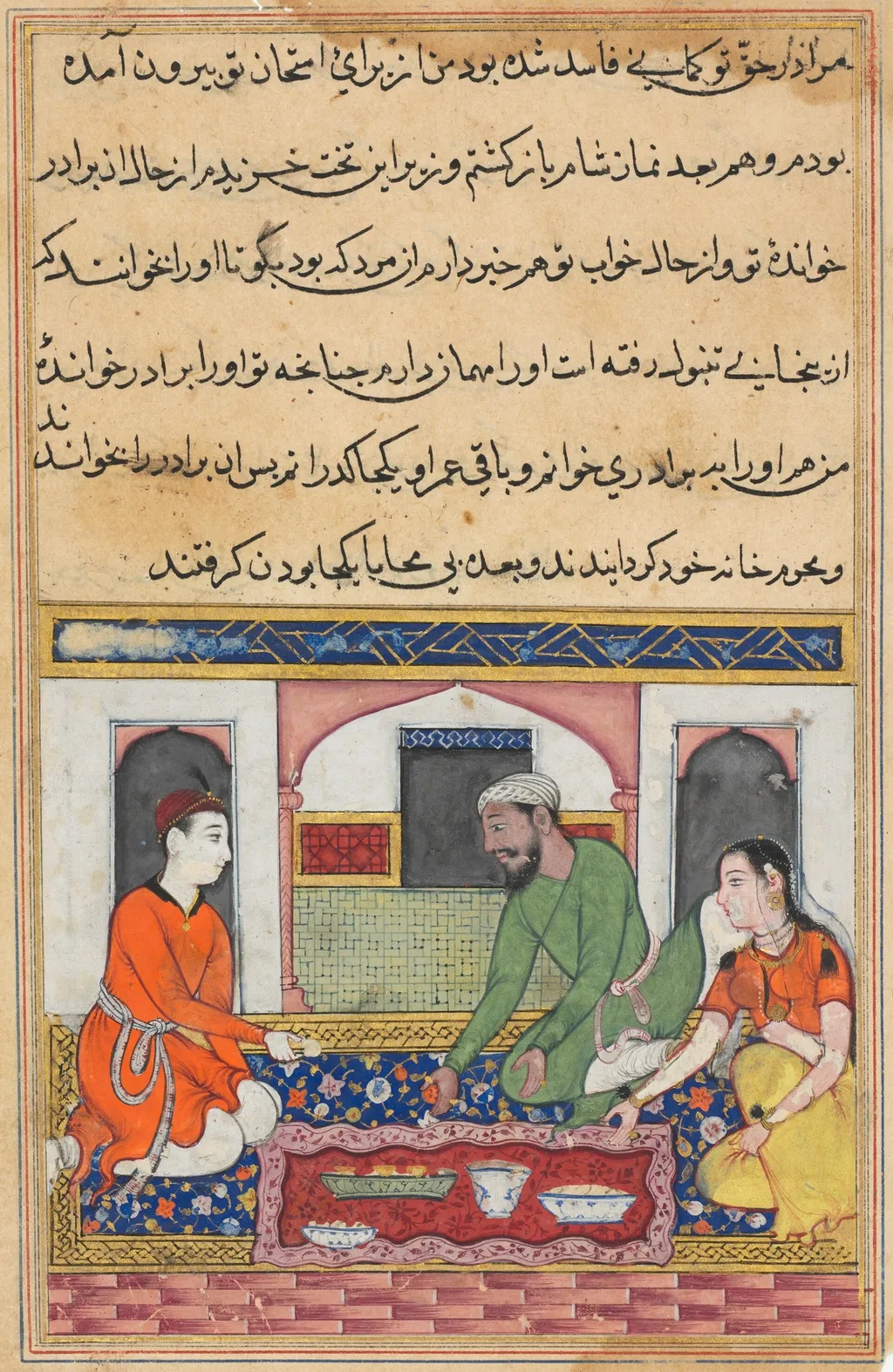
Shahr-Arai and her husband adopt her lover as a brother in the family, from a Tuti-nama (Tales of a Parrot): Fortieth Night is an unspecified painting. It dates from 1560 and is held in the collection of the Cleveland Museum of Art. The work depicts three figures seated on a patterned rug within an interior space defined by tiled walls and an arched doorway.
About this work
Overview
The work depicts three figures seated on a patterned rug within an interior space defined by tiled walls and an arched doorway.
The work depicts three figures seated on a patterned rug within an interior space defined by tiled walls and an arched doorway. The leftmost figure wears an orange robe and a red cap, the central figure is dressed in green with a white hat, and the rightmost figure is clothed in orange and yellow with a headscarf. A low table before them holds a few bowls and a cup, while a flowing script above the scene suggests a narrative context.
Subject & Meaning
The scene illustrates a moment from a Tuti-nama, a Persian illustrated manuscript of stories. It shows Shahr‑Araï and her husband welcoming her lover into the family as a brother, a gesture that reflects themes of reconciliation and social integration within the tale’s fortieth night episode.
Technique & Style
Rendered in miniature painting style, the composition relies on delicate brushwork, intricate patterning on the rug, and a limited yet vivid palette of oranges, greens, and reds. The architectural elements—tiled wall and arched doorway—are stylized rather than realistic, emphasizing narrative over spatial depth.
History & Provenance
The painting originates from a Persian manuscript tradition and is part of the Cleveland Museum of Art’s collection of Islamic miniatures. Its exact date and creator are not specified, but it aligns with the artistic conventions of the late medieval Persian court.
Artist & collection

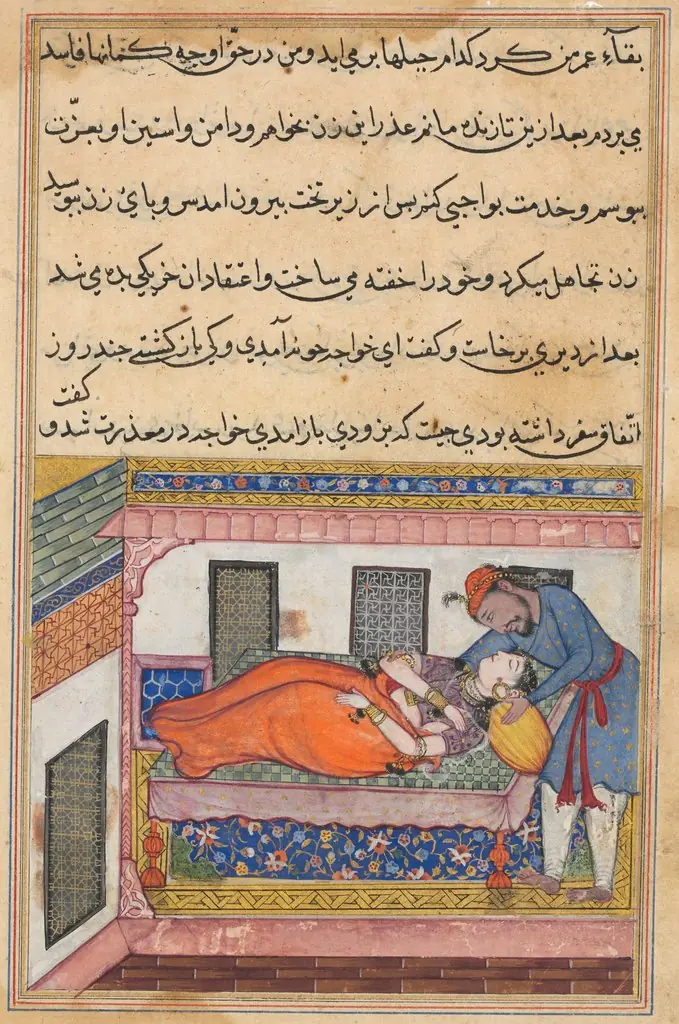 Shahr-Arai’s husband bends to kiss his wife who feigns sleep, from a Tuti-nama (Tales of a Parrot): Fortieth Night
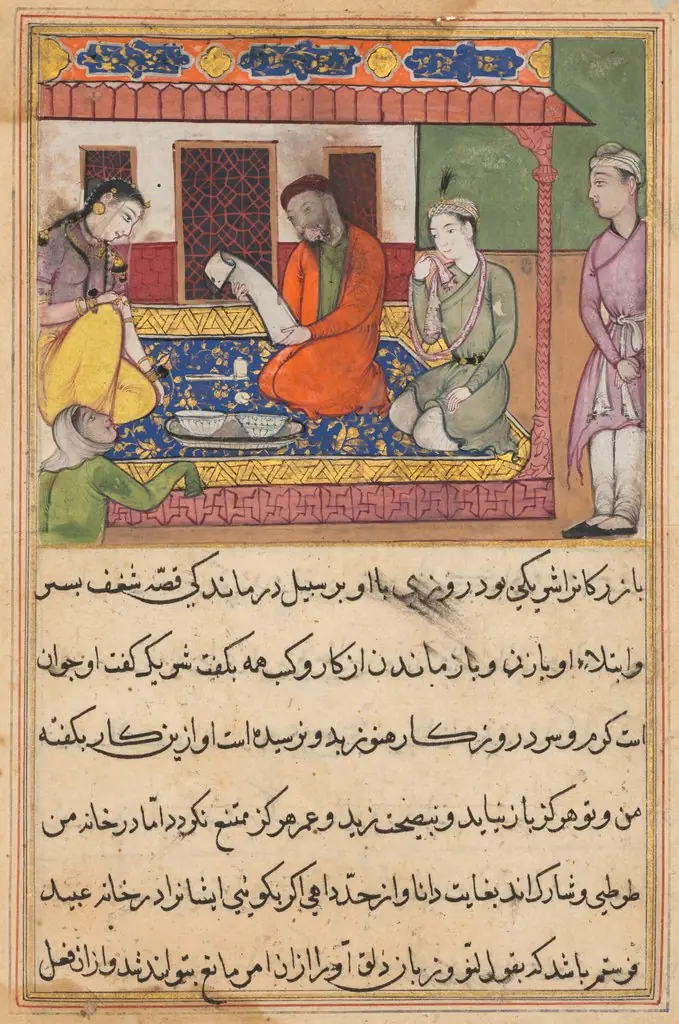 The marriage of ‘Ubaid, son of a merchant of Tirmiz, from a Tuti-nama (Tales of a Parrot): Forty-second Night
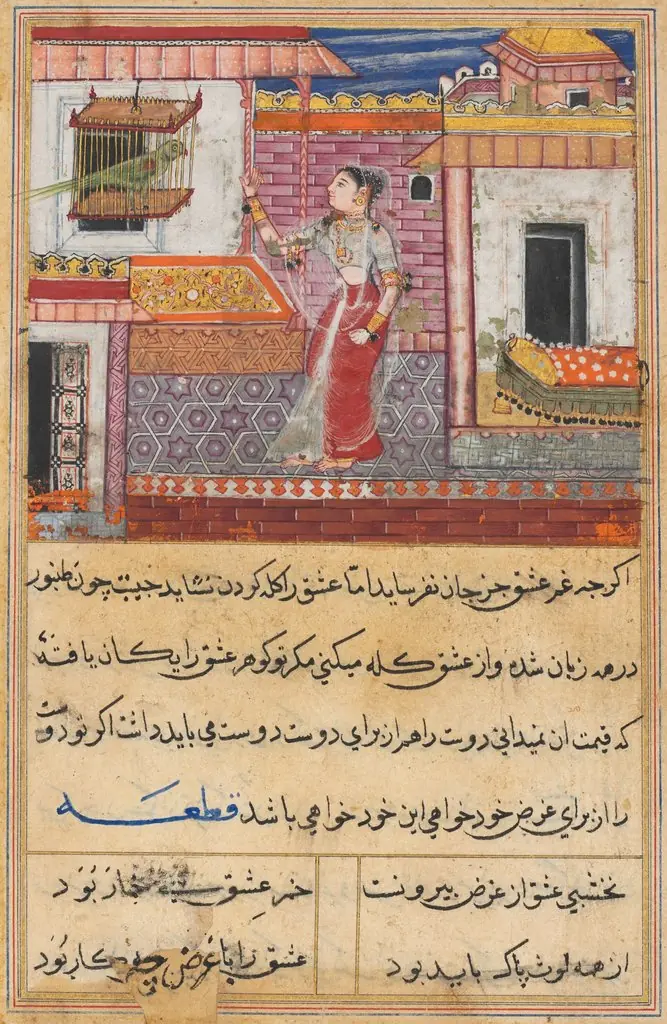 The Parrot Addresses Khujasta at the Beginning of the Thirteenth Night, from a Tuti-nama (Tales of a Parrot)
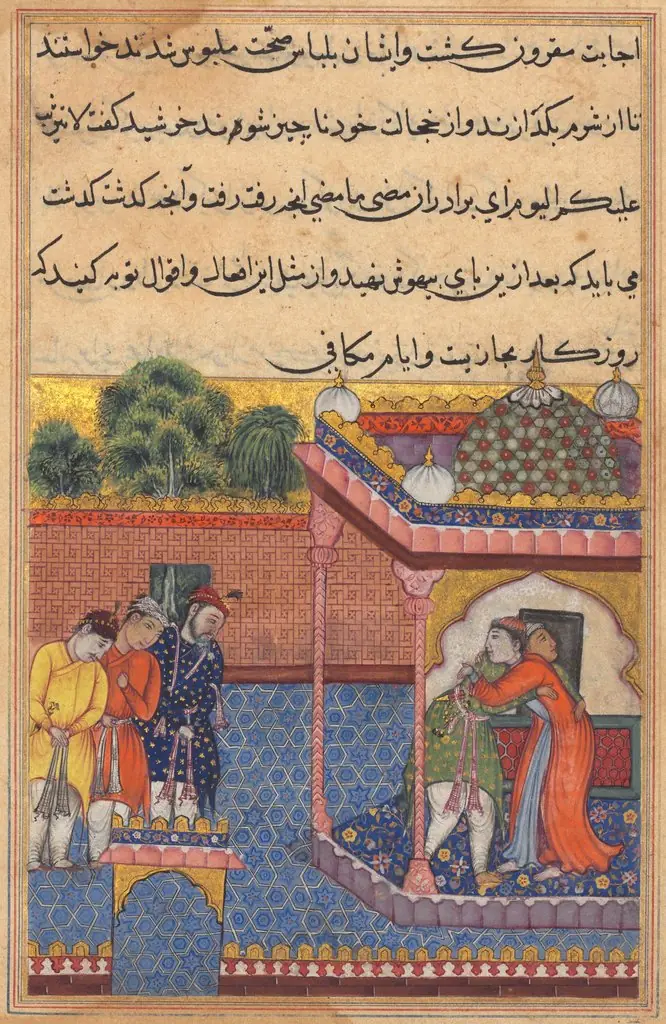 Khurshid reunited with her husband Utarid, from a Tuti-nama (Tales of a Parrot): Thirty-second Night
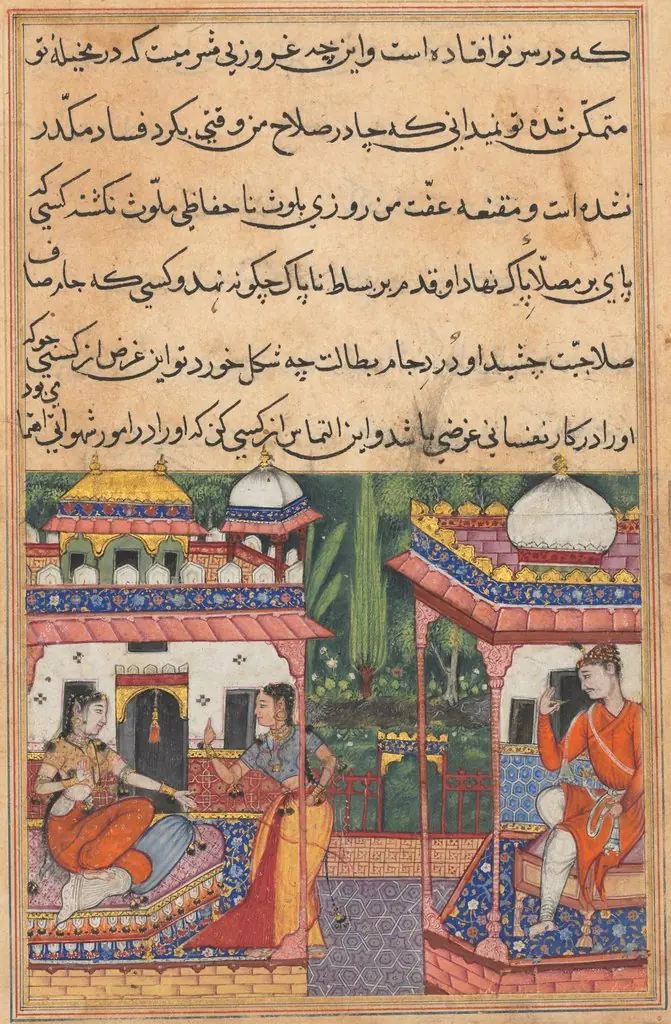 Kaiwan sends a message of love to Khurshid, wife of his brother Utarid who is away on a journey, from a Tuti-nama (Tales of a Parrot): Thirty-second Night
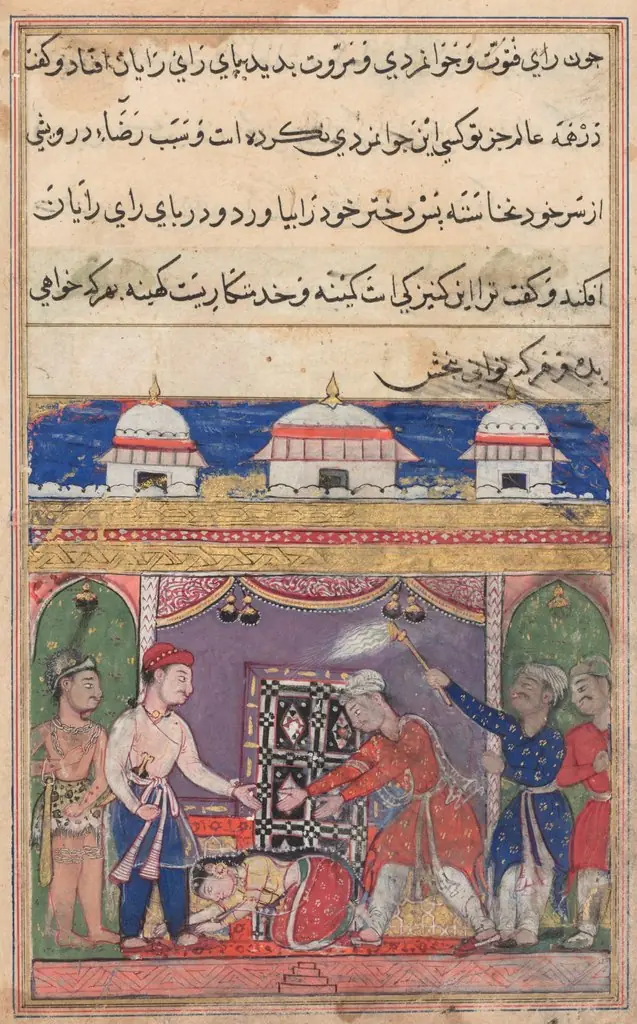 The king of Bahilistan offers his daughter to the King of Kings, from a Tuti-nama (Tales of a Parrot): Seventh Night
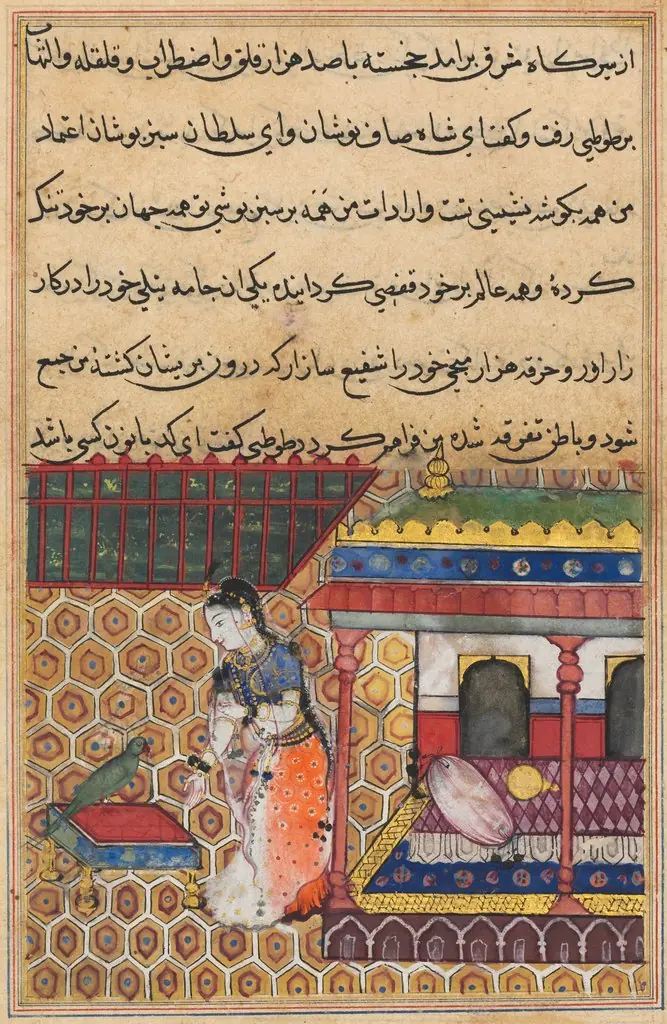 The parrot addresses Khujasta at the beginning of the thirty-eighth night, from a Tuti-nama (Tales of a Parrot)
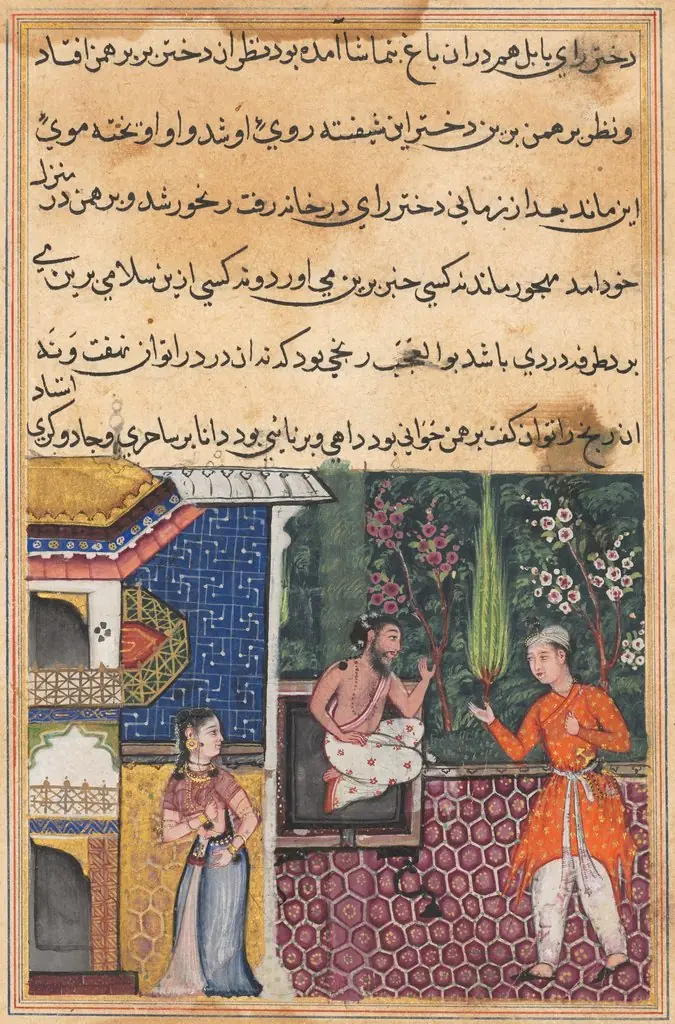 The Brahman gives an account of his falling in love with the king of Babylon’s daughter to his friend, the magician, from a Tuti-nama (Tales of a Parrot): Thirty-fifth Night
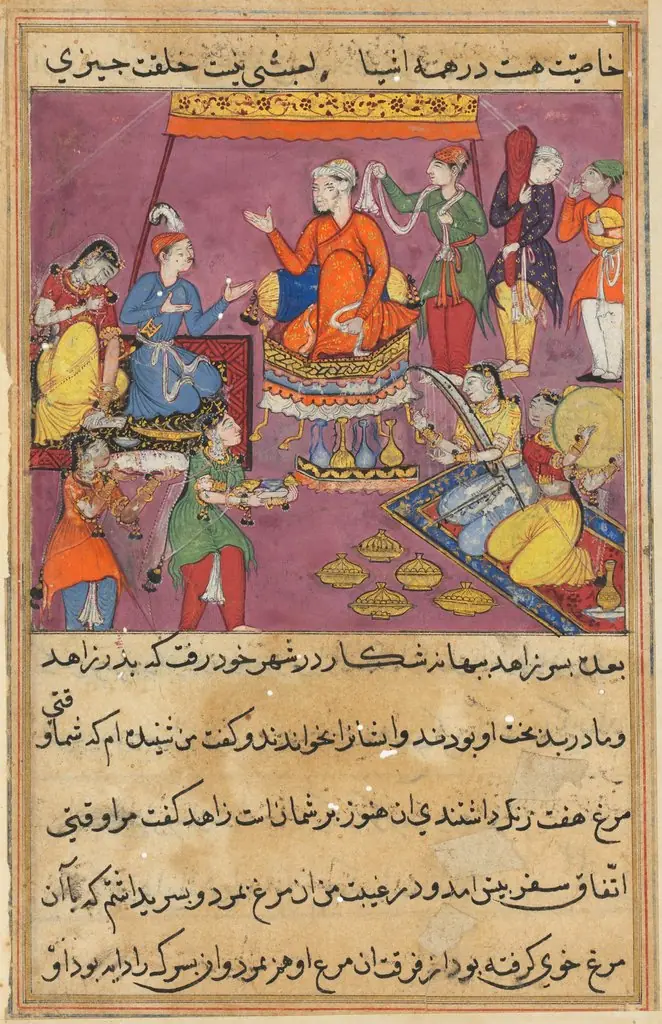 The king gives his daughter in marriage to the pious man’s son, from a Tuti-nama (Tales of a Parrot): Fifty-second Night
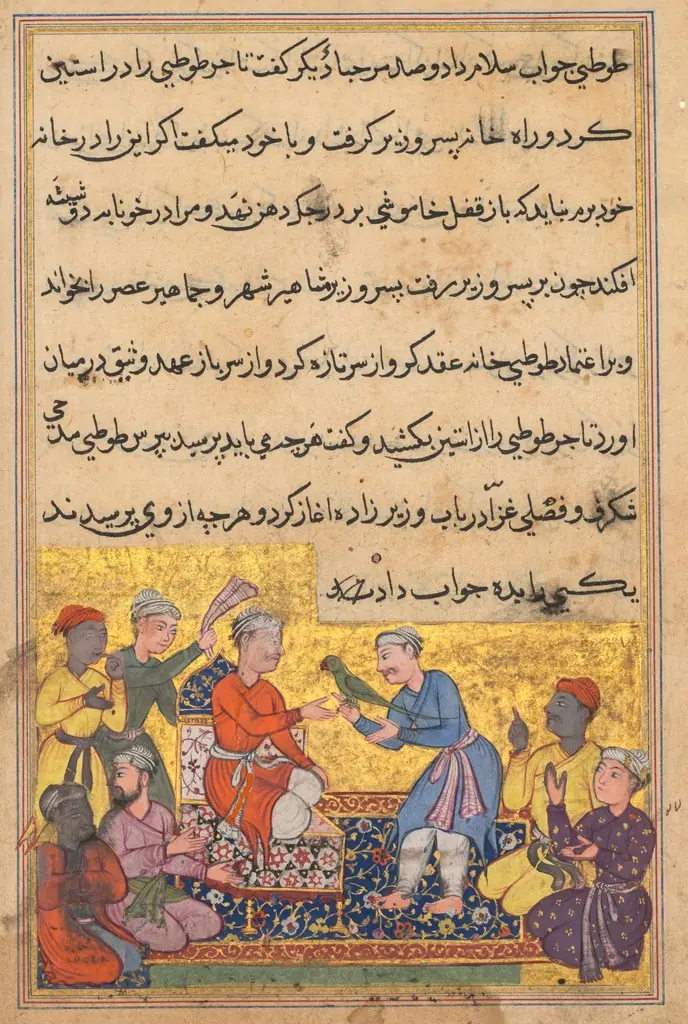 The magic parrot of the merchant talks to the vizier’s son, from a Tuti-nama (Tales of a Parrot): Tenth Night
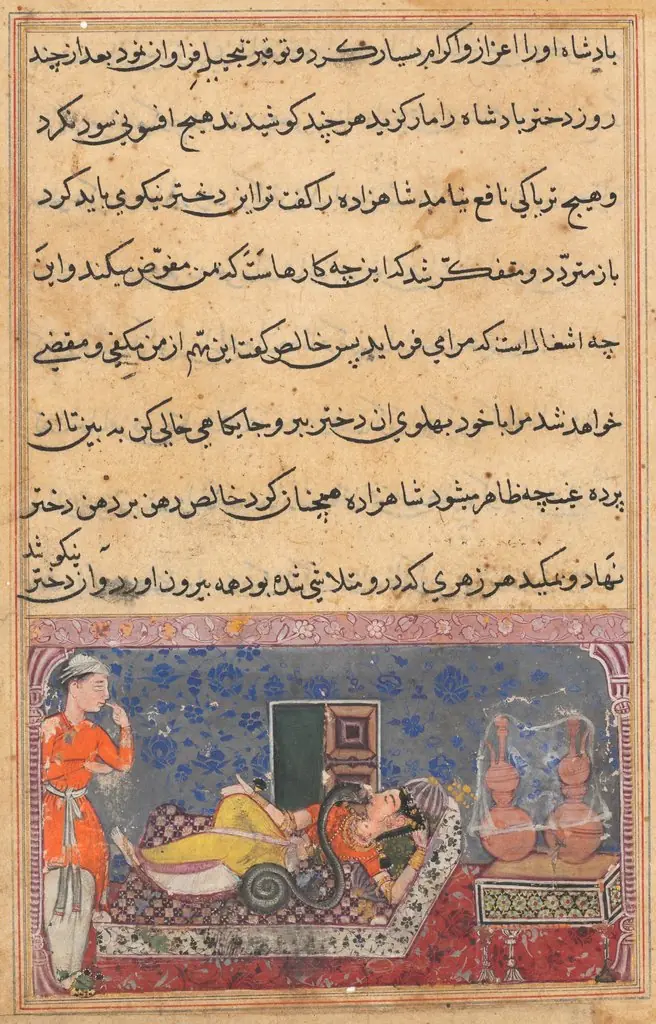 Khalis repays the prince for his kindness by changing into a snake and sucking the poison from the king’s daughter, from a Tuti-nama (Tales of a Parrot): Eighteenth Night
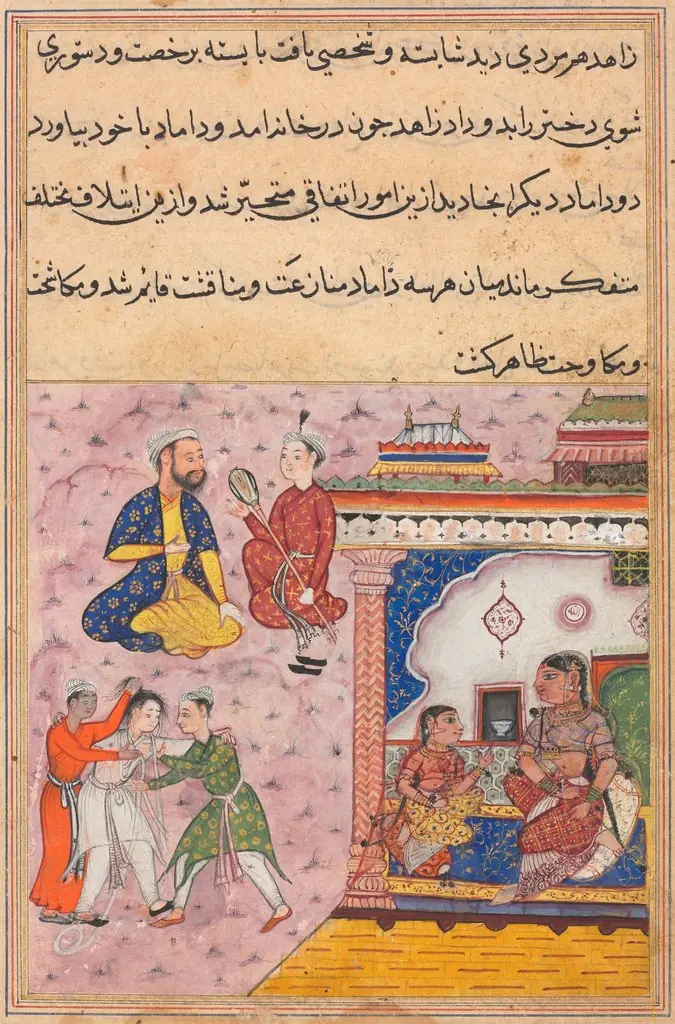 Three suitors fight amongst themselves for the hand of the devotee’s daughter, from a Tuti-nama (Tales of a Parrot): Twentieth Night
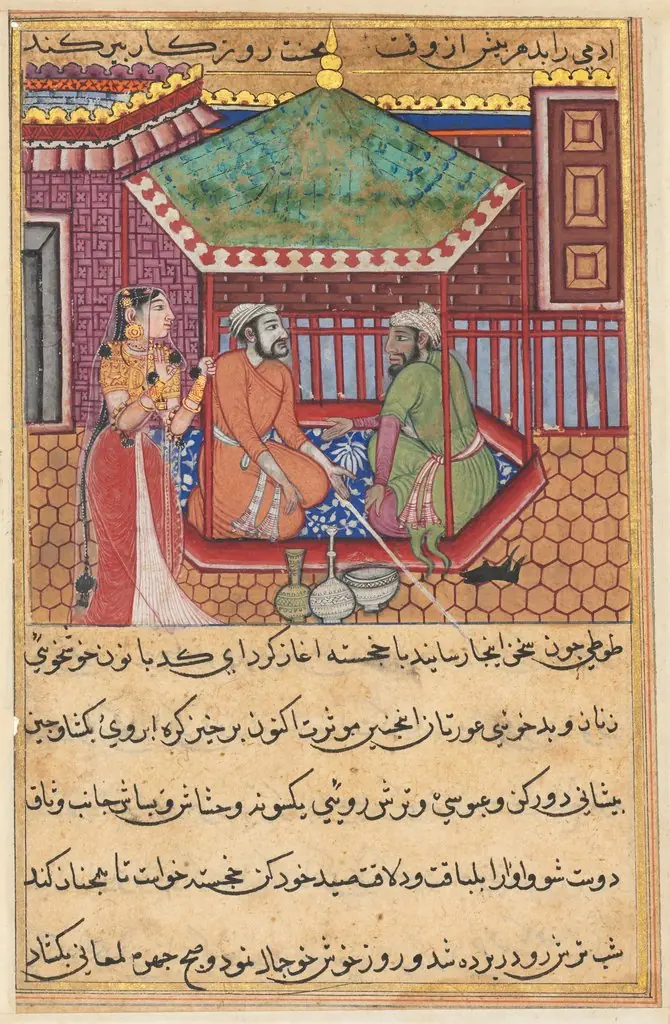 The eldest brother explains the reason for his youthful appearance, from a Tuti-nama (Tales of a Parrot): Forty-ninth Night
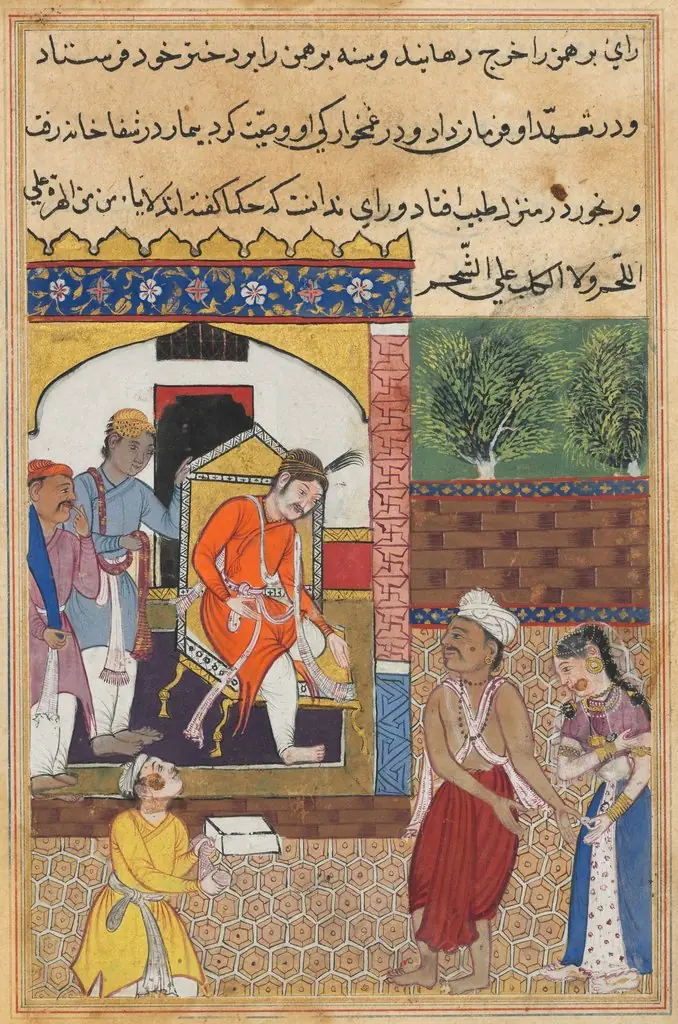 The magician, disguised as a Brahman, visits the king of Babylon, from a Tuti-nama (Tales of a Parrot): Thirty-fifth Night
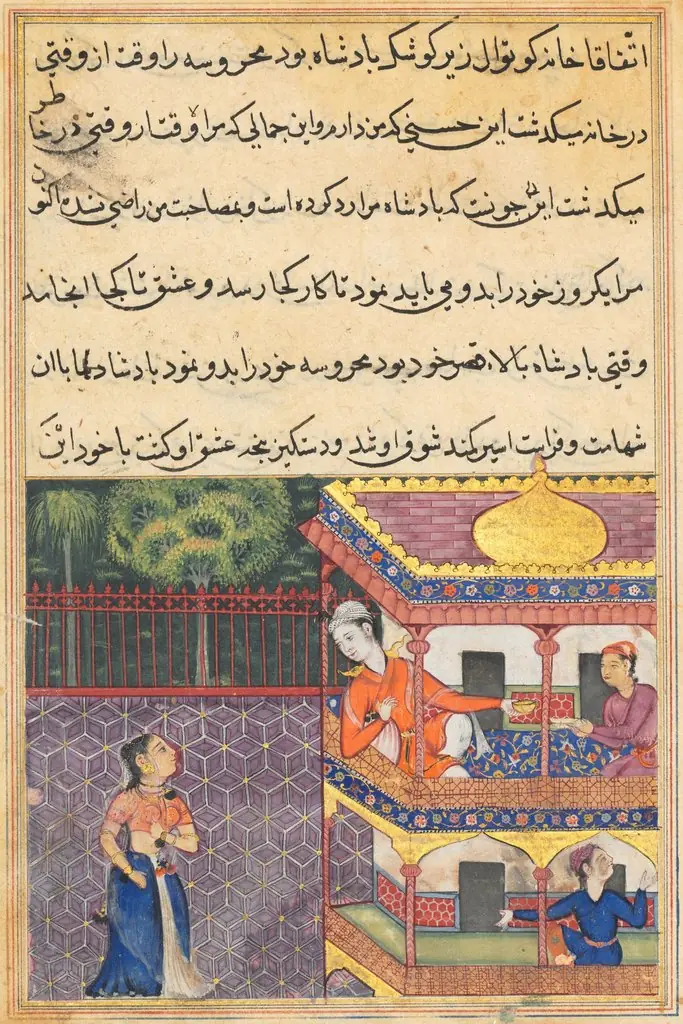 The king of Zabul sees Mahrusa from his palace balcony, from a Tuti-nama (Tales of a Parrot): Thirty-sixth Night
 Repenting his conduct, ‘Ubaid falls at the feet of his parents, from a Tuti-nama (Tales of a Parrot): Forty-second Night