Artwork
The daughter-in-law returns from her misadventure, feigning insanity, from a Tuti-nama (Tales of a Parrot): Sixteenth Night
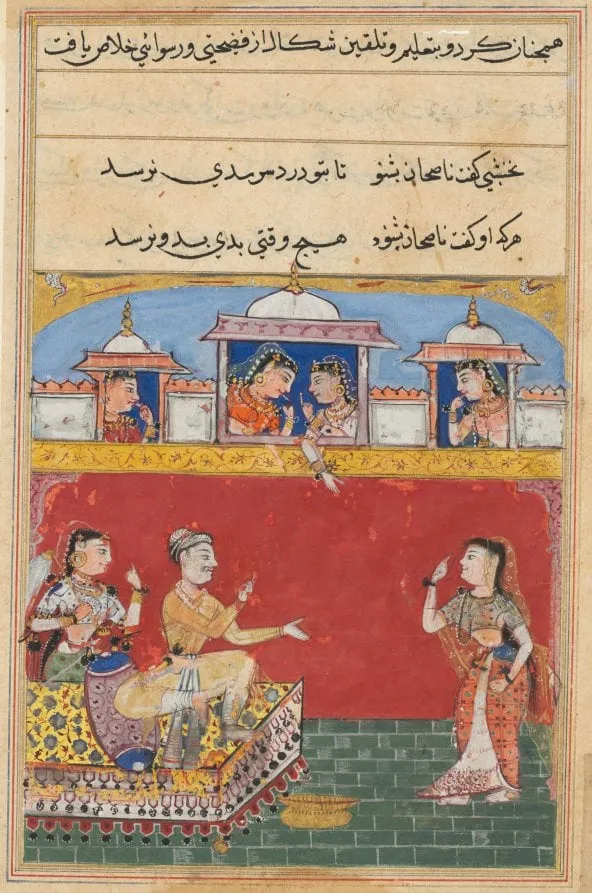
The daughter-in-law returns from her misadventure, feigning insanity, from a Tuti-nama (Tales of a Parrot): Sixteenth Night is an unspecified painting by the Mughal Painting artist Unknown. It dates from 1560 and is held in the collection of the Cleveland Museum of Art.
About this work
The artist shows her acting crazy, but the real drama is in the faces of the people watching.
A woman with wild hair and torn clothes kneels before a king. She’s barefoot, no jewelry, pretending to be mad. The king sits on a carpet, watching. Above them, women peek from a balcony, shocked.
This painting tells a story from a 16th-century Indian book called the *Tuti-nama*. The woman is lying—she ran off with a lover and now has to hide it. The artist shows her acting crazy, but the real drama is in the faces of the people watching.
To see more paintings like this, look up Mughal India, court of Akbar (reigned 1556–1605).
Overview
This painting illustrates a scene from the sixteenth-century Persianate text known as the Tuti-nama, a collection of moral fables framed by a parrot’s stories. Created during the reign of Emperor Akbar, it depicts a royal daughter-in-law’s return to her husband’s court after an unauthorized absence. Her disheveled appearance and barefoot state are part of a calculated performance to conceal her true actions, setting the stage for a quiet drama of deception and observation.
Subject & Meaning
The woman, having fled with a lover, feigns madness to avoid punishment. Her unkempt hair, torn garments, and absence of adornment serve as visible signs of her claimed mental state. The king, seated calmly with an attendant, observes her without immediate reaction, suggesting suspicion or restraint. Above, women peer from a balcony, their expressions revealing shock and curiosity, underscoring the tension between public performance and private truth.
Technique & Style
Executed in the Mughal court painting tradition, the work employs fine brushwork, delicate color gradations, and precise detailing of textiles and architecture. The composition is divided horizontally: the lower plane holds the central interaction, while the upper gallery introduces a secondary layer of witnesses. Spatial depth is suggested through architectural framing, and emotional nuance is conveyed through subtle facial expressions rather than exaggerated gestures.
History & Provenance
The painting originates from a manuscript commissioned under Emperor Akbar’s patronage, likely produced in the imperial atelier between 1560 and 1580. Such illustrated Tuti-nama manuscripts were created to entertain and instruct the court, blending Persian literary traditions with Indian artistic sensibilities. This particular folio was part of a larger series, now dispersed across global collections, reflecting the mobility of Mughal artistic projects during the late sixteenth century.
Context
The Tuti-nama was adapted from earlier Arabic and Persian sources and reimagined for Akbar’s court as a vehicle for ethical storytelling. These tales often explored themes of loyalty, deception, and social order—subjects relevant to courtly life. The depiction of a noblewoman’s transgression and its concealment reflects contemporary anxieties about gender, status, and the performance of propriety within the royal household.
Legacy
This painting exemplifies the Mughal court’s investment in narrative illustration as a tool for moral and political reflection. Its nuanced portrayal of psychological subtlety influenced later Indian miniature traditions. Though the Tuti-nama manuscripts are less widely known than other Mughal works, they remain vital for understanding how storytelling, visual culture, and imperial ideology converged in sixteenth-century India.
Artist & collection

 Domestic Scene
 Giacomo and Cardinal Marco, investing Andrea, Abbot of San Zeno, with his Benefice
 The Nymph of Fontainebleau
 Portrait of a Woman
 Madonna and Child with Saints in the Enclosed Garden
 Venus and Minerva
 Family Group of Four on Sofa
 Wall painting from Room H of the Villa of P. Fannius Synistor at Boscoreale
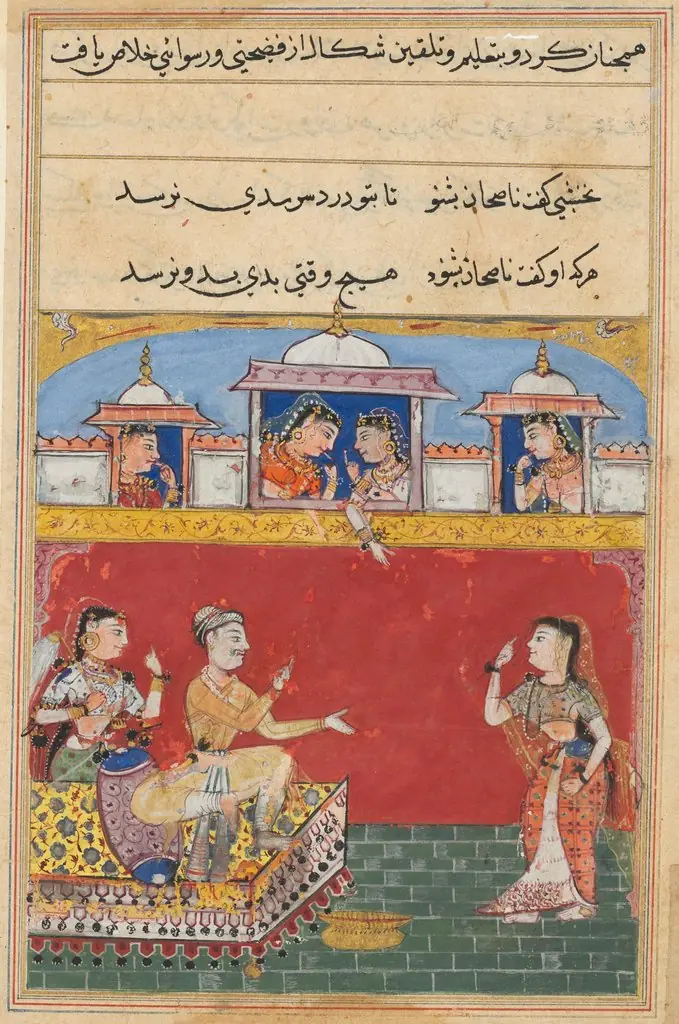 The daughter-in-law returns from her misadventure, feigning insanity, from a Tuti-nama (Tales of a Parrot): Sixteenth Night
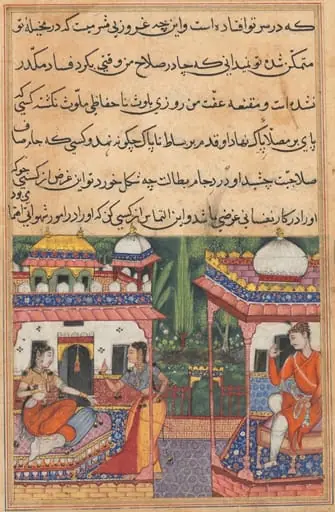 Kaiwan sends a message of love to Khurshid, wife of his brother Utarid who is away on a journey, from a Tuti-nama (Tales of a Parrot): Thirty-second Night
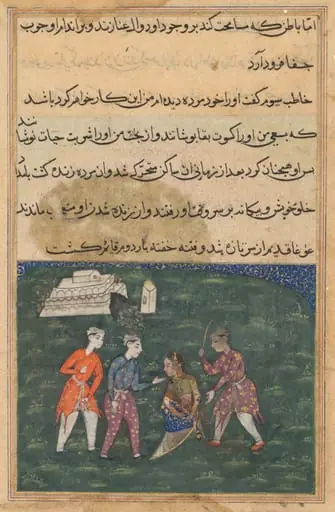 The third suitor strikes the devotee’s daughter and thus restores her to life, from a Tuti-nama (Tales of a Parrot): Twentieth Night
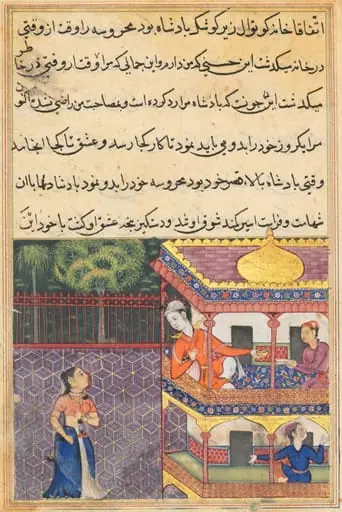 The king of Zabul sees Mahrusa from his palace balcony, from a Tuti-nama (Tales of a Parrot): Thirty-sixth Night
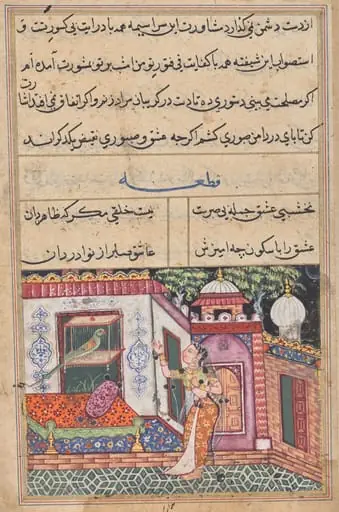 The Parrot Addresses Khujasta at the Beginning of the Eleventh Night, from a Tuti-nama (Tales of a Parrot)
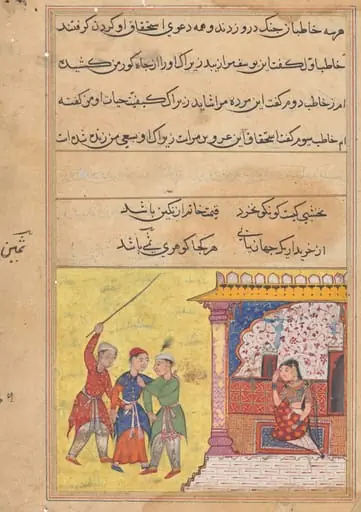 The three suitors again begin to quarrel among themselves for the hand of the devotee’s daughter, from a Tuti-nama (Tales of a Parrot): Twentieth Night
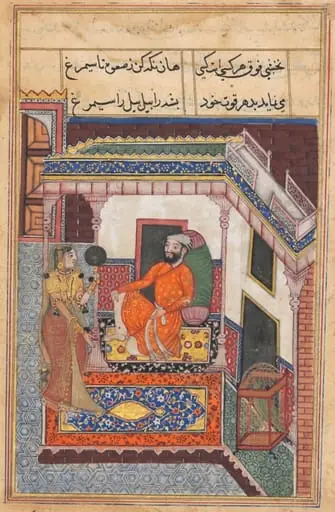 The parrot laughs on hearing the Raja of Ujjain’s wife admire her beauty in a mirror, from a Tuti-nama (Tales of a Parrot: Forty-sixth Night
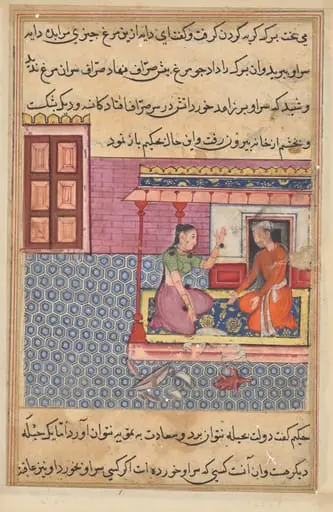 The pious man’s wife offers the seven-colored bird as food to her lover, but not finding its head, he breaks the pot and bowl in anger, from a Tuti-nama (Tales of a Parrot): Fifty-second Night
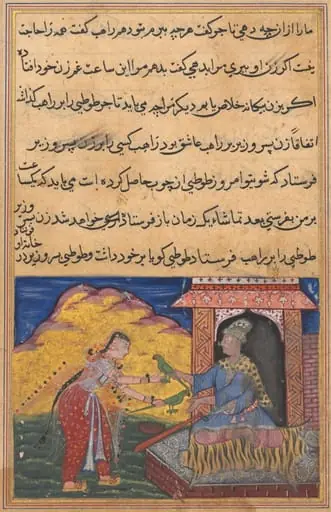 The wife of the son of the vizier brings the magic wooden parrot to her lover, the monk, who exchanges it for the replica, from a Tuti-nama (Tales of a Parrot): Tenth Night
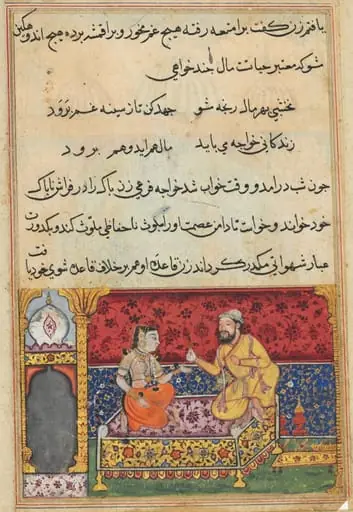 The young man changes himself to look like Mansur, and thus inveigles himself into the bed of Mansur’s wife, but is put off by her, from a Tuti-nama (Tales of a Parrot): Seventeenth Night