Artwork
The dethroned frog Shapur seeks the help of the serpent, from a Tuti-nama (Tales of a Parrot): Twenth-sixth Night
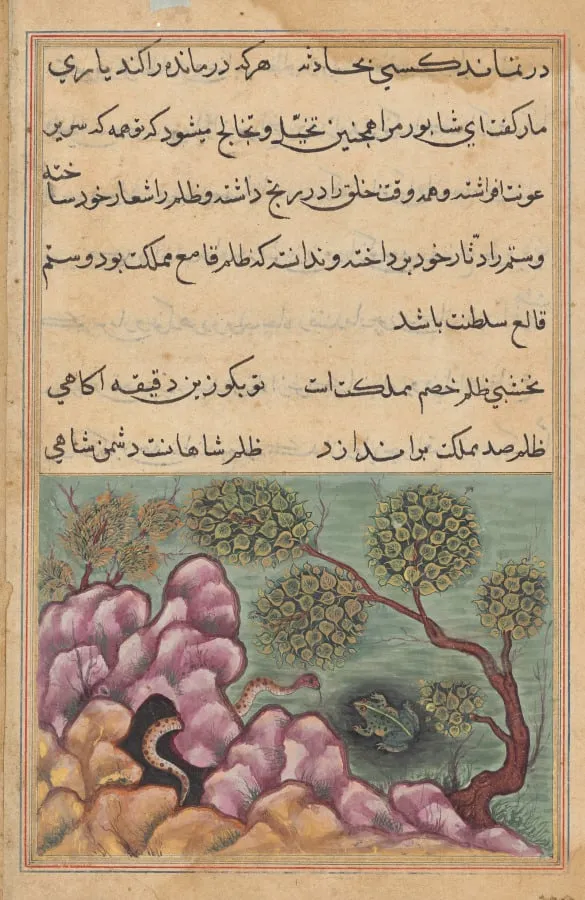
The dethroned frog Shapur seeks the help of the serpent, from a Tuti-nama (Tales of a Parrot): Twenth-sixth Night is an unspecified painting by the Mughal Painting artist Unknown. It dates from 1560 and is held in the collection of the Cleveland Museum of Art. The painting illustrates a scene from the Tuti‑nama, a collection of parrot tales compiled for the court of Emperor Akbar.
About this work
The story is set in China, but the artist painted the rocks in a way that feels more Indian—thick shadows and sharp edges.
A frog in a red robe kneels before a coiled snake inside a dark cave. The cave walls are stacked like layers of paper, and a twisted tree leans over the scene.
This painting comes from a book of parrot tales made for Emperor Akbar’s court. The story is set in China, but the artist painted the rocks in a way that feels more Indian—thick shadows and sharp edges. The frog is asking the snake for help to get his kingdom back.
To see more art from this time, look up Mughal India, court of Akbar (reigned 1556–1605).
Overview
The painting illustrates a scene from the Tuti‑nama, a collection of parrot tales compiled for the court of Emperor Akbar. In the image, a frog dressed in a red garment kneels before a coiled serpent within a dimly lit cavern, while a twisted tree arches over the figures.
Subject & Meaning
The narrative depicts the deposed frog king Shapur, who, after being overthrown for his cruelty, petitions a frog‑eating snake for assistance in regaining his throne. The interaction underscores themes of political exile, vengeance, and the uneasy alliance between former rivals.
Technique & Style
The artist renders the cave walls as layered, paper‑like strata, employing deep shadows and sharply defined edges that recall Indian miniature conventions. The serpent’s pattern resembles that of a Chinese mountain pit viper, and a pipal (Ficus religiosa) tree, native to India, leans over the frog, blending iconographic elements from both regions.
History & Provenance
Created as an illustration for a Mughal manuscript produced during Akbar’s reign (1556–1605), the work reflects the empire’s interest in Persian literary traditions and its openness to stories set in distant lands such as China. The manuscript remained within the imperial collection before entering modern museum holdings.
Context
Mughal court art of the late 16th century frequently combined Persian narrative forms with Indian visual vocabularies. This piece exemplifies that synthesis, situating a Chinese‑set tale within a landscape rendered with Indian aesthetic sensibilities, illustrating the cultural hybridity of Akbar’s atelier.
Artist & collection

 Domestic Scene
 Giacomo and Cardinal Marco, investing Andrea, Abbot of San Zeno, with his Benefice
 The Nymph of Fontainebleau
 Portrait of a Woman
 Madonna and Child with Saints in the Enclosed Garden
 Venus and Minerva
 Family Group of Four on Sofa
 Wall painting from Room H of the Villa of P. Fannius Synistor at Boscoreale
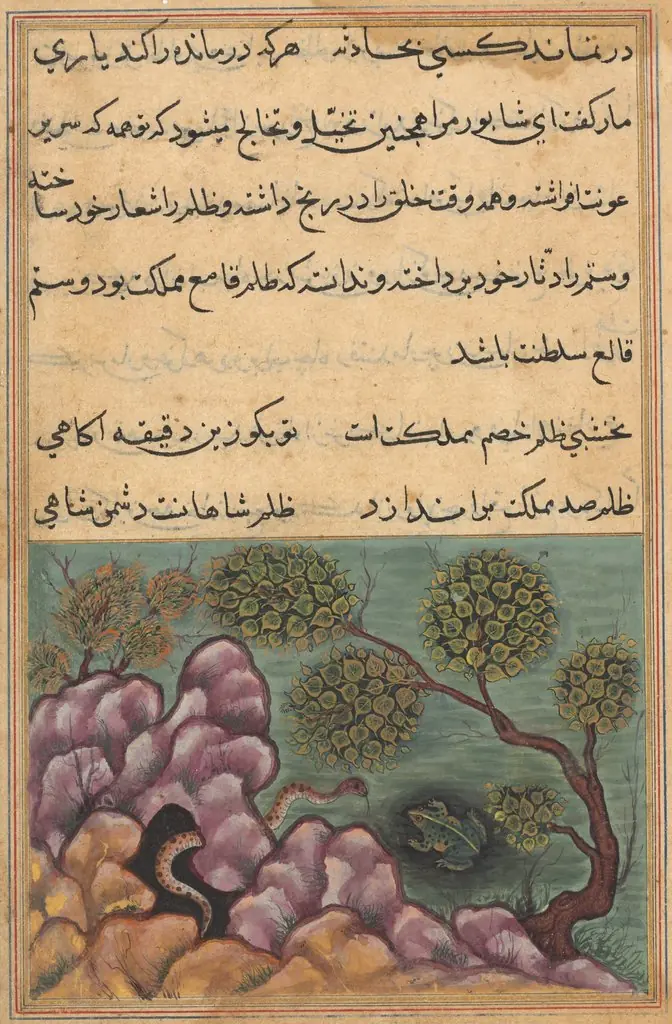 The dethroned frog Shapur seeks the help of the serpent, from a Tuti-nama (Tales of a Parrot): Twenth-sixth Night
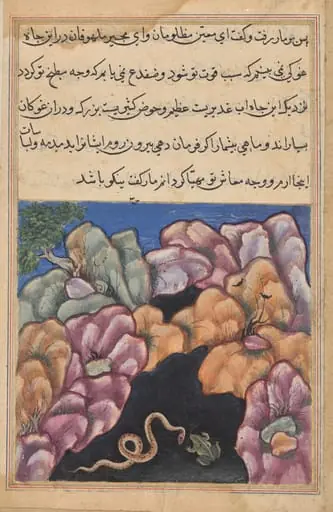 The snake enters into an argument with the frog, from a Tuti-nama (Tales of a Parrot): Twenty-sixth Night
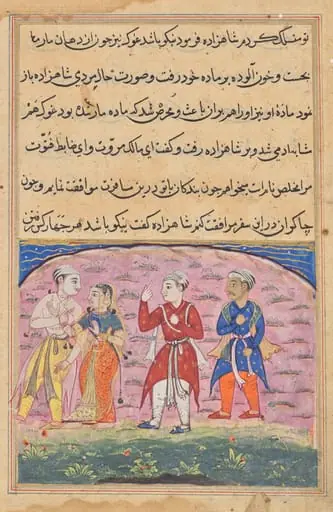 The prince and Nikfal are joined by Khalis and the Mukhlis who are the grateful snake and frog in human form, from a Tuti-nama (Tales of a Parrot): Eighteenth Night
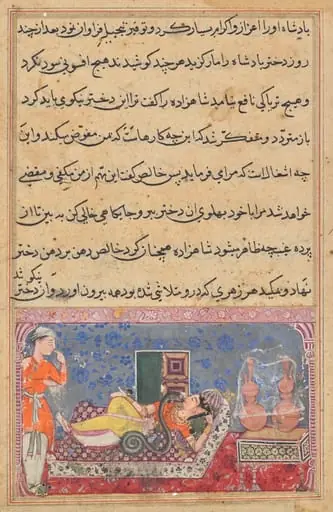 Khalis repays the prince for his kindness by changing into a snake and sucking the poison from the king’s daughter, from a Tuti-nama (Tales of a Parrot): Eighteenth Night
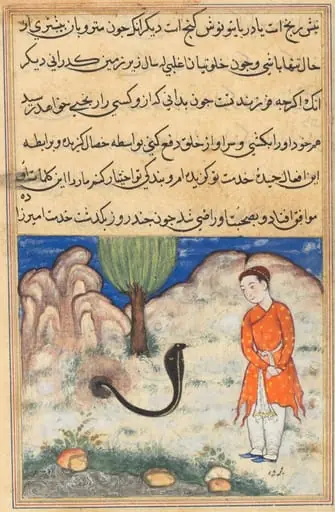 The prince, a son of the ruler of Sistan, enters the service of a snake, from a Tuti-nama (Tales of a Parrot): Thirty-seventh Night
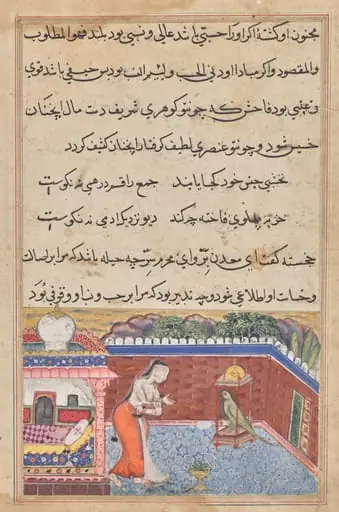 The parrot addresses Khujasta at the beginning of the thirty-first night, from a Tuti-nama (Tales of a Parrot)
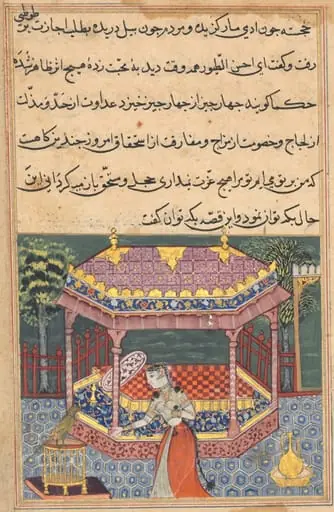 The parrot addresses Khujasta at the beginning of the thirty-seventh night, from a Tuti-nama (Tales of a Parrot)
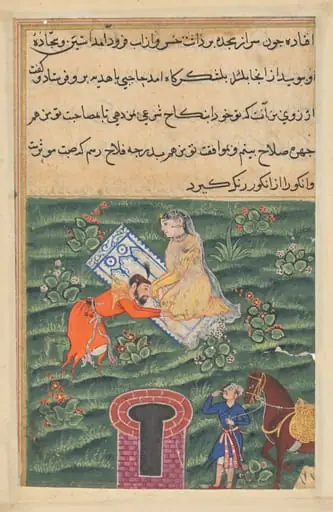 Khusrau, the King of Kings, pays homage to the pious daughter of Khassa, from a Tuti-nama (Tales of a Parrot): Fifty-first Night
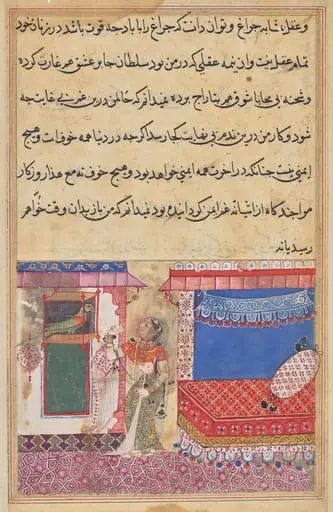 The Parrot Addresses Khujasta at the Beginning of the Eighteenth Night, from a Tuti-nama (Tales of a Parrot)
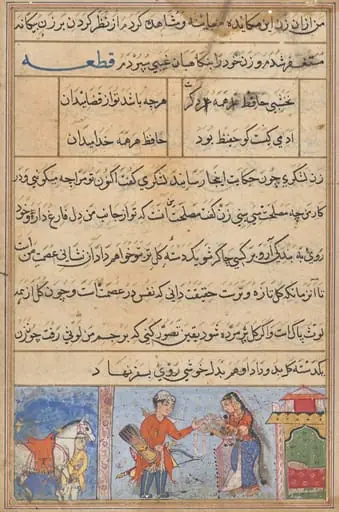 The soldier receives a garland of roses from his wife which will remain fresh as long as she is faithful, from a Tuti-nama (Tales of a Parrot): Fourth Night