Artwork
The prince, a son of the ruler of Sistan, enters the service of a snake, from a Tuti-nama (Tales of a Parrot): Thirty-seventh Night
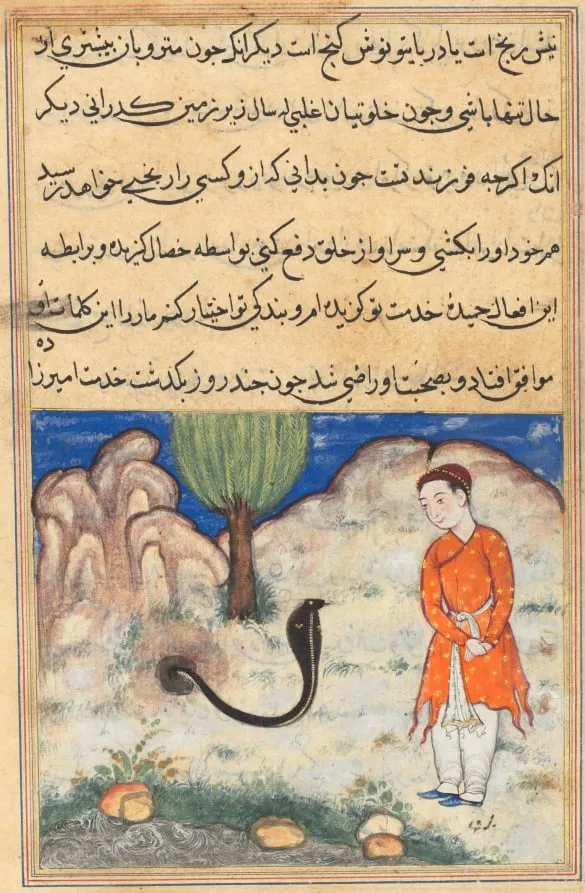
The prince, a son of the ruler of Sistan, enters the service of a snake, from a Tuti-nama (Tales of a Parrot): Thirty-seventh Night is an unspecified painting by the Mughal Painting artist Unknown. It dates from 1560 and is held in the collection of the Cleveland Museum of Art.
About this work
A prince kneels on rocky ground while a giant black snake coils up from a hole in front of him.
A prince kneels on rocky ground while a giant black snake coils up from a hole in front of him. The prince wears a simple robe; the snake’s scales glint in the light.
This scene comes from a book of parrot tales made for Emperor Akbar’s court. The prince had promised to serve the first creature he met—even if it was a snake. The snake tests him, but the prince keeps his word and is later rewarded.
To see more stories from this book, look up court of akbar (reigned 1556–1605).
Overview
This painting illustrates a scene from the Tuti-nama, a collection of moral tales translated into Persian and illustrated for the Mughal court of Emperor Akbar. It depicts the moment a destitute prince, having vowed to serve the first living being he encounters, meets a giant black snake emerging from a crevice in the desert. The narrative unfolds within a broader tradition of didactic storytelling, where loyalty and humility are tested through encounters with the unexpected.
Subject & Meaning
The prince, stripped of status and wandering in exile, fulfills a solemn promise to serve whatever creature he meets next. The snake, initially doubtful of the prince’s sincerity, becomes both master and tester. Their bond symbolizes the triumph of integrity over circumstance, suggesting that true virtue lies in keeping one’s word, even when it leads to servitude. The tale frames humility as a path to eventual redemption.
Technique & Style
Rendered in fine brushwork typical of Mughal miniature painting, the scene balances naturalism with symbolic detail. The snake’s scaled body catches light with metallic highlights, contrasting with the prince’s plain robe and the stark, rocky terrain. The composition directs focus to the moment of encounter: the prince kneels in submission, the serpent rises with deliberate grace, and the surrounding emptiness emphasizes the isolation and gravity of the vow.
History & Provenance
Created between 1560 and 1580 under Akbar’s patronage, this illustration belongs to a manuscript commissioned to translate and adapt Sanskrit fables into Persian. The Tuti-nama was among the first major illustrated projects of the Mughal atelier, involving artists from diverse regional traditions. The painting’s survival reflects the imperial interest in storytelling as both entertainment and moral instruction.
Context
Akbar’s court fostered a vibrant culture of illustrated manuscripts that blended Persian, Indian, and Central Asian influences. The Tuti-nama’s tales, rooted in earlier Indian collections, were reimagined to resonate with Mughal audiences. This scene reflects a broader interest in themes of fate, duty, and transformation—values aligned with Akbar’s own efforts to synthesize religious and cultural traditions across his empire.
Legacy
The Tuti-nama set a precedent for later Mughal illustrated manuscripts, influencing narrative structure and visual storytelling in court art. Its emphasis on ethical trials through allegory contributed to the development of a distinctive Indo-Persian literary-visual tradition. Though the original manuscript is now dispersed, surviving folios like this one remain key to understanding early Mughal artistic patronage and its philosophical underpinnings.
Artist & collection

 Domestic Scene
 Giacomo and Cardinal Marco, investing Andrea, Abbot of San Zeno, with his Benefice
 The Nymph of Fontainebleau
 Portrait of a Woman
 Madonna and Child with Saints in the Enclosed Garden
 Venus and Minerva
 Family Group of Four on Sofa
 Wall painting from Room H of the Villa of P. Fannius Synistor at Boscoreale
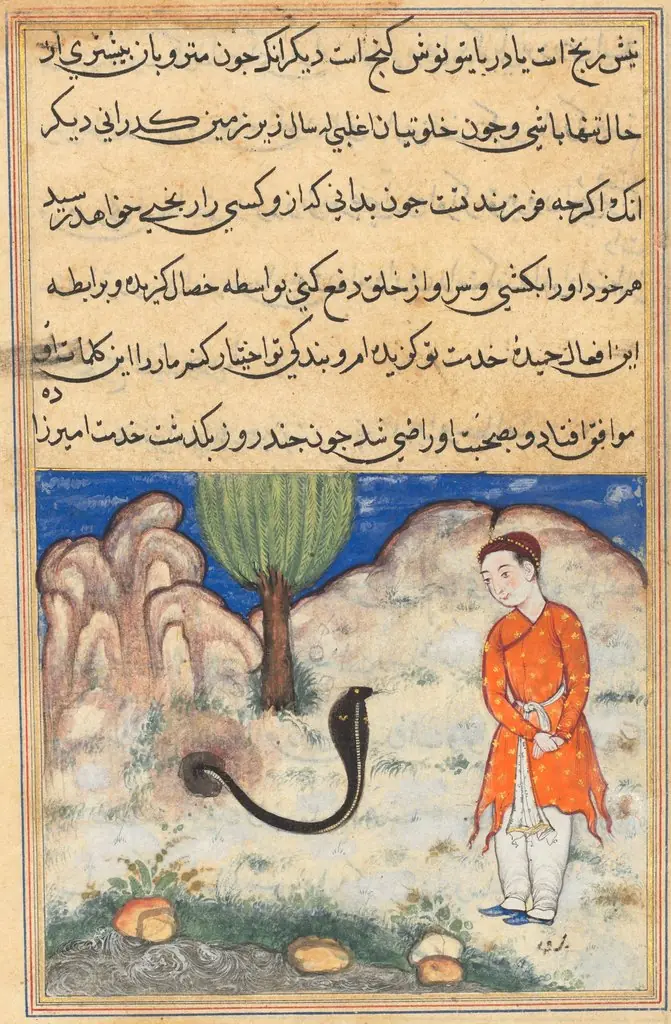 The prince, a son of the ruler of Sistan, enters the service of a snake, from a Tuti-nama (Tales of a Parrot): Thirty-seventh Night
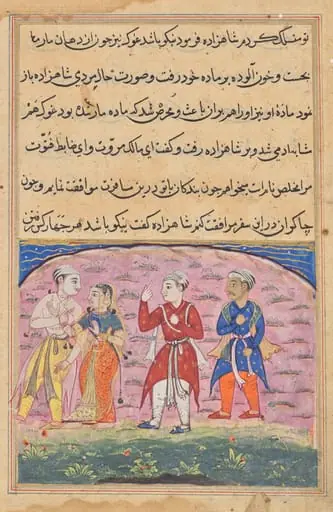 The prince and Nikfal are joined by Khalis and the Mukhlis who are the grateful snake and frog in human form, from a Tuti-nama (Tales of a Parrot): Eighteenth Night
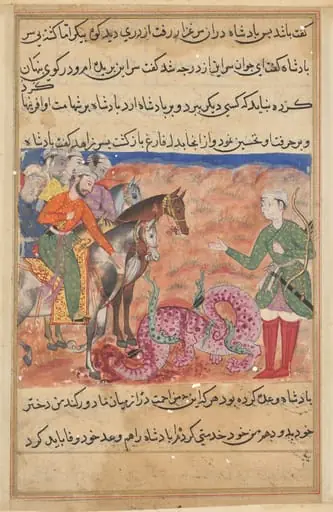 The pious man’s son presents the slain dragon to the king, from a Tuti-nama (Tales of a Parrot): Fifty-second Night
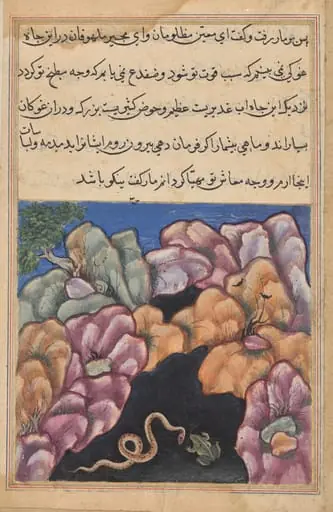 The snake enters into an argument with the frog, from a Tuti-nama (Tales of a Parrot): Twenty-sixth Night
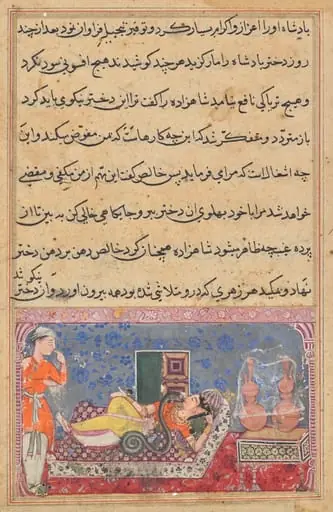 Khalis repays the prince for his kindness by changing into a snake and sucking the poison from the king’s daughter, from a Tuti-nama (Tales of a Parrot): Eighteenth Night
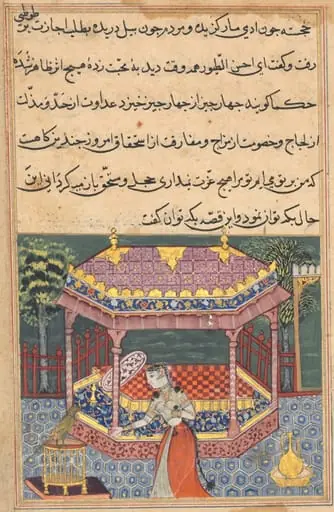 The parrot addresses Khujasta at the beginning of the thirty-seventh night, from a Tuti-nama (Tales of a Parrot)
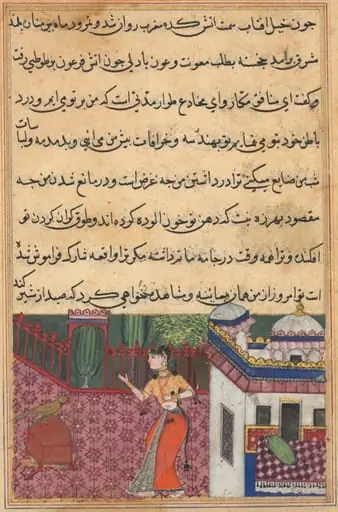 The parrot addresses Khujasta at the beginning of the thirty-third night, from a Tuti-nama (Tales of a Parrot)
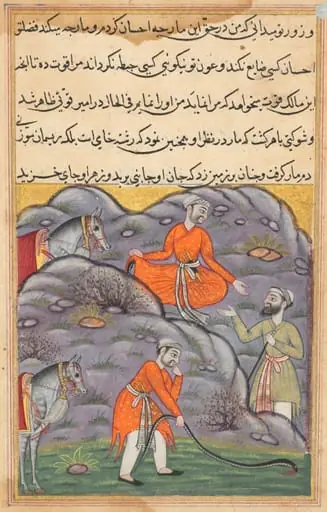 The emir slays the snake after giving it shelter, from a Tuti-nama (Tales of a Parrot): Forty-fifth Night
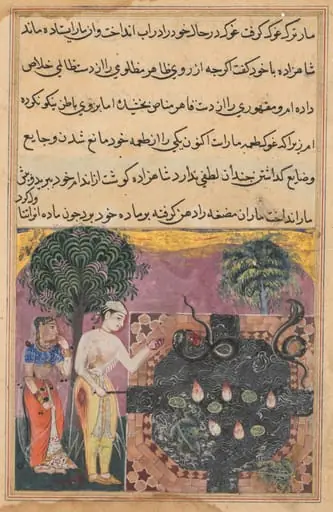 The prince, having deprived the snake of its natural food, a frog, feeds it with a piece of his own flesh, from a Tuti-nama (Tales of a Parrot): Eighteenth Night
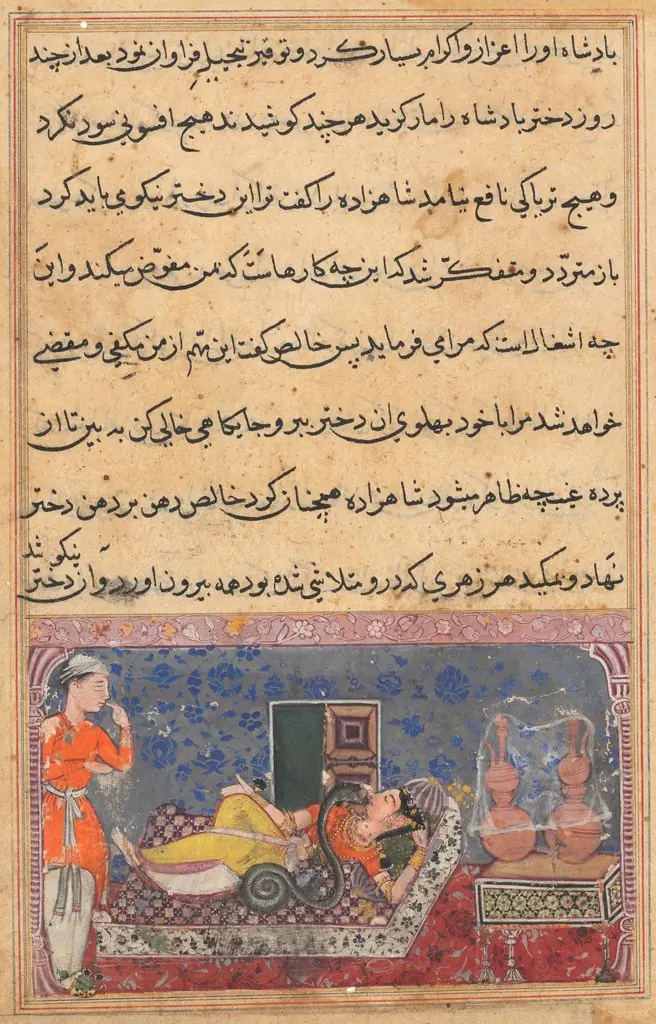 Khalis repays the prince for his kindness by changing into a snake and sucking the poison from the king’s daughter, from a Tuti-nama (Tales of a Parrot): Eighteenth Night
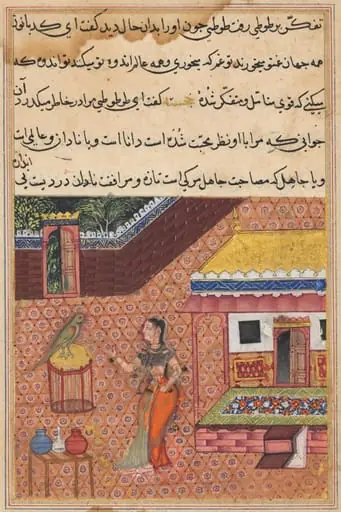 The parrot addresses Khujasta at the beginning of the thirty-fourth night, from a Tuti-nama (Tales of a Parrot)
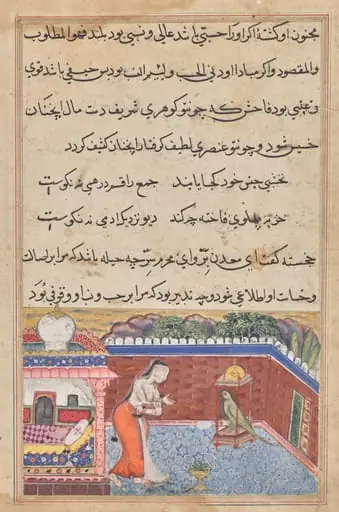 The parrot addresses Khujasta at the beginning of the thirty-first night, from a Tuti-nama (Tales of a Parrot)