Artwork
The Parrot Addresses Khujasta at the Beginning of the Twenty-ninth Night, from a Tuti-nama (Tales of a Parrot)
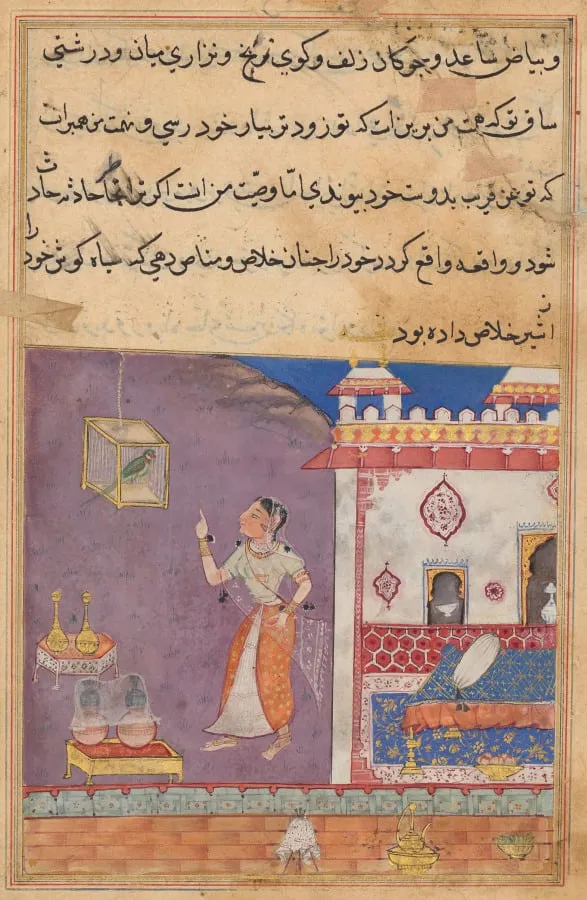
The Parrot Addresses Khujasta at the Beginning of the Twenty-ninth Night, from a Tuti-nama (Tales of a Parrot) is an unspecified painting by the Mughal Painting artist Unknown. It dates from 1560 and is held in the collection of the Cleveland Museum of Art.
About this work
The tiny details, like the gold embroidery on her robe, show how carefully these illustrations were made for royal eyes.
You see a woman in a rich red robe sitting on the floor, listening to a bright green parrot perched on a stand. The bird leans forward, beak open, as if mid-sentence. Behind them, a servant holds a lantern, casting soft light on the scene.
This painting comes from a book of stories told by a parrot to delay a woman’s secret meeting. The bird’s tale works—she stays put. The tiny details, like the gold embroidery on her robe, show how carefully these illustrations were made for royal eyes.
To see more like this, look up *Mughal India, court of Akbar (reigned 1556–1605)*.
Overview
The miniature illustrates a woman named Khujasta seated on a floor cushion, clothed in a richly dyed red garment with gold‑threaded embroidery. A vivid green parrot perches on a low stand before her, beak open as if speaking. A servant stands to the side, holding a lantern that bathes the figures in a gentle glow, emphasizing the intimate interior setting.
Subject & Meaning
In the narrative, Khujasta seeks counsel from the loquacious parrot Tuti before departing to meet her lover. The bird recounts a fable about a lynx outwitting a lion, using the story to occupy her attention. By the time the tale concludes, the intended rendezvous has passed, suggesting the parrot’s role as a deliberate delay tactic within the tale.
Technique & Style
Executed in the Mughal miniature tradition, the work combines fine ink outlines with delicate washes of mineral and vegetable pigments. The contrast between the deep vermilion of the robe and the bright emerald of the bird demonstrates a sophisticated use of color to draw focus. Gold leaf applied to the embroidery highlights the garment’s opulence, while the soft illumination from the lantern reflects the refined rendering of light.
Context
The image originates from a Tuti‑nama, a collection of stories narrated by a parrot to postpone a secret meeting. Such manuscripts were produced for the royal court of Akbar (1556–1605), where elaborate illustrations served both decorative and didactic purposes. The attention to detail and luxurious materials indicate the work was intended for an elite audience familiar with courtly literature and visual culture.
Artist & collection

 Domestic Scene
 Giacomo and Cardinal Marco, investing Andrea, Abbot of San Zeno, with his Benefice
 The Nymph of Fontainebleau
 Portrait of a Woman
 Madonna and Child with Saints in the Enclosed Garden
 Venus and Minerva
 Family Group of Four on Sofa
 Wall painting from Room H of the Villa of P. Fannius Synistor at Boscoreale
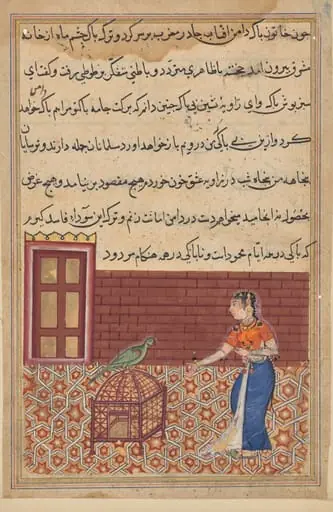 The parrot addresses Khujasta at the beginning of the fifty-first night, from a Tuti-nama (Tales of a Parrot): Fifty-first Night
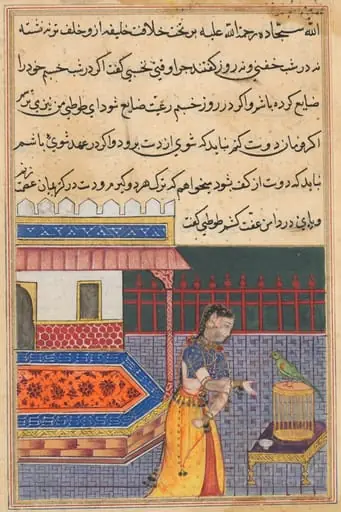 The parrot addresses Khujasta at the beginning of the forty-first night, from a Tuti-nama (Tales of a Parrot): Forty-first Night
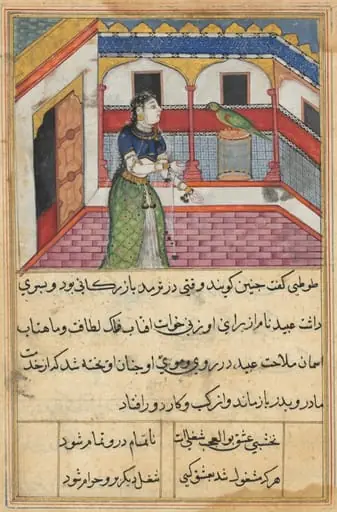 The parrot addresses Khujasta at the beginning of the forty-second night, from a Tuti-nama (Tales of a Parrot)
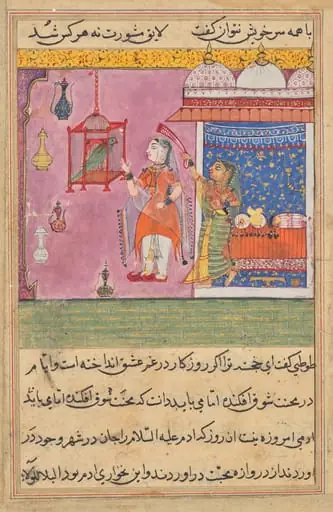 The Parrot Addresses Khujasta at the Beginning of the Nineteenth Night, from a Tuti-nama (Tales of a Parrot)
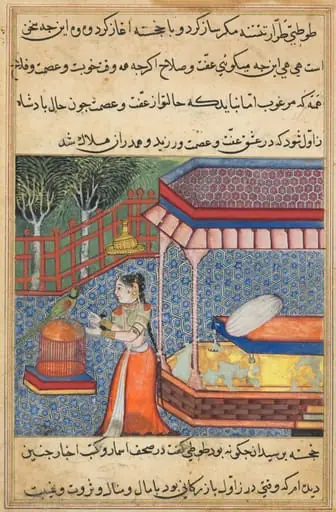 The parrot addresses Khujasta at the beginning of the thirty-sixth night, from a Tuti-nama (Tales of a Parrot)
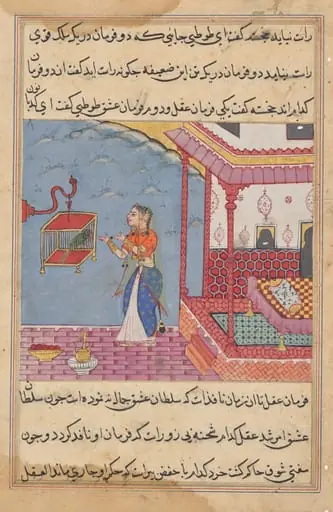 The Parrot Addresses Khujasta at the Beginning of the Twenty-Fourth Night, from a Tuti-nama (Tales of a Parrot)
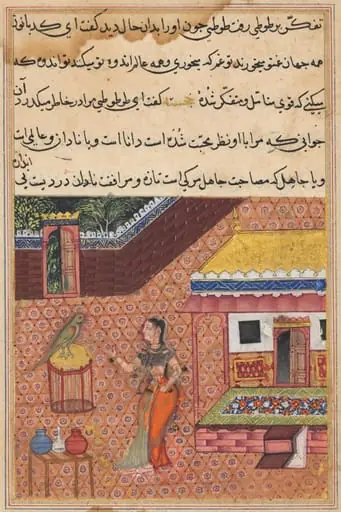 The parrot addresses Khujasta at the beginning of the thirty-fourth night, from a Tuti-nama (Tales of a Parrot)
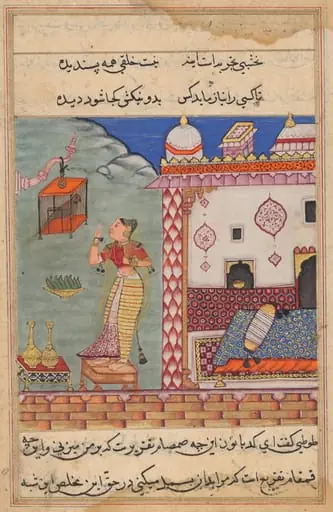 The Parrot Addresses Khujasta at the Beginning of the Twenty-seventh Night, form a Tuti-nama (Tales of a Parrot)
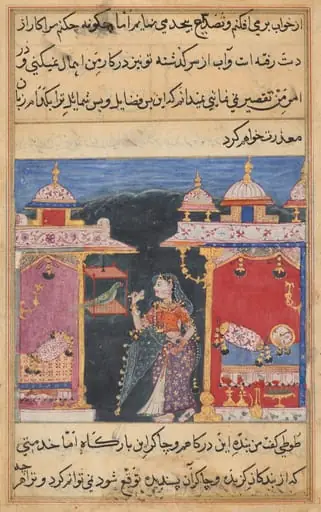 The Parrot Addresses Khujasta at the Beginning of the Seventh Night, from a Tuti-nama (Tales of a Parrot)
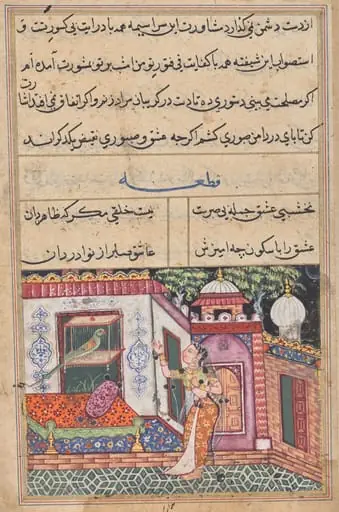 The Parrot Addresses Khujasta at the Beginning of the Eleventh Night, from a Tuti-nama (Tales of a Parrot)
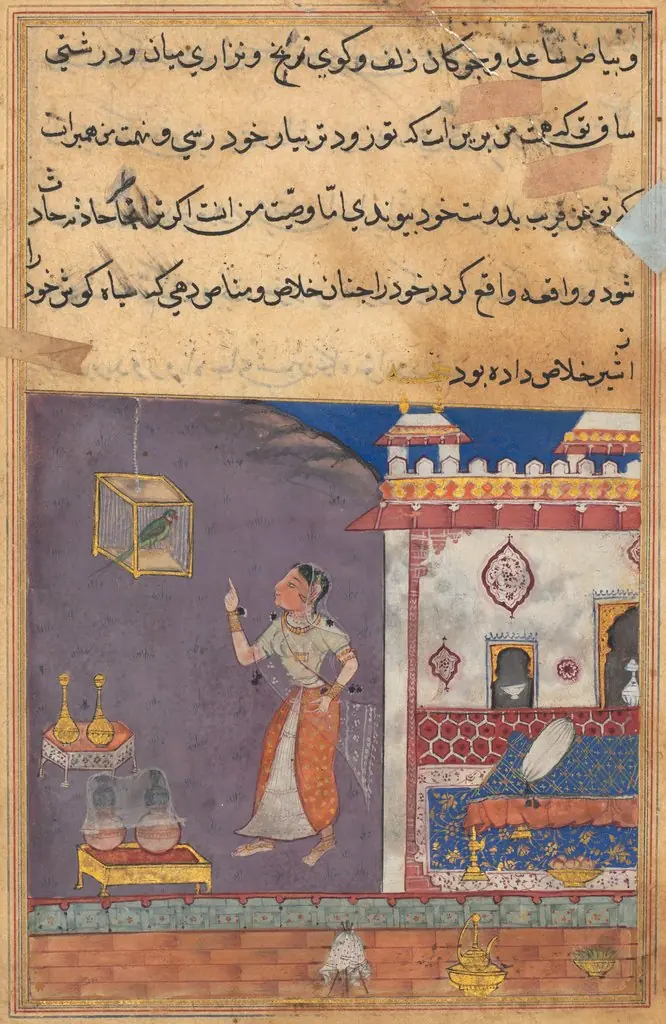 The Parrot Addresses Khujasta at the Beginning of the Twenty-ninth Night, from a Tuti-nama (Tales of a Parrot)