Artwork
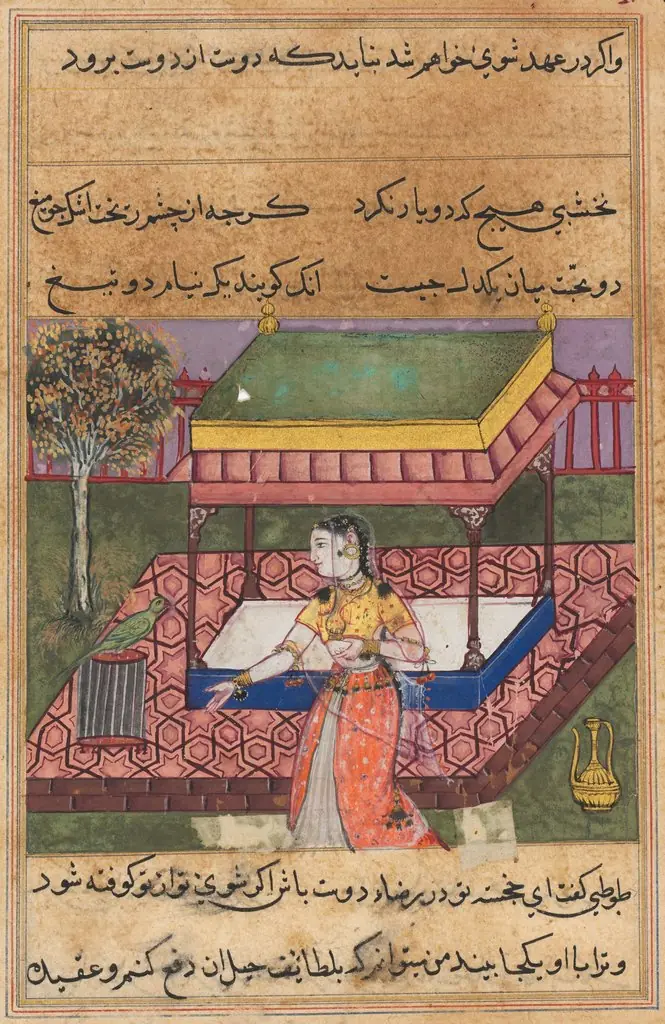
The parrot addresses Khujasta at the beginning of the thirty-sixth night, from a Tuti-nama (Tales of a Parrot)
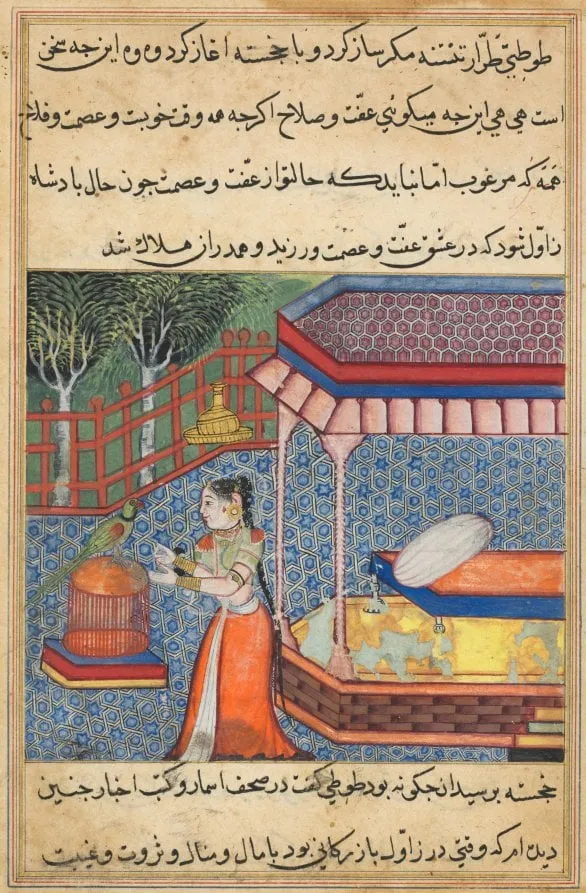
The parrot addresses Khujasta at the beginning of the thirty-sixth night, from a Tuti-nama (Tales of a Parrot) is an unspecified painting by the Mughal Painting artist Unknown. It dates from 1560 and is held in the collection of the Cleveland Museum of Art.
About this work
The parrot keeps the woman from sneaking out by spinning tales of love and loss—like a Mughal-era soap opera.
A woman in a blue dress stands in a courtyard, listening to a green parrot perched on a stand. Bright flowers and patterned tiles fill the space around them.
This painting comes from a book of stories told over fifty-two nights. The parrot keeps the woman from sneaking out by spinning tales of love and loss—like a Mughal-era soap opera. The details are tiny but sharp, from the folds in her dress to the feathers on the bird.
If you like this, look up *Mughal India, court of Akbar (reigned 1556–1605)*.
Overview
The work depicts a woman in a blue garment standing within a richly decorated courtyard, attentively listening to a green parrot perched on a low stand. The surrounding space is filled with vivid floral motifs and intricate tile patterns that frame the figures. The scene is taken from the thirty‑sixth night of a collection of fifty‑two tales, where the bird narrates a tragic love story to deter the woman from leaving.
Subject & Meaning
In the narrative moment captured, the parrot, named Tuti, recounts the sorrowful fate of the King of Zabul, who fell for a merchant’s daughter and perished from unfulfilled love. The storytelling serves as a moral device, attempting to keep Khujasta from seeking her own lover. The juxtaposition of the talking bird and the attentive woman underscores themes of persuasion, love, and the power of narrative in Mughal courtly culture.
Technique & Style
Executed with meticulous miniature painting techniques, the composition features finely rendered details: the delicate folds of the woman's dress, the iridescent plumage of the parrot, and the precise geometric patterns of the tiles. The palette combines cool blues with vivid greens and warm floral reds, typical of Mughal court art. The brushwork achieves a crisp clarity that allows each element to be distinguished despite the overall compact scale of the piece.
History & Provenance
The painting originates from a illustrated manuscript of the Tuti‑nama, a collection of stories told over fifty‑two nights during the Mughal period. Though the exact workshop is unidentified, the style aligns with productions from the court of Emperor Akbar (1556–1605). The manuscript was later dispersed among private collections before entering a museum holding focused on South Asian art.
Context
The scene reflects the broader tradition of narrative illustration in Mughal India, where literary works were frequently accompanied by elaborate visual commentaries. Such images served both decorative and didactic purposes, reinforcing courtly values and the sophisticated storytelling favored by Akbar’s patronage. The courtyard setting, with its ornamental tiles and flora, evokes the opulent architectural spaces of contemporary Mughal palaces.
Artist & collection

 Domestic Scene
 Giacomo and Cardinal Marco, investing Andrea, Abbot of San Zeno, with his Benefice
 The Nymph of Fontainebleau
 Portrait of a Woman
 Madonna and Child with Saints in the Enclosed Garden
 Venus and Minerva
 Family Group of Four on Sofa
 Wall painting from Room H of the Villa of P. Fannius Synistor at Boscoreale
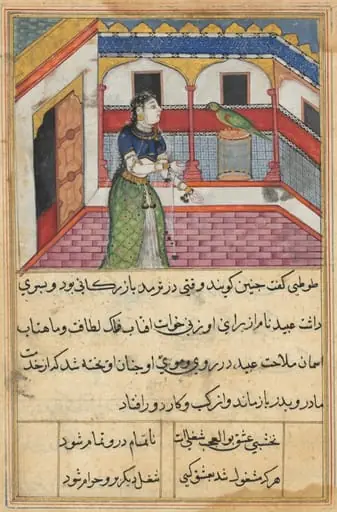 The parrot addresses Khujasta at the beginning of the forty-second night, from a Tuti-nama (Tales of a Parrot)
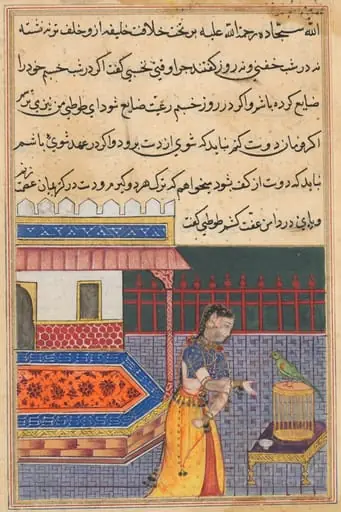 The parrot addresses Khujasta at the beginning of the forty-first night, from a Tuti-nama (Tales of a Parrot): Forty-first Night
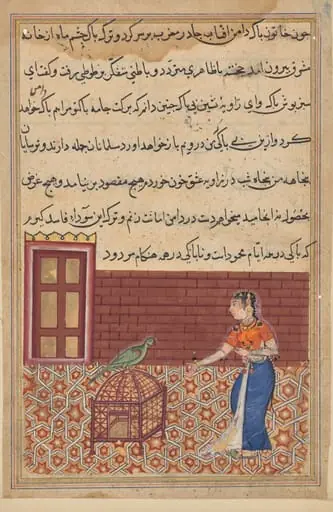 The parrot addresses Khujasta at the beginning of the fifty-first night, from a Tuti-nama (Tales of a Parrot): Fifty-first Night
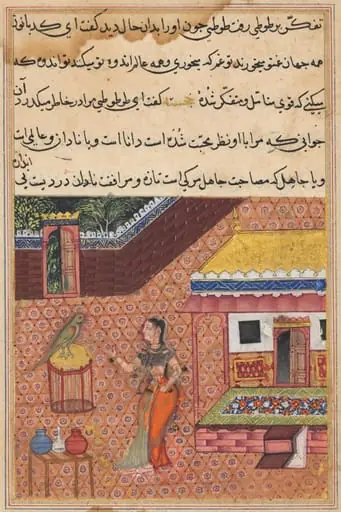 The parrot addresses Khujasta at the beginning of the thirty-fourth night, from a Tuti-nama (Tales of a Parrot)
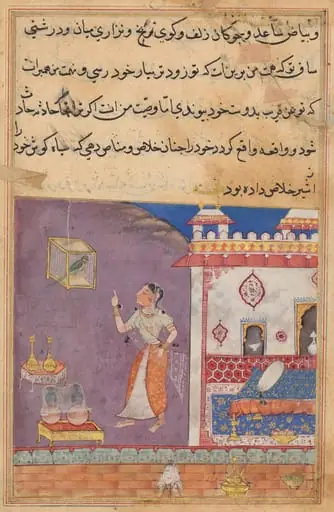 The Parrot Addresses Khujasta at the Beginning of the Twenty-ninth Night, from a Tuti-nama (Tales of a Parrot)
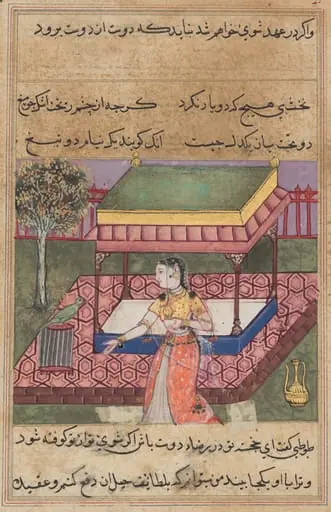 The parrot addresses Khujasta at the beginning of the fortieth night, from a Tuti-nama (Tales of a Parrot)
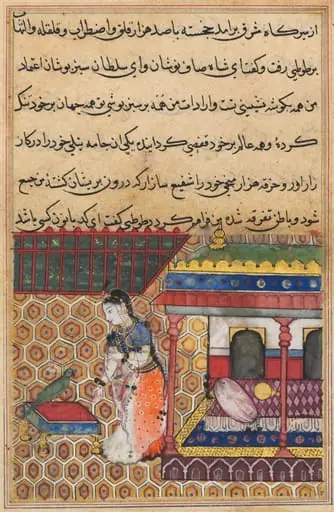 The parrot addresses Khujasta at the beginning of the thirty-eighth night, from a Tuti-nama (Tales of a Parrot)
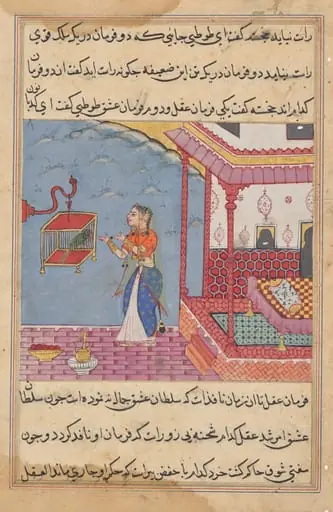 The Parrot Addresses Khujasta at the Beginning of the Twenty-Fourth Night, from a Tuti-nama (Tales of a Parrot)
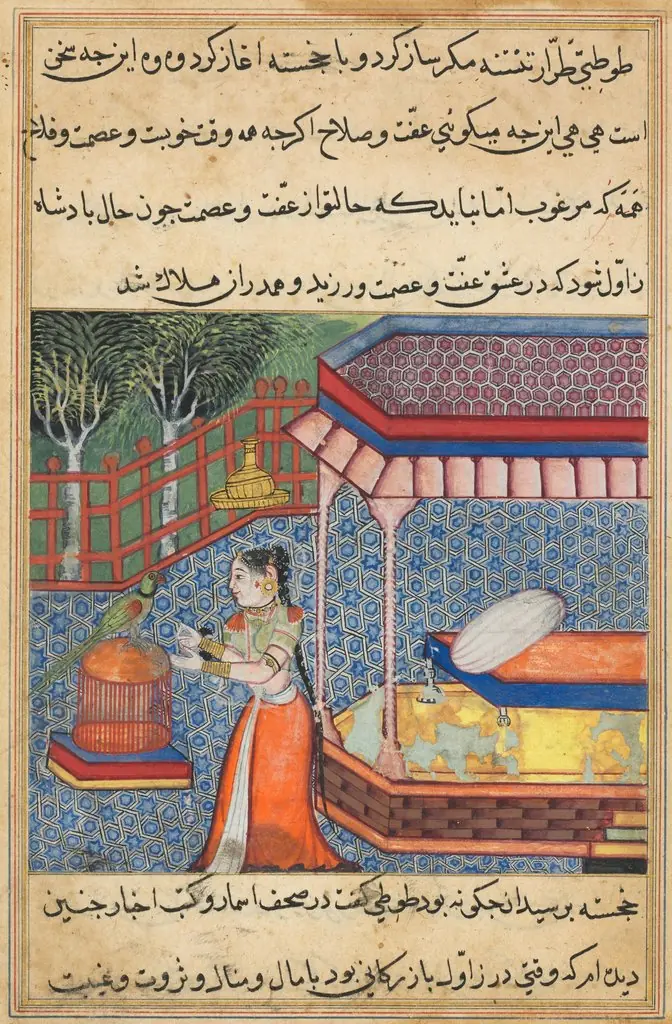 The parrot addresses Khujasta at the beginning of the thirty-sixth night, from a Tuti-nama (Tales of a Parrot)
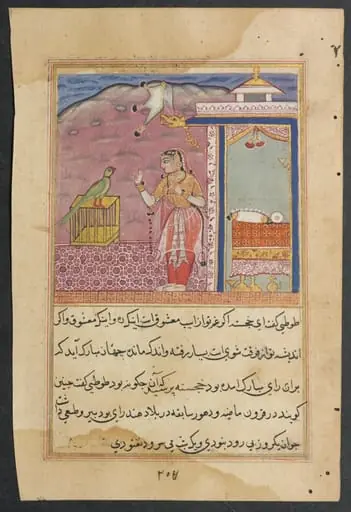 The parrot addresses Khujasta at the beginning of the forty-fourth night, from a Tuti-nama (Tales of a Parrot)
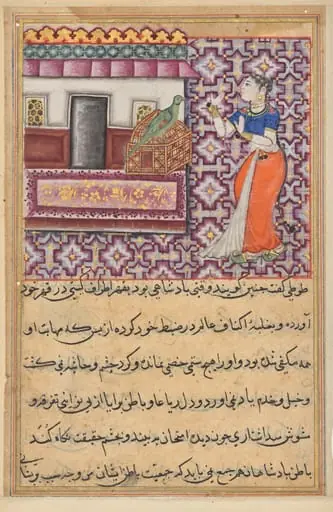 The parrot addresses Khujasta at the beginning of the fiftieth night, from a Tuti-nama (Tales of a Parrot): Fiftieth Night
 The parrot addresses Khujasta at the beginning of the fortieth night, from a Tuti-nama (Tales of a Parrot)