Artwork
The Parrot Addresses Khujasta at the Beginning of the Seventeenth Night, from a Tuti-nama (Tales of a Parrot)
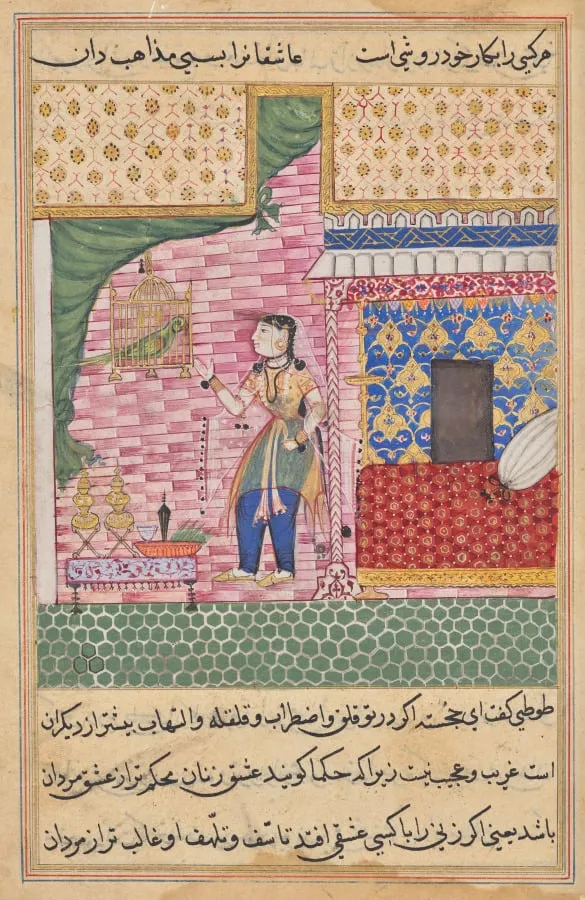
The Parrot Addresses Khujasta at the Beginning of the Seventeenth Night, from a Tuti-nama (Tales of a Parrot) is an unspecified painting by the Patna School of Painting artist Sravana. It dates from 1560 and is held in the collection of the Cleveland Museum of Art. The miniature illustrates a scene from the Tuti‑nama, a collection of parrot narratives.
About this work
The style is older than the famous Mughal miniatures that followed; it feels quieter, almost like a storybook page.
You see a woman sitting on a patterned rug, listening to a green parrot perched on a stand. The room is simple—flat walls, soft colors, no deep shadows.
This painting comes from a book of parrot tales told to delay a wife’s secret meeting. The style is older than the famous Mughal miniatures that followed; it feels quieter, almost like a storybook page.
To see how painting changed under Akbar, look up *mughal india, court of akbar (reigned 1556–1605)*.
Overview
The miniature illustrates a scene from the Tuti‑nama, a collection of parrot narratives. A green parrot perched on a stand addresses a seated woman, Khujasta, while she listens from a patterned rug. The composition is confined to a modest interior, characterized by flat walls and muted tones, presenting a quiet, storybook‑like tableau.
Subject & Meaning
In the depicted episode, the talking parrot recounts the tale of a merchant named Mansur and his encounter with an impostor, serving as an entertaining diversion for Khujasta. The narrative function of the parrot reflects the text’s purpose: to occupy a wife’s attention and postpone a clandestine meeting, highlighting the role of storytelling as a social device.
Technique & Style
The work employs a restrained palette of pale, soft colors and lacks the deep chiaroscuro typical of later Mughal art. Its flat spatial arrangement and simplified architectural elements echo the pre‑Akbar painting tradition, emphasizing line and pattern over volumetric modeling. The figures are rendered with delicate outlines, giving the scene a manuscript‑illustration quality.
History & Provenance
Created for a manuscript of the Tuti‑nama, the painting predates the flourishing of Mughal court miniatures under Emperor Akbar (1556–1605). Its older stylistic traits suggest production in the early sixteenth century, likely within a regional workshop that supplied illustrated books for aristocratic patrons before the imperial atelier’s dominance.
Context
The scene belongs to a broader literary genre in which parrots function as narrators, a motif common in Persian and South Asian storytelling. The illustration reflects a transitional period in Indian art, when indigenous visual conventions coexisted with emerging Persian influences that would later be synthesized in the Akbarian court.
Artist & collection

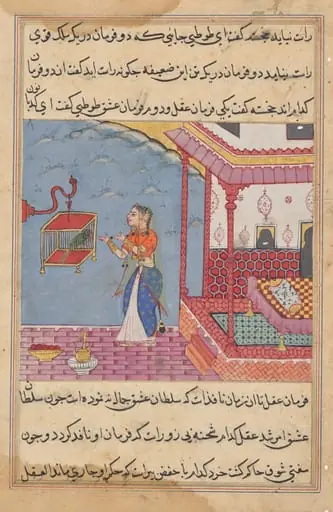 The Parrot Addresses Khujasta at the Beginning of the Twenty-Fourth Night, from a Tuti-nama (Tales of a Parrot)
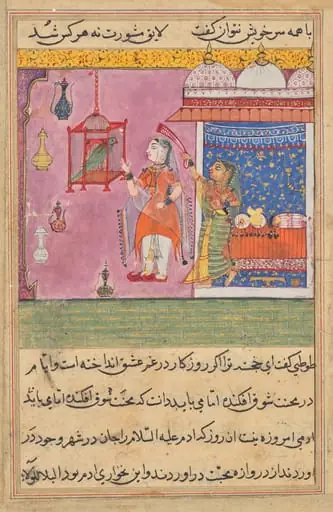 The Parrot Addresses Khujasta at the Beginning of the Nineteenth Night, from a Tuti-nama (Tales of a Parrot)
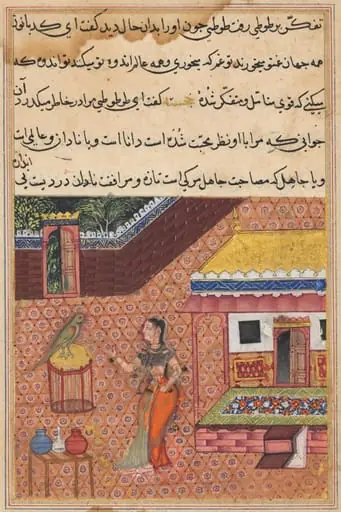 The parrot addresses Khujasta at the beginning of the thirty-fourth night, from a Tuti-nama (Tales of a Parrot)
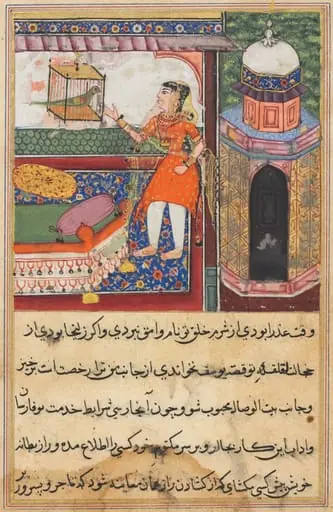 The Parrot Addresses Khujasta at the Beginning of the Tenth Night, from a Tuti-nama (Tales of a Parrot)
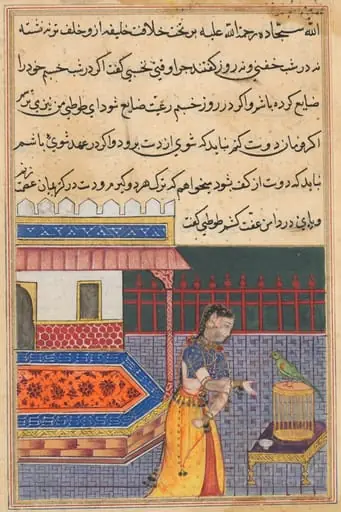 The parrot addresses Khujasta at the beginning of the forty-first night, from a Tuti-nama (Tales of a Parrot): Forty-first Night
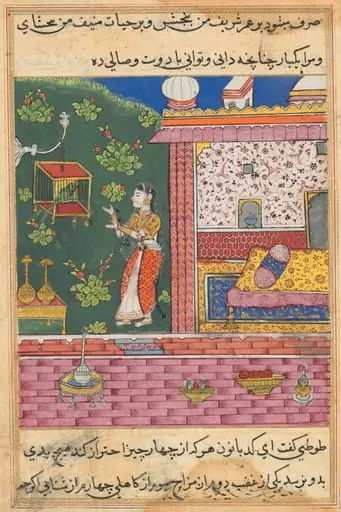 The Parrot Addresses Khujasta at the Beginning of the Thirtieth Night, from a Tuti-nama (Tales of a Parrot)
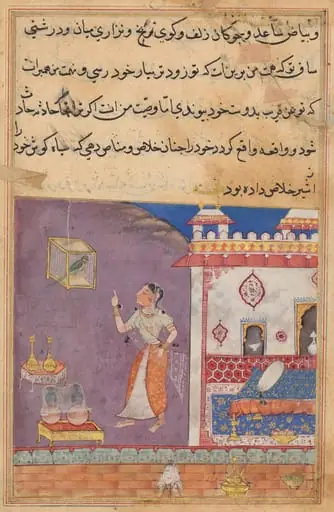 The Parrot Addresses Khujasta at the Beginning of the Twenty-ninth Night, from a Tuti-nama (Tales of a Parrot)
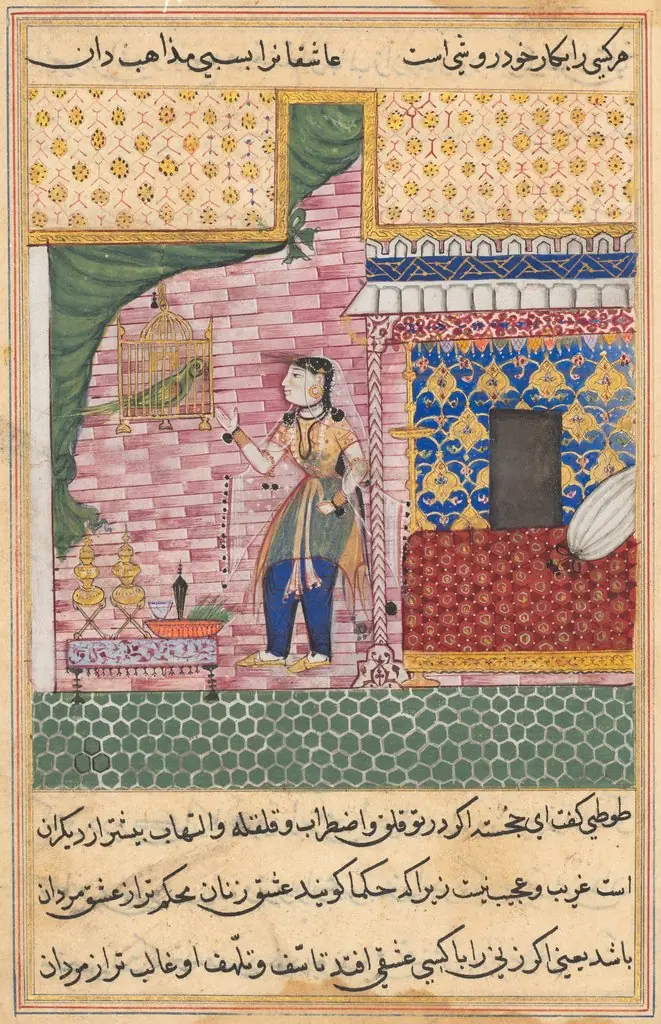 The Parrot Addresses Khujasta at the Beginning of the Seventeenth Night, from a Tuti-nama (Tales of a Parrot)
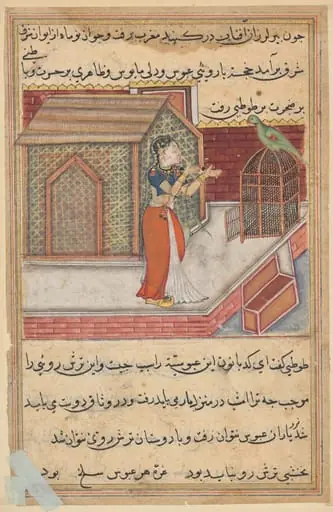 The parrot addresses Khujasta at the beginning of the forty-ninth night, from a Tuti-nama (Tales of a Parrot): Forty-Ninth Night
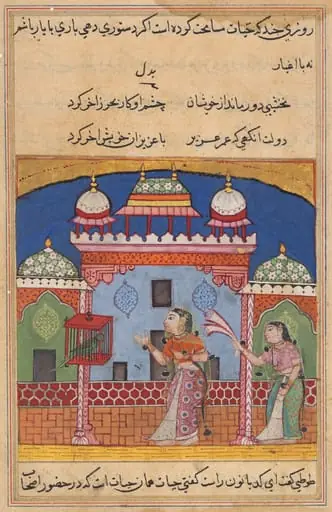 The Parrot Addresses Khujasta at the Beginning of the Twenty-second Night, from a Tuti-nama (Tales of a Parrot)
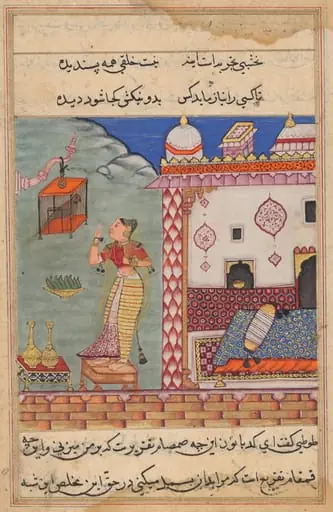 The Parrot Addresses Khujasta at the Beginning of the Twenty-seventh Night, form a Tuti-nama (Tales of a Parrot)
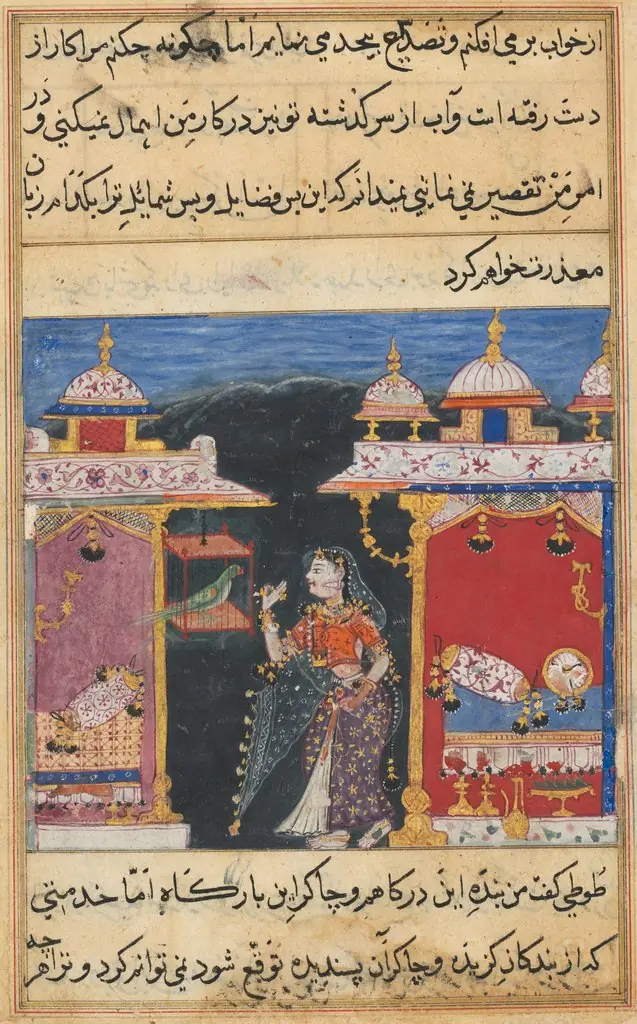 The Parrot Addresses Khujasta at the Beginning of the Seventh Night, from a Tuti-nama (Tales of a Parrot)
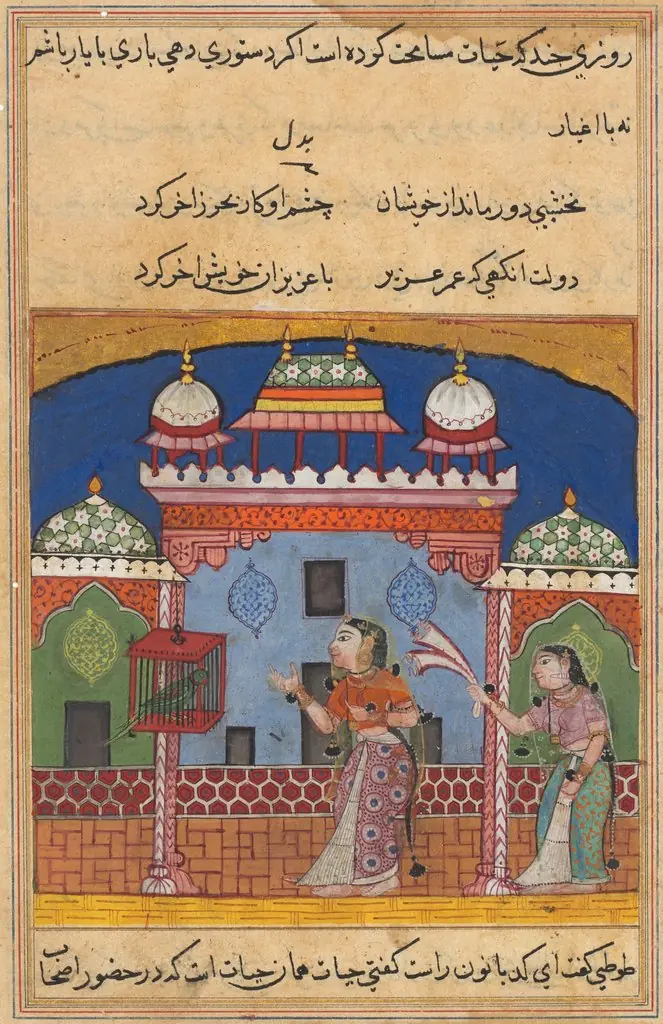 The Parrot Addresses Khujasta at the Beginning of the Twenty-second Night, from a Tuti-nama (Tales of a Parrot)
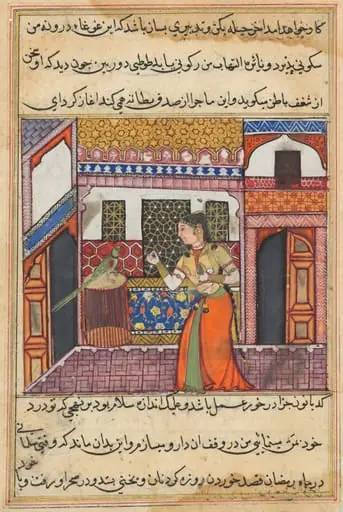 The parrot addresses Khujasta at the beginning of the forty-third night, from a Tuti-nama (Tales of a Parrot)
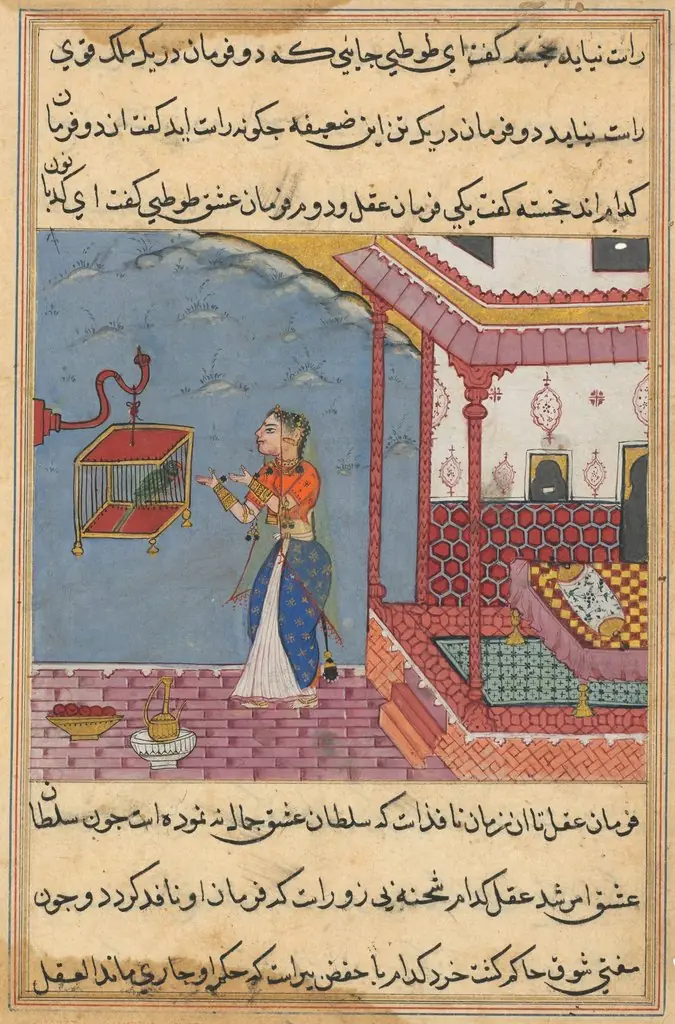 The Parrot Addresses Khujasta at the Beginning of the Twenty-Fourth Night, from a Tuti-nama (Tales of a Parrot)