Artwork
The parrot addresses Khujasta at the beginning of the forty-third night, from a Tuti-nama (Tales of a Parrot)
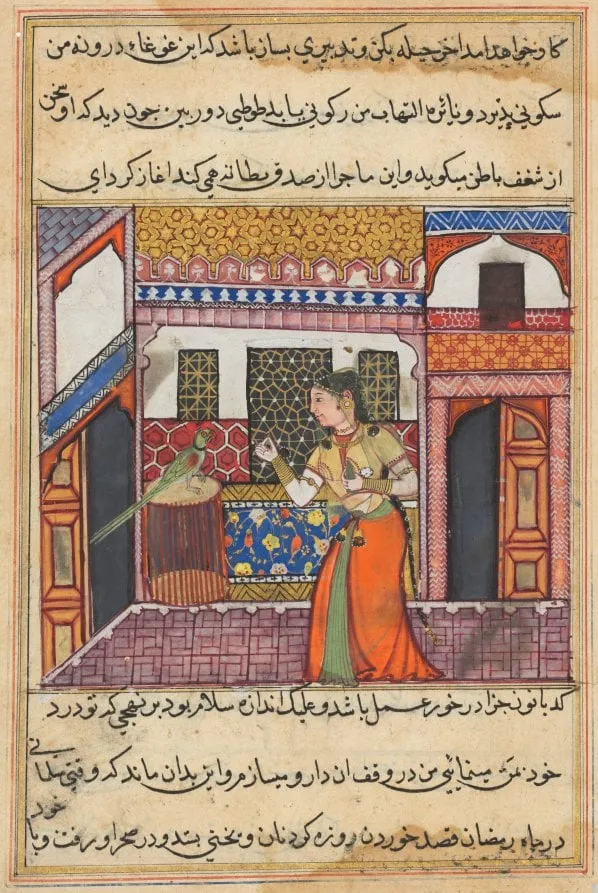
The parrot addresses Khujasta at the beginning of the forty-third night, from a Tuti-nama (Tales of a Parrot) is an unspecified painting by the Mughal Painting artist Unknown. It dates from 1560 and is held in the collection of the Cleveland Museum of Art.
About this work
The artist flattened the space so every surface looks like it’s been pasted in—no shadows, just bold colors and patterns.
You see a woman in a courtyard, stopped by a bright green parrot perched on a stand. The floor is pink tile, the walls are red, and a blue carpet seems to float behind her like a paper cutout.
This painting comes from a book of parrot tales told to delay the woman’s secret meeting until dawn. The artist flattened the space so every surface looks like it’s been pasted in—no shadows, just bold colors and patterns.
To see more art like this, look up Mughal India, court of Akbar (reigned 1556–1605).
Overview
This painting depicts a scene from the Tuti-nama, a collection of tales told by a parrot to delay its owner's lover's secret meeting until dawn. The image shows the parrot addressing Khujasta in a courtyard.
Subject & Meaning
The scene illustrates the beginning of the forty-third night, where Khujasta is stopped by the parrot, Tuti, who tells her moralizing stories. The narrative is part of a larger work, the Tuti-nama.
Technique & Style
The artist has employed a distinctive style, flattening multiple architectural spaces and presenting them as if made from paper cutouts. Bold colors and patterns are used without shadows, creating a vibrant and two-dimensional effect.
Context
The painting is associated with the court of Akbar in Mughal India, who reigned from 1556 to 1605. It reflects the artistic traditions of that period.
Artist & collection

 Domestic Scene
 Giacomo and Cardinal Marco, investing Andrea, Abbot of San Zeno, with his Benefice
 The Nymph of Fontainebleau
 Portrait of a Woman
 Madonna and Child with Saints in the Enclosed Garden
 Venus and Minerva
 Family Group of Four on Sofa
 Wall painting from Room H of the Villa of P. Fannius Synistor at Boscoreale
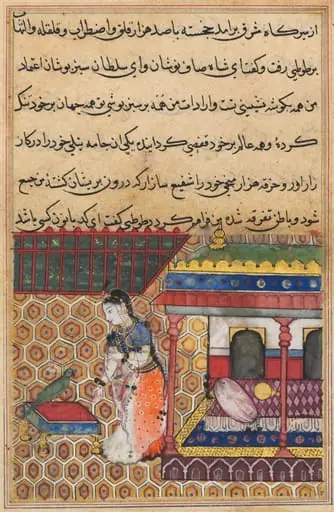 The parrot addresses Khujasta at the beginning of the thirty-eighth night, from a Tuti-nama (Tales of a Parrot)
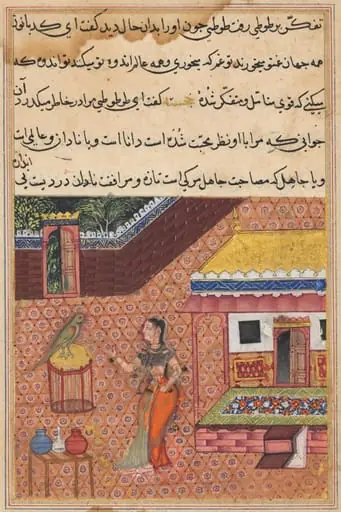 The parrot addresses Khujasta at the beginning of the thirty-fourth night, from a Tuti-nama (Tales of a Parrot)
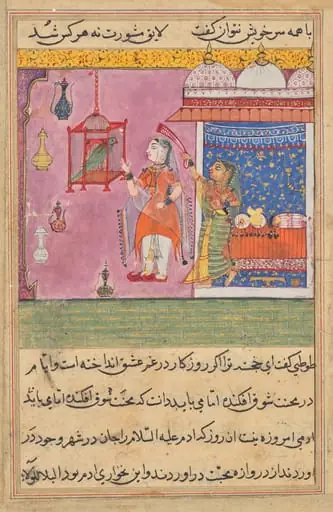 The Parrot Addresses Khujasta at the Beginning of the Nineteenth Night, from a Tuti-nama (Tales of a Parrot)
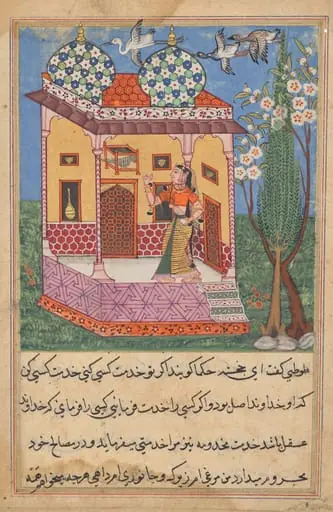 The Parrot Addresses Khujasta at the Beginning of the Twenty-sixth Night, from a Tuti-nama (Tales of a Parrot)
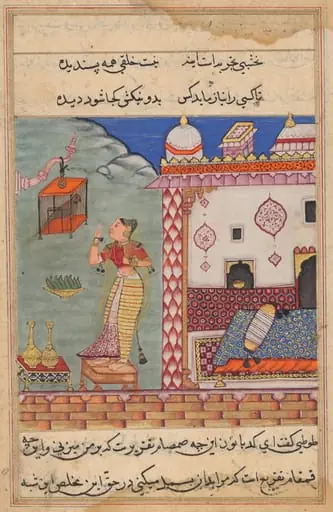 The Parrot Addresses Khujasta at the Beginning of the Twenty-seventh Night, form a Tuti-nama (Tales of a Parrot)
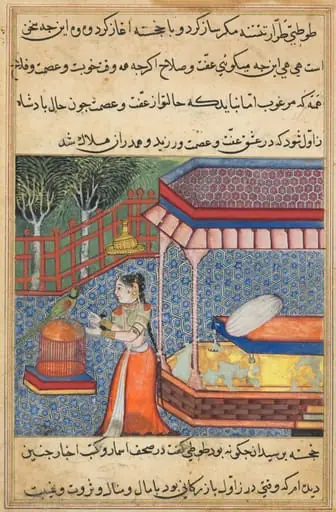 The parrot addresses Khujasta at the beginning of the thirty-sixth night, from a Tuti-nama (Tales of a Parrot)
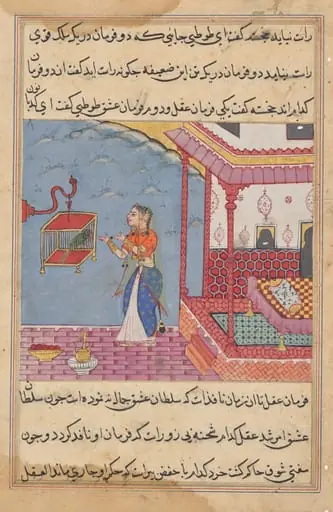 The Parrot Addresses Khujasta at the Beginning of the Twenty-Fourth Night, from a Tuti-nama (Tales of a Parrot)
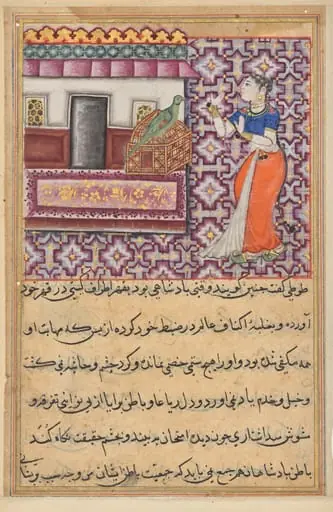 The parrot addresses Khujasta at the beginning of the fiftieth night, from a Tuti-nama (Tales of a Parrot): Fiftieth Night
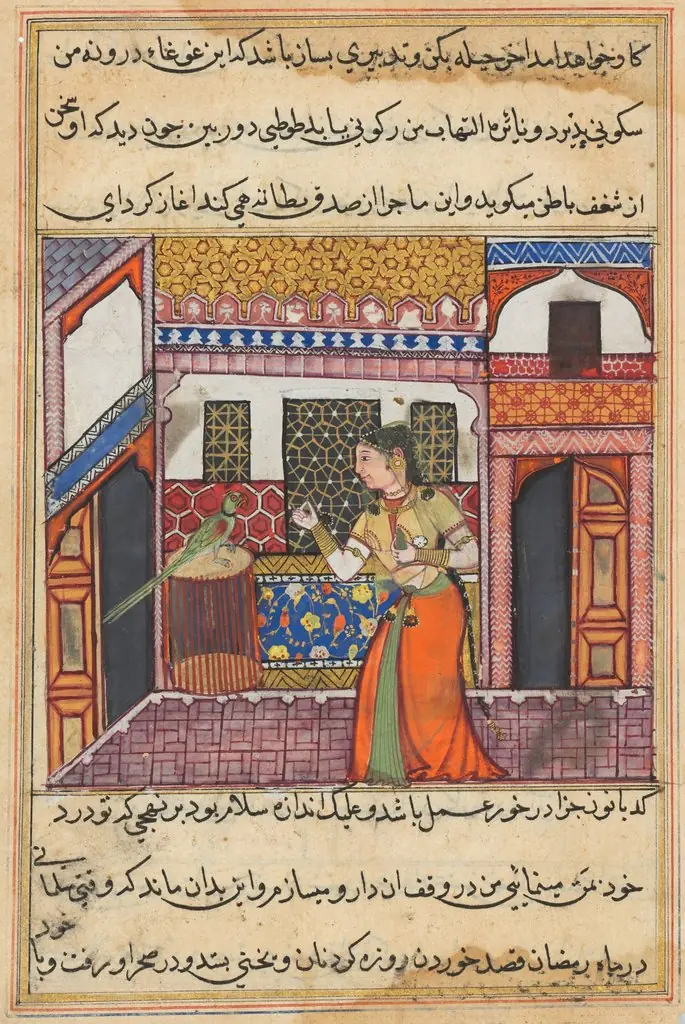 The parrot addresses Khujasta at the beginning of the forty-third night, from a Tuti-nama (Tales of a Parrot)
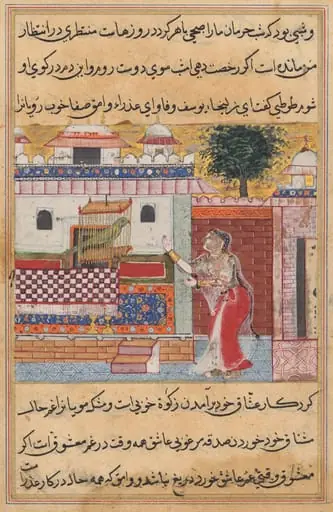 The Parrot Addresses Khujasta at the Beginning of the Twelfth Night, from a Tuti-nama (Tales of a Parrot)