Artwork
The pious man’s son presents the slain dragon to the king, from a Tuti-nama (Tales of a Parrot): Fifty-second Night
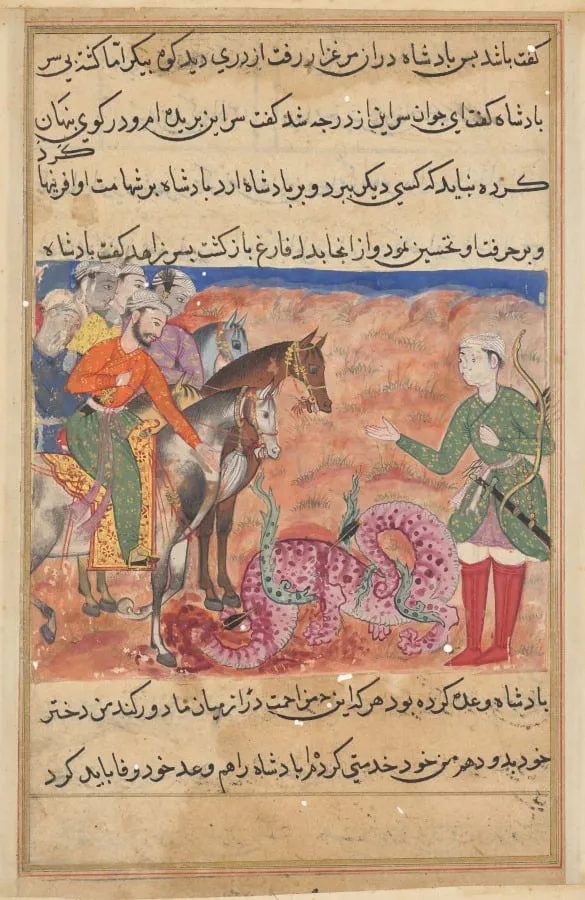
The pious man’s son presents the slain dragon to the king, from a Tuti-nama (Tales of a Parrot): Fifty-second Night is an unspecified painting by the Mughal Painting artist Unknown. It dates from 1560 and is held in the collection of the Cleveland Museum of Art. The painting illustrates a scene from a Mughal manuscript of the Tuti‑nama, a collection of parrot tales compiled for Emperor Akbar’s court.
About this work
The story shows a poor man’s son proving himself by killing the beast—so the king rewards him with a princess and a high title.
You see a king in an orange tunic staring at a headless dragon on the ground, its body stuck with arrows.
This painting comes from a book of parrot tales made for Emperor Akbar’s court. The story shows a poor man’s son proving himself by killing the beast—so the king rewards him with a princess and a high title. The bright colors and tiny details were meant to impress the emperor, not just tell the tale.
Look up Mughal India, court of Akbar (reigned 1556–1605) to see more of these royal book paintings.
Overview
The painting illustrates a scene from a Mughal manuscript of the Tuti‑nama, a collection of parrot tales compiled for Emperor Akbar’s court. In the image, a king in an orange tunic watches a slain, headless dragon whose body is riddled with arrows, while a young man stands nearby, having defeated the creature.
Subject & Meaning
The narrative depicts the son of a humble man who, by slaying the fearsome dragon, proves his bravery and skill. The king, impressed by this feat, rewards the youth with marriage to his daughter and appoints him as vice‑regent, underscoring themes of meritocratic advancement and royal patronage.
Technique & Style
Executed in vivid pigments typical of Mughal court painting, the work combines precise miniature detailing with a rich, saturated palette. Fine brushwork renders the king’s attire, the dragon’s anatomy, and the arrow‑pierced body, while the composition balances narrative clarity with decorative flourish intended to captivate an imperial audience.
History & Provenance
Created during the reign of Akbar (1556–1605), the piece formed part of an illuminated manuscript produced for the emperor’s library. Such books were commissioned to celebrate literary and artistic excellence within the Mughal atelier, and the painting remained in the royal collection before entering modern museum holdings.
Context
Mughal court art under Akbar merged Persian miniature traditions with indigenous Indian motifs, resulting in a distinctive visual language. The Tuti‑nama, as a moral and entertaining anthology, served both as a didactic tool and as a showcase for the empire’s cultural sophistication, reflecting the ruler’s interest in diverse narratives.
Legacy
The work exemplifies the high point of Mughal manuscript illustration, influencing subsequent generations of South Asian painters. Its vivid storytelling and technical mastery continue to inform scholarly understanding of Akbar’s artistic patronage and the broader visual culture of early modern India.
Artist & collection

 Domestic Scene
 Giacomo and Cardinal Marco, investing Andrea, Abbot of San Zeno, with his Benefice
 The Nymph of Fontainebleau
 Portrait of a Woman
 Madonna and Child with Saints in the Enclosed Garden
 Venus and Minerva
 Family Group of Four on Sofa
 Wall painting from Room H of the Villa of P. Fannius Synistor at Boscoreale
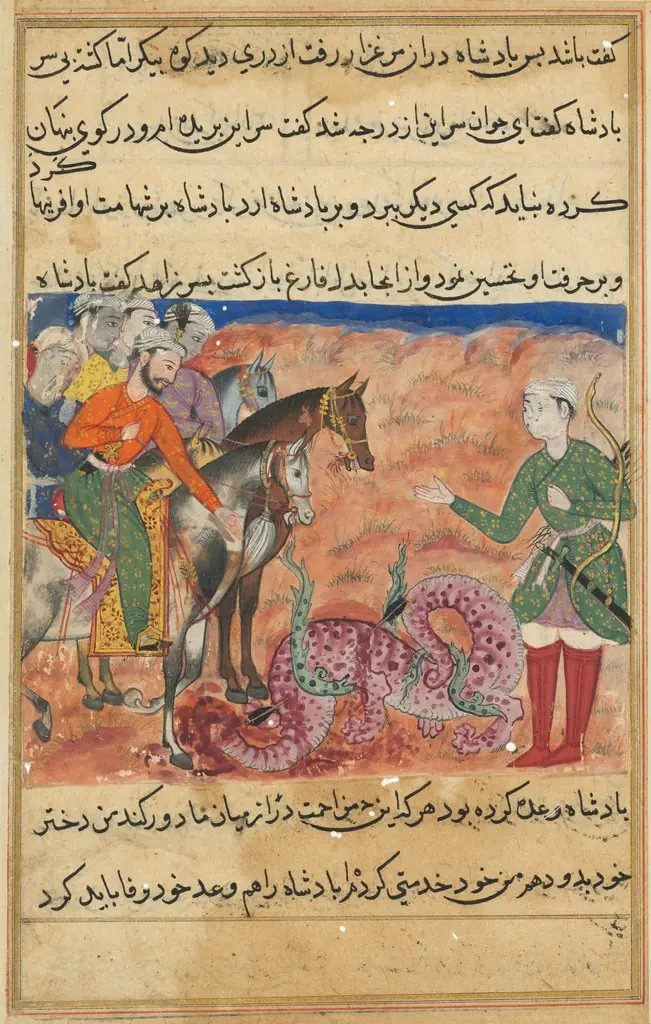 The pious man’s son presents the slain dragon to the king, from a Tuti-nama (Tales of a Parrot): Fifty-second Night
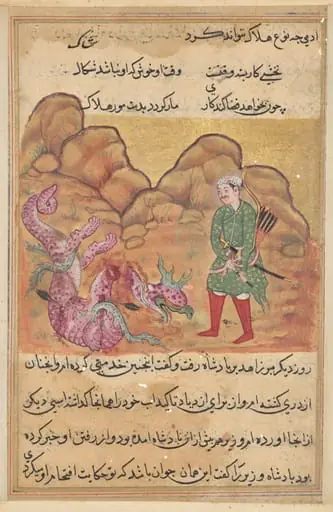 The son of the pious man slays the dragon, from a Tuti-nama (Tales of a Parrot): Fifty-second Night
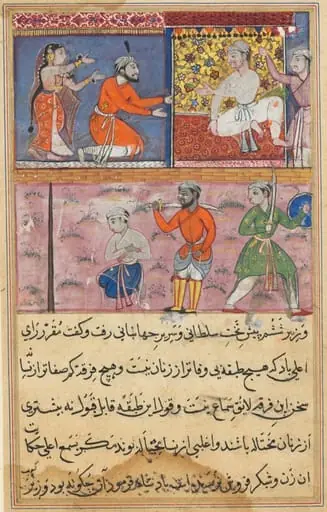 The prince sent back to the place of execution for the sixth time, from a Tuti-nama (Tales of a Parrot): Eighth Night
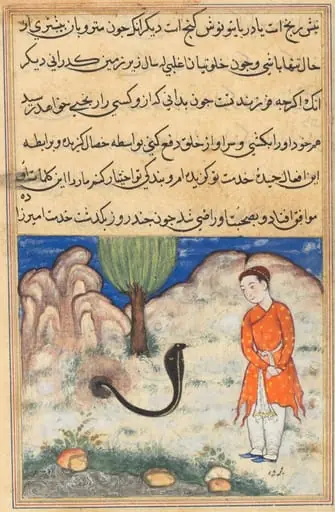 The prince, a son of the ruler of Sistan, enters the service of a snake, from a Tuti-nama (Tales of a Parrot): Thirty-seventh Night
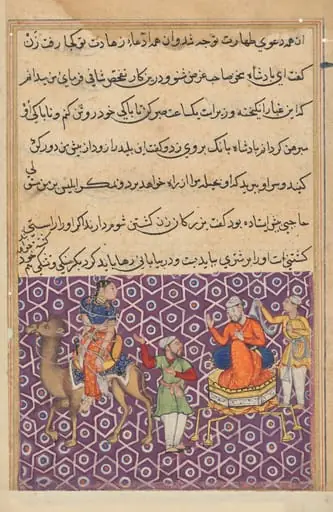 King Bahram, who has married Khassa’s daughter, has her tied to a camel to be abandoned in the desert as a result of false accusations made by Khulasa, from a Tuti-nama (Tales of a Parrot): Fifty-first Night
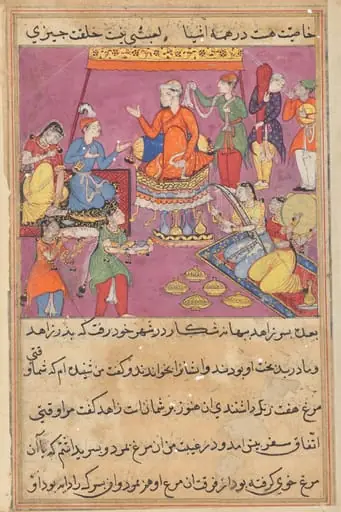 The king gives his daughter in marriage to the pious man’s son, from a Tuti-nama (Tales of a Parrot): Fifty-second Night
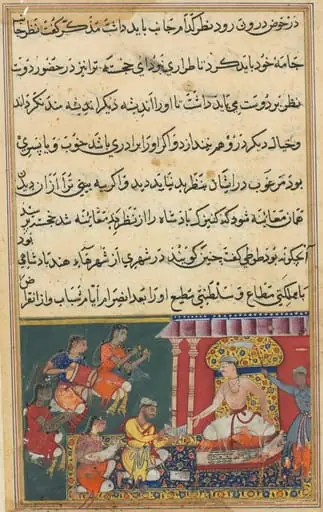 The astrologer predicts a calamity for the newly born prince in his thirteenth year, but one which he would be able to overcome, from a Tuti-nama (Tales of a Parrot): Eighth Night
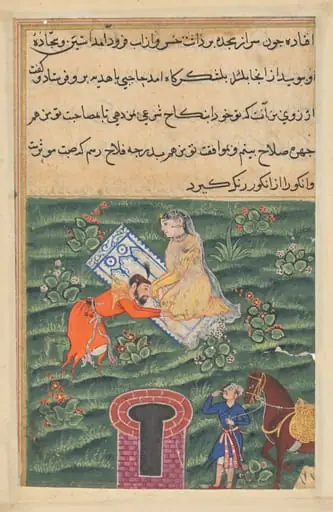 Khusrau, the King of Kings, pays homage to the pious daughter of Khassa, from a Tuti-nama (Tales of a Parrot): Fifty-first Night
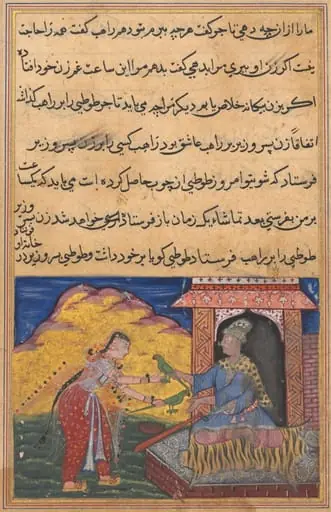 The wife of the son of the vizier brings the magic wooden parrot to her lover, the monk, who exchanges it for the replica, from a Tuti-nama (Tales of a Parrot): Tenth Night
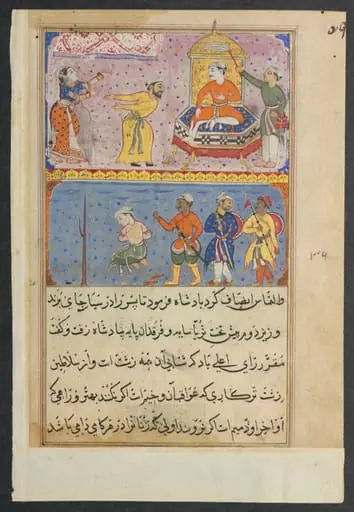 The prince, once reprieved, is returned to the palace of execution a second time on the plea of the king’s handmaiden, from a Tuti-nama (Tales of a Parrot): Eighth Night