Artwork
The prince, with the help of Mukhlis who changes into a frog, recovers the ring lost in the sea, and returns it to the king, from a Tuti-nama (Tales of a Parrot): Eighteenth Night
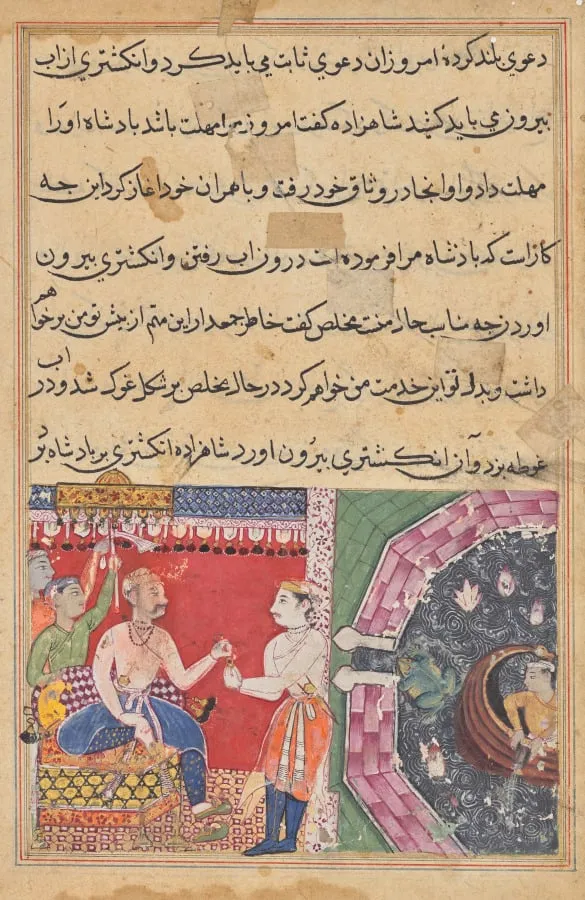
The prince, with the help of Mukhlis who changes into a frog, recovers the ring lost in the sea, and returns it to the king, from a Tuti-nama (Tales of a Parrot): Eighteenth Night is an unspecified painting by the Mughal Painting artist Unknown. It dates from 1560 and is held in the collection of the Cleveland Museum of Art.
About this work
If you like this, look up Mughal India, court of Akbar (reigned 1556–1605) for more paintings from the same world.
You see a prince handing a ring to a king on a throne, while a frog watches from a walled harbor.
This painting comes from a book of parrot tales made for Emperor Akbar’s court. The frog isn’t just decoration—it’s a servant who shape-shifted to dive for the lost ring. The artist filled the scene with tiny details: lotus flowers swirling in the water, a boatman bailing his boat.
If you like this, look up Mughal India, court of Akbar (reigned 1556–1605) for more paintings from the same world.
Overview
This 18th-century painting illustrates a narrative from the Tuti-nama (Tales of a Parrot), depicting a prince's successful retrieval of a king's lost ring with the aid of a shape-shifting servant, Mukhlis, who transforms into a frog.
Subject & Meaning
The scene conveys themes of loyalty and ingenuity. The prince, having pledged service to the king, demonstrates his commitment by recovering the lost ring, highlighting the value of devotion and clever resourcefulness in overcoming challenges.
Technique & Style
Characterized by meticulous detail, the painting features swirling water with lotus flowers, a boating figure, and architectural elements, showcasing the refined, observant style typical of Mughal court art during the period.
History & Provenance
Originating from a Tuti-nama manuscript created for Emperor Akbar's court (r. 1556–1605), this painting reflects the cultural and artistic patronage of the Mughal Empire during its flourishing period.
Context
Part of a larger illustrated book, this work is contextualized within the literary and artistic traditions of Mughal India, where such tales served both entertainment and moral instruction for the imperial family and nobility.
Artist & collection

 Domestic Scene
 Giacomo and Cardinal Marco, investing Andrea, Abbot of San Zeno, with his Benefice
 The Nymph of Fontainebleau
 Portrait of a Woman
 Madonna and Child with Saints in the Enclosed Garden
 Venus and Minerva
 Family Group of Four on Sofa
 Wall painting from Room H of the Villa of P. Fannius Synistor at Boscoreale
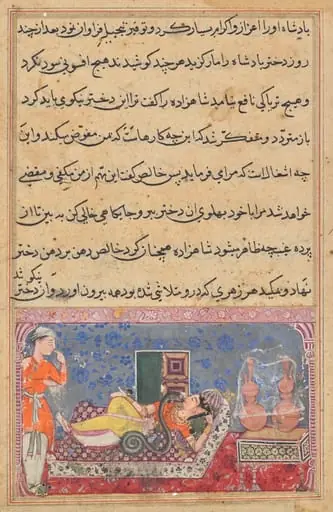 Khalis repays the prince for his kindness by changing into a snake and sucking the poison from the king’s daughter, from a Tuti-nama (Tales of a Parrot): Eighteenth Night
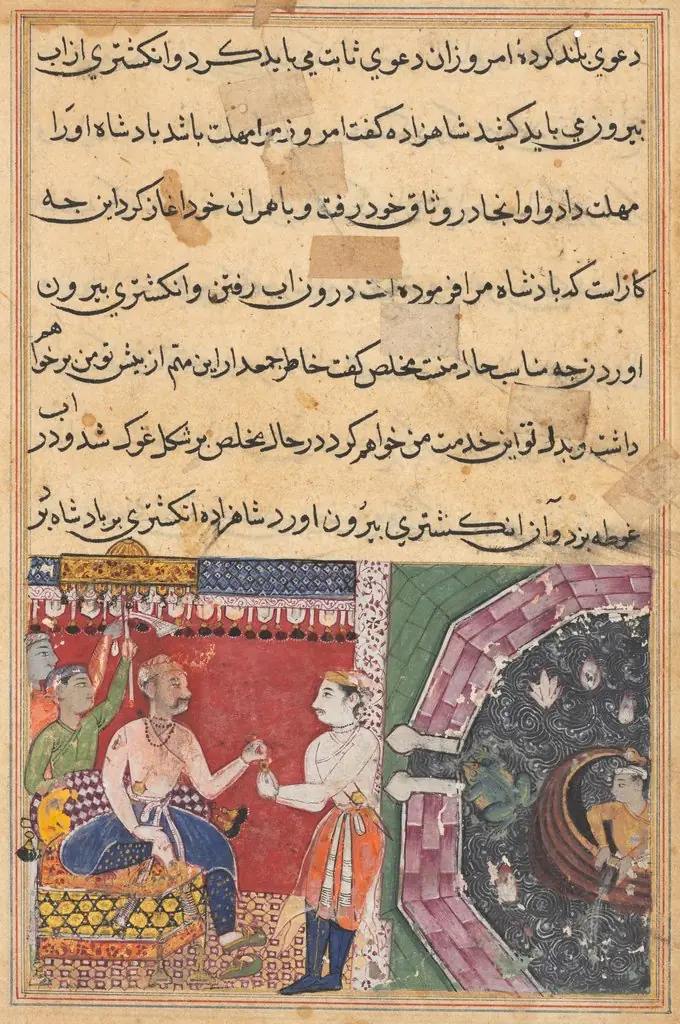 The prince, with the help of Mukhlis who changes into a frog, recovers the ring lost in the sea, and returns it to the king, from a Tuti-nama (Tales of a Parrot): Eighteenth Night
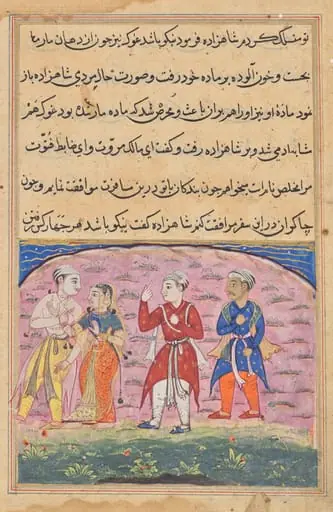 The prince and Nikfal are joined by Khalis and the Mukhlis who are the grateful snake and frog in human form, from a Tuti-nama (Tales of a Parrot): Eighteenth Night
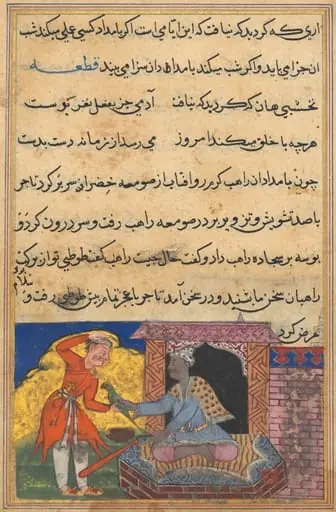 The monk returns the magic parrot to its rightful owner, the merchant, from a Tuti-nama (Tales of a Parrot): Tenth Night
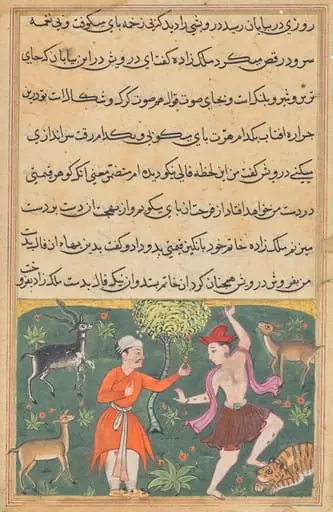 The prince meets a carefree dancing dervish whose good fortune he purchases for his ring, from a Tuti-nama (Tales of a Parrot): Eighteenth Night
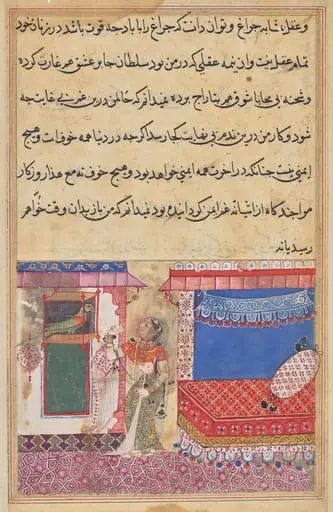 The Parrot Addresses Khujasta at the Beginning of the Eighteenth Night, from a Tuti-nama (Tales of a Parrot)
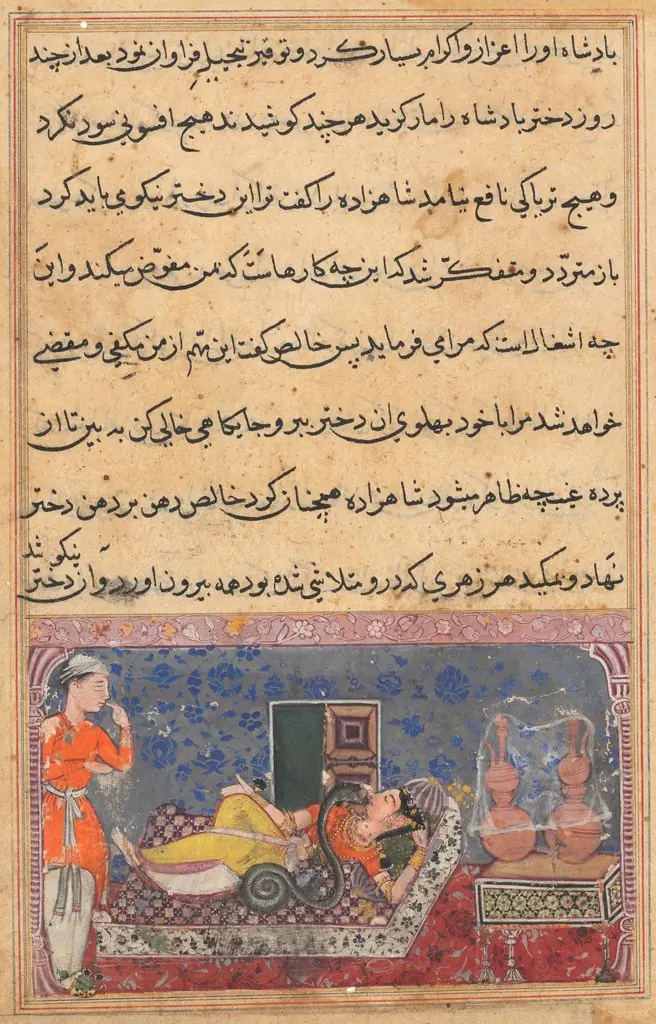 Khalis repays the prince for his kindness by changing into a snake and sucking the poison from the king’s daughter, from a Tuti-nama (Tales of a Parrot): Eighteenth Night
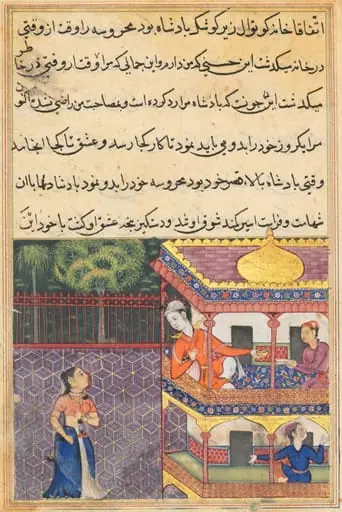 The king of Zabul sees Mahrusa from his palace balcony, from a Tuti-nama (Tales of a Parrot): Thirty-sixth Night
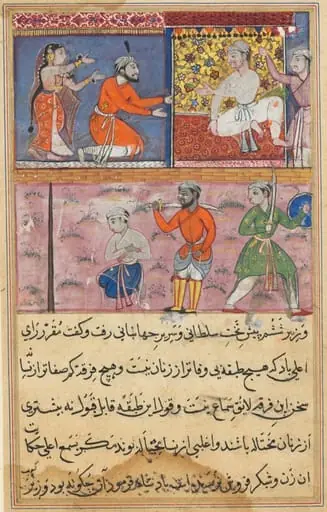 The prince sent back to the place of execution for the sixth time, from a Tuti-nama (Tales of a Parrot): Eighth Night