Artwork
The monk returns the magic parrot to its rightful owner, the merchant, from a Tuti-nama (Tales of a Parrot): Tenth Night
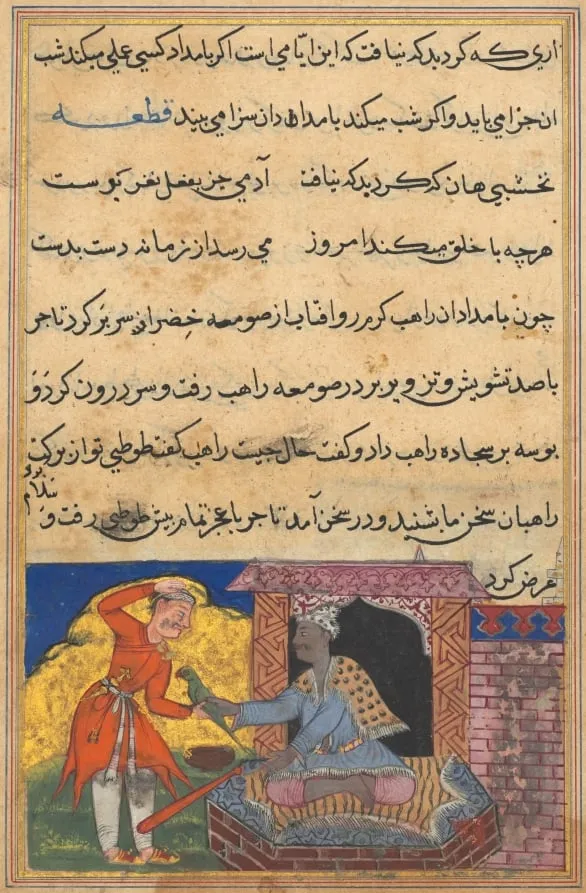
The monk returns the magic parrot to its rightful owner, the merchant, from a Tuti-nama (Tales of a Parrot): Tenth Night is an unspecified painting by the Mughal Painting artist Lalu. It dates from 1560 and is held in the collection of the Cleveland Museum of Art. The painting depicts a seated monk, draped in a leopard‑skin mantle, returning a vividly green wooden parrot to a merchant.
About this work
The artist worked in the court of Emperor Akbar, where paintings like this were made to entertain and teach.
A monk in a leopard-skin cape hands a bright green parrot back to a merchant. The bird sits calmly on the monk’s finger, its wooden body painted with tiny details. Around them, rich fabrics and patterned tiles fill the scene.
This painting comes from a book of parrot tales told over fifty-two nights. The story here is about trickery and trust—how the parrot was stolen, then returned. The artist worked in the court of Emperor Akbar, where paintings like this were made to entertain and teach.
To see more art from this time, look up *mughal india, court of akbar (reigned 1556–1605)*.
Overview
The painting depicts a seated monk, draped in a leopard‑skin mantle, returning a vividly green wooden parrot to a merchant. The bird perches on the monk’s finger, while sumptuous textiles and intricately patterned tiles frame the exchange, emphasizing the narrative moment.
Subject & Meaning
The scene illustrates a tale from the Tuti‑nama, a collection of fifty‑two parrot stories. In this episode, the monk retrieves the bird—originally stolen by the vizier’s son’s wife to win a wager—and restores it to its rightful owner, highlighting themes of deceit, restitution, and moral trust.
Technique & Style
Executed in the Mughal court tradition, the work combines precise brushwork with rich coloration. The wooden parrot is rendered with fine detailing that mimics feather patterns, while the surrounding fabrics and tiles display the elaborate decorative motifs typical of late‑16th‑century imperial art.
History & Provenance
Created for the court of Emperor Akbar (reigned 1556–1605), the painting formed part of an illustrated manuscript intended for both entertainment and instruction. Its provenance remains linked to the Mughal atelier that produced narrative miniatures for royal patrons.
Context
Mughal paintings of this period often served didactic purposes, embedding moral lessons within courtly stories. The Tuti‑nama’s parrot narratives were popular for their blend of humor and ethical instruction, reflecting the cultural milieu of Akbar’s empire.
Artist & collection

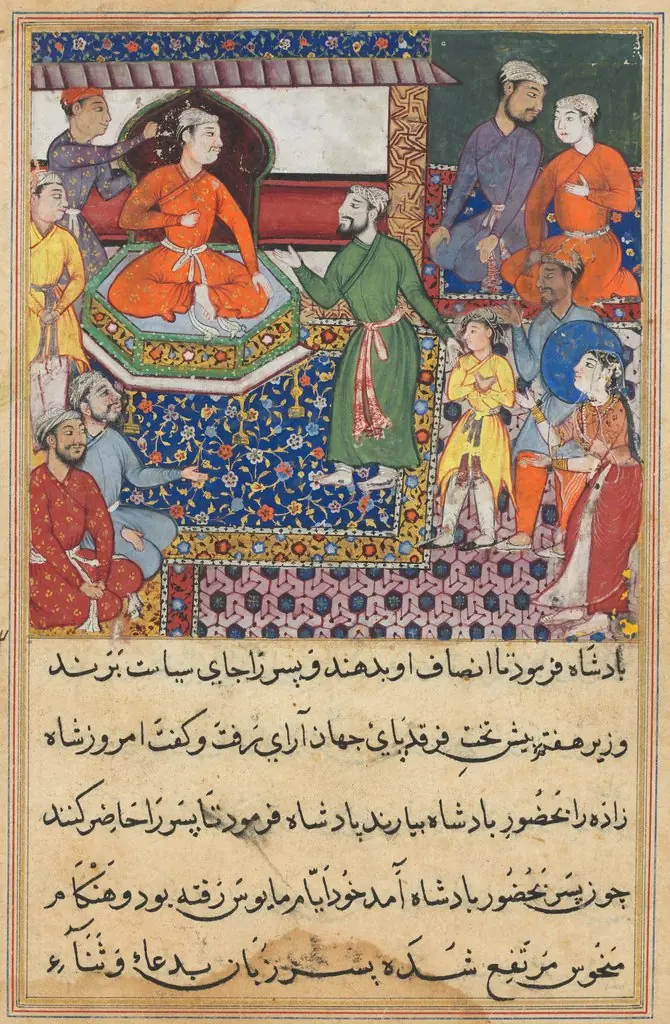 The handmaiden again pleads for the death of the prince, from a Tuti-nama (Tales of a Parrot): Eighth Night
 The handmaiden again pleads for the death of the prince, from a Tuti-nama (Tales of a Parrot): Eighth Night
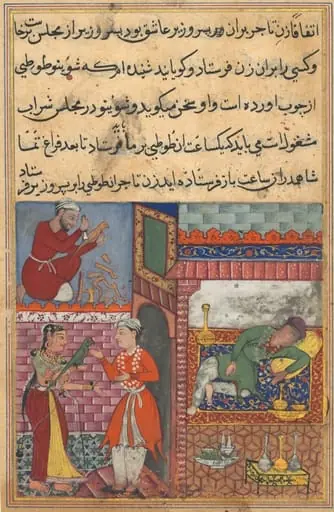 The vizier’s son receives the magic wooden parrot from the wife of the merchant, who is drunk, and has a replica made by a carpenter, from a Tuti-nama (Tales of a Parrot): Tenth Night
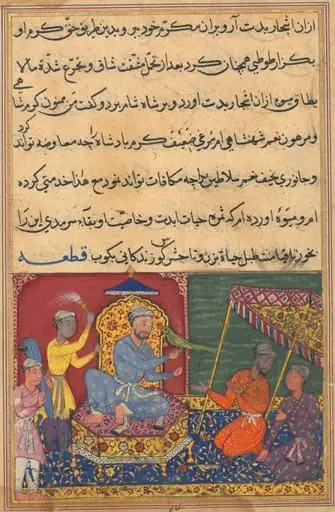 The parrot brings a fruit from the Tree of Life to the king of Syria, from a Tuti-nama (Tales of a Parrot): Ninth Night
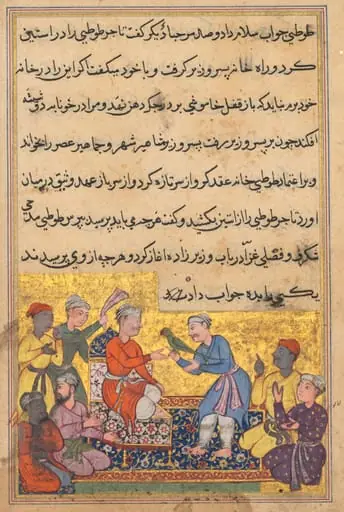 The magic parrot of the merchant talks to the vizier’s son, from a Tuti-nama (Tales of a Parrot): Tenth Night
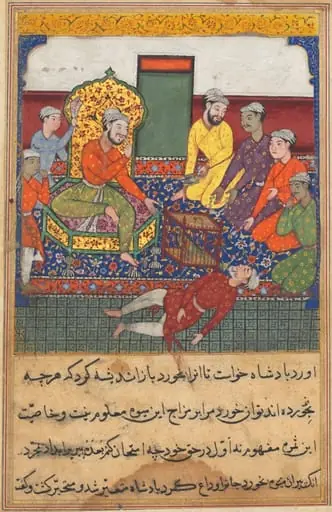 The old man eats of the fruit of the Tree of Life, but drops dead, from a Tuti-nama (Tales of a Parrot): Ninth Night
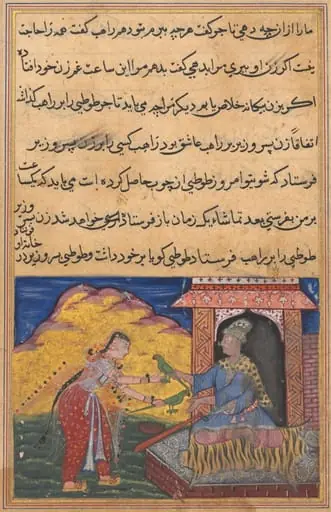 The wife of the son of the vizier brings the magic wooden parrot to her lover, the monk, who exchanges it for the replica, from a Tuti-nama (Tales of a Parrot): Tenth Night
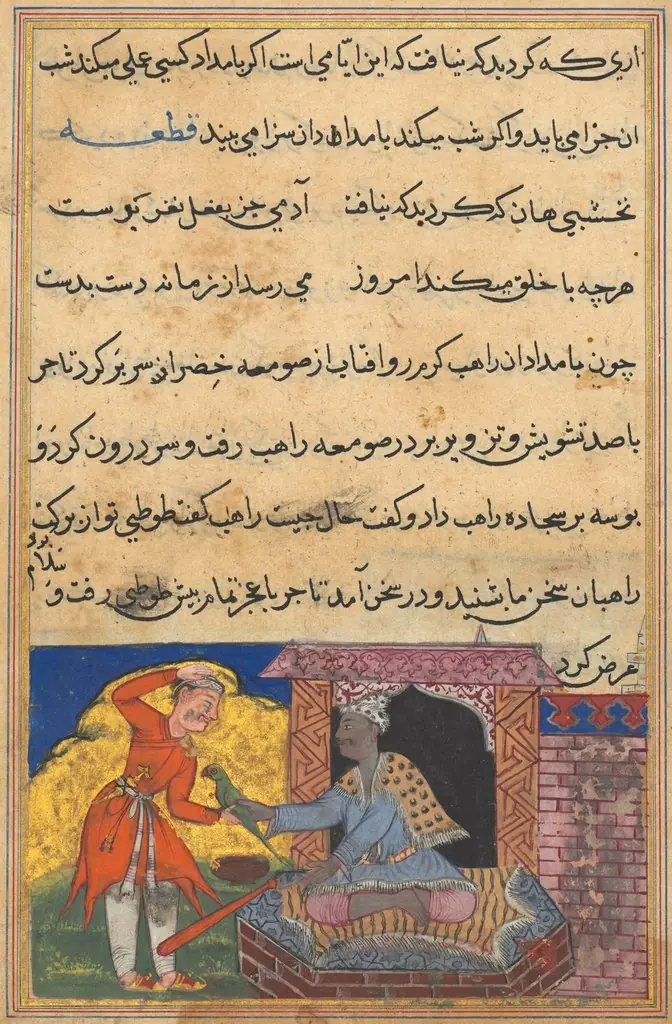 The monk returns the magic parrot to its rightful owner, the merchant, from a Tuti-nama (Tales of a Parrot): Tenth Night
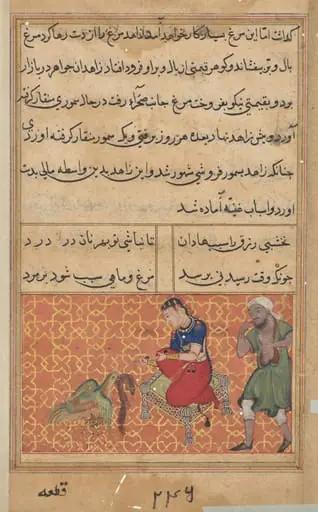 The bird of seven colors brings a sable to the pious man, from a Tuti-nama (Tales of a Parrot): Fifty-second Night
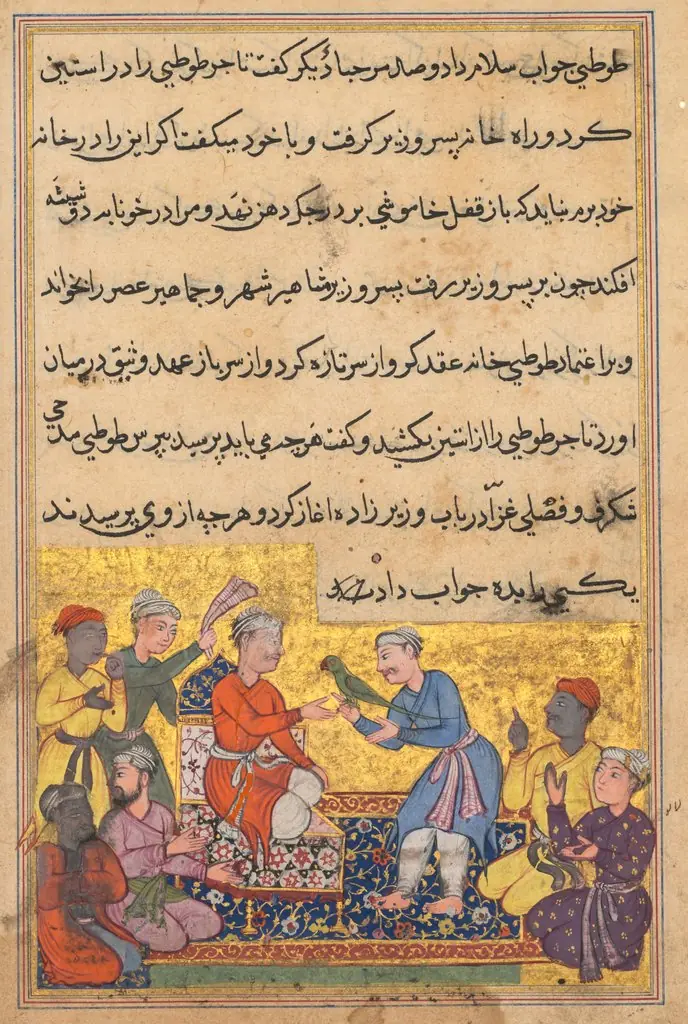 The magic parrot of the merchant talks to the vizier’s son, from a Tuti-nama (Tales of a Parrot): Tenth Night
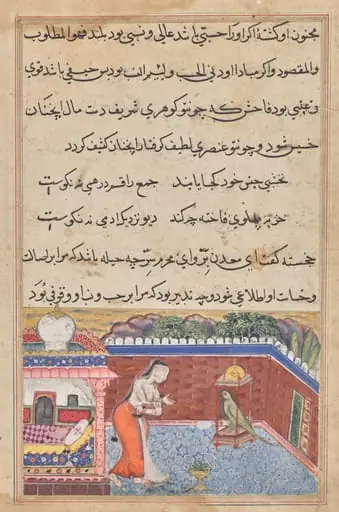 The parrot addresses Khujasta at the beginning of the thirty-first night, from a Tuti-nama (Tales of a Parrot)
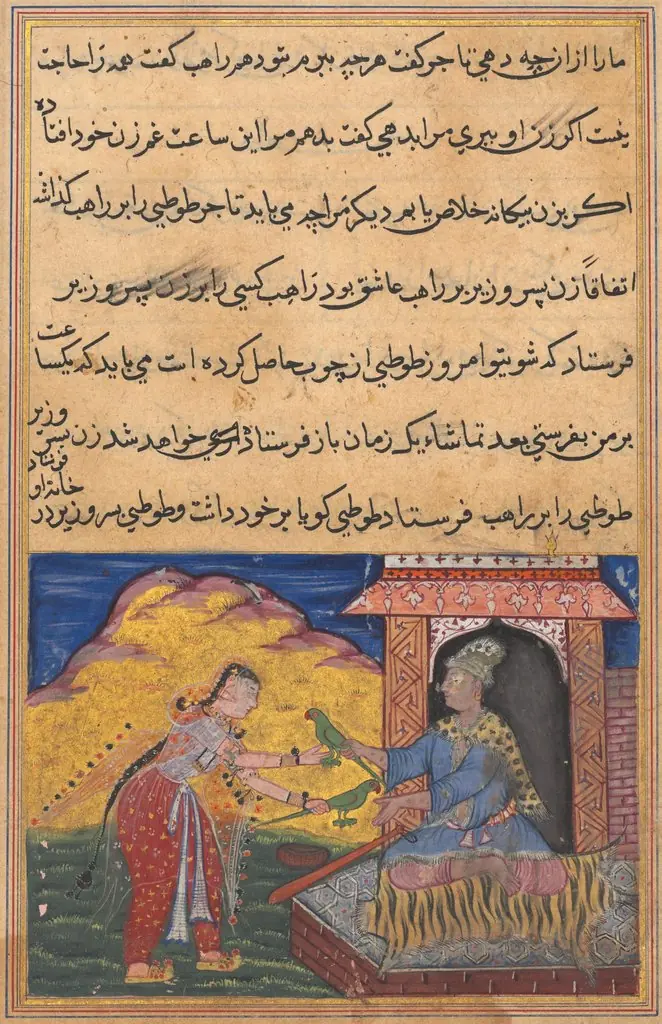 The wife of the son of the vizier brings the magic wooden parrot to her lover, the monk, who exchanges it for the replica, from a Tuti-nama (Tales of a Parrot): Tenth Night
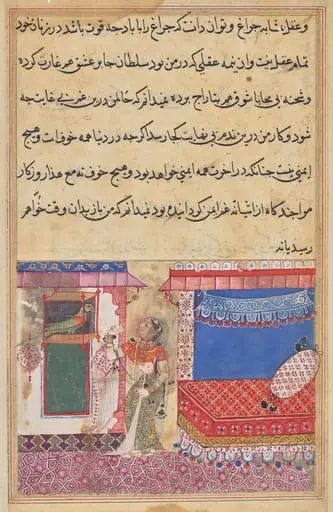 The Parrot Addresses Khujasta at the Beginning of the Eighteenth Night, from a Tuti-nama (Tales of a Parrot)
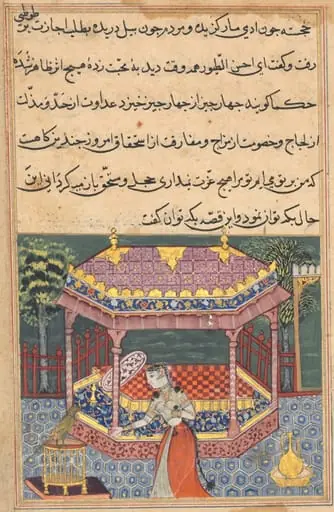 The parrot addresses Khujasta at the beginning of the thirty-seventh night, from a Tuti-nama (Tales of a Parrot)