Artwork
March and April
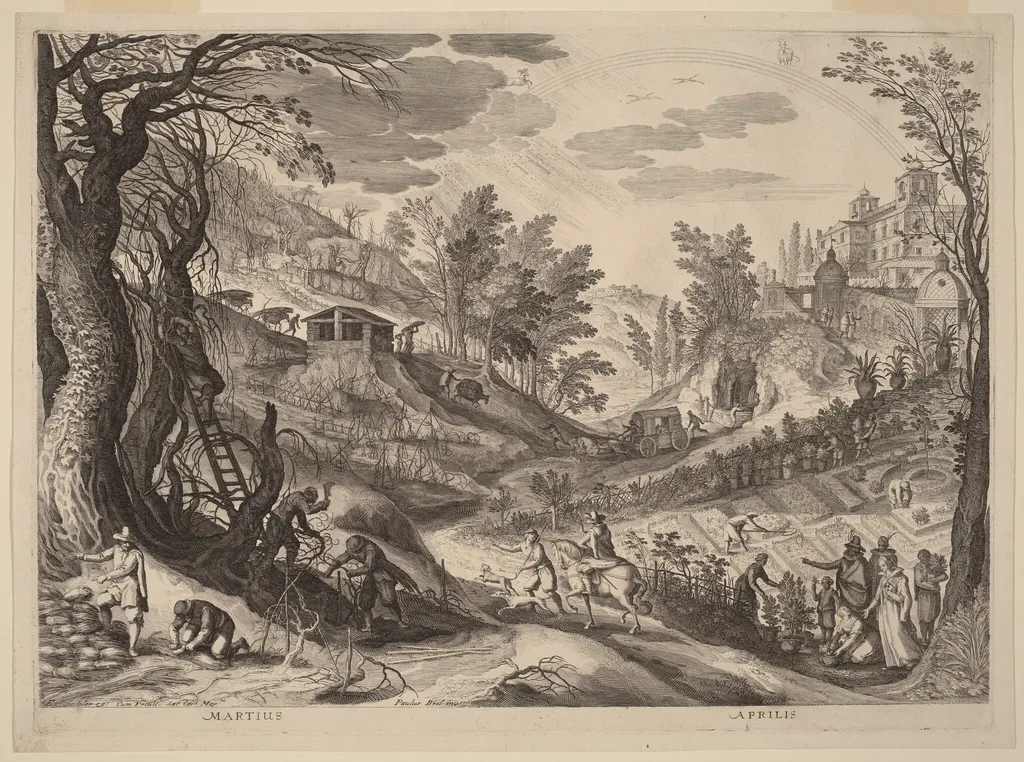
March and April is an ink print by the Baroque artist Aegidius Sadeler II. It dates from 1615 and is held in the collection of the National Gallery of Art.
About this work
Overview
Aegidius Sadeler II produced *March and April* in 1615 as an engraving on laid paper. A Flemish printmaker, Sadeler served at the Prague court of Emperor Rudolf II, where he specialized in both reproductive engravings and original compositions. This work forms part of a series exploring seasonal themes, capturing the transitional character of early spring through meticulous detail.
Subject & Meaning
The print juxtaposes the labors and travels of March and April within a single landscape. On one side, figures engage in agricultural tasks or journey along a path, while a towering tree divides the scene. The composition reflects the cyclical renewal of the seasons, contrasting human activity with the natural world’s gradual awakening under a cloud-streaked sky.
Technique & Style
Fine lines render foliage, fabric, and terrain with precision, while subtle gradations of tone create atmospheric perspective.
Sadeler’s engraving demonstrates the Baroque emphasis on texture and spatial depth. Fine lines render foliage, fabric, and terrain with precision, while subtle gradations of tone create atmospheric perspective. The restrained palette of grays and browns enhances the print’s realism, evoking the muted light of early spring. Such technical mastery aligns with the period’s demand for intricate, reproducible imagery.
History & Provenance
Created during Sadeler’s tenure at the imperial court, *March and April* likely circulated among collectors of Northern European prints. As a reproductive engraver, Sadeler frequently translated paintings into prints, though this work appears to be an original composition. Its survival in multiple impressions attests to its contemporary appeal, though specific early ownership remains undocumented.
Context
The print reflects the late Renaissance and early Baroque fascination with allegory and natural observation. Court artists like Sadeler often depicted seasonal cycles, merging classical themes with contemporary rural life. Such works catered to elite patrons who valued both artistic skill and the symbolic resonance of the changing year, a tradition extending from medieval calendars to Baroque decorative cycles.
Artist & collection
Artist
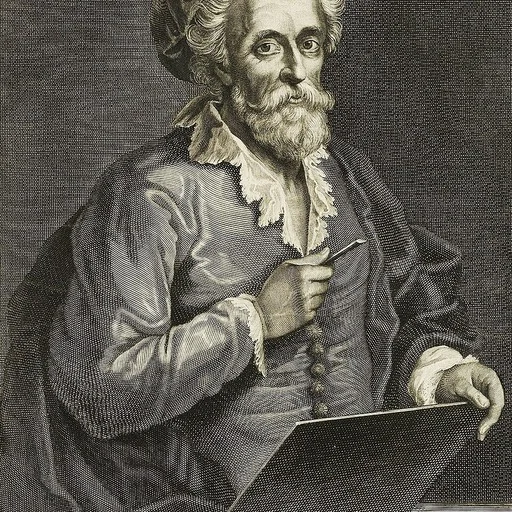
Aegidius Sadeler or Aegidius Sadeler II (1570–1629) was a Flemish engraver who was principally active at the Prague court of Rudolf II, Holy Roman Emperor and his successors.

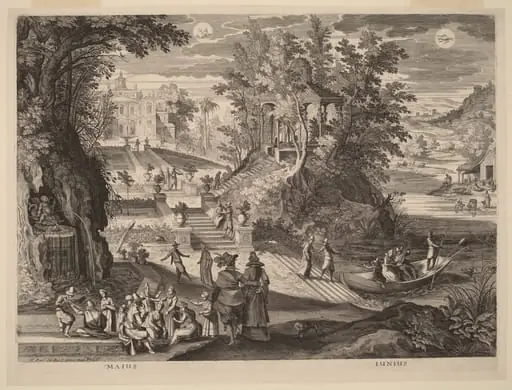 May and June
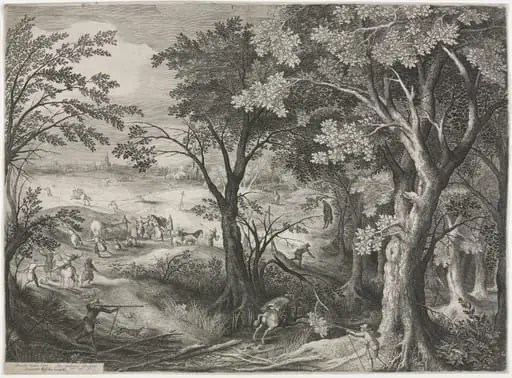 Landscape with Travelers Attacked by a Gang of Robbers
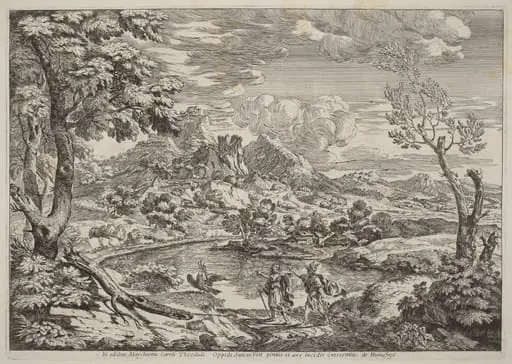 A Man Showing Mercury the Eagle of Jupiter
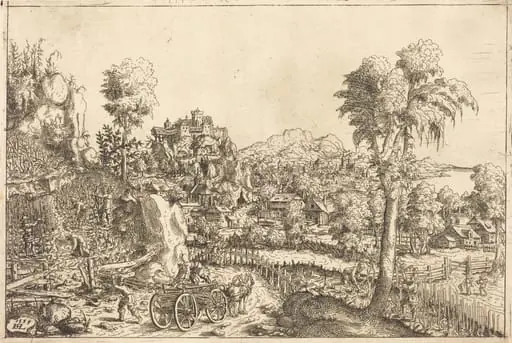 Landscape with a Vineyard
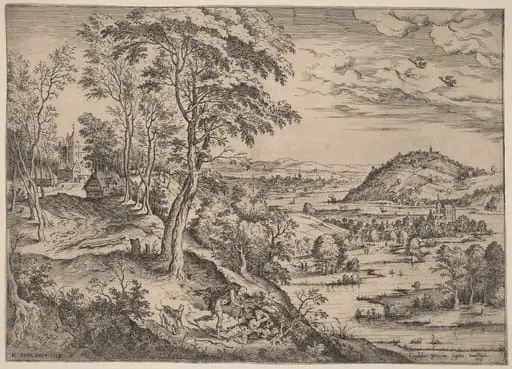 Cephalus and Procris
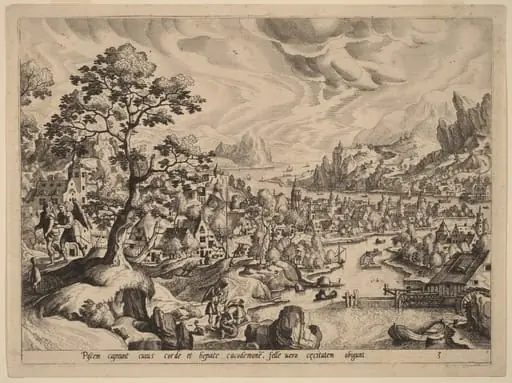 Tobias Catching the Fish in the River Tigris
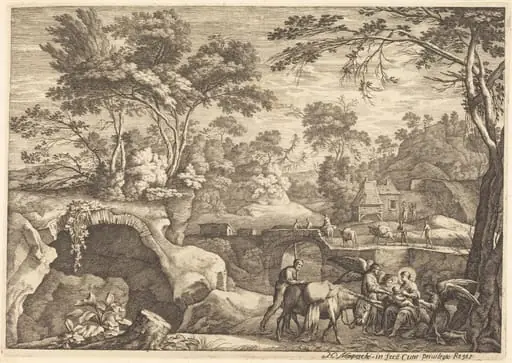 The Flight into Egypt
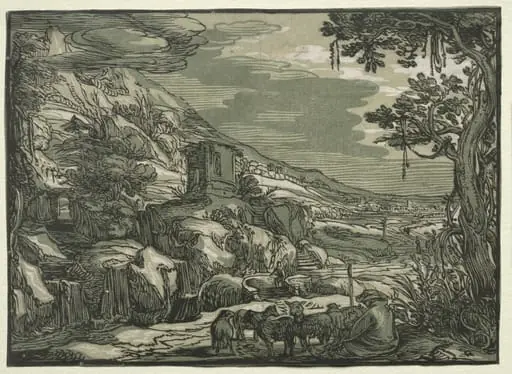 Arcadian Landscape
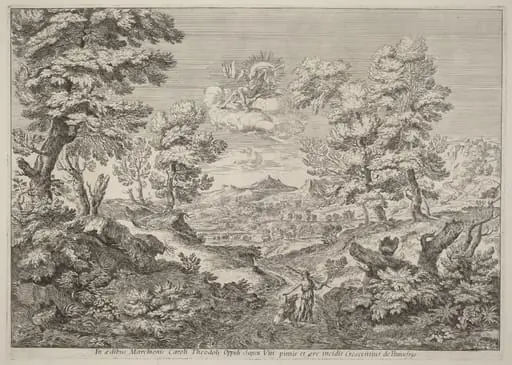 Apollo and a Nymph Leading a Lion
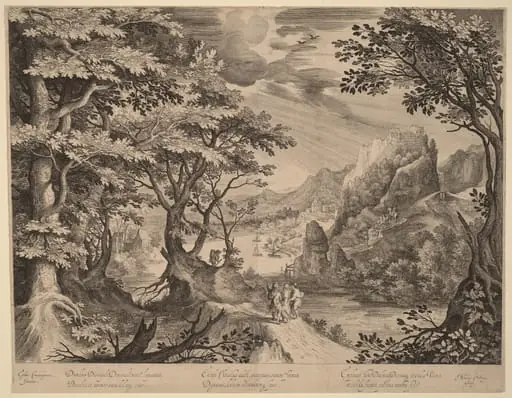 The Disciples on the Way to Emmaus
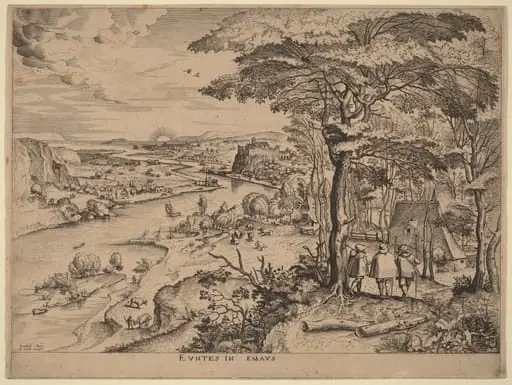 Euntes in Emaus (The Pilgrims to Emmaus)
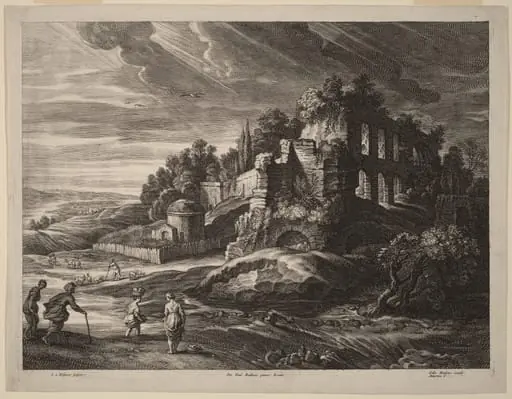 Landscape with Large Roman Ruins