Artwork
Untitled
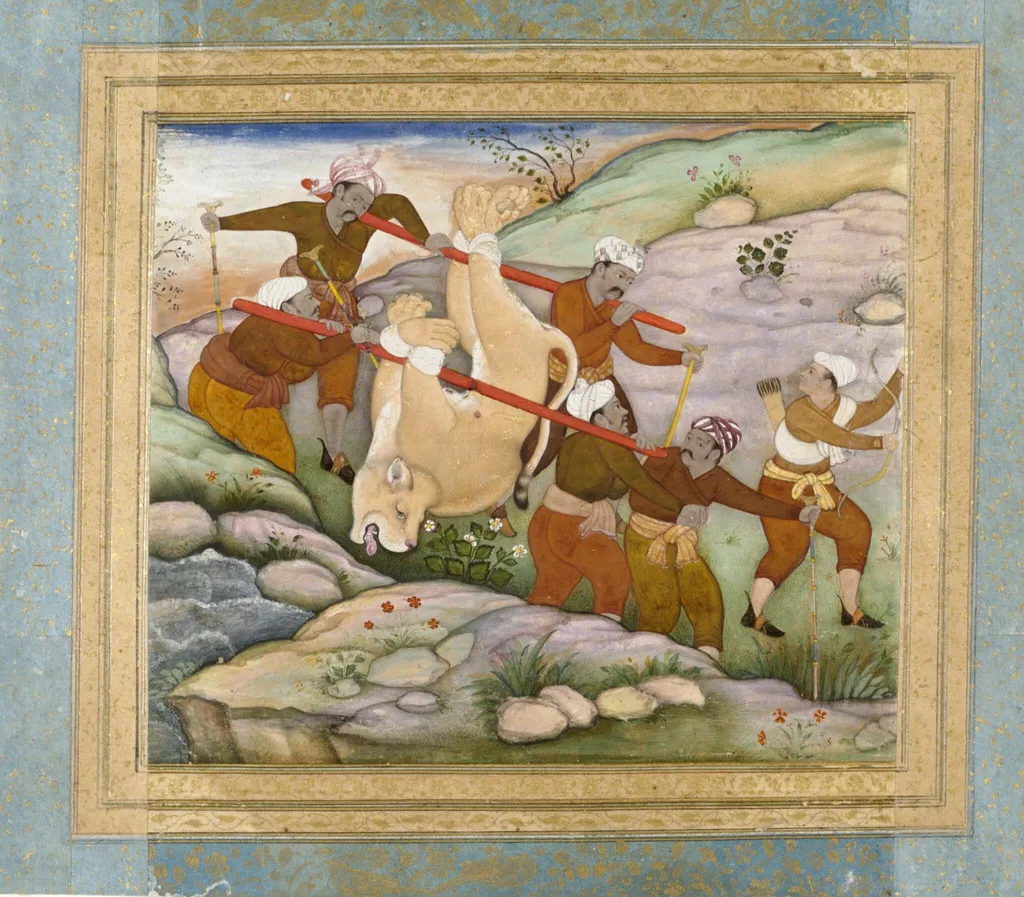
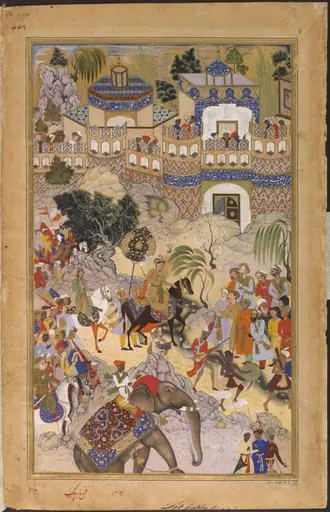
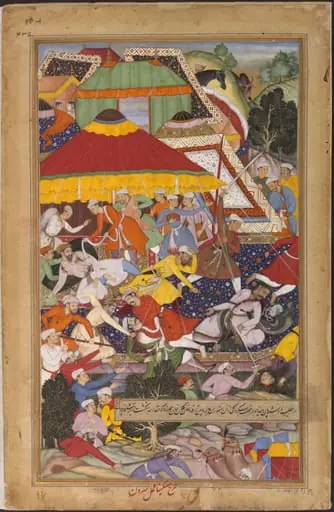
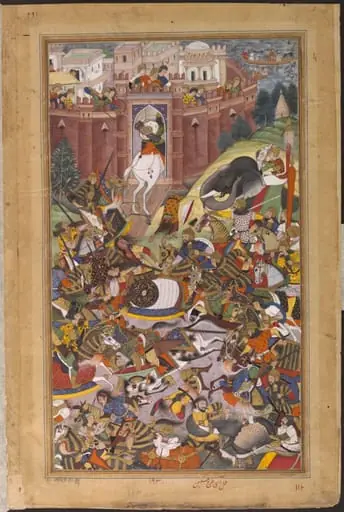
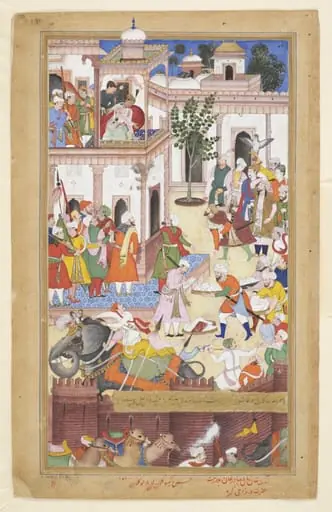
Untitled is a paint painting by the Baroque artist Unknown. It dates from 1602 and is held in the collection of the Victoria and Albert Museum. This painting is executed in opaque watercolour on paper, with subtle gold detailing along the edges.
About this work
Overview
The background suggests a quiet landscape with scattered trees and a narrow stream, framed by muted earth tones and a single vivid red accent.
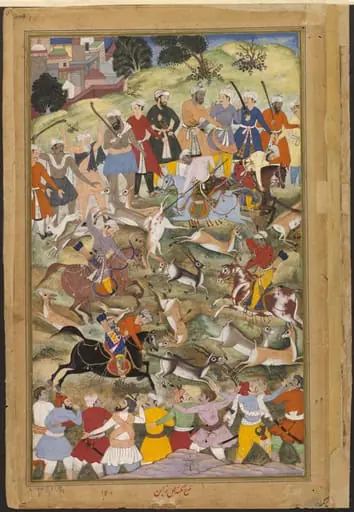
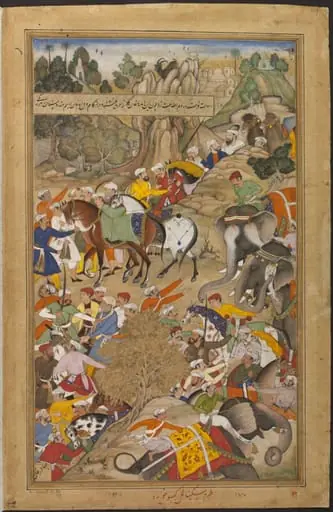
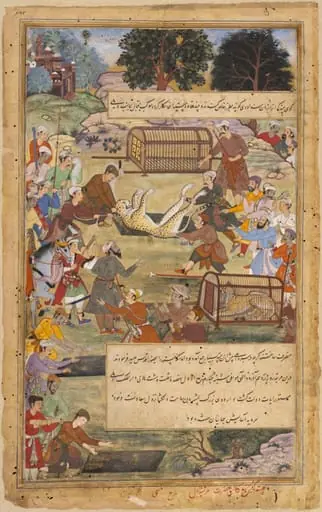
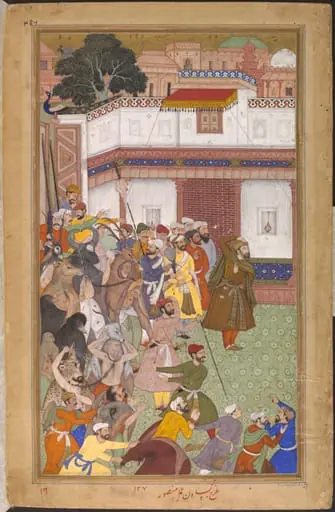
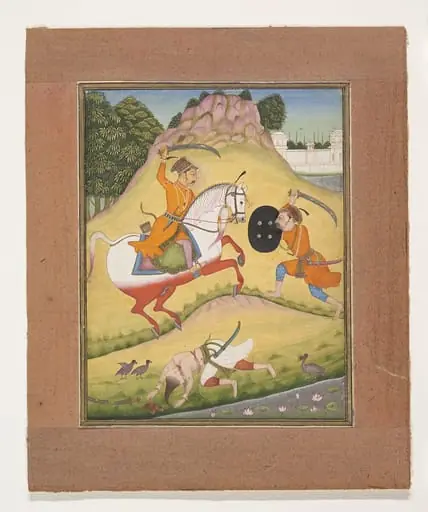
This painting is executed in opaque watercolour on paper, with subtle gold detailing along the edges. It portrays a dynamic scene of men transporting a large, lifeless animal across a rugged hillside at dusk. The figures, dressed in traditional robes and turbans, are engaged in a collective effort, their postures conveying strain and purpose. The background suggests a quiet landscape with scattered trees and a narrow stream, framed by muted earth tones and a single vivid red accent.
Subject & Meaning
The scene depicts the aftermath of a hunt, with a large animal—likely a wild boar—being carried by a group of hunters. The absence of violence in the moment suggests a focus on ritual or labor rather than triumph. The presence of the landscape and the careful arrangement of figures imply a cultural narrative around hunting as communal effort, possibly tied to status, sustenance, or ceremonial practice, rather than mere sport.
Technique & Style
The artist employs opaque watercolour with restrained tonality—earthy browns, greens, and ochres—balanced by a bold vermilion in the animal’s hide and gold highlights along the borders. Brushwork is precise yet fluid, capturing the tension in the men’s limbs and the animal’s weight. The composition directs the eye along the diagonal of the carried form, enhancing the sense of movement across the uneven terrain.
History & Provenance
The painting was acquired from the estate of Captain E.G. Spencer-Churchill, suggesting a colonial-era origin or collection. Its presence in his holdings points to possible acquisition during British administrative or military service in South Asia. The work’s survival in private hands until institutional acquisition reflects its status as a lesser-known but carefully preserved artifact of regional artistic practice.
Context
This image aligns with regional traditions of illustrated manuscripts and album paintings from the 18th to early 19th centuries, where hunting scenes were common subjects. Unlike European depictions emphasizing drama or nobility, this work emphasizes collective labor and natural setting. The inclusion of flora and topography suggests an observational approach, possibly commissioned by local patrons interested in documenting daily or seasonal activities.
Legacy
Though not widely exhibited, the painting contributes to a broader understanding of non-European visual narratives around hunting and labor. Its quiet realism and attention to environmental detail distinguish it from more stylized or symbolic contemporaries. It remains a quiet testament to the artistic practices of regional workshops that documented everyday life with nuance and restraint.
Artist & collection

 Domestic Scene
 Giacomo and Cardinal Marco, investing Andrea, Abbot of San Zeno, with his Benefice
 The Nymph of Fontainebleau
 Portrait of a Woman
 Madonna and Child with Saints in the Enclosed Garden
 Venus and Minerva
 Family Group of Four on Sofa
 Wall painting from Room H of the Villa of P. Fannius Synistor at Boscoreale