Artwork
東海道五十三次 吉田|Yoshida; Toyokawa-Bashi, Toyokawa Bridge
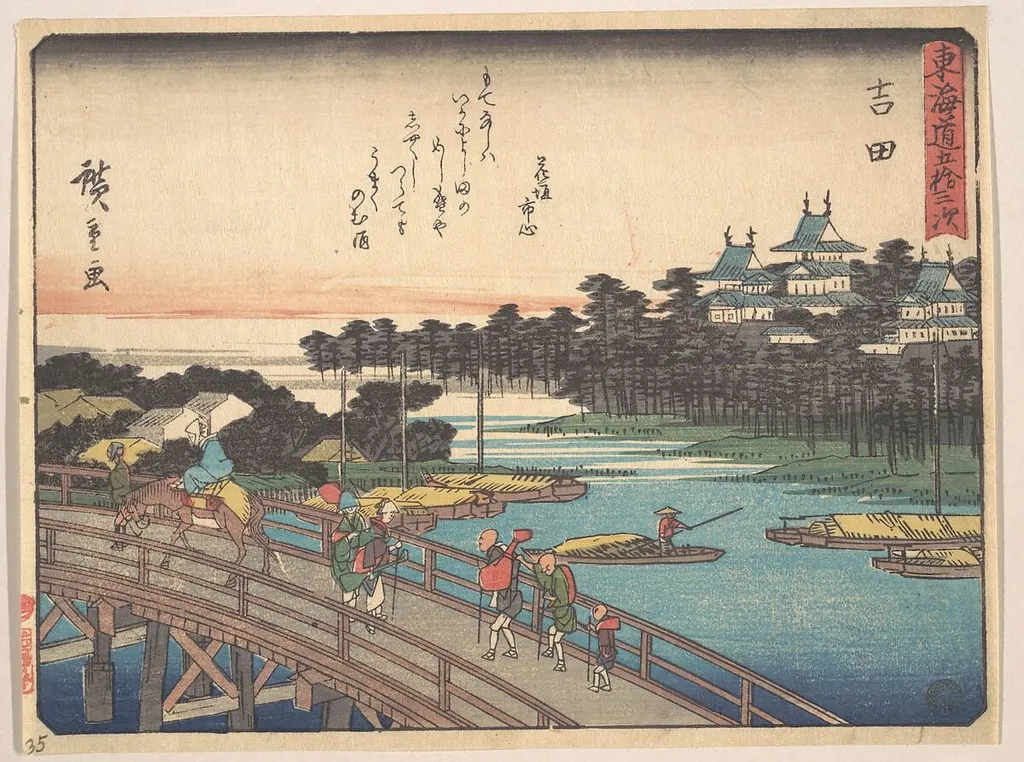
東海道五十三次 吉田|Yoshida; Toyokawa-Bashi, Toyokawa Bridge is an ink print by the Romanticist artist Utagawa Hiroshige. It dates from 1838 and is held in the collection of the Metropolitan Museum of Art.
About this work
Overview
It depicts the Yoshida post station, centered on the Toyokawa Bridge, and exemplifies Hiroshige’s focus on travel landscapes rather than urban nightlife.
Created around 1838 by Utagawa Hiroshige, this woodblock print is one of fifty-three scenes in the series *The Fifty-three Stations of the Tōkaidō*. It depicts the Yoshida post station, centered on the Toyokawa Bridge, and exemplifies Hiroshige’s focus on travel landscapes rather than urban nightlife. The print combines ink and color on paper, following traditional ukiyo-e methods to capture a moment of transit along Japan’s most important road.
Subject & Meaning
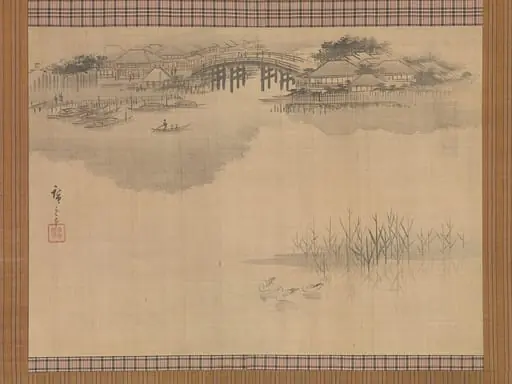
The scene portrays travelers crossing the bridge—pedestrians, horses, and porters—engaged in the routine of journeying along the Tōkaidō. Behind them, temple buildings with curved eaves rise above the riverbank, while dense trees frame the water. The composition suggests the quiet rhythm of daily travel, emphasizing movement and place over drama. The soft pink sky hints at dawn or dusk, reinforcing the passage of time in a world defined by pilgrimage and commerce.
Technique & Style
Hiroshige employed flat planes of color and simplified forms to suggest depth without perspective tricks. The bridge’s structure is rendered with clean lines, while the crowd is suggested through clustered figures rather than individual detail. Washes of pale pink and green create atmospheric haze, and the river’s reflection adds subtle rhythm. The print’s clarity and balance reflect the precision of woodblock carving, where each color required a separate carved block.
History & Provenance
The print was produced during the late Edo period as part of a commercially successful series commissioned by the publisher Hoeido. It was widely distributed, making Hiroshige’s landscapes accessible beyond elite circles. Surviving impressions are held in major collections worldwide, including the British Museum and the Museum of Fine Arts, Boston, attesting to its early and enduring circulation.
Context
The Tōkaidō connected Edo with Kyoto, serving as a vital artery for pilgrims, merchants, and officials. Stations like Yoshida offered rest and lodging, becoming cultural touchpoints. Hiroshige’s series responded to growing public interest in travel, blending topographical accuracy with poetic mood. Unlike earlier ukiyo-e focused on courtesans or actors, this work elevated landscape as a subject worthy of artistic attention.
Legacy
Hiroshige’s *Tōkaidō* series influenced later artists in Japan and Europe, notably inspiring Impressionists with its compositional economy and sensitivity to light. The print’s quiet observation of ordinary life helped redefine Japanese printmaking’s scope. Today, it remains a key reference for understanding how everyday travel was visualized in 19th-century Japan, bridging art and social history.
Artist & collection
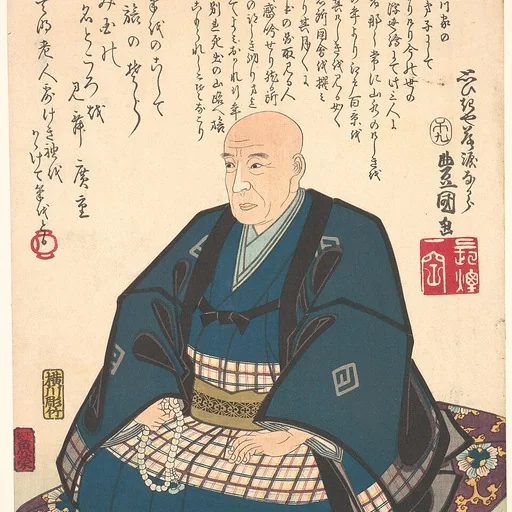
Artist
Utagawa Hiroshige (歌川 広重) or Andō Hiroshige (安藤 広重), born Andō Tokutarō (安藤 徳太郎; 1797 – 12 October 1858), was a Japanese ukiyo-e artist, considered the last great master of that tradition.

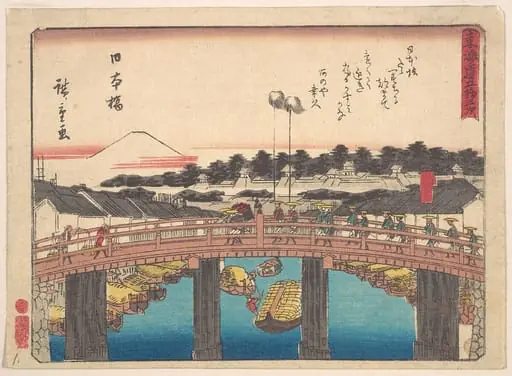 東海道五十三次 日本橋|Nihon Bashi
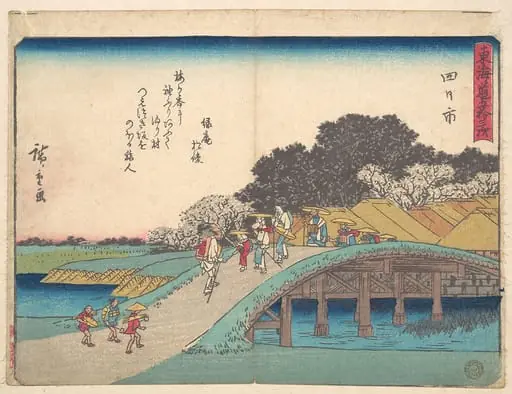 東海道五十三次 四日市|Yokkaichi
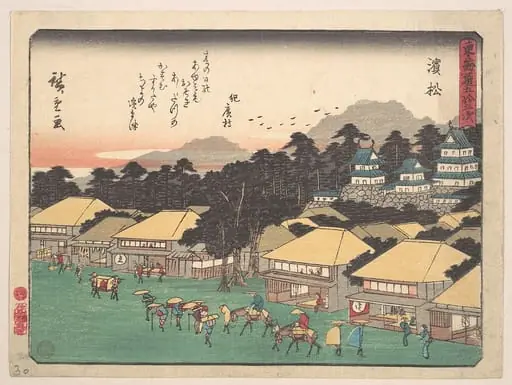 東海道五十三次 浜松|Hamamatsu
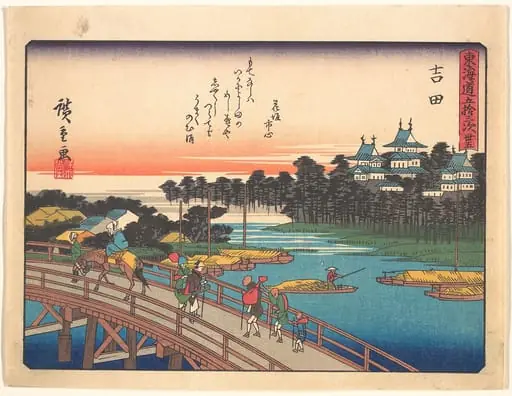 東海道五十三次 吉田|Yoshida, from the series The Fifty-three Stations of the Tōkaidō Road
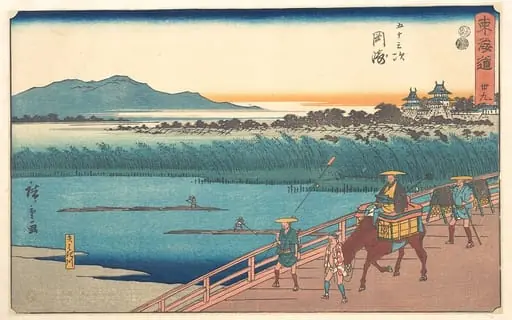 東海道五十三次 岡崎 矢はぎ川|Okazaki
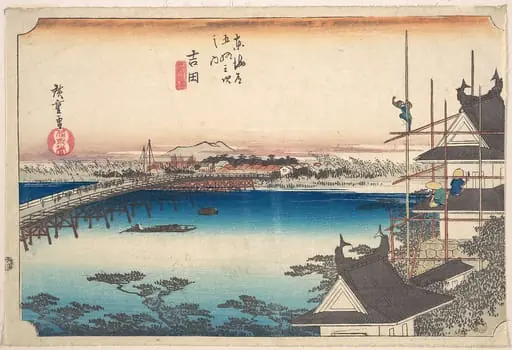 東海道五十三次之内 吉田 豊川橋|Yoshida, Toyokawa Hashi
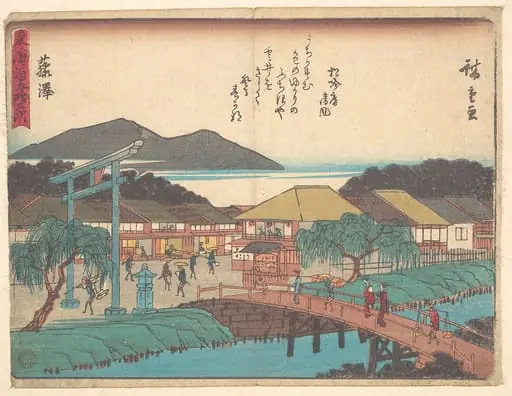 東海道五十三次 藤沢|Fujisawa
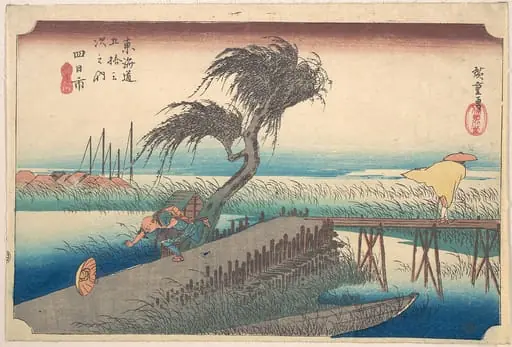 東海道五十三次之内 四日市 三重川|Yokkaichi, Sanchokawa
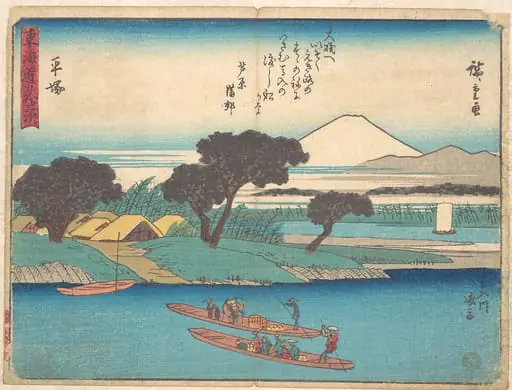 東海道五十三次 平塚|Hiratsuka
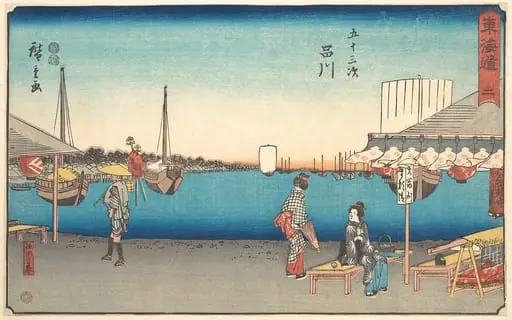 東海道五十三次 品川 鮫州の茶や|Shinagawa