Artwork
東海道五十三次 石薬師|Ishiyakushi, from the series The Fifty-three Stations of the Tōkaidō Road
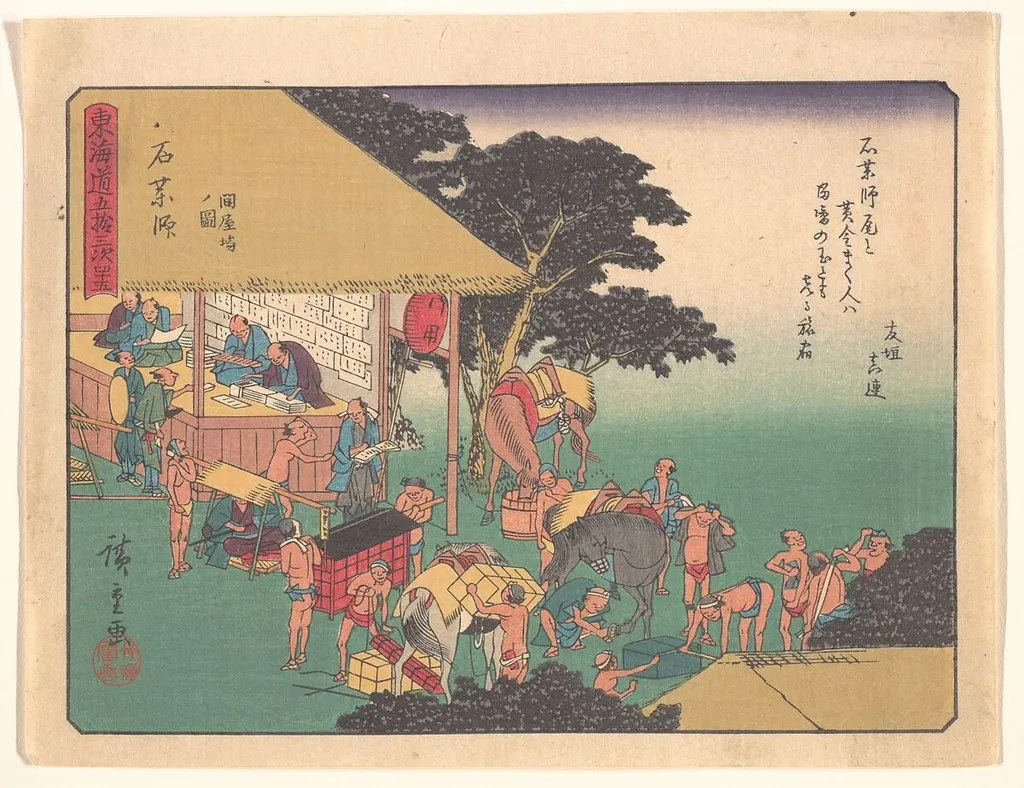
東海道五十三次 石薬師|Ishiyakushi, from the series The Fifty-three Stations of the Tōkaidō Road is an ink print by Utagawa Hiroshige. It is held in the collection of the Metropolitan Museum of Art.
About this work
Overview
This woodblock print is part of Utagawa Hiroshige’s series depicting the fifty-three post stations along the Tōkaidō, the major road linking Edo and Kyoto.
This woodblock print is part of Utagawa Hiroshige’s series depicting the fifty-three post stations along the Tōkaidō, the major road linking Edo and Kyoto. Created in the 1830s, not 1916, it belongs to a landmark body of work that shifted ukiyo-e focus from urban pleasure quarters to the quiet rhythms of travel and landscape. The print captures a moment of transit at Ishiyakushi, one of the route’s waystations, rendered with attention to seasonal atmosphere and spatial depth.
Subject & Meaning
The scene portrays travelers and porters at rest near a roadside inn, engaged in the routine tasks of loading packhorses and preparing to continue their journey. The presence of a red lantern and a large tree suggests a familiar, established stopping point along the road. Rather than emphasizing grandeur, Hiroshige highlights the ordinary rhythms of pilgrimage and commerce, reflecting the cultural significance of the Tōkaidō as a conduit of daily life across Japan.
Technique & Style
Hiroshige employed fine woodblock carving and layered color printing to achieve subtle gradations in sky, water, and foliage. Soft blues and muted greens dominate, evoking a hazy, early morning or late afternoon light. The composition balances horizontal bands of land and water with vertical elements—trees, buildings, figures—to create rhythmic movement. Details like the lantern and rooflines are rendered with precision, grounding the scene in tangible reality.
History & Provenance
The print was produced around 1833–1834 by Hiroshige and his publisher, Hoeido, as part of the first edition of the Tōkaidō series. It quickly gained popularity for its poetic realism and was reprinted multiple times. Early impressions, like this one, are distinguished by delicate ink lines and hand-applied pigments. The work entered public collections in the late 19th century, becoming a reference for both Japanese and Western artists interested in landscape representation.
Context
During the Edo period, the Tōkaidō was the most traveled road in Japan, used by samurai, merchants, pilgrims, and officials. While ukiyo-e traditionally depicted courtesans and actors, Hiroshige’s series redefined the genre by treating travel itself as worthy subject matter. The print reflects a growing public interest in geography and regional identity, fueled by improved infrastructure and the rise of leisure travel among the urban middle class.
Legacy
Hiroshige’s Tōkaidō series influenced generations of artists, including French Impressionists and later Japanese printmakers. Its emphasis on transient light, weather, and quiet human activity prefigured modern landscape aesthetics. The print remains a key example of how everyday scenes, when rendered with sensitivity, can convey broader cultural and emotional truths about movement, place, and time.
Artist & collection
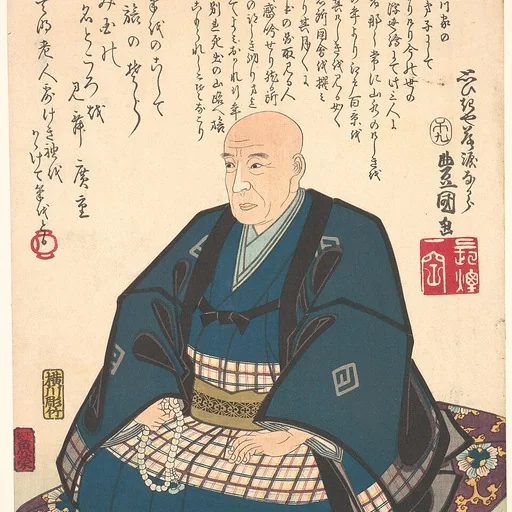
Artist
Utagawa Hiroshige (歌川 広重) or Andō Hiroshige (安藤 広重), born Andō Tokutarō (安藤 徳太郎; 1797 – 12 October 1858), was a Japanese ukiyo-e artist, considered the last great master of that tradition.


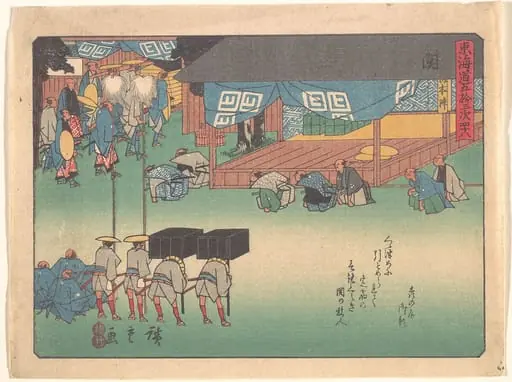 東海道五十三次 関|Seki, from the series The Fifty-three Stations of the Tōkaidō Road
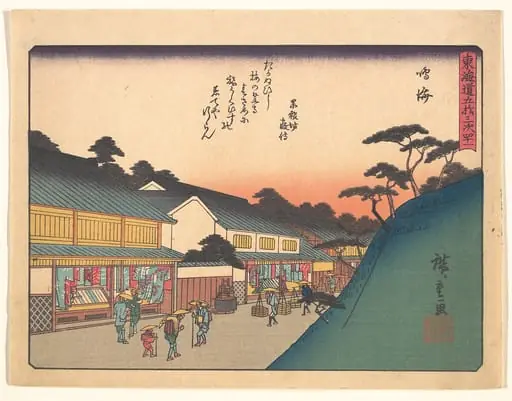 東海道五十三次 鳴海|Narumi, from the series The Fifty-three Stations of the Tōkaidō Road
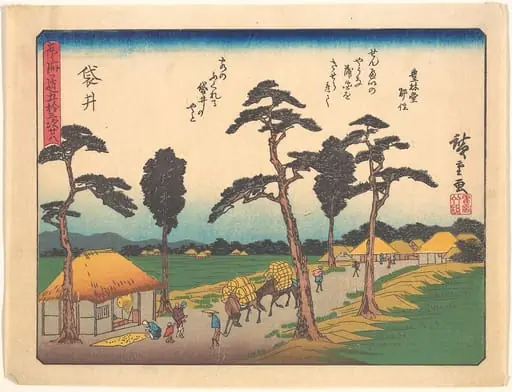 東海道五十三次 袋井|Fukuroi, from the series The Fifty-three Stations of the Tōkaidō Road
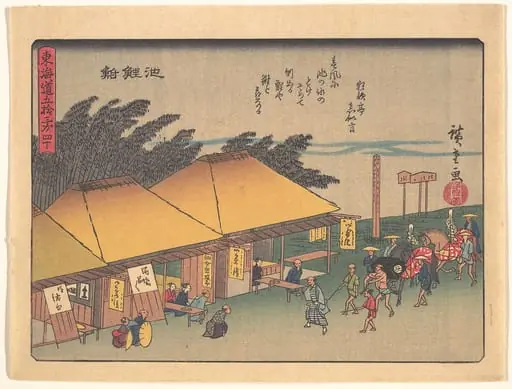 東海道五十三次 池鯉鮒|Chiryūshuku, from the series The Fifty-three Stations of the Tōkaidō Road
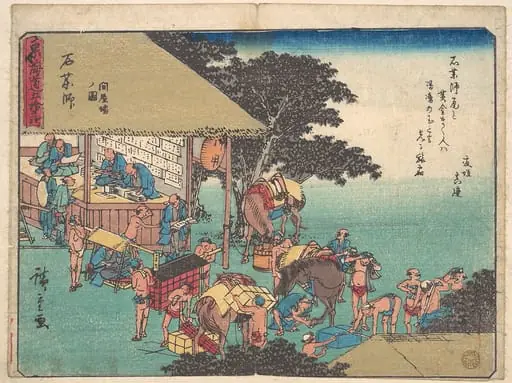 東海道五十三次 石薬師|Ishiyakushi
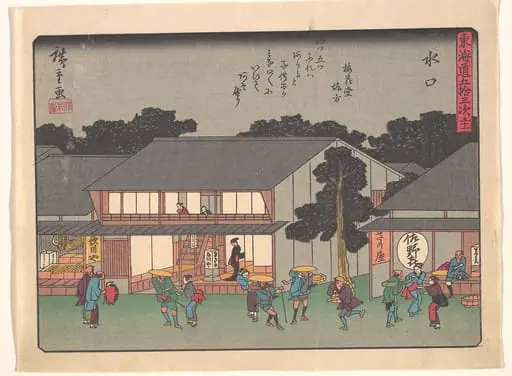 東海道五十三次 水口|Mizukuchi, from the series The Fifty-three Stations of the Tōkaidō Road
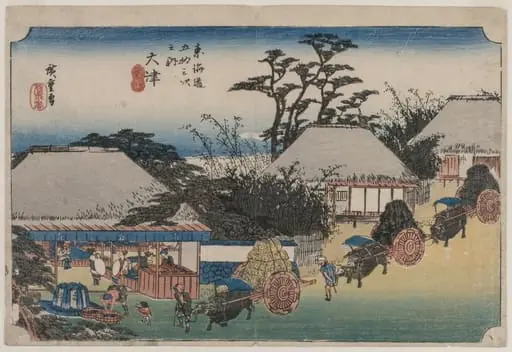 The Fifty-Three Stations of the Tokaido: Otsu
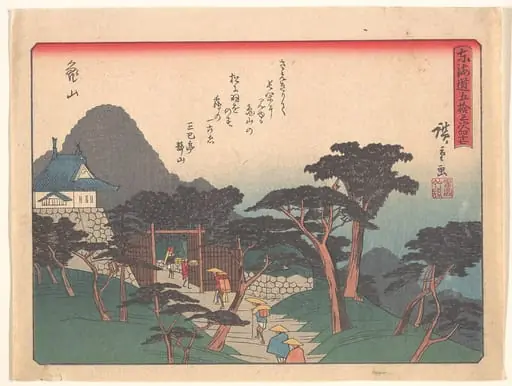 東海道五十三次 亀山|Kameyama, from the series The Fifty-three Stations of the Tōkaidō Road
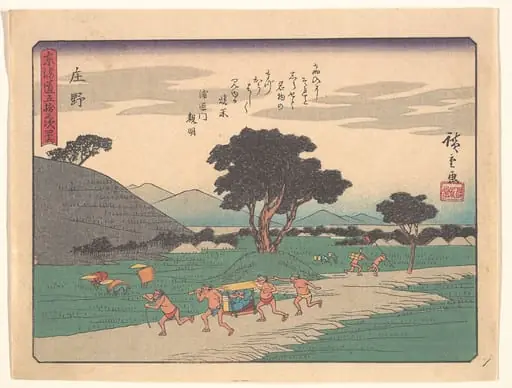 東海道五十三次 庄野|Shōno, from the series The Fifty-three Stations of the Tōkaidō Road
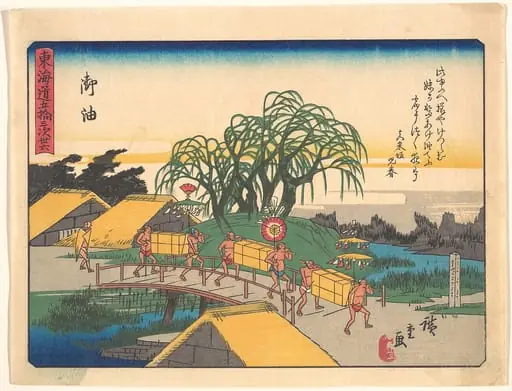 東海道五十三次 御油|Goyu, from the series The Fifty-three Stations of the Tōkaidō Road