Artwork
東海道五十三次 関|Seki, from the series The Fifty-three Stations of the Tōkaidō Road
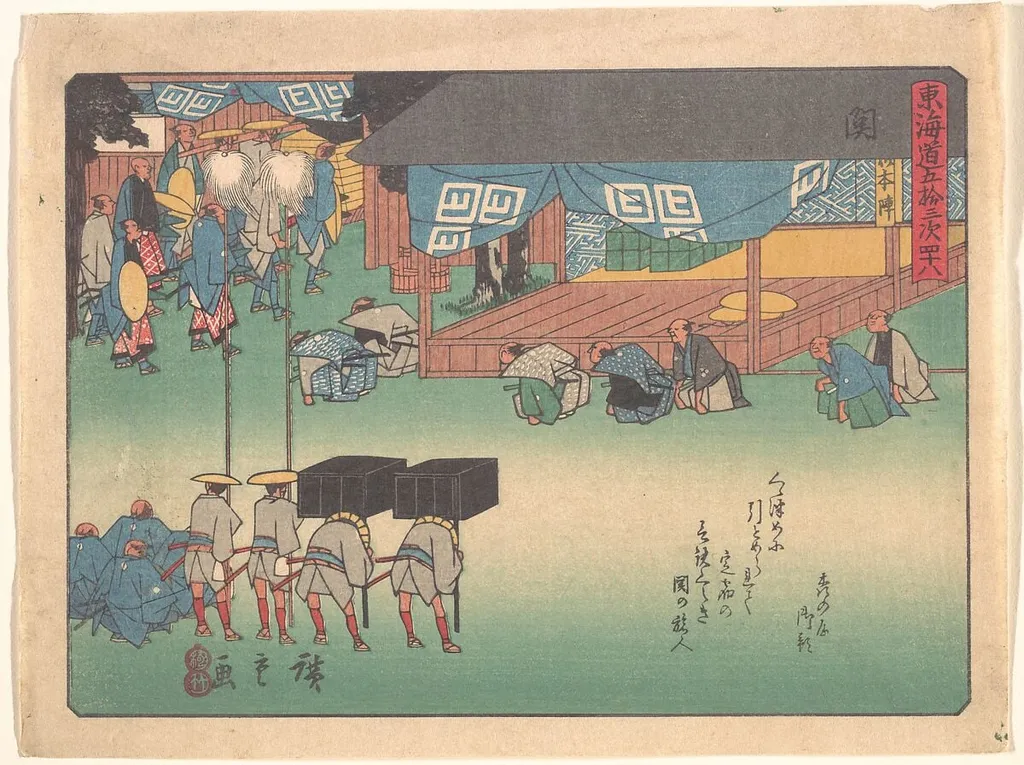
東海道五十三次 関|Seki, from the series The Fifty-three Stations of the Tōkaidō Road is an ink print by Utagawa Hiroshige. It is held in the collection of the Metropolitan Museum of Art.
About this work
Overview
This woodblock print is part of Utagawa Hiroshige’s series depicting the fifty-three rest stops along the Tōkaidō, the primary road linking Edo and Kyoto. Created in the 1830s, not 1916, it captures a moment of transit at the station of Seki. Rendered in ink and color on paper, the work exemplifies the ukiyo-e tradition’s shift from urban nightlife to the quiet rhythms of travel and landscape.
Subject & Meaning
The scene portrays a bustling roadside halt where travelers rest and transport moves steadily forward. A horse-drawn carriage, escorted by attendants, advances on the left, while groups of pedestrians and porters gather beneath a shaded awning. The composition suggests the rhythm of pilgrimage and commerce along the Tōkaidō, emphasizing movement and temporary respite rather than static grandeur.
Technique & Style
Hiroshige employed bold, flat areas of color and simplified forms to enhance legibility and visual rhythm. The use of layered woodblock printing allowed for subtle gradations in sky and water, while the crisp outlines of figures and architecture convey clarity. His palette—bright yet restrained—reflects the commercial appeal of ukiyo-e prints meant for mass circulation.
History & Provenance
Produced in the 1830s during Hiroshige’s peak period, the print was widely distributed as part of a popular travel series. It entered the collection of The Metropolitan Museum of Art through later acquisitions, reflecting its enduring status as a representative example of Edo-period printmaking. The original publisher and edition details remain documented in museum archives.
Context
The Tōkaidō was a vital artery for merchants, pilgrims, and officials during the Edo period. Hiroshige’s series responded to growing public interest in travel and regional identity, offering viewers a visual guide to the road’s stations. Unlike earlier ukiyo-e focused on courtesans or actors, these prints celebrated the natural and social landscape of Japan’s highways.
Legacy
Hiroshige’s Tōkaidō series influenced both Japanese and Western artists, notably inspiring Impressionists and Post-Impressionists with its compositional economy and atmospheric perspective. The prints helped define the aesthetic of Japanese landscape art internationally and remain key references in the study of printmaking and travel culture in 19th-century Japan.
Artist & collection
Artist
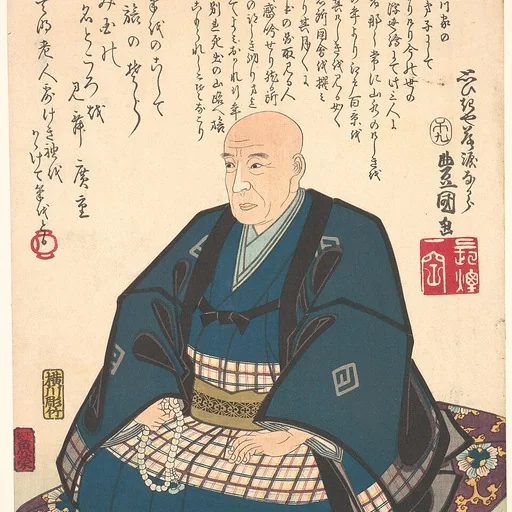
Utagawa Hiroshige (歌川 広重) or Andō Hiroshige (安藤 広重), born Andō Tokutarō (安藤 徳太郎; 1797 – 12 October 1858), was a Japanese ukiyo-e artist, considered the last great master of that tradition.

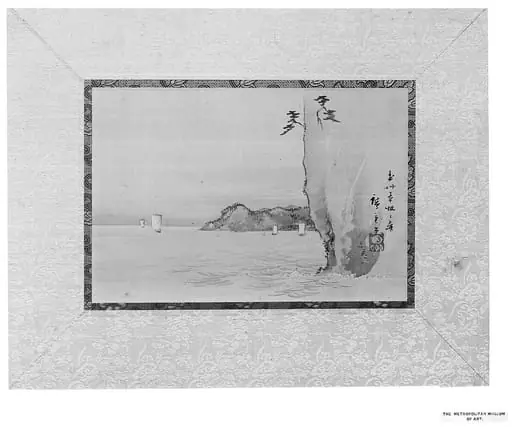
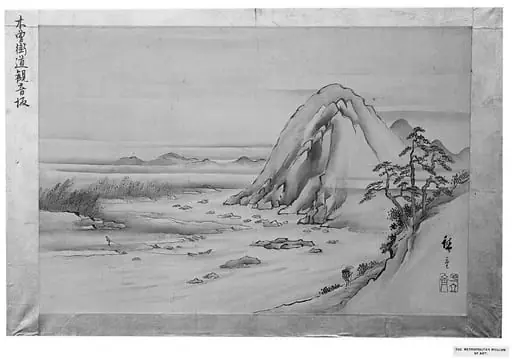
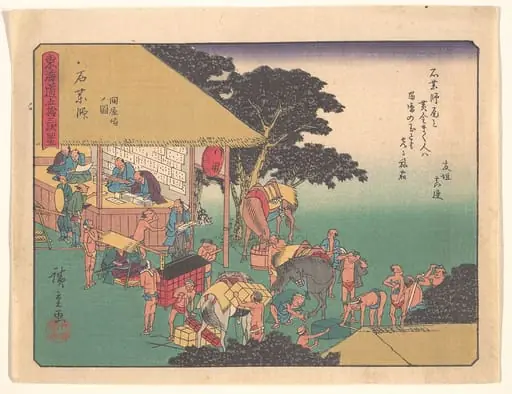 東海道五十三次 石薬師|Ishiyakushi, from the series The Fifty-three Stations of the Tōkaidō Road
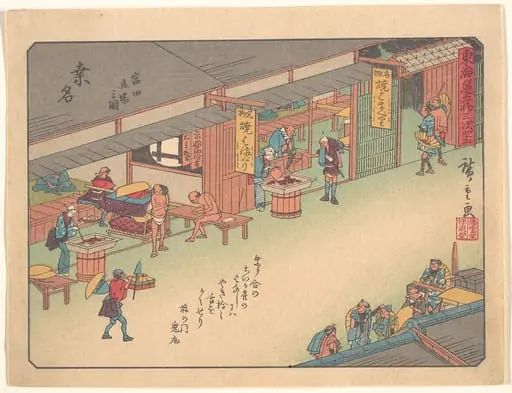 東海道五十三次 桑名|Kuwana, from the series The Fifty-three Stations of the Tōkaidō Road
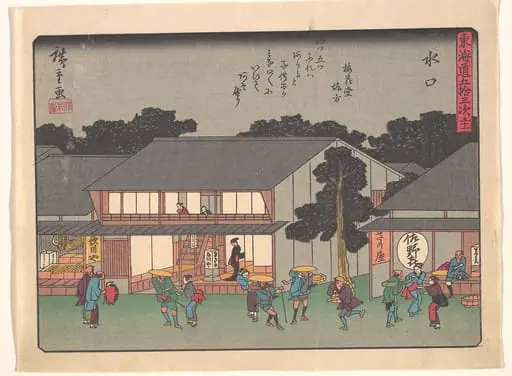 東海道五十三次 水口|Mizukuchi, from the series The Fifty-three Stations of the Tōkaidō Road
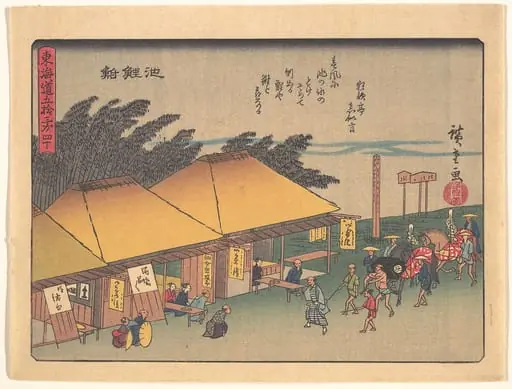 東海道五十三次 池鯉鮒|Chiryūshuku, from the series The Fifty-three Stations of the Tōkaidō Road
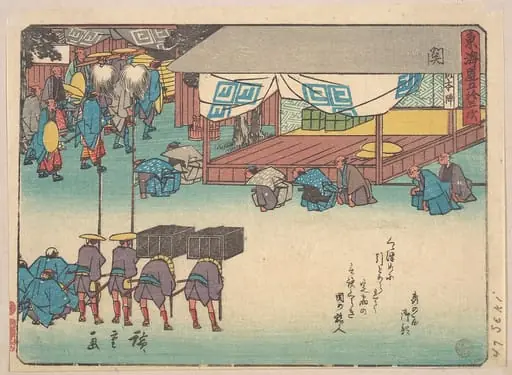 東海道五十三次 関|Seki
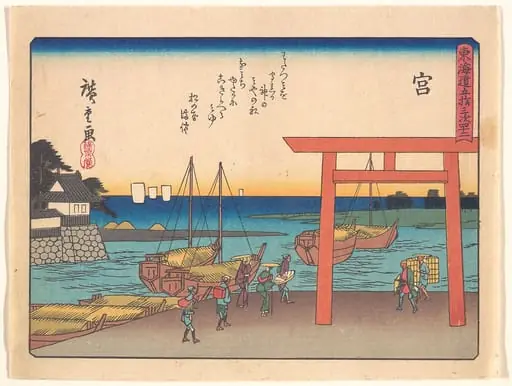 東海道五十三次 宮|Miya, from the series The Fifty-three Stations of the Tōkaidō Road
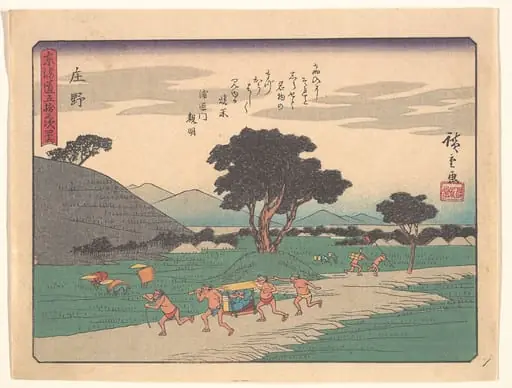 東海道五十三次 庄野|Shōno, from the series The Fifty-three Stations of the Tōkaidō Road
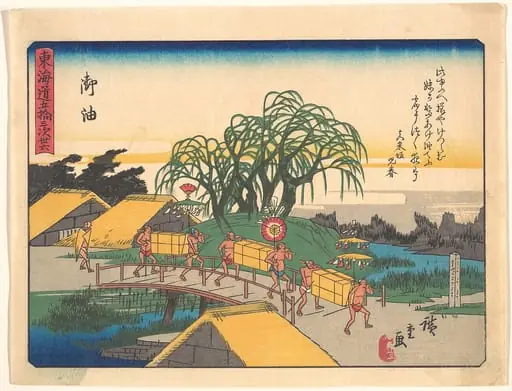 東海道五十三次 御油|Goyu, from the series The Fifty-three Stations of the Tōkaidō Road
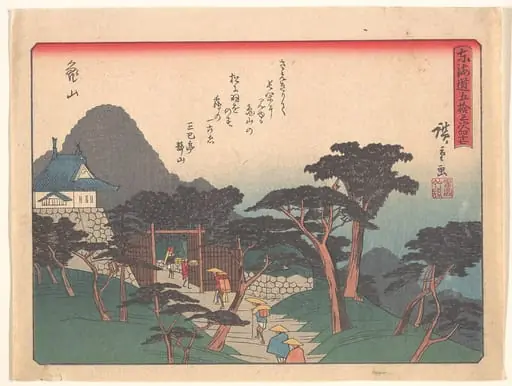 東海道五十三次 亀山|Kameyama, from the series The Fifty-three Stations of the Tōkaidō Road
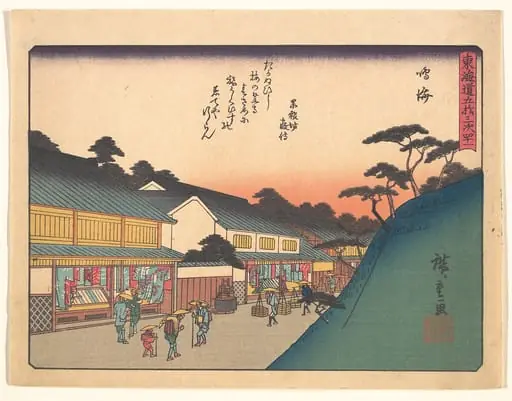 東海道五十三次 鳴海|Narumi, from the series The Fifty-three Stations of the Tōkaidō Road
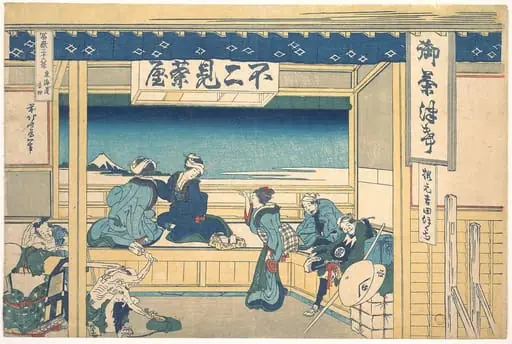 冨嶽三十六景 東海道吉田|Yoshida on the Tōkaidō (Tōkaidō Yoshida), from the series Thirty-six Views of Mount Fuji (Fugaku sanjūrokkei)