Artwork
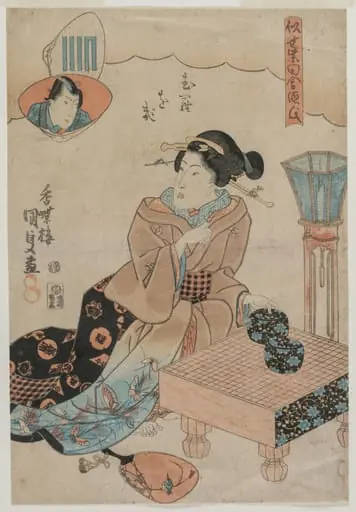
Woman with a Fan in her Left Hand Combing her Hair
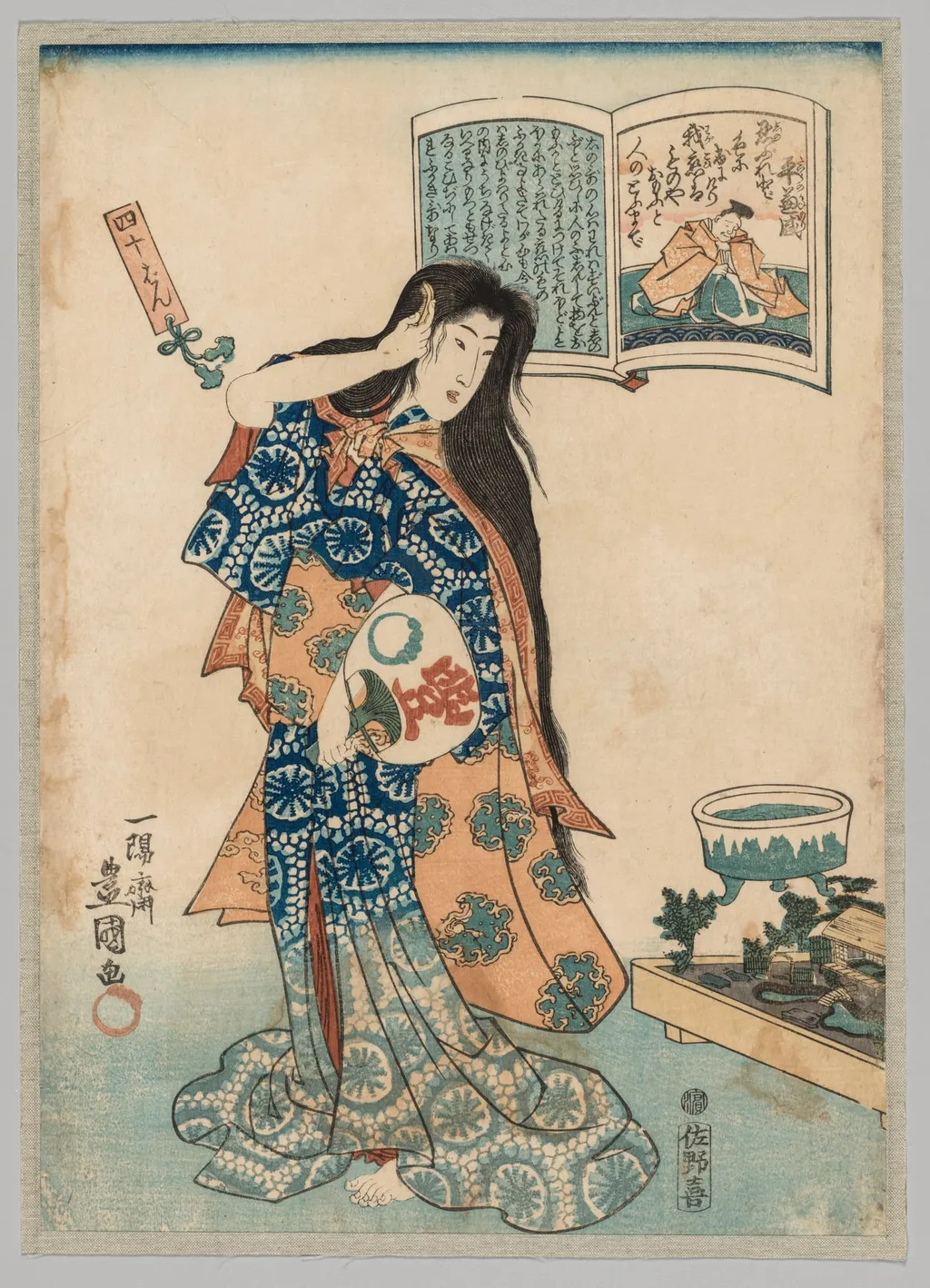
Woman with a Fan in her Left Hand Combing her Hair is a print by the Romanticist artist Utagawa Kunisada. It dates from 1825 and is held in the collection of the Cleveland Museum of Art.
About this work
Overview
This woodblock print, created by Utagawa Kunisada in 1825, depicts a woman in a moment of private grooming. Rendered in the ukiyo-e tradition, it combines elegant line work with layered color to capture a quiet, intimate scene. The composition balances figure and detail, drawing attention to both the subject and the subtle narrative elements surrounding her.
Subject & Meaning
The woman, engaged in the act of combing her hair, embodies a common theme in Edo-period prints: the private rituals of urban women. Her poised demeanor and the inclusion of a book and potted tree suggest an interior space rich with cultural refinement. The miniature scene within the book may allude to literary or romantic ideals, reinforcing themes of introspection and cultivated leisure.
Technique & Style
The book’s inset scene is rendered with delicate lines, contrasting with the bolder contours of the main figure, demonstrating layered visual storytelling.
Kunisada employed fine woodblock carving and hand-coloring to achieve subtle gradations in the robe’s floral pattern, using blues, peach, and white to create depth. The background is deliberately minimal, allowing the figure and embedded imagery to dominate. The book’s inset scene is rendered with delicate lines, contrasting with the bolder contours of the main figure, demonstrating layered visual storytelling.
History & Provenance
The print was produced during the height of Kunisada’s career, when demand for actor and beauty prints was strong in Edo. It entered the collection of The Cleveland Museum of Art through established channels of early 20th-century Japanese art acquisition, likely as part of a broader effort to document ukiyo-e’s diversity beyond theatrical subjects.
Context
In early 19th-century Japan, prints like this catered to a growing urban middle class interested in domestic elegance and literary allusion. The inclusion of a book and potted plant reflects the aesthetic values of the time—where nature, literature, and personal ritual intertwined in depictions of feminine life, offering viewers both beauty and cultural resonance.
Legacy
Kunisada’s work in this genre helped define the visual language of bijin-ga, or beauty prints, influencing later artists and collectors. While less celebrated than contemporaries like Hokusai, his attention to domestic detail and layered symbolism contributed to a richer understanding of everyday life in Edo-period Japan, preserved in museum collections worldwide.
Artist & collection
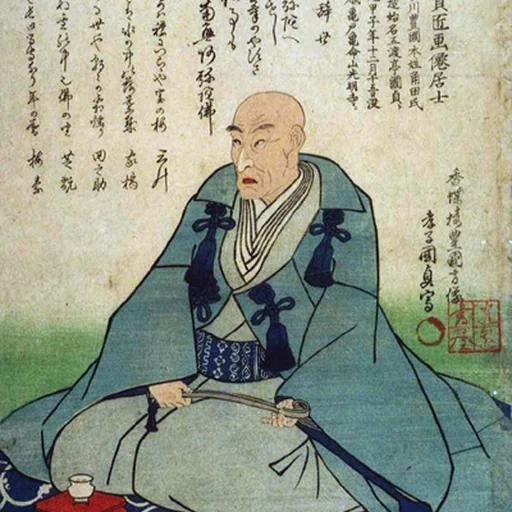

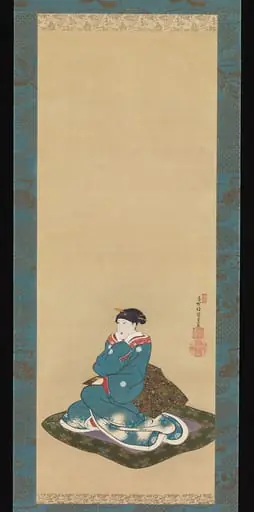 二代目岩井粂三郎の肖像|Portrait of Iwai Kumesaburō II
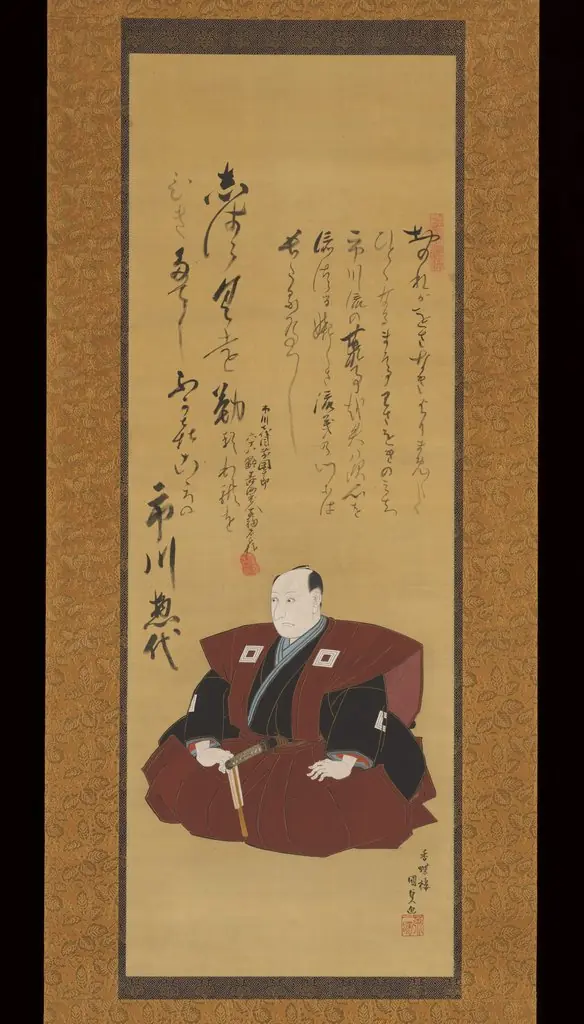 Memorial Portrait of the Actor Ichikawa Ōmezō I
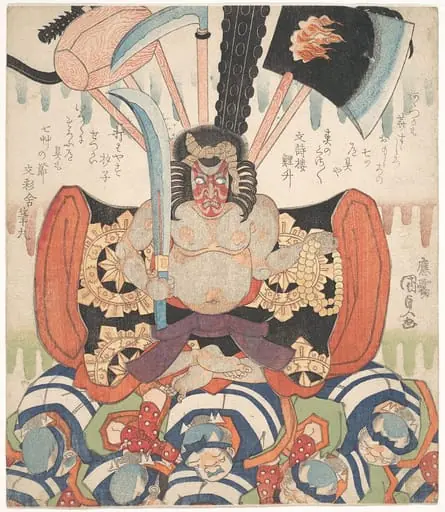 Untitled
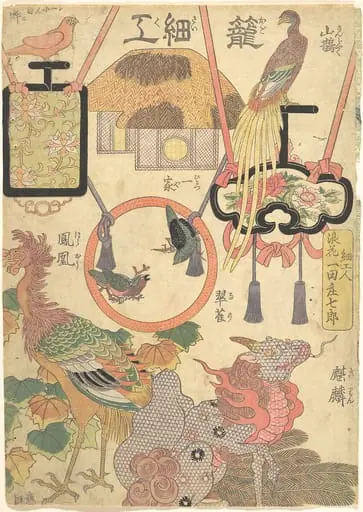 「籠細工 浪花細工人一田庄七郎」|Basketry Work: By the Craftsman Ichida Shōshichirō of Naniwa (Kagosaiku Naniwa saikujin Ichida Shōshichirō)
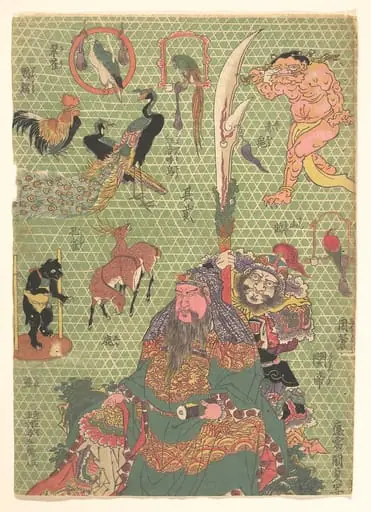 歌川国貞画 「籠細工 浪花細工人 一田庄七郎」|Basketry Work: By the Craftsman Ichida Shōshichirō of Naniwa (Kagozaiku Naniwa saikunin Ichida Shōshichirō)
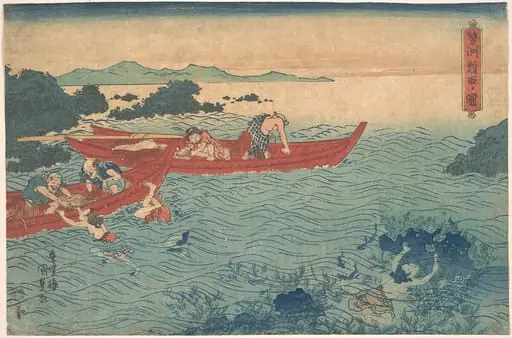 Untitled
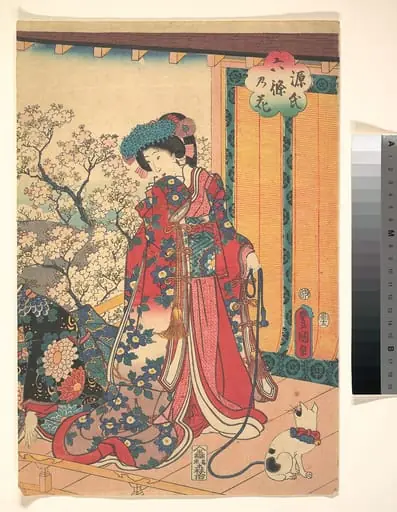 Untitled
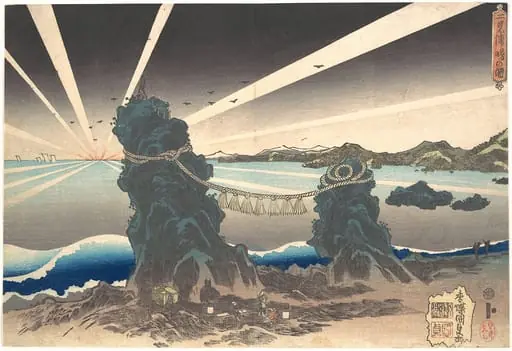 Futami-ga-ura akebono-no kuni|Futami-ga-ura Rocks at Ise, Land of Dawn
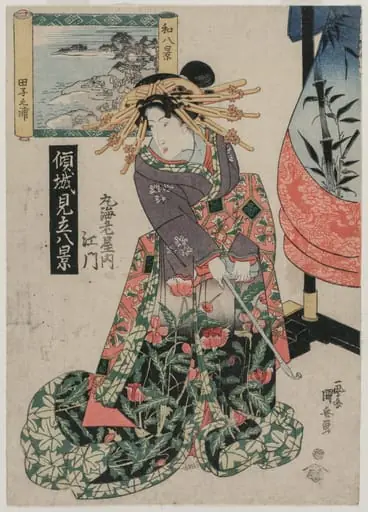 The Courtesan Emon of Maruebiya with a View of Tago Bay (form the series Courtesans with a Playful Group of Eight Views)
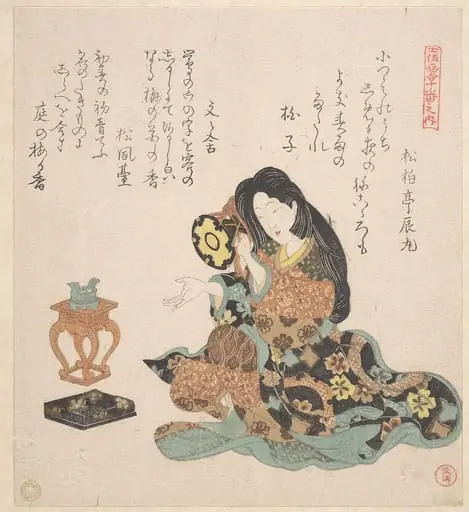 Untitled
 Muraogi, from the series The False Murasaki's Rustic Genji (Nise Murasaki Inaka Genji)
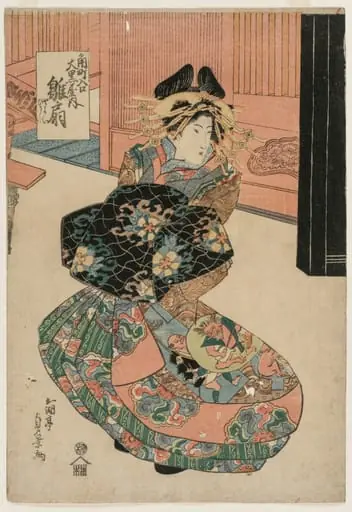 The Courtesan Hinaogi of the Daikokuya at the Entrance of Kadomachi
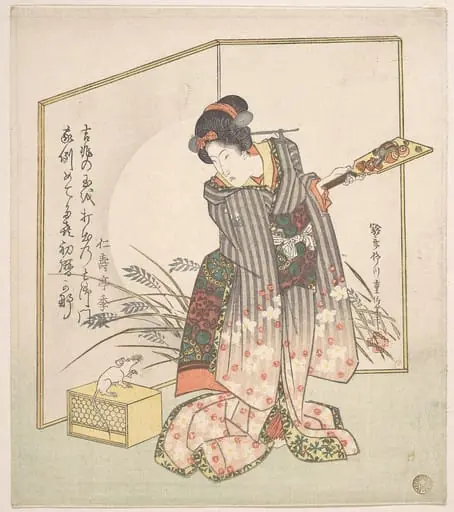 Untitled
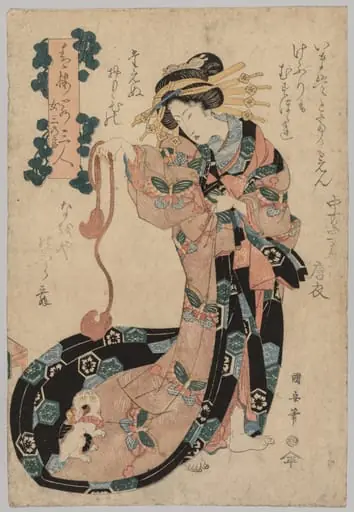 Courtesan
 Untitled
 Seated Woman Washing Clothes in a Wooden Tub
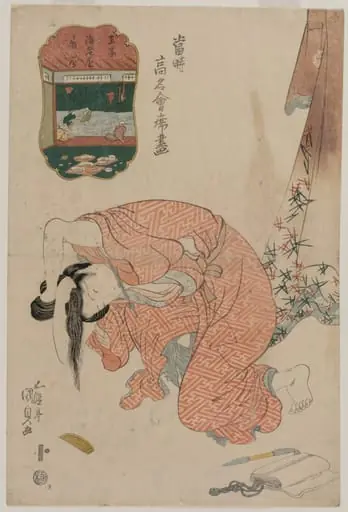 Woman Tying Her Hair (from the series Famous Restaurants of the Present Day)