Artwork
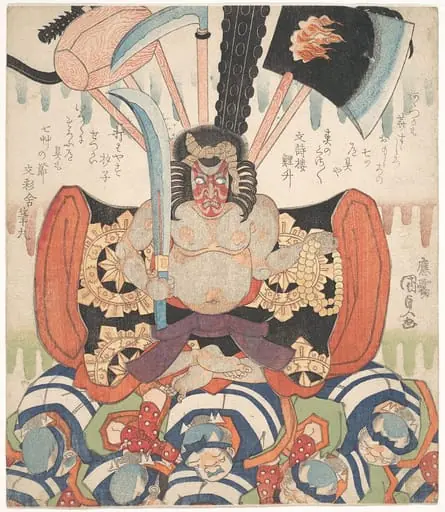
O Ateri Kyogen Uchi|Wild Words - a Play
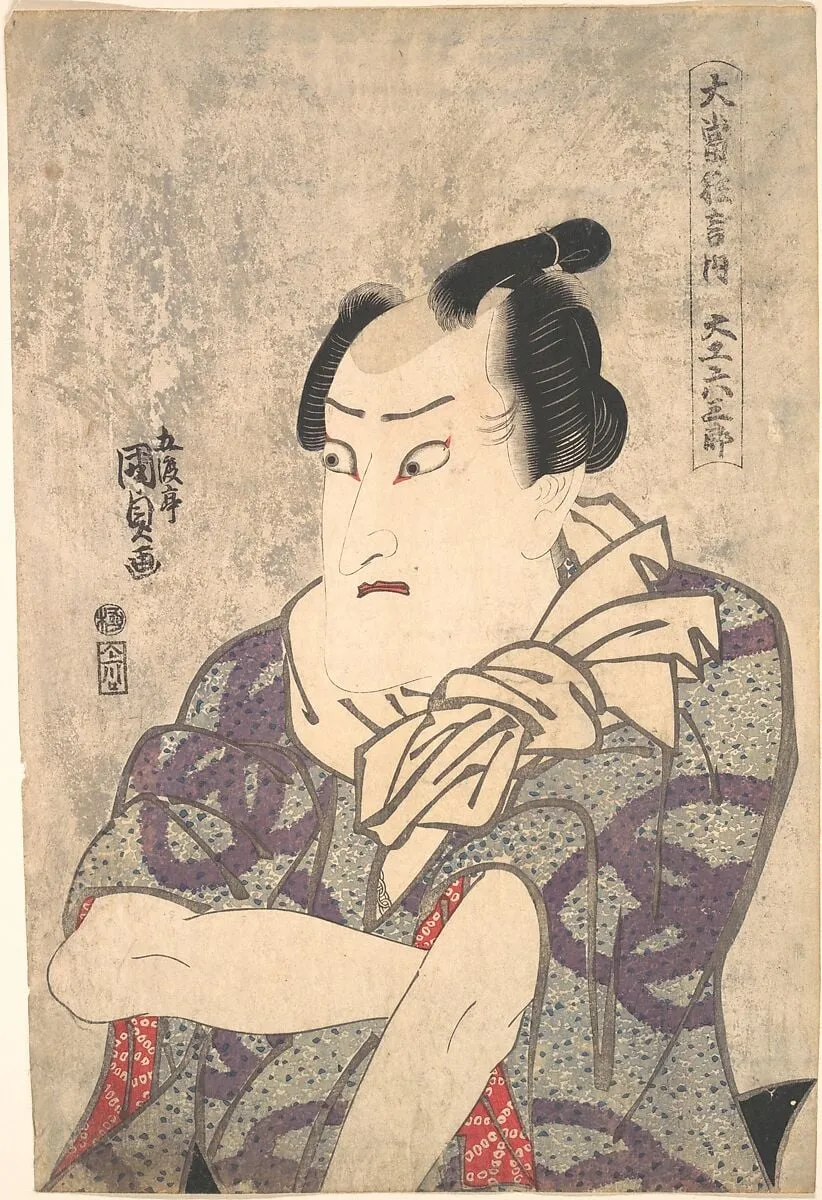
O Ateri Kyogen Uchi|Wild Words - a Play is an ink print by the Romanticist artist Utagawa Kunisada. It dates from 1825 and is held in the collection of the Metropolitan Museum of Art.
About this work
Overview
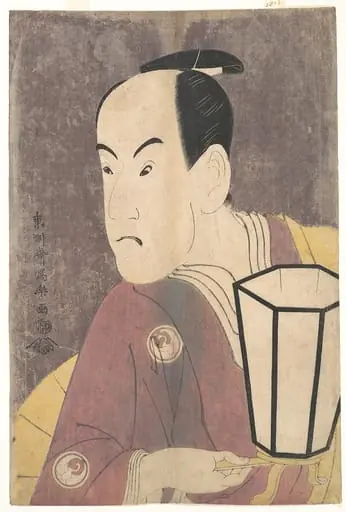
This woodblock print, created by Utagawa Kunisada in 1825, depicts a theatrical figure in mid-performance. Rendered in ink and color on paper, it belongs to the ukiyo-e tradition of Japanese printmaking. The work is part of the collection at The Metropolitan Museum of Art, where it exemplifies the genre’s fusion of stage drama and visual art.
Subject & Meaning
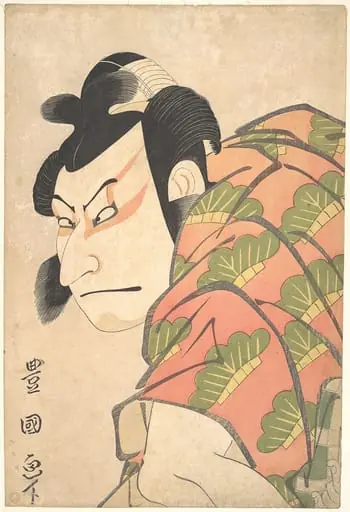
The figure, dressed in an elaborate robe of blue and purple with red accents, is captured in a tense, static pose—arm resting on knee, face rigid. His exaggerated features—black-lined eyes and a crimson slash for a mouth—convey heightened emotion, typical of kabuki roles. The title suggests a scene from a kyogen farce, where verbal wit and physical expression drive the narrative.
Technique & Style
Kunisada employed bold, clean outlines and flat areas of color, characteristic of woodblock printing. The absence of shading and the sharp contrast between hues emphasize form over depth. Patterns on the robe and the crisp definition of fabric folds reflect the precision required in multi-block carving and printing, a hallmark of Edo-period print production.
History & Provenance
Produced in 1825 during the peak of kabuki’s popularity, the print was likely part of a series illustrating popular plays or actors. It entered The Metropolitan Museum of Art’s collection through documented acquisitions of Japanese prints in the early 20th century, preserving its original context as a mass-produced theatrical souvenir.
Context
In early 19th-century Edo, woodblock prints served as affordable visual records of theater, capturing famous actors in signature roles. Kunisada, a leading printmaker of the time, frequently illustrated kabuki scenes to meet public demand. This work reflects the close relationship between performance culture and print media, where actor portraits functioned as both art and advertisement.
Legacy
The print endures as a representative example of Kunisada’s theatrical imagery and the broader ukiyo-e tradition. It contributes to scholarly understanding of how Japanese audiences engaged with performance through visual culture, offering insight into the aesthetics and social habits of Edo-period urban life.
Artist & collection

 二代目岩井粂三郎の肖像|Portrait of Iwai Kumesaburō II
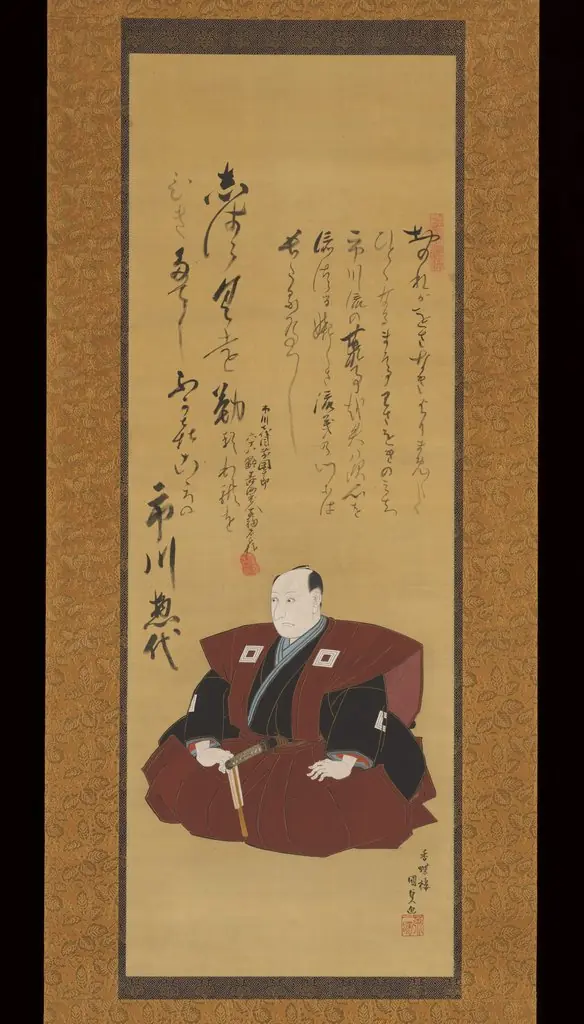 Memorial Portrait of the Actor Ichikawa Ōmezō I
 Untitled
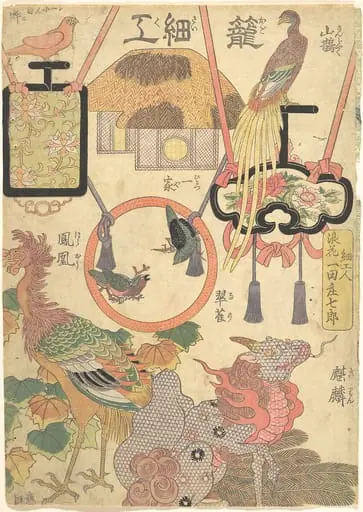 「籠細工 浪花細工人一田庄七郎」|Basketry Work: By the Craftsman Ichida Shōshichirō of Naniwa (Kagosaiku Naniwa saikujin Ichida Shōshichirō)
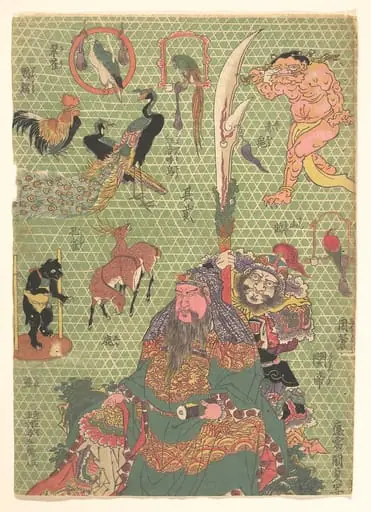 歌川国貞画 「籠細工 浪花細工人 一田庄七郎」|Basketry Work: By the Craftsman Ichida Shōshichirō of Naniwa (Kagozaiku Naniwa saikunin Ichida Shōshichirō)
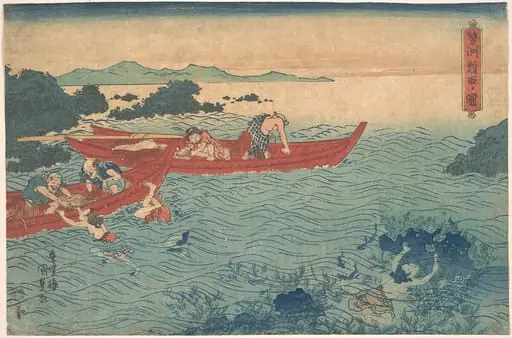 Untitled
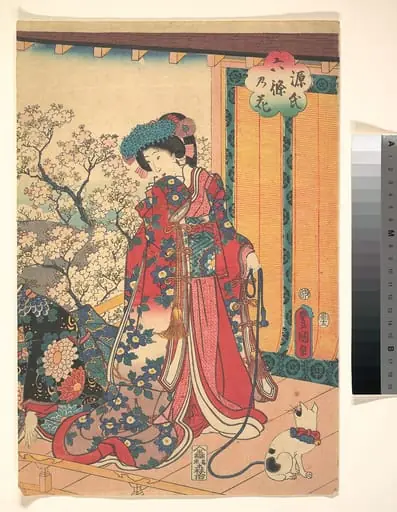 Untitled
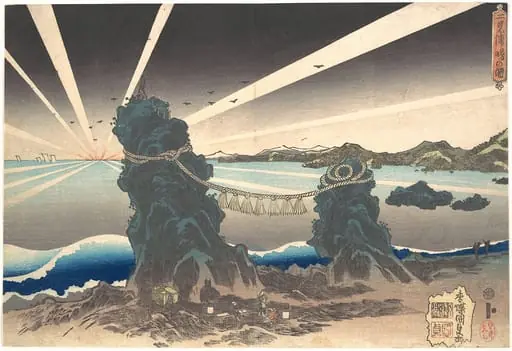 Futami-ga-ura akebono-no kuni|Futami-ga-ura Rocks at Ise, Land of Dawn
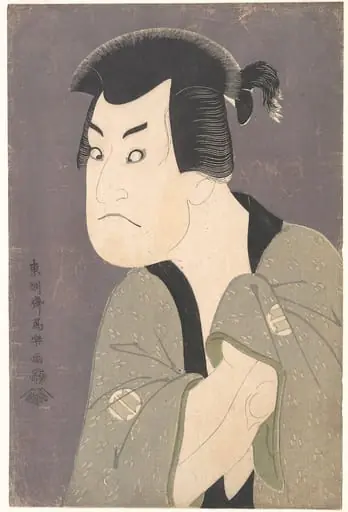 東洲斎写楽画 三世坂田半五郎の藤川水右衛門 『花菖蒲文禄曽我』|Sakata Hangorō III as Fujikawa Mizuemon in the Play "Hana Ayame Bunroku Soga"
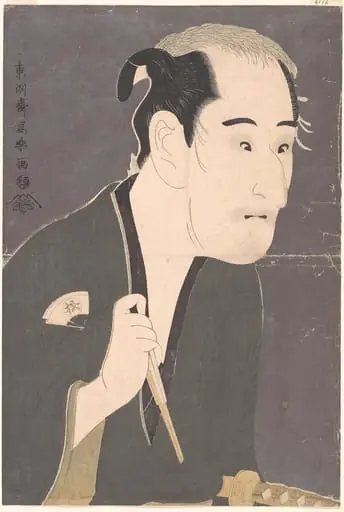 東洲斎写楽画 尾上松助の松下酒之進 『敵討乗合話』|Onoe Matsusuke I as Matsushita Mikinojō in the Play "Katakiuchi noriyaibanashi"
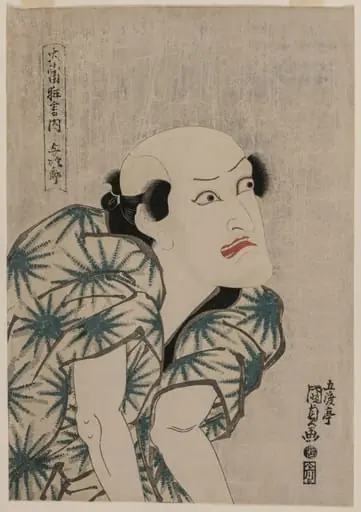 Nakamura Utaemon III as the Monkey Trainer Yojiro (from the series Famous Kabuki Plays)
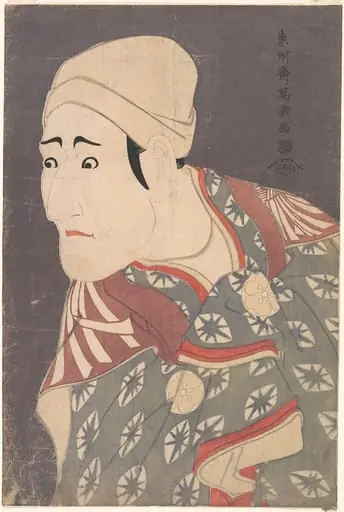 八代目守田勘弥の鴬の次郎作|Kabuki Actor Morita Kan’ya VIII as the Palanquin-Bearer in the Play A Medley of Tales of Revenge (Katakiuchi noriaibanashi)
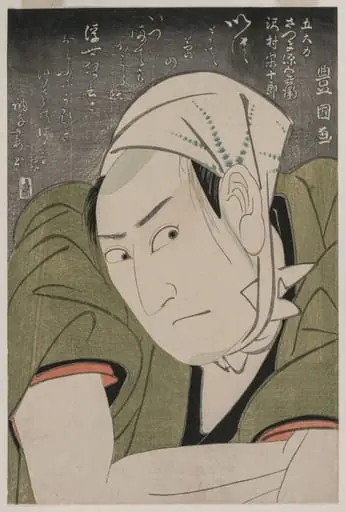 Memorial Portrait of Sawamura Sojuro III as Satsuma Gengobei
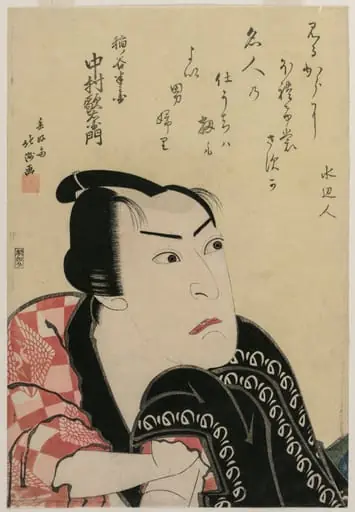 Nakamura Utaemon as Inanoya Hanbei
 Untitled
 Untitled
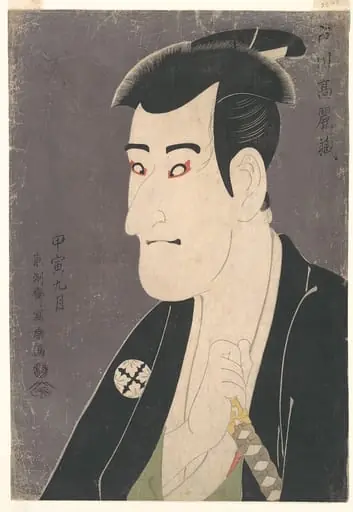 三代目市川高麗蔵の志賀大七|Kabuki Actor Ichikawa Komazō III as Shiga Daishichi in the Play A Medley of Tales of Revenge (Katakiuchi noriaibanashi)
 Untitled
 Untitled
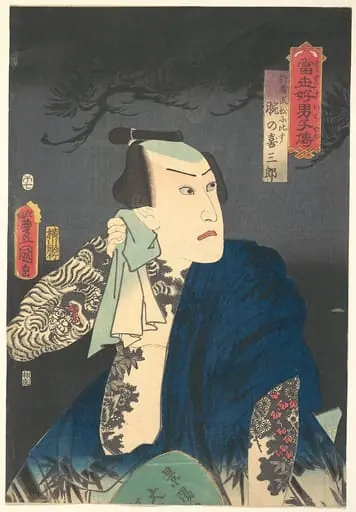 「当世好男子伝」松 「行者武松に比す腕の喜三郎」 初代河原崎権十郎|The Actor Kawarazaki Gonjūrō I as Ude no Kisaburō, likened to Wu Song the Ascetic (Gyōja Bushō ni hisu), from the “Pine” triptych of the series A Modern Water Margin (Tōsei suikoden)