Artwork
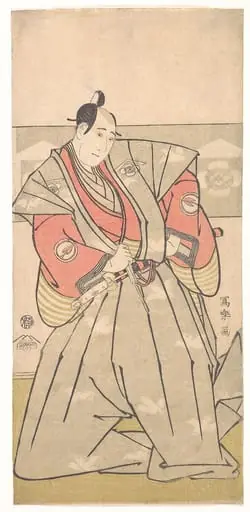
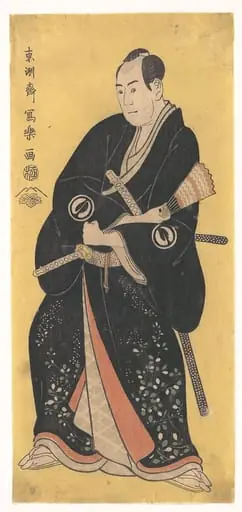
東洲斎写楽画 三世坂田半五郎の藤川水右衛門 『花菖蒲文禄曽我』|Sakata Hangorō III as Fujikawa Mizuemon in the Play "Hana Ayame Bunroku Soga"
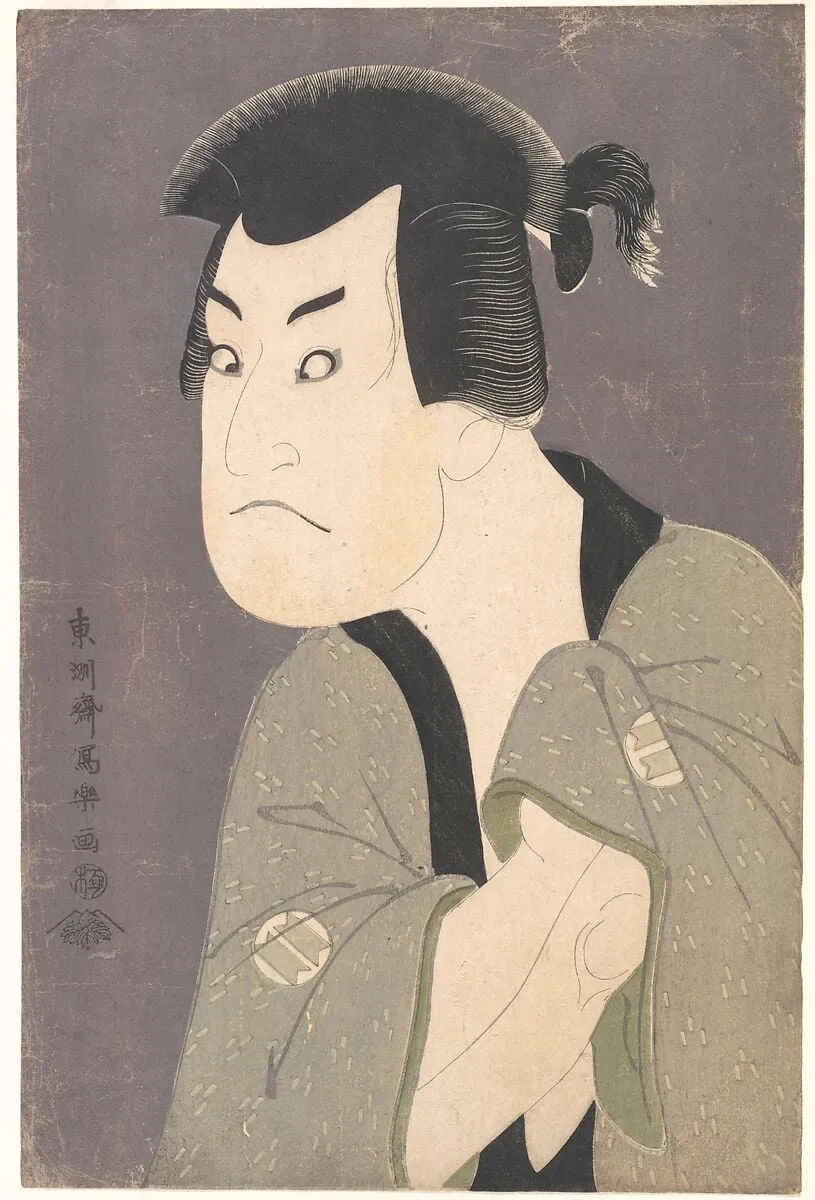
東洲斎写楽画 三世坂田半五郎の藤川水右衛門 『花菖蒲文禄曽我』|Sakata Hangorō III as Fujikawa Mizuemon in the Play "Hana Ayame Bunroku Soga" is an ink print by the Romanticist artist Tōshū. It dates from 1794 and is held in the collection of the Metropolitan Museum of Art.
About this work
Look up other prints of *men, actors, japan* to see how Sharaku turned stage faces into sharp, dramatic art.
You see a man in a fierce pose, one arm raised, face twisted in anger. His robe swirls with bold patterns, and his hair sticks up like flames. The background shimmers with tiny silver flakes—mica ground—that catch the light.
Sharaku made these prints fast, like movie posters. This one shows an actor playing a hot-headed character in a 1794 play. The prints were cheap, sold to fans outside the theater. Most were thrown away; only about 150 survive.
Look up other prints of *men, actors, japan* to see how Sharaku turned stage faces into sharp, dramatic art.
Overview
This woodblock print, created by Tōshūsai Sharaku in 1794, depicts Sakata Hangorō III as Fujikawa Mizuemon in the play 'Hana Ayame Bunroku Soga'. The print is characterized by its dynamic pose and expressive facial features, set against a shimmering background.
Subject & Meaning
The print portrays an actor in a dramatic role, conveying intense emotion through his facial expression and body language. The character's attire features bold patterns, adding to the overall dynamic effect.
Technique & Style
The print is notable for its use of ink, color, and mica on paper, creating a shimmering effect in the background. Sharaku's style is marked by its sharp, dramatic portrayal of stage characters, achieved through a rapid production process.
History & Provenance
Produced in 1794, this print was likely sold as a cheap, ephemeral item to theater fans. As a result, most prints from this series have not survived, with only around 150 remaining.
Artist & collection


 Untitled
 Untitled
 Untitled
 Untitled
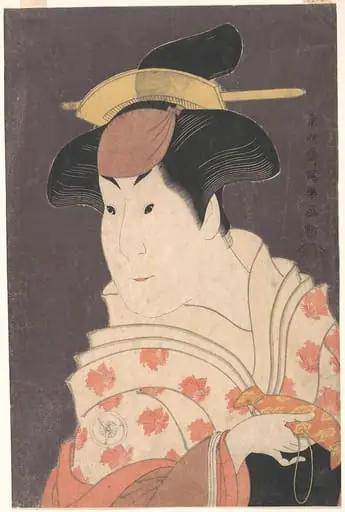 東洲斎写楽画 四代岩井半四郎の重の井 『恋女房染分手綱』|Iwai Hanshirō IV as Shigenoi in the Play "Koinyōbō Somewake Tazuna"
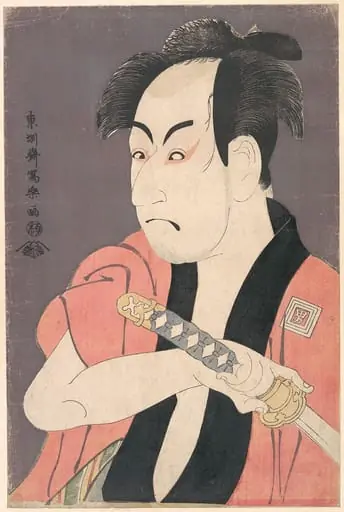 東洲斎写楽画 初代市川男女蔵の奴一平 『恋女房染分手綱』|Ichikawa Omezō I in the Role of Yakko Ippei from the Play "Koinyōbō somewake tazuna"
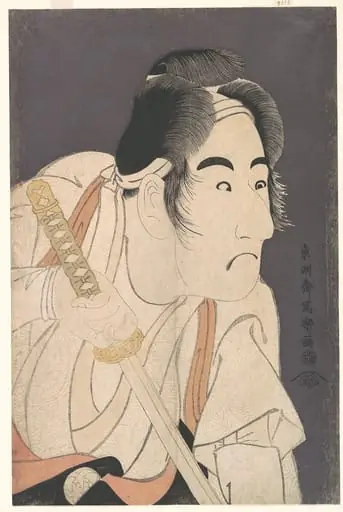 東洲斎写楽画 二世坂東三津五郎の石井源蔵 『花菖蒲文禄曽我』|Bandō Mitsugorō II as Ishii Genzō in the Play "Hana-ayame Bunroku Soga"
 Untitled
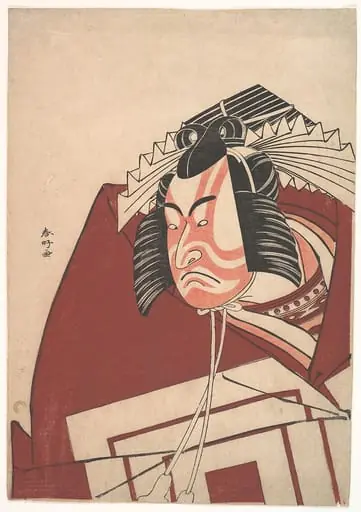 勝川春好画 二代目市川門之助|Ichikawa Monnosuke II in a Shibaraku Performance
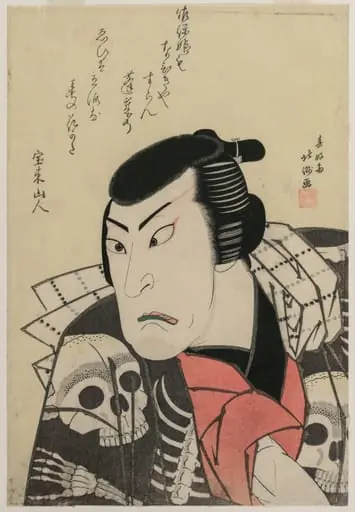 Actor Ichikawa Ebijūrō I as Tōken (China Dog) Jūbei, in the play Red and Purple, Rich Dyes of Osaka (Benimurasaki ai de someage)
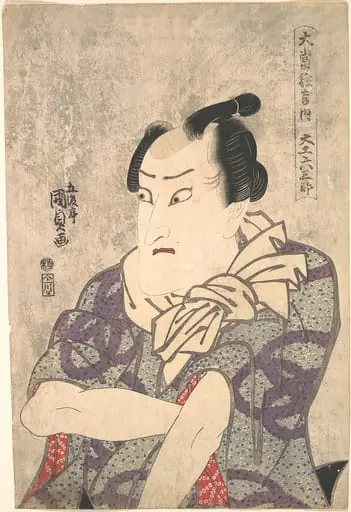 O Ateri Kyogen Uchi|Wild Words - a Play
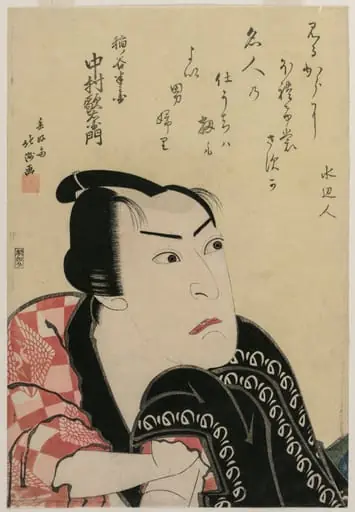 Nakamura Utaemon as Inanoya Hanbei
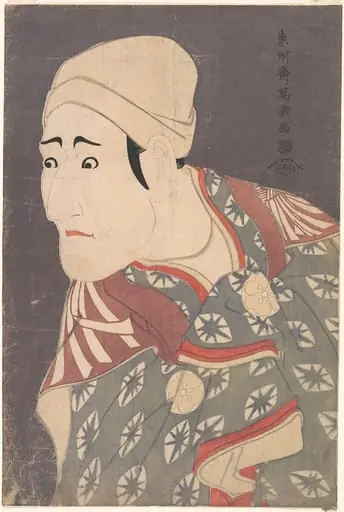 八代目守田勘弥の鴬の次郎作|Kabuki Actor Morita Kan’ya VIII as the Palanquin-Bearer in the Play A Medley of Tales of Revenge (Katakiuchi noriaibanashi)
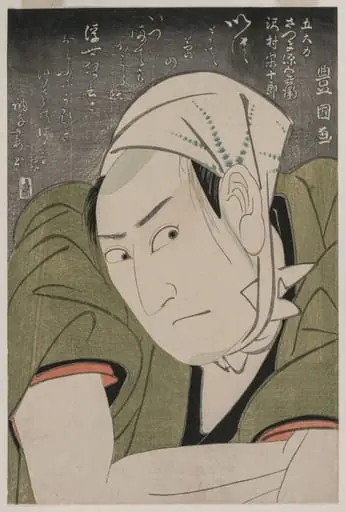 Memorial Portrait of Sawamura Sojuro III as Satsuma Gengobei
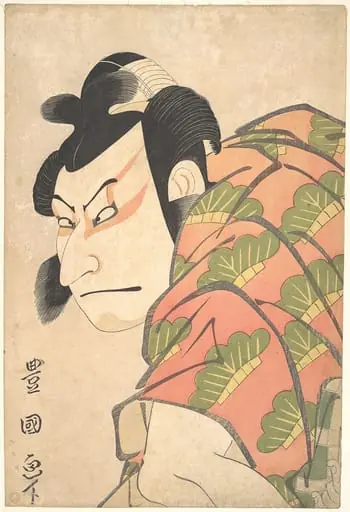 Untitled