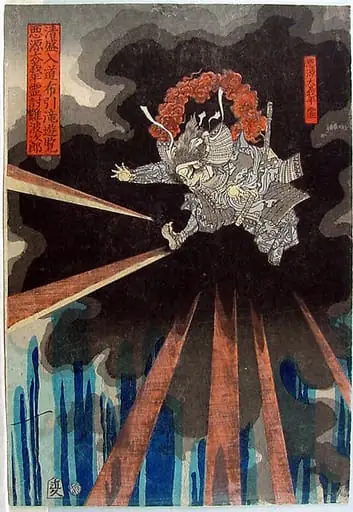
Artwork
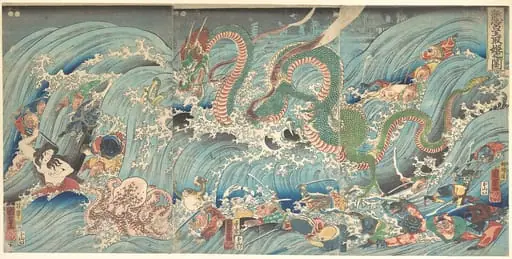
歌川芳房画 「清盛布引滝遊覧 義平霊難波討圖」|Kiyomori’s Visit to Nunobiki Waterfall: The Ghost of Yoshihira Taking Revenge on Nanba
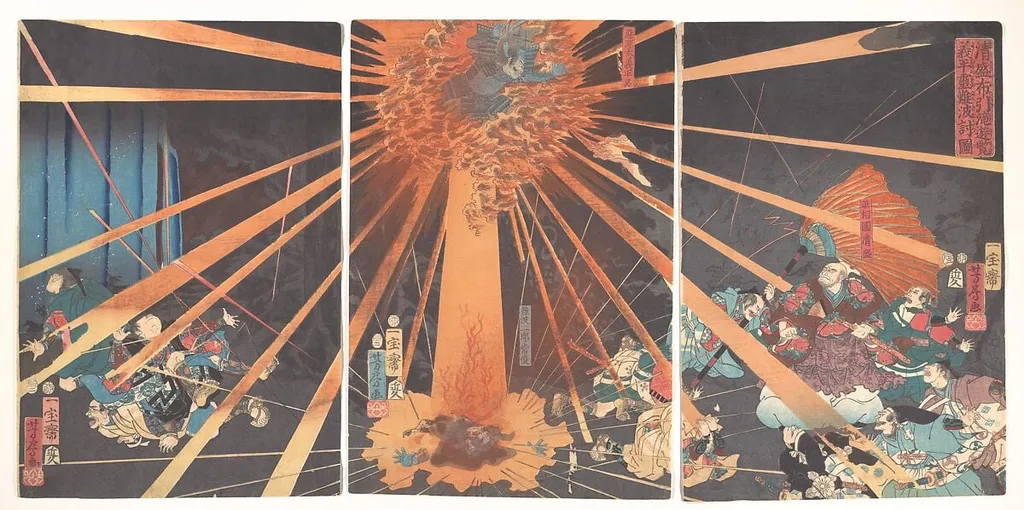
歌川芳房画 「清盛布引滝遊覧 義平霊難波討圖」|Kiyomori’s Visit to Nunobiki Waterfall: The Ghost of Yoshihira Taking Revenge on Nanba is an ink print by the Impressionist artist Utagawa Yoshifusa. It dates from 1856 and is held in the collection of the Metropolitan Museum of Art.
About this work
Overview
The work belongs to the nishiki-e tradition, known for its vivid hues and intricate detail, and is held in the collection of The Metropolitan Museum of Art.
Created in 1856 by Utagawa Yoshifusa, this triptych woodblock print depicts a legendary moment from the Heian period, blending historical narrative with supernatural retribution. Rendered in ink and color on paper, the three panels form a single dramatic scene centered on the violent death of Nanba Jirō, triggered by the vengeful spirit of Minamoto no Yoshihira. The work belongs to the nishiki-e tradition, known for its vivid hues and intricate detail, and is held in the collection of The Metropolitan Museum of Art.
Subject & Meaning
The scene illustrates the ghost of Yoshihira, son of the disgraced Minamoto clan leader, exacting vengeance on Nanba Jirō, who had betrayed his family. As the spirit manifests through fire and wind, the explosion consumes Nanba and his attendants. The presence of Taira no Kiyomori, observing from afar, underscores the political weight of the moment. The imagery merges historical memory with Buddhist themes of karma and unresolved grievance, transforming a personal feud into a cosmic reckoning.
Technique & Style
Yoshifusa employs the nishiki-e technique, using multiple woodblocks to layer vibrant pigments over fine ink outlines. The composition is dynamically asymmetrical, with diagonal forces—flames, wind, falling figures—pulling the viewer’s eye across the panels. Bold contrasts between the calm, distant figure of Kiyomori and the chaotic center heighten tension. The use of bokashi gradients in the smoke and sky adds atmospheric depth, while exaggerated motion in the figures conveys sudden, violent disruption.
History & Provenance
The print was produced during the late Edo period, when interest in historical and warrior tales surged among urban audiences. It was likely part of a series illustrating episodes from the Heiji Rebellion, a popular subject in ukiyo-e. The work entered The Metropolitan Museum of Art’s collection through documented acquisitions in the 20th century, preserving its original format as a triptych. Its survival in near-complete condition reflects careful handling and the enduring appeal of its dramatic narrative.
Context
This print emerged during a time when woodblock prints increasingly depicted historical and supernatural themes to satisfy a growing literate public. The Heiji Rebellion, though centuries old, remained a potent symbol of betrayal and retribution. Artists like Yoshifusa drew from illustrated scrolls and kabuki dramas to reinterpret these stories for contemporary audiences. The triptych format allowed for expanded storytelling, aligning with the theatrical sensibilities of Edo-period visual culture.
Legacy
Though less widely known than works by Hiroshige or Kuniyoshi, Yoshifusa’s triptych exemplifies the narrative ambition of mid-19th-century ukiyo-e. Its fusion of historical drama with supernatural elements influenced later depictions of ghostly vengeance in print and theater. The piece remains a key reference for scholars studying how Edo-period artists translated literary and oral traditions into visually compelling, mass-produced imagery, bridging folklore and historical memory.
Artist & collection


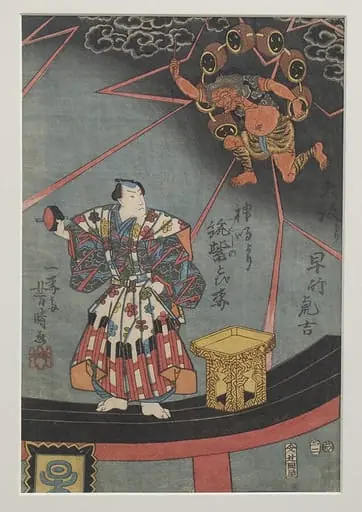 大坂下り早竹虎吉|The Plum Blossom that Flew on Lightning from Chikushino
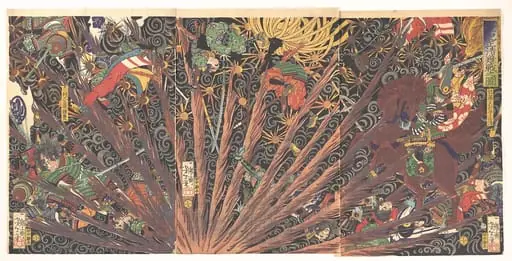 太平記正清難戦之図|Masakiyo's Challenging Battle, from the series Taiheiki (Taiheiki, Masakiyo nansen no zu)
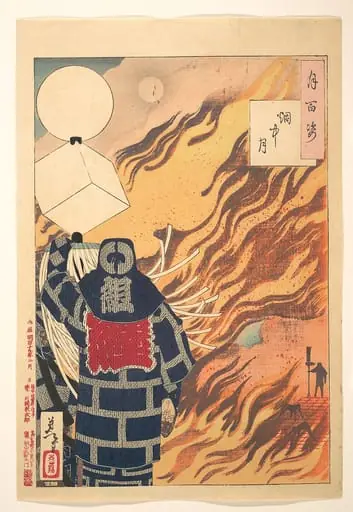 月百姿 - 煙中月|Moon in the Flame from the Series One Hundred Images of the Moon (Tsuki hyaku sugata-enchūgetsu)
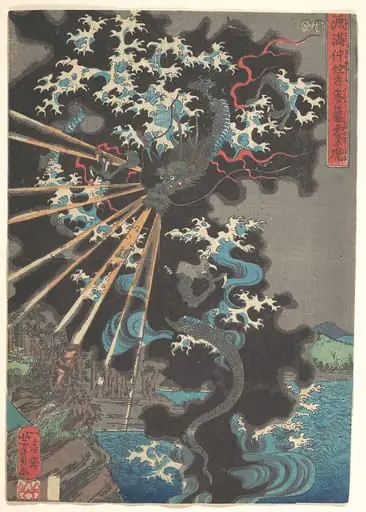 Untitled
 Untitled
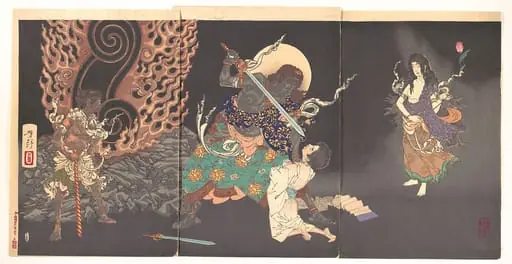 月岡芳年筆 不動明王∙祐天上人図|Fudō Myōō Threatening a Novice
 Untitled
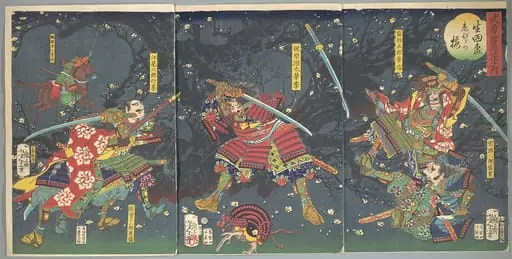 武勇雪月花之内 ゑびらの梅|Plum Blossoms in the Forrest of Ikuta, from the series Bravery-Beauty of the four seasons (Buyū setsugekka no uchi-Ikuta no mori, Ebira no ume)
 Ryugu Tamatori Hime no su|Recovering the Stolen Jewel from the Palace of the Dragon King