Artwork
Untitled
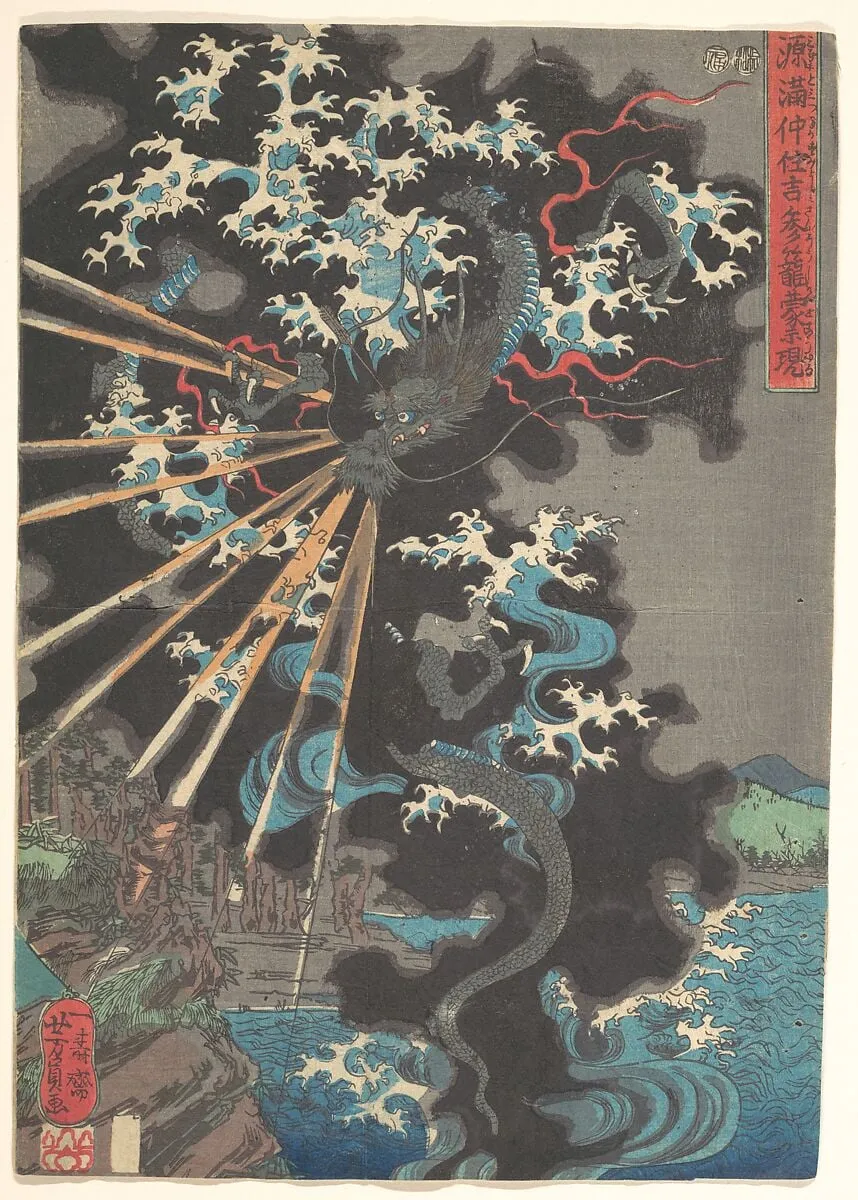
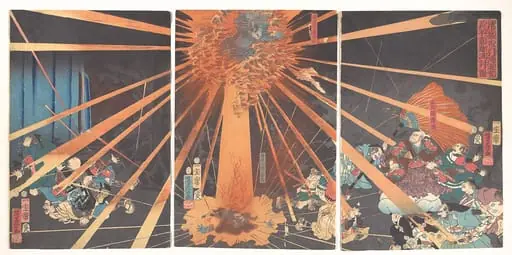
Untitled is an ink print by the Impressionist artist Utagawa Yoshikazu. It dates from 1860 and is held in the collection of the Metropolitan Museum of Art.
About this work
Overview
This woodblock print, dated 1860, is attributed to Utagawa Yoshikazu and belongs to the ukiyo-e tradition. Executed in ink and color on paper, it captures a moment of intense natural force. The work is part of the collection at The Metropolitan Museum of Art, where it represents the late Edo period’s fascination with mythic imagery and dramatic landscapes.
Subject & Meaning
A massive dragon coils around a towering structure, its form dominating the composition. The creature, often a symbol of elemental power in East Asian cosmology, exhales fire into a storm-lit sky. The crashing waves below and the turbulent clouds suggest a confrontation between celestial and terrestrial forces, evoking themes of nature’s supremacy and the fragility of human constructs.
Technique & Style
The composition uses diagonal energy and asymmetry to amplify motion, typical of late Edo-period prints that emphasized dynamism over stillness.
The print employs traditional woodblock methods, with layered pigments for the dragon’s blue-gray scales and vivid red-orange flames. Contrast is heightened through deep blacks in the sky and water, while fine lines define the churning waves and lightning. The composition uses diagonal energy and asymmetry to amplify motion, typical of late Edo-period prints that emphasized dynamism over stillness.
History & Provenance
Created during the final decades of the Edo period, the print reflects a time when ukiyo-e artists increasingly turned to mythological and supernatural subjects. It entered the Metropolitan Museum of Art’s collection through documented acquisition, though its earlier ownership history remains unrecorded. Its survival in good condition suggests it was carefully preserved, possibly by a private collector or temple.
Context
In mid-19th century Japan, woodblock prints often depicted legendary creatures as metaphors for societal change or natural disasters. As foreign pressure mounted and internal unrest grew, imagery of dragons and storms resonated with public anxieties. Yoshikazu’s work aligns with a trend among artists to merge folklore with heightened emotional intensity, moving beyond conventional landscapes and courtesan scenes.
Legacy
Though not among Yoshikazu’s most widely reproduced works, this print exemplifies the technical sophistication and symbolic depth achieved in late Edo-period printmaking. It contributes to scholarly understanding of how mythological themes persisted in popular art during Japan’s transition to modernity, offering insight into visual culture beyond the dominant genres of the time.
Artist & collection

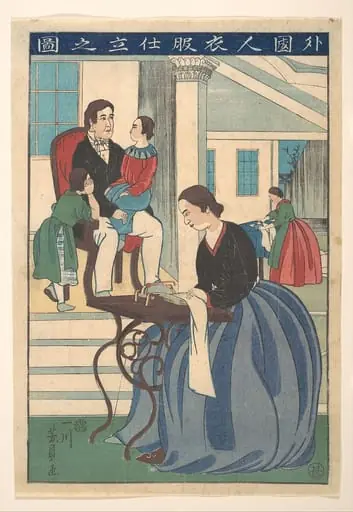 歌川芳員画 『外国人衣服仕立之図』|Foreign Family with Wife Making Clothes (Gaikokujin ifuku shitate no zu)
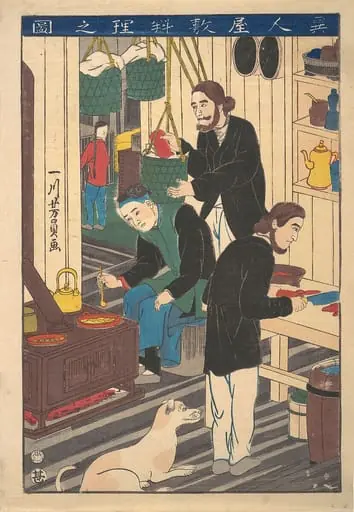 Ijiin Yashiki ryōri no zu|Inside a Foreign Restaurant
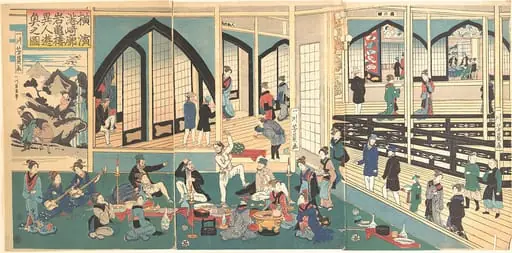 Yokohama Miyozaki-kaku Gankirō ijin yūkyō no zu|Foreigners Enjoying a Party at the Gankirō Tea House
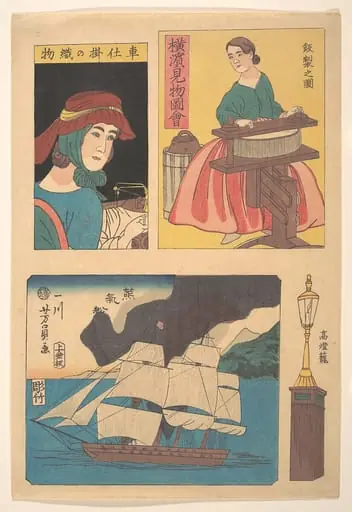 Yokohama kenbutsu zue|Picture of Sights in Yokohama: Woman with a Ringer, Lamp Post, a Steamboat at Full Sail and a Woman with a Sewing Machine
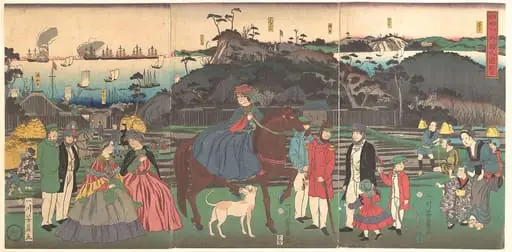 Kanagawa Gongenyama Gaikokujin yūran|Foreigners Visiting the Famous Site of Mt. Gongen in Kanagawa
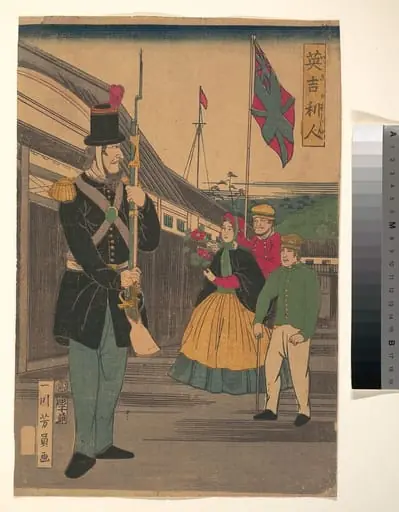 Igirisujin|英吉利人|Englishmen
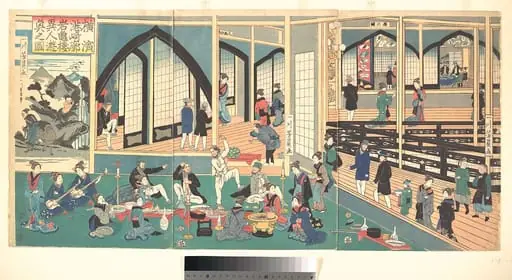 Untitled
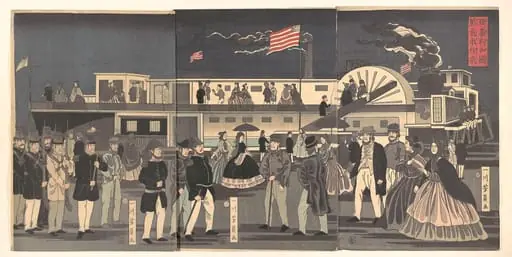 「亞墨利加國蒸氣車往来」|“America”: A Steamship in Transit
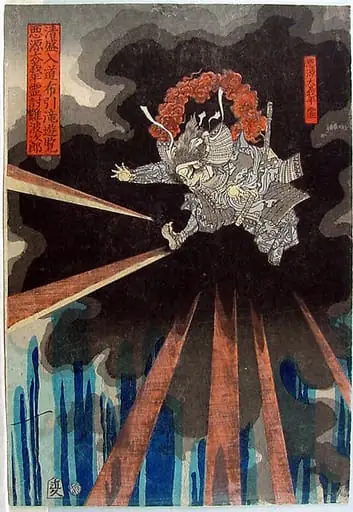 月岡芳年画 「清盛入道布引滝遊覧 悪源太義平霊討難波次郎」|The Spirit of Akugenta Yoshihira Strikes Nanba Jirō during Kiyomori’s Visit to Nunobiki Waterfall
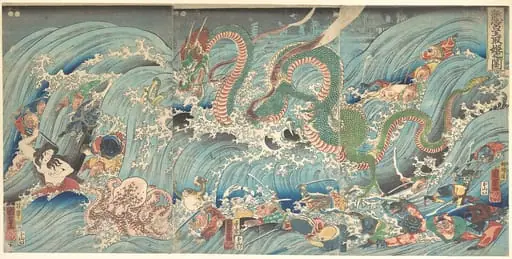 Ryugu Tamatori Hime no su|Recovering the Stolen Jewel from the Palace of the Dragon King
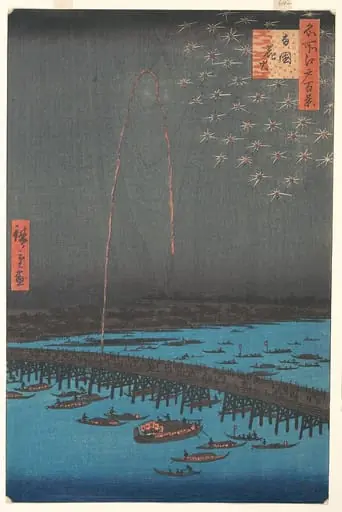 名所江戶百景 両国花火|Fireworks at Ryōgoku Bridge, from the series One Hundred Famous Views of Edo
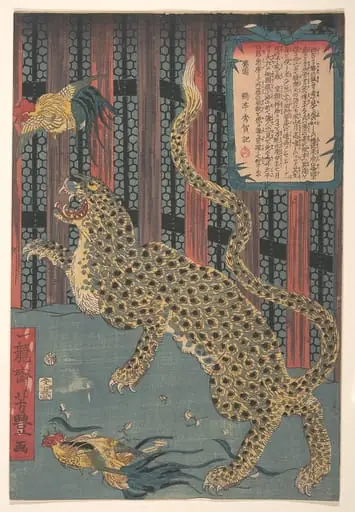 Untitled
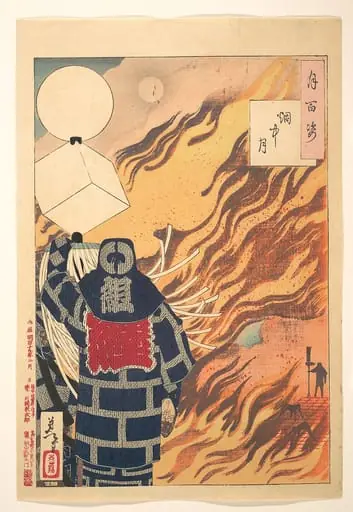 月百姿 - 煙中月|Moon in the Flame from the Series One Hundred Images of the Moon (Tsuki hyaku sugata-enchūgetsu)
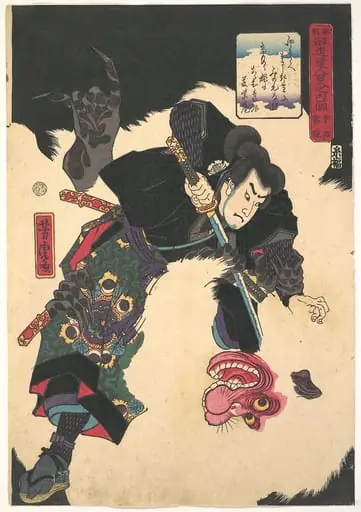 Untitled
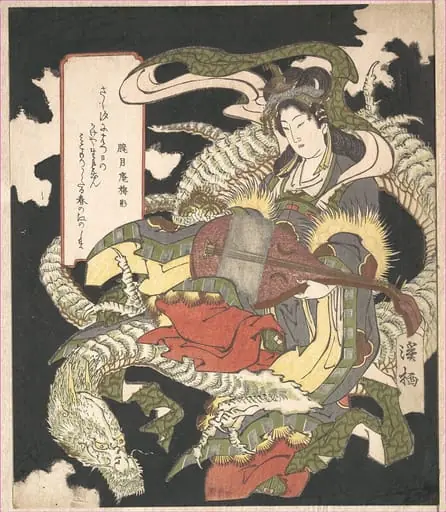 騎龍弁財天|Benzaiten (Goddess of Music and Good Fortune) Seated on a White Dragon
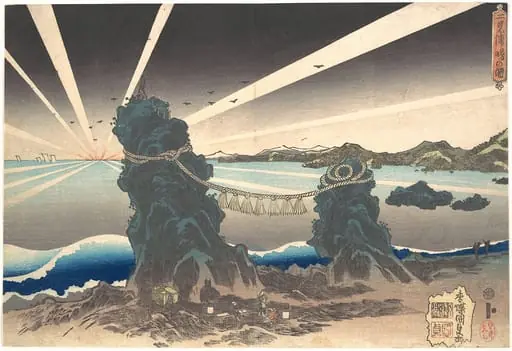 Futami-ga-ura akebono-no kuni|Futami-ga-ura Rocks at Ise, Land of Dawn
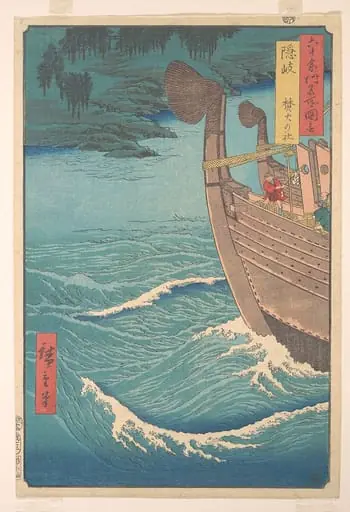 六十余州名所図会 隠岐 焚火の社|The Takihi Shrine, Oki Province, from the series Views of Famous Places in the Sixty-Odd Provinces
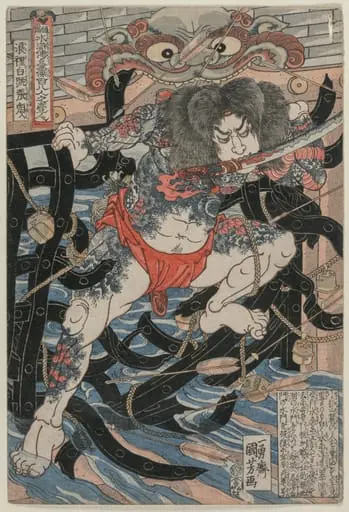 Rori Hakucho Chojun (from the series 108 Heroes of the Novel Shui Hu Chuan)
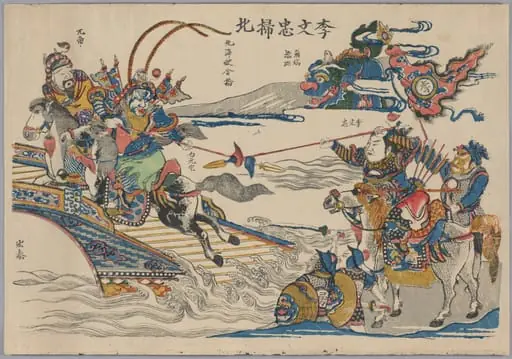 Li Wenzhong Clears the North
 歌川芳房画 「清盛布引滝遊覧 義平霊難波討圖」|Kiyomori’s Visit to Nunobiki Waterfall: The Ghost of Yoshihira Taking Revenge on Nanba