Artwork
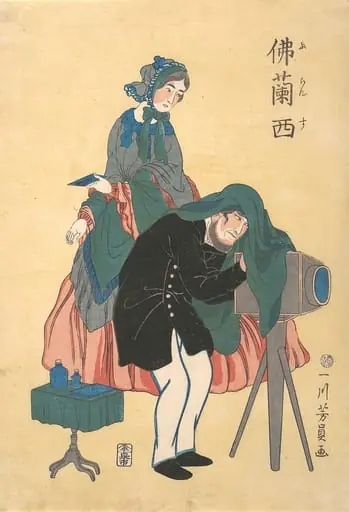
仏蘭西|French Photographer with His Wife
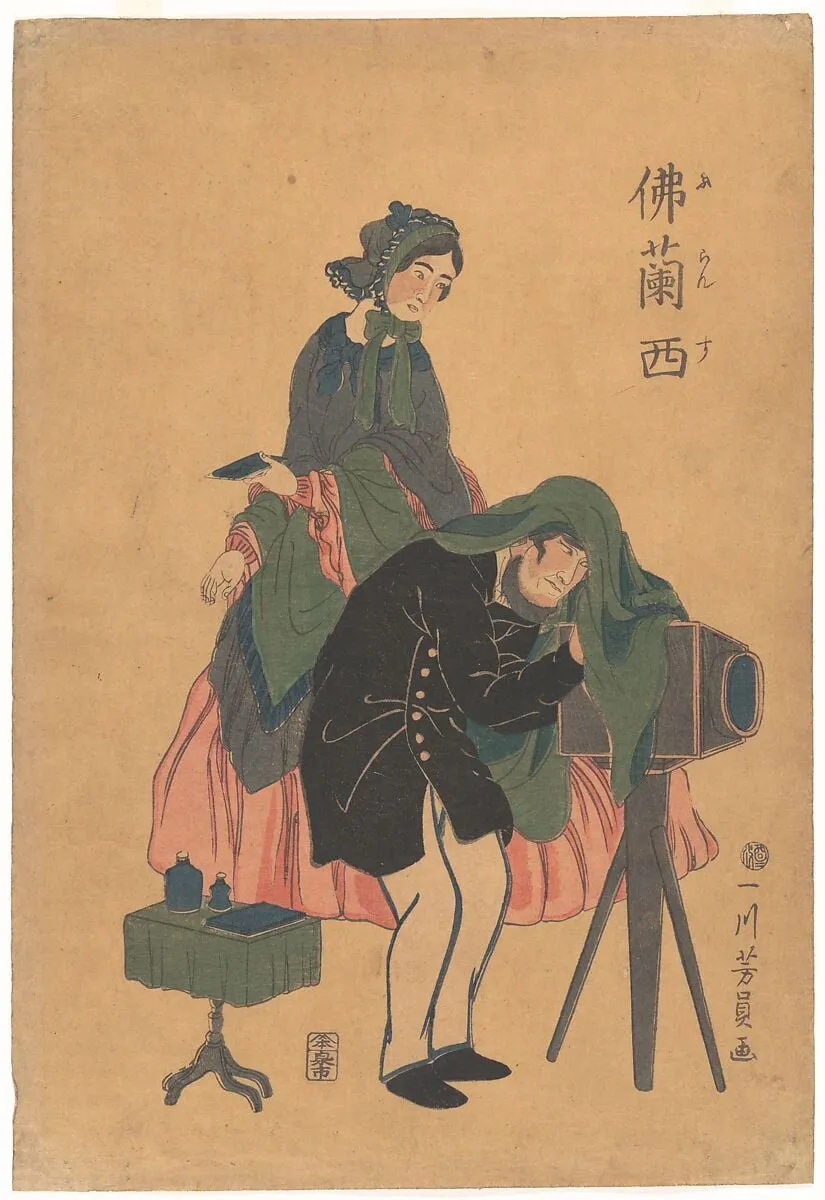
仏蘭西|French Photographer with His Wife is an ink print by the Impressionist artist Utagawa Yoshikazu. It dates from 1861 and is held in the collection of the Metropolitan Museum of Art.
About this work
Overview
The work is part of the collection at The Metropolitan Museum of Art, where it serves as a visual record of cultural exchange between Japan and the West.
Created in 1861 by Utagawa Yoshikazu, this woodblock print depicts a French photographer and his wife in a modest interior. Rendered in ink and color on paper, it belongs to a series of prints illustrating Western figures and customs during Japan’s late Edo period. The work is part of the collection at The Metropolitan Museum of Art, where it serves as a visual record of cultural exchange between Japan and the West.
Subject & Meaning
The print captures a moment of domestic intimacy between a foreign photographer and his companion, framing Western technology within a private Japanese space. The man’s focused posture beside the bulky camera suggests the novelty and seriousness of photographic practice, while the woman’s supportive gesture implies companionship and quiet presence. The scene subtly conveys curiosity about foreign customs without overt commentary.
Technique & Style
Executed in the ukiyo-e tradition, the print uses soft, muted tones with deliberate contrasts: the woman’s green coat and the man’s dark attire anchor the composition. Fine linework defines the camera’s mechanical form and the room’s sparse furnishings. The delicate application of color and attention to texture reflect the craftsmanship typical of mid-19th-century Japanese printmaking, blending realism with stylized elegance.
History & Provenance
Produced during a period of increasing foreign presence in Japan, the print reflects growing public interest in Western technologies and lifestyles. It was likely made for domestic consumption, catering to curiosity about foreigners rather than for export. The work entered The Metropolitan Museum of Art’s collection through established acquisition channels in the 20th century, preserving its historical context.
Context
In the early 1860s, Japan was opening to the West after centuries of isolation. Photographers, often foreign, became symbols of modernity. This print emerged amid a wave of ukiyo-e depictions of Westerners, known as 'yōfū ga,' which documented their dress, tools, and behavior. The camera, then a rare and mysterious device, represented both scientific progress and cultural difference.
Legacy
The print remains a quiet testament to cross-cultural observation during Japan’s transition into modernity. It offers insight into how Japanese artists interpreted foreign practices—not as exotic spectacle, but as ordinary moments within domestic life. Its preservation allows ongoing study of visual representations of Western influence in Edo-period art.
Artist & collection

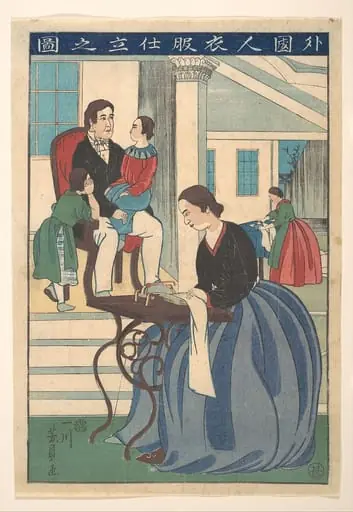 歌川芳員画 『外国人衣服仕立之図』|Foreign Family with Wife Making Clothes (Gaikokujin ifuku shitate no zu)
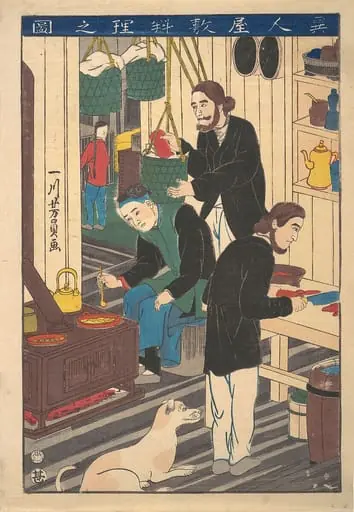 Ijiin Yashiki ryōri no zu|Inside a Foreign Restaurant
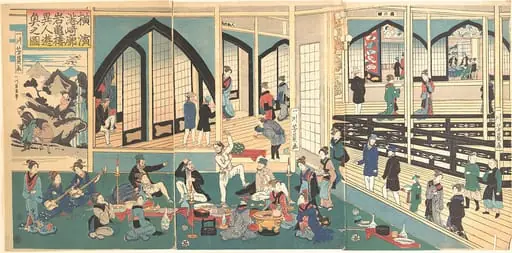 Yokohama Miyozaki-kaku Gankirō ijin yūkyō no zu|Foreigners Enjoying a Party at the Gankirō Tea House
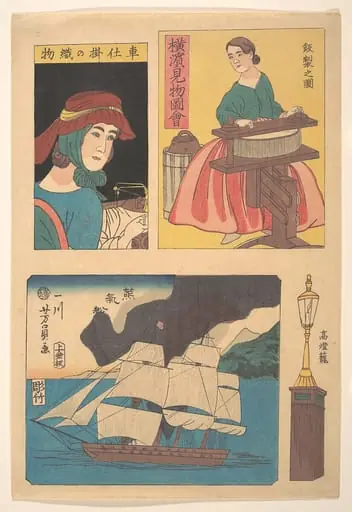 Yokohama kenbutsu zue|Picture of Sights in Yokohama: Woman with a Ringer, Lamp Post, a Steamboat at Full Sail and a Woman with a Sewing Machine
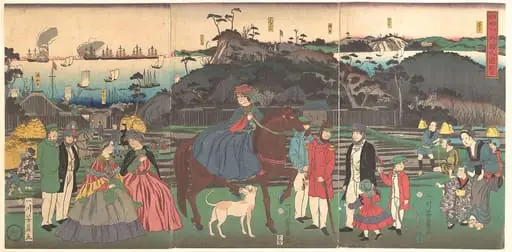 Kanagawa Gongenyama Gaikokujin yūran|Foreigners Visiting the Famous Site of Mt. Gongen in Kanagawa
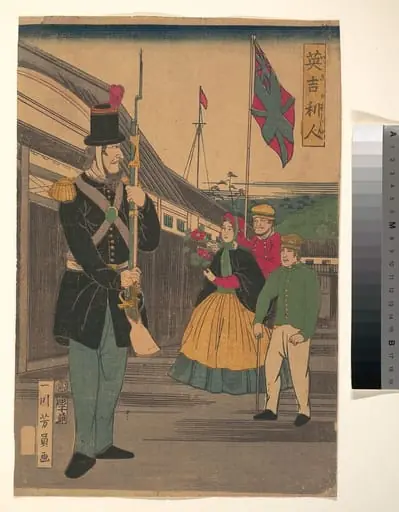 Igirisujin|英吉利人|Englishmen
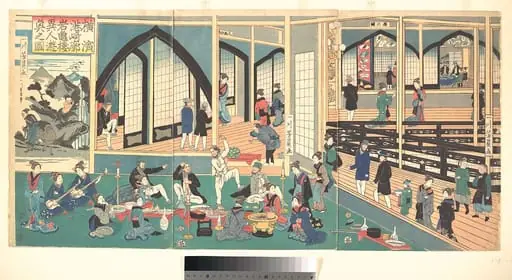 Untitled
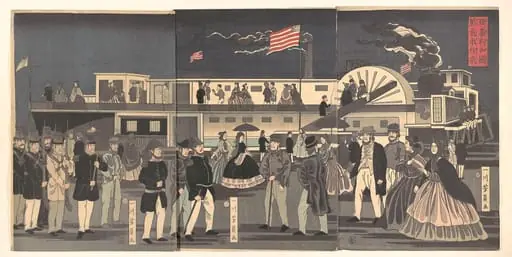 「亞墨利加國蒸氣車往来」|“America”: A Steamship in Transit
 Furansu|French Photographer
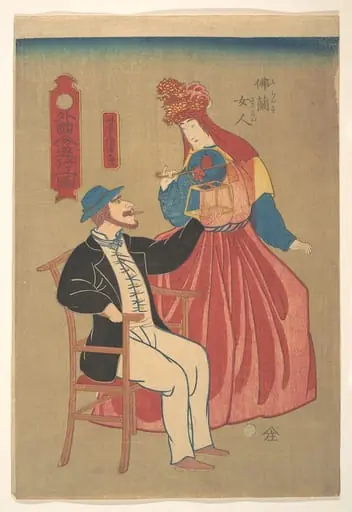 Furansu nyōjin|French Housewife and Her Husband
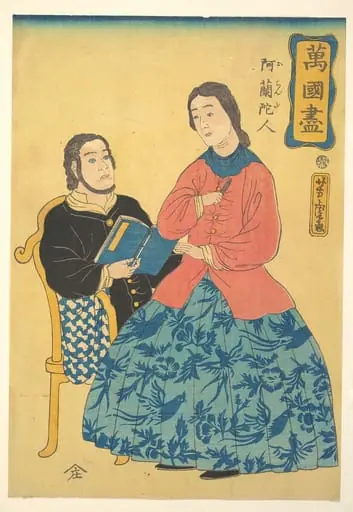 Orandajin|Dutchmen
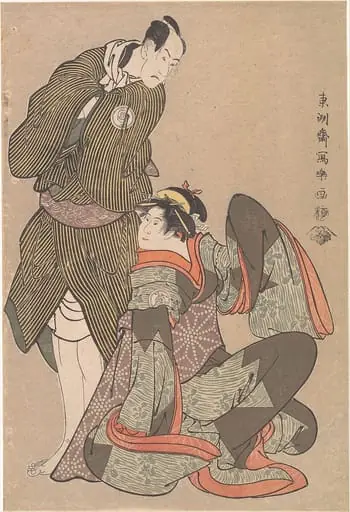 東洲斎写楽画 三代目坂東彦三郎の帯屋長右衛門と四代目岩井半四郎の信濃 屋お半 『二本松陸奥生長』|Bandō Hikosaburō III in the Role of Obiya Chōemon and Iwai Hanshiro IV in the Role of Shinanoya Ohan, from the Play “Nihonmatsu Michinoku sodachi”
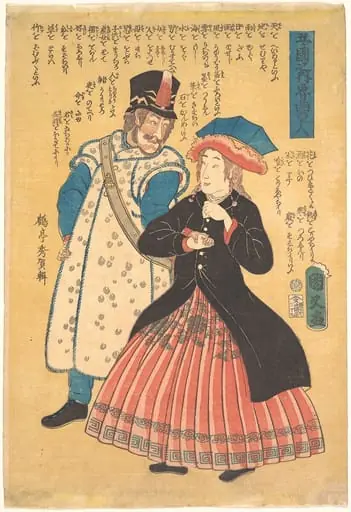 Roshiajin|Russians
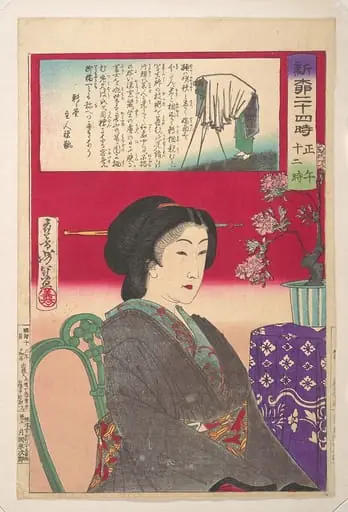 新柳二十四時 午前十二時|Twenty-Four Hours at Shinbashi/Yanagibashi: 12 Noon. (Shinyanagi nijūyo-ji, gozen jūni-ji)
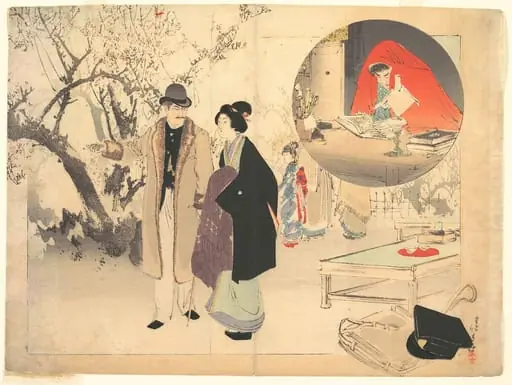 Untitled
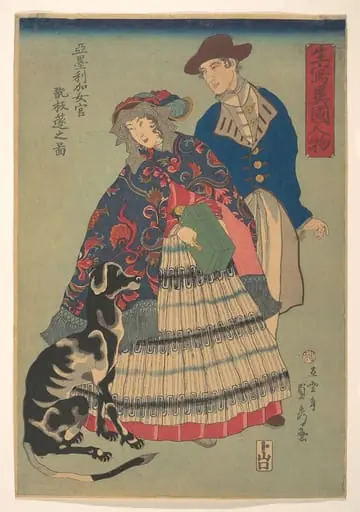 「生寫異國人物」|American Woman Playing a Concertina, from the series Life Drawings of People from Foreign Nations
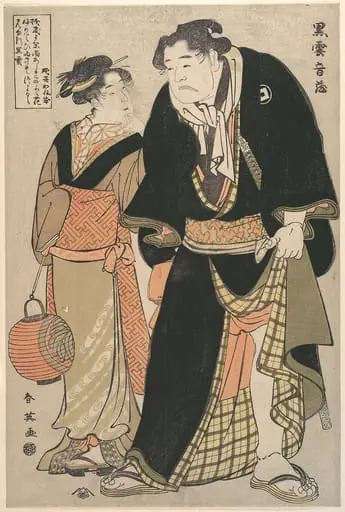 Untitled
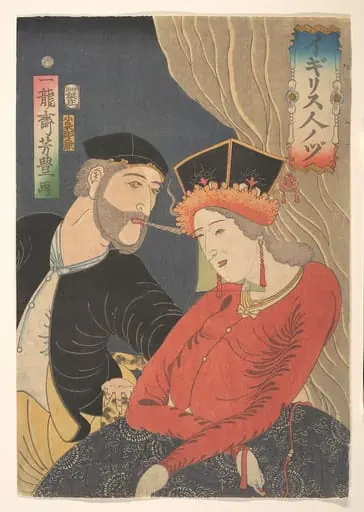 英吉利人之図|Illustration of English People (Igirisujin no zu)
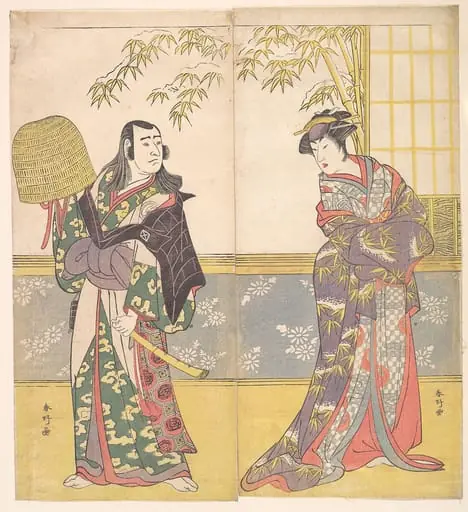 勝川春好画 三代目澤村宗十郎 三代目佐野川市松 |Kabuki Actors Sawamura Sōjūrō III and Sanogawa Ichimatsu III in "A Courtesan’s Mirror for the Eastern Provinces" (Keisei Azuma kagami)
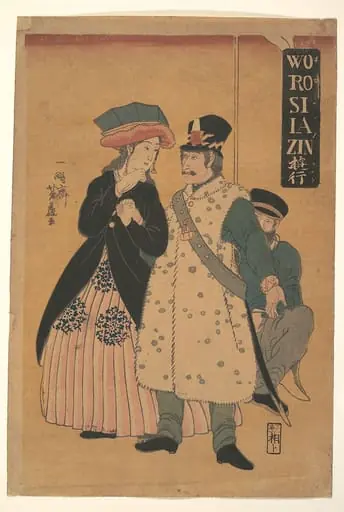 Worosiiazin yuko|魯西亜人遊行|Russians Strolling