Artwork
Oranda|A Dutch Group
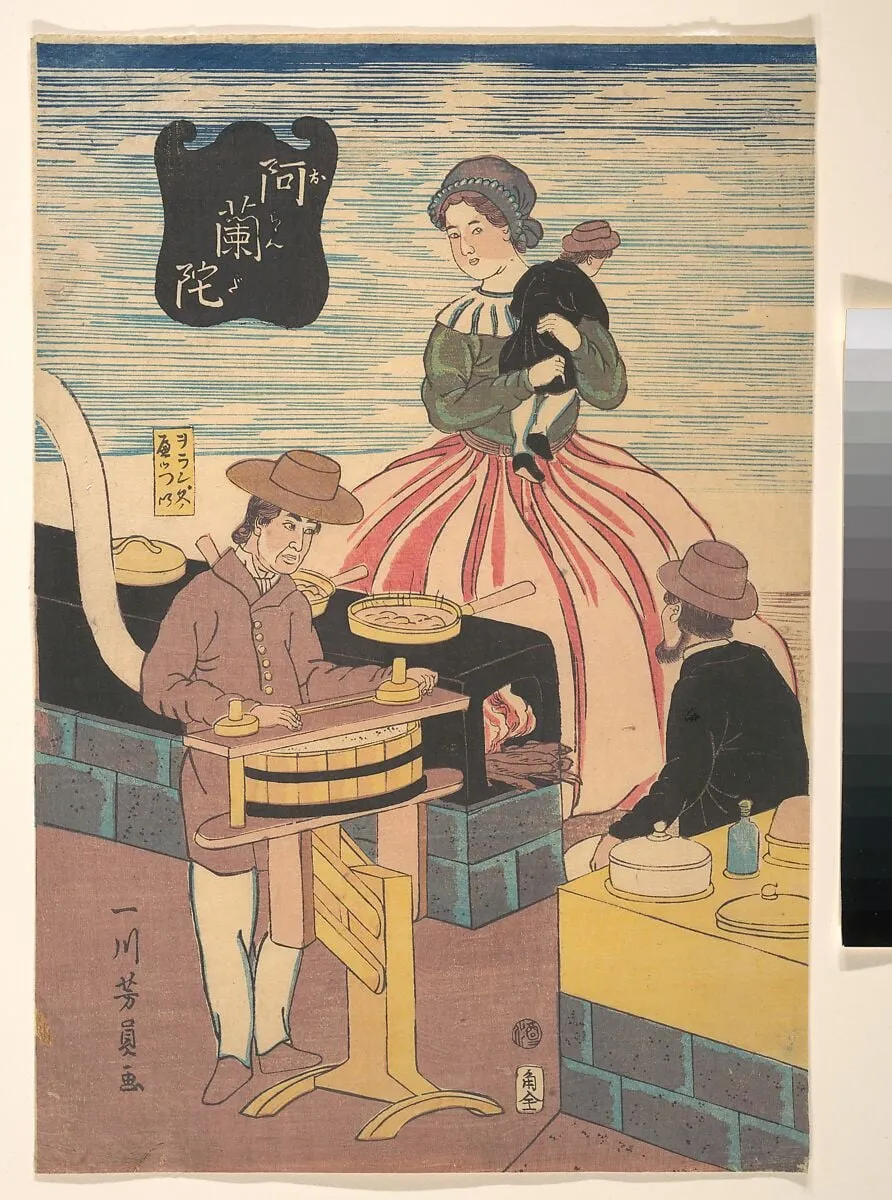
Oranda|A Dutch Group is an ink print by the Impressionist artist Utagawa Yoshikazu. It dates from 2 and is held in the collection of the Metropolitan Museum of Art.
About this work
Overview
Oranda|A Dutch Group is a woodblock print executed in ink and color on paper by the Japanese artist Utagawa Yoshikazu. The work, dated to the early 19th century, is part of the collection of the Metropolitan Museum of Art. It presents a compact interior scene rendered in the bold palette and flattened forms typical of ukiyo-e prints.
Subject & Meaning
The image captures a bustling kitchen where three figures are engaged in domestic activity. A woman in a wide red skirt cradles an infant while standing near a stove, a seated man in a hat eats at a table, and another man in dark clothing tends a pot. A simple brick wall, wooden floor, and a window revealing a boat on water frame the scene, suggesting a moment of everyday life.
Technique & Style
Yoshikazu employs the woodblock technique, carving separate blocks for each color and layering them to achieve vivid contrasts. The composition relies on clear outlines and flat areas of pigment, emphasizing shape over perspective. Japanese text runs across the top, integrating narrative elements common in ukiyo-e genre prints.
History & Provenance
The print was produced in Japan during the Edo period, a time when woodblock publishing flourished. It entered the Metropolitan Museum of Art's collection through acquisition in the 20th century, where it remains catalogued as an example of domestic genre imagery.
Context
Domestic interiors were a frequent subject in ukiyo-e, reflecting the interests of a growing urban audience. The inclusion of a foreign‑named title, Oranda (the Japanese term for “Holland”), hints at the period's fascination with Western motifs, though the scene itself remains rooted in Japanese daily life.
Artist & collection

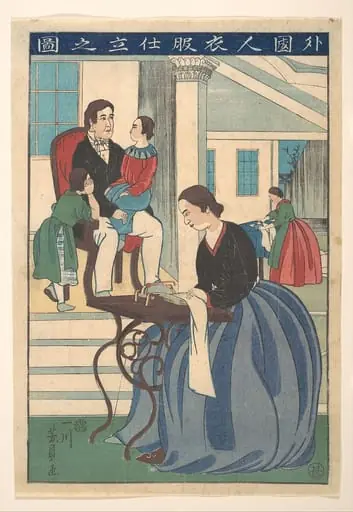 歌川芳員画 『外国人衣服仕立之図』|Foreign Family with Wife Making Clothes (Gaikokujin ifuku shitate no zu)
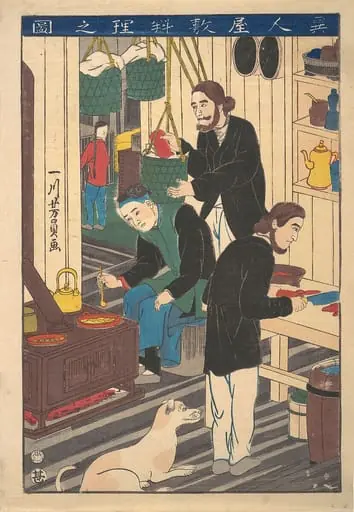 Ijiin Yashiki ryōri no zu|Inside a Foreign Restaurant
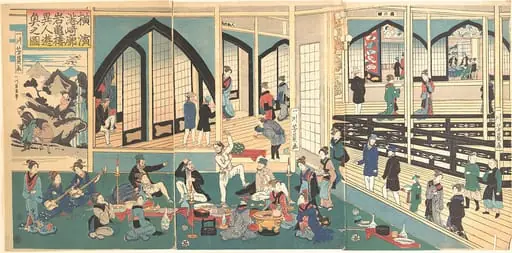 Yokohama Miyozaki-kaku Gankirō ijin yūkyō no zu|Foreigners Enjoying a Party at the Gankirō Tea House
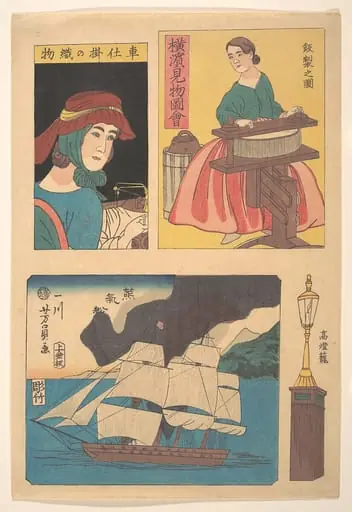 Yokohama kenbutsu zue|Picture of Sights in Yokohama: Woman with a Ringer, Lamp Post, a Steamboat at Full Sail and a Woman with a Sewing Machine
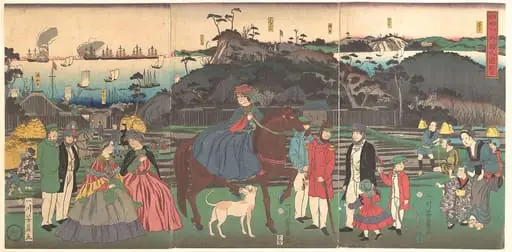 Kanagawa Gongenyama Gaikokujin yūran|Foreigners Visiting the Famous Site of Mt. Gongen in Kanagawa
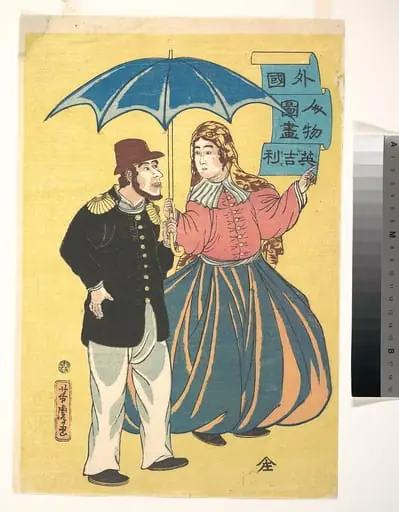
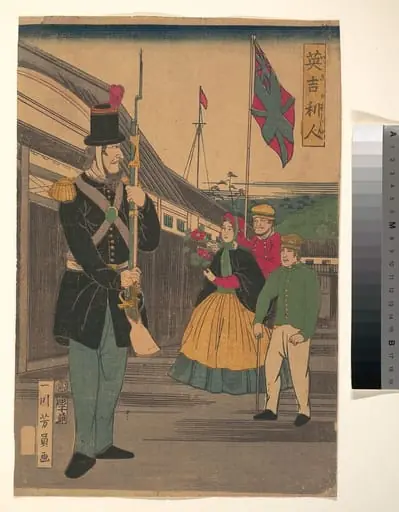 Igirisujin|英吉利人|Englishmen
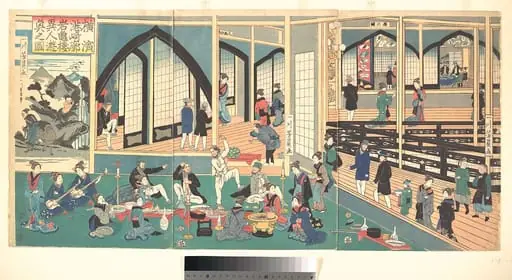 Untitled
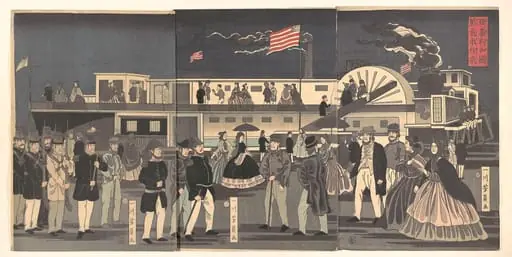 「亞墨利加國蒸氣車往来」|“America”: A Steamship in Transit
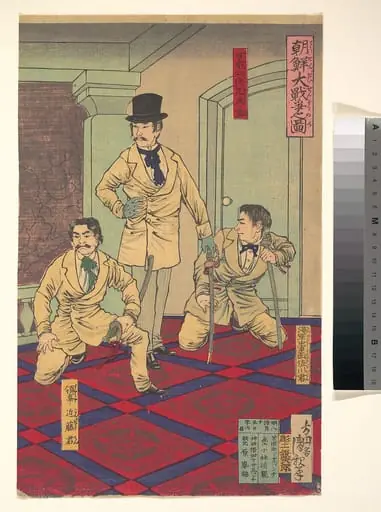 朝鮮大戦争之図|Illustration of the Great Korean War (Chōsen dai sensō no zu)
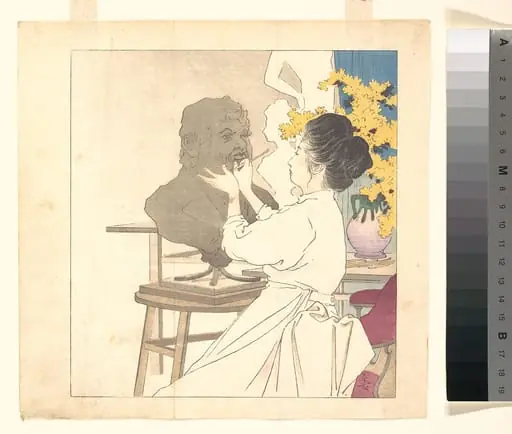 Untitled
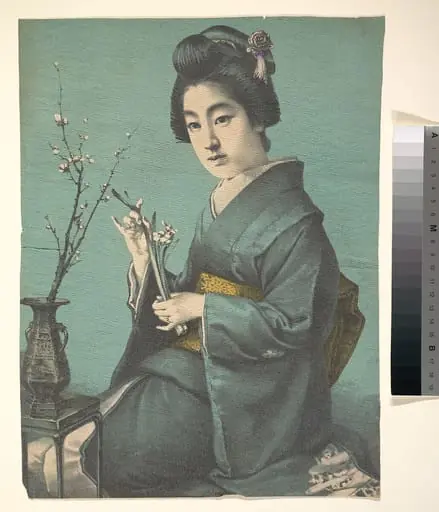 Untitled
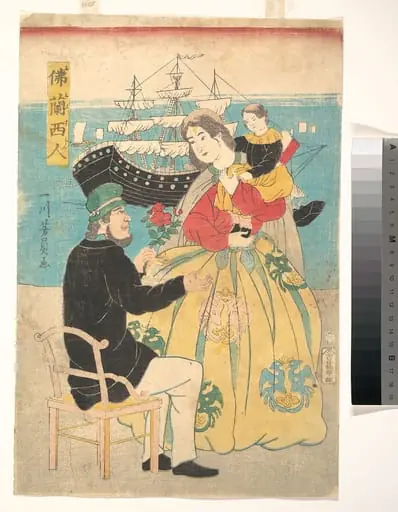 Untitled
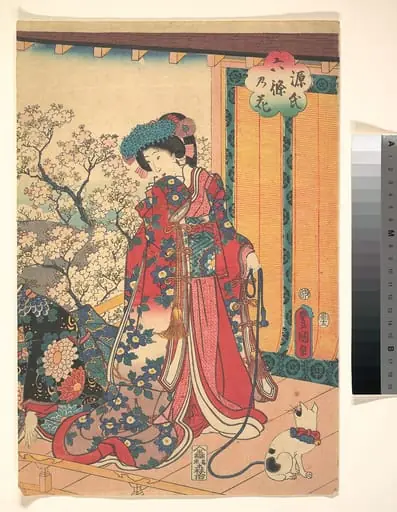 Untitled
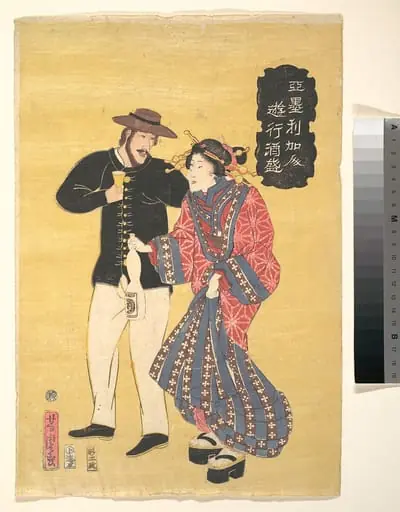 Amerika jin Yuko Sakamori|An American Carousing
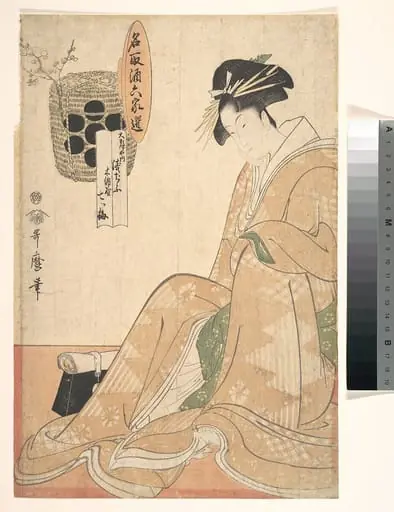 名取酒六家選 大もんぢや内浅じふ 木綿屋七ッ梅|A Courtesan
 Untitled
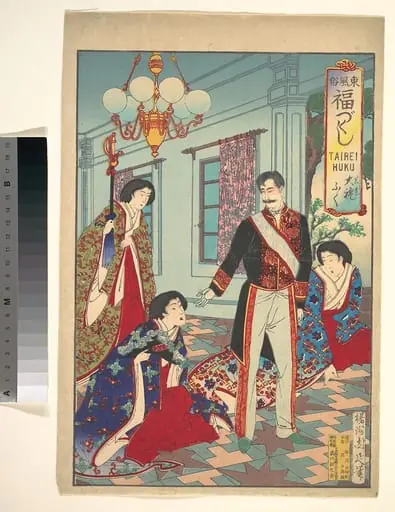 『東風俗福づくし 大 礼ふく』|“Ceremonial Attire” from the series An Array of Auspicious Customs of Eastern Japan (Azuma fūzoku, fukuzukushi: Tairei fuku)
 Untitled
 Untitled
 Untitled