Artwork
Cheerfulness
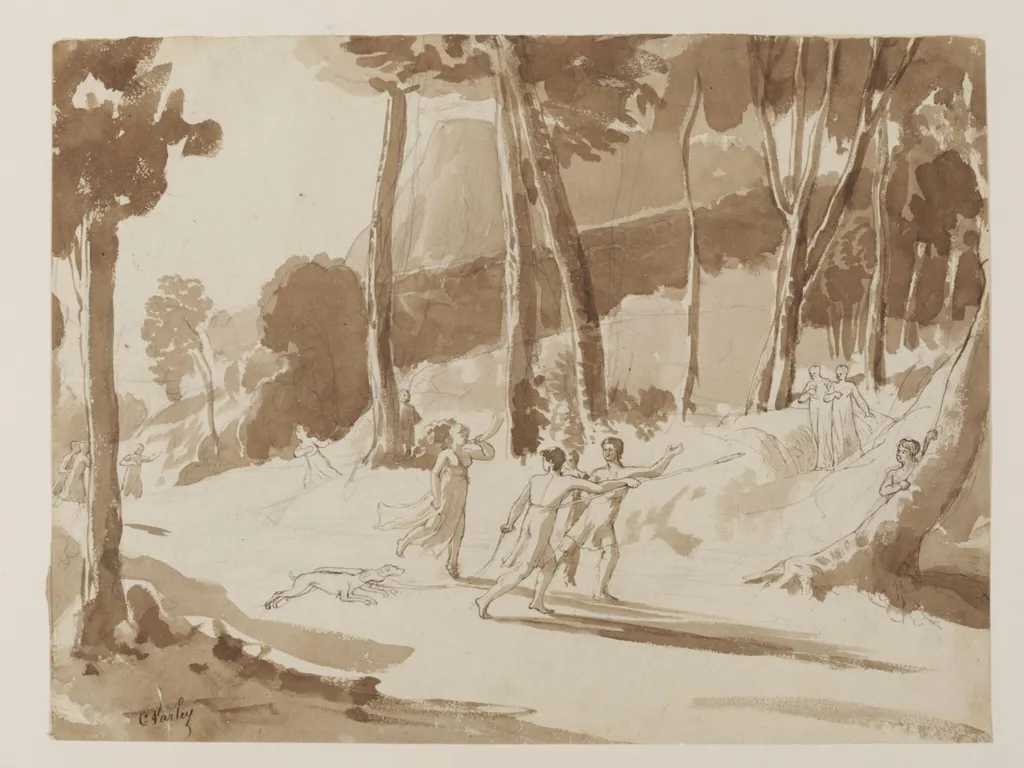
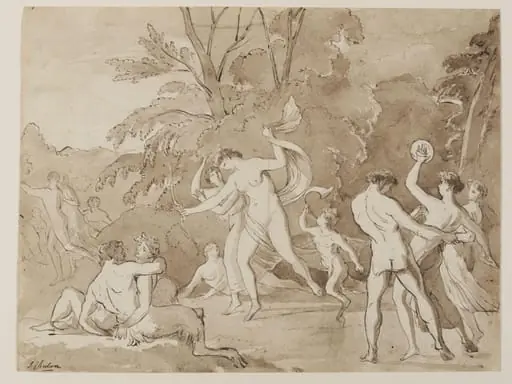
Cheerfulness is a drawing by the Romanticist artist Cornelius Varley. It dates from 1818 and is held in the collection of the Victoria and Albert Museum.
About this work
Overview
The sketch’s spontaneity reflects a focus on atmosphere over finish, typical of preparatory or observational drawing in the early nineteenth century.
Created in 1818 by Cornelius Varley, this ink drawing captures a group of figures moving through a forested landscape. Rendered with minimal detail and fluid lines, the work conveys movement and informal interaction rather than precise representation. The sketch’s spontaneity reflects a focus on atmosphere over finish, typical of preparatory or observational drawing in the early nineteenth century.
Subject & Meaning
The figures—women in loose garments, one playing a horn, another guiding two dogs—move through the woods with unstructured grace. A figure reclines near the ground, accompanied by a dog, suggesting rest amid activity. The scene evokes a sense of harmonious leisure, possibly symbolizing an idealized communion with nature, free from social constraint, aligning with Romantic ideals of natural freedom and emotional expression.
Technique & Style
Varley employed swift, light ink strokes to suggest form and motion without heavy shading or detail. The trees are elongated and sparse, rocks are hinted at with minimal marks, and figures are simplified into gestural outlines. The absence of fine detail emphasizes rhythm and energy, prioritizing the impression of life over realism, characteristic of sketchbook practices of the period.
History & Provenance
The drawing originates from Varley’s personal sketchbook, likely made during a period of outdoor observation. As a founding member of the Society of Painters in Watercolours, Varley frequently documented natural scenes and informal gatherings. This work remained within his collection until its later inclusion in institutional holdings, preserving its status as a private study rather than a public commission.
Context
Produced during the height of Romanticism in Britain, the drawing reflects a cultural shift toward valuing emotion, individual experience, and the natural world over classical order. Varley’s loose style mirrors contemporaries like Turner and Constable, who favored expressive rendering over polished finish. The scene’s informality and integration with landscape echo broader Romantic interests in untamed nature and human harmony within it.
Legacy
Though not widely exhibited during Varley’s lifetime, the drawing contributes to understanding his role in advancing observational drawing as a legitimate artistic practice. Its unpolished quality reveals the value placed on immediacy and personal response in early Romantic art, influencing later generations who prioritized expressive sketching over academic finish.
Own this work as a print
Artist & collection

Artist
Cornelius Varley, FRSA (21 November 1781 – 2 October 1873) was a British painter, mostly in watercolour, printmaker and optical instrument-maker. He invented the graphic telescope and the graphic microscope.

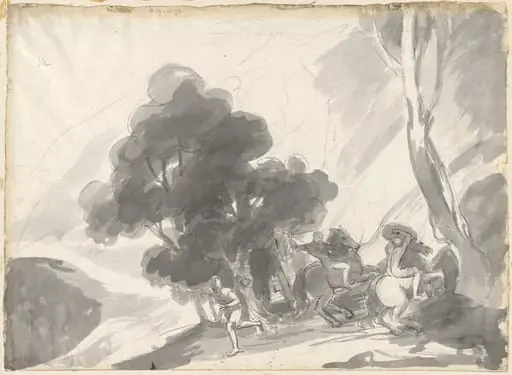 Troilus and Cressida, Act IV, Scene V: The Fight Between Hector and Ajax II
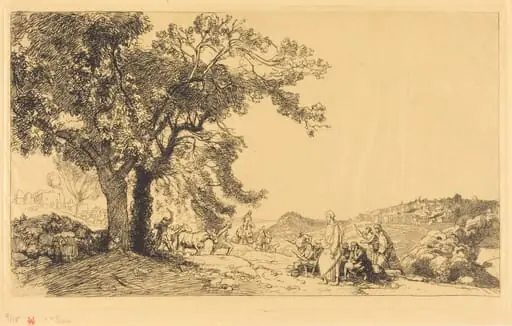 Le Christ au matin de rameaux
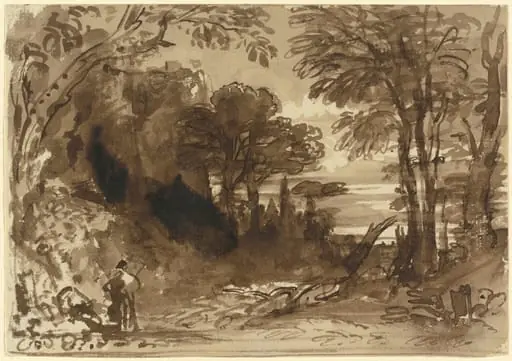 A Clearing in a Forest
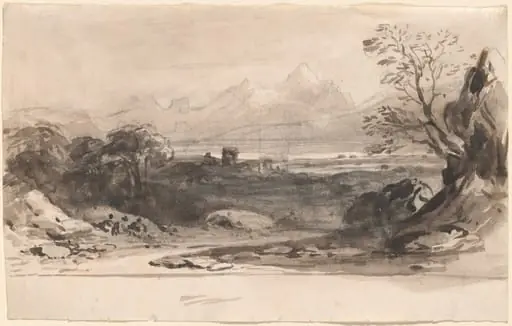 Landscape with Ruins
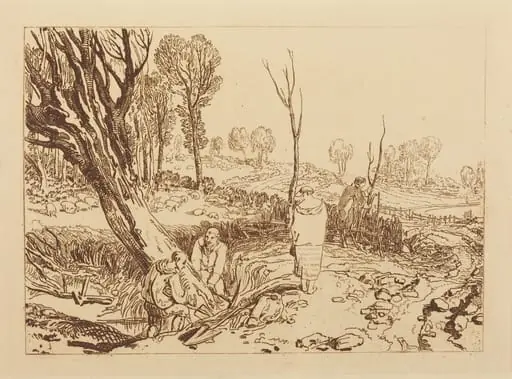 Hedging and Ditching
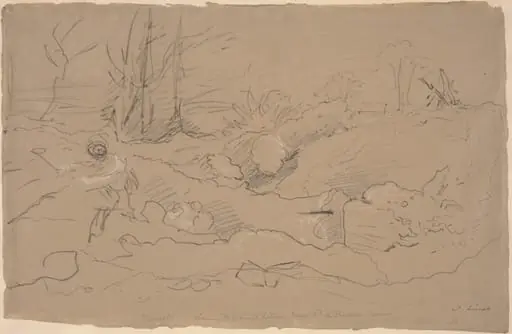 Bayswater, Clearing the Ground between Queen's Road and Porchester Terrace
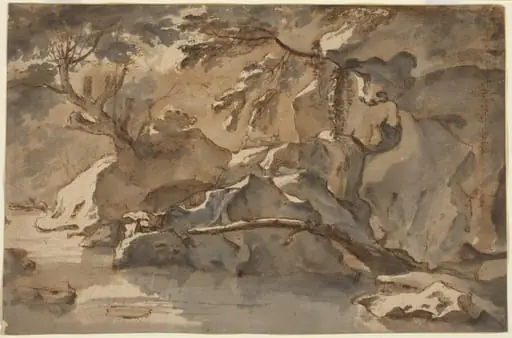 Landscape (after Paul Bril)
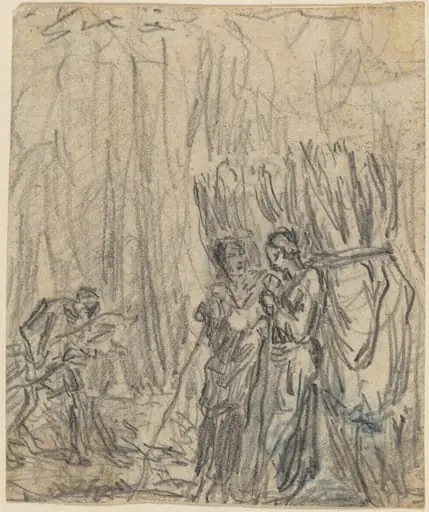 Gleaners
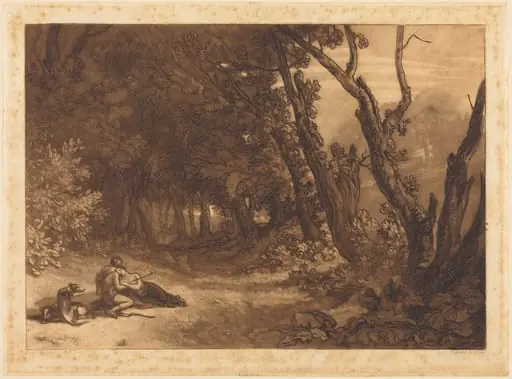 Procris and Cephalus
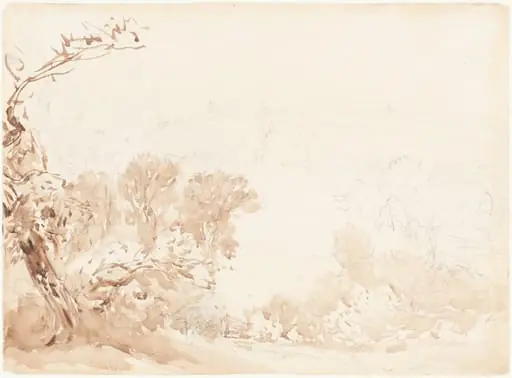 Hillside and Trees
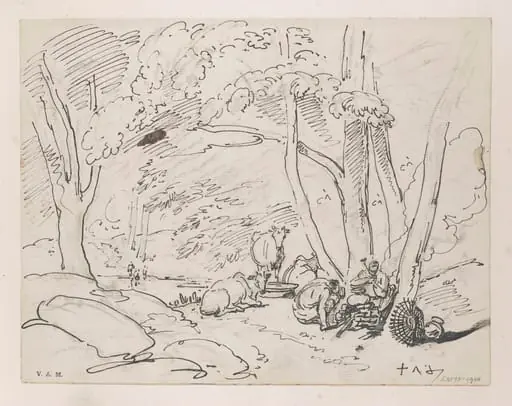 A wooded landscape with Indian figures and cattle
 Cheerfulness