Artwork
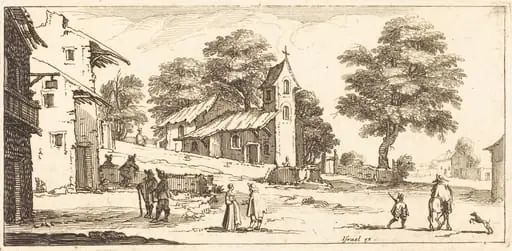
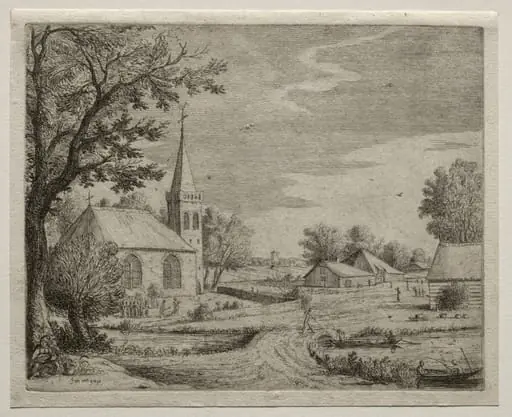
Landscape with a Meadow and a Village Church
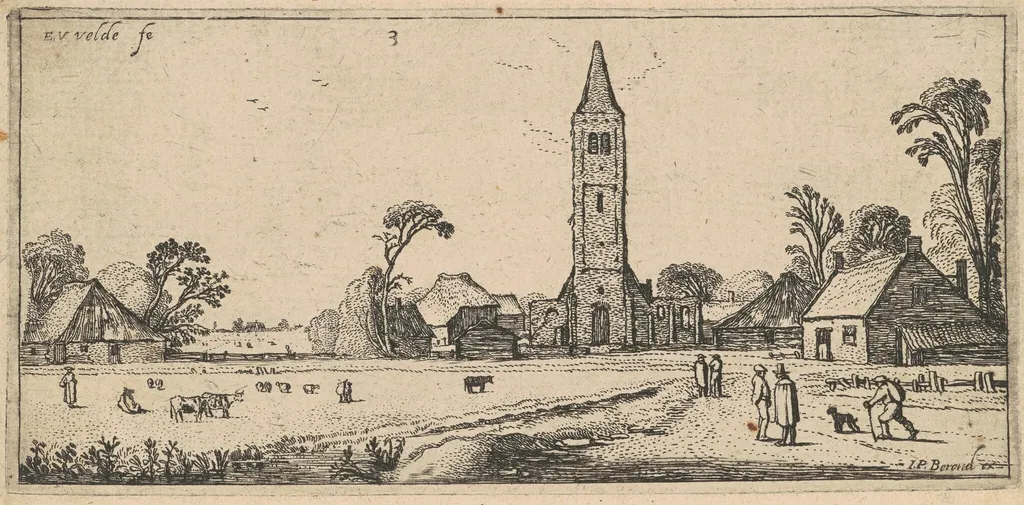
Landscape with a Meadow and a Village Church is an ink print by the Baroque artist Velde, Esaias van de, I. It dates from 1615 and is held in the collection of the National Gallery of Art. Created around 1615, this etching by Esaias van de Velde depicts a quiet rural scene on laid paper.
About this work
Overview
The work belongs to the printmaking tradition of early 17th-century Dutch art, where landscape subjects gained increasing attention.
Created around 1615, this etching by Esaias van de Velde depicts a quiet rural scene on laid paper. The work belongs to the printmaking tradition of early 17th-century Dutch art, where landscape subjects gained increasing attention. The artist employed etching as the primary technique, supplemented by drypoint to enhance texture and tonal depth, resulting in a delicate interplay of light and shadow across the composition.
Subject & Meaning
The scene centers on a broad, level meadow dominated by tall grasses, with a narrow dirt path leading the eye toward a modest village church. The church, with its pale walls and reddish roof, stands as the only architectural element, suggesting a quiet center of community life. The absence of figures and the soft morning light evoke stillness and solitude, reflecting a contemplative view of rural existence rather than narrative action.
Technique & Style
Van de Velde used etching to define the structure of the landscape, incising lines into a copper plate with acid. He then added drypoint strokes directly with a needle, creating rich, fuzzy lines that hold ink and produce soft, velvety shadows. This combination allowed subtle gradations of tone, particularly in the grasses and sky, enhancing the atmospheric quality. The paper’s laid texture further contributes to the tactile, muted character of the print.
History & Provenance
The work originates from the early phase of van de Velde’s career, when he was active in Haarlem and influenced by the emerging Dutch landscape tradition. While specific early ownership records are sparse, the print aligns with a broader circulation of small-scale landscapes among collectors and artists in the Netherlands during the 1610s. Its survival in good condition reflects its careful handling and enduring appeal within print collections.
Context
This print emerged during a period when Dutch artists began shifting focus from religious or historical themes to everyday environments. Van de Velde, alongside contemporaries like Jan van Goyen, helped establish landscape as an independent genre. The emphasis on natural light, humble architecture, and unidealized terrain reflects a growing cultural interest in the local countryside, distinct from the grander traditions of Italianate painting.
Legacy
Van de Velde’s early etchings, including this one, contributed to the development of Dutch landscape printmaking. His use of drypoint to suggest atmosphere influenced later artists who sought to capture mood through tonal variation rather than detailed rendering. Though not widely known today, his works remain important examples of how printmaking expanded the possibilities of landscape representation in Northern Europe.
Artist & collection