Artwork
Untitled
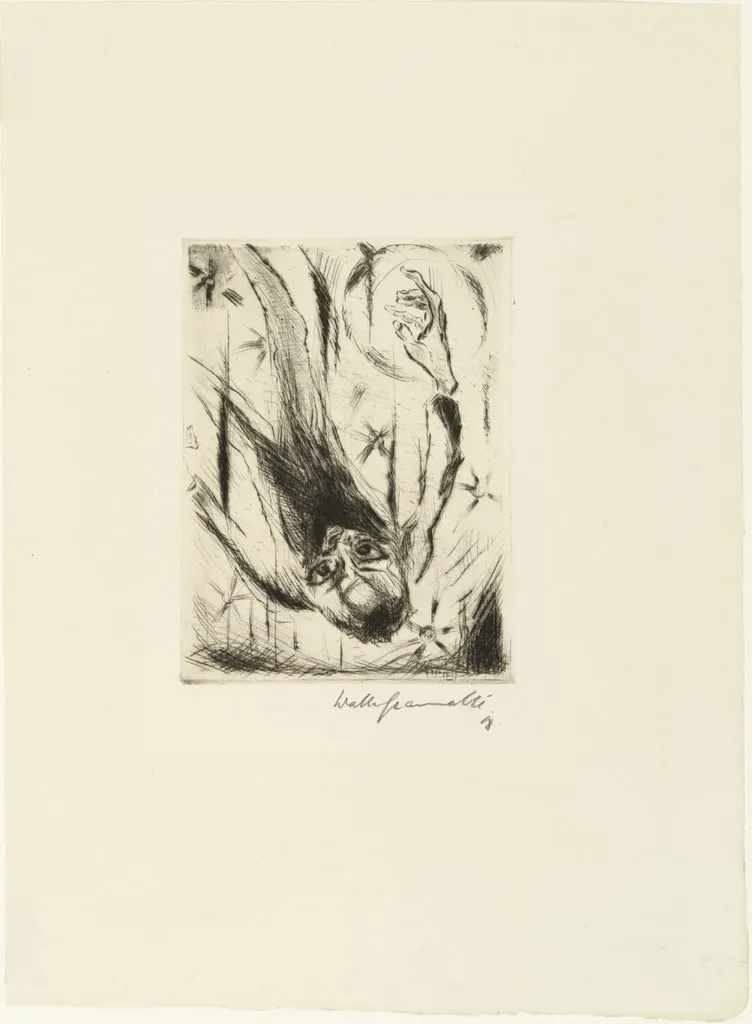
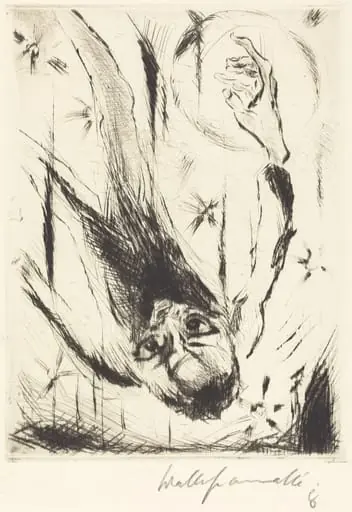
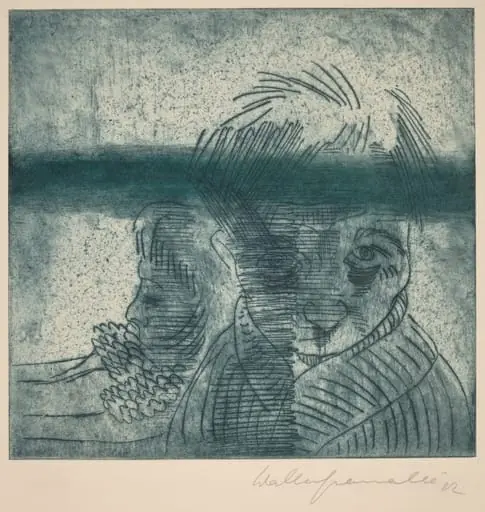
Untitled is an ink print by Walter Gramatté. It dates from 1918 and is held in the collection of the Museum of Modern Art.
About this work
Overview
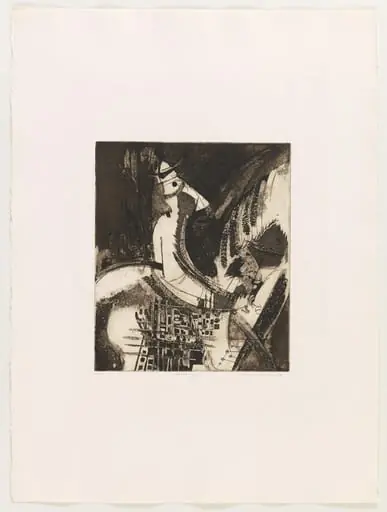
Executed in black ink on paper, it features a stark contrast between dense, expressive lines and untouched white areas.
Created in 1918, Untitled is a drypoint print by German artist Walter Gramatté. The work is part of the collection at The Museum of Modern Art. Executed in black ink on paper, it features a stark contrast between dense, expressive lines and untouched white areas. The composition conveys motion through fragmented forms and an unconventional orientation of the central figure, reflecting the emotional intensity of its post-war era.
Subject & Meaning
A bearded male figure, wearing a tall, pointed hat, appears inverted at the center of the composition. His distorted posture and the surrounding swirls of abstract lines suggest psychological unease or disorientation. The figure’s orientation may imply a world turned upside down, resonating with the social and political upheavals following World War I. No narrative is explicit; instead, the image evokes inner turmoil through visual disruption.
Technique & Style
Gramatté employed drypoint, a printmaking method that scratches lines directly into a metal plate, producing rich, velvety blacks. The technique allows for spontaneous, gestural marks, evident in the jagged contours and dense hatching that envelop the figure. The absence of grayscale tones emphasizes contrast, while the uninked paper functions as active negative space, heightening the sense of agitation and spatial instability.
History & Provenance
The print was made in 1918, during Gramatté’s most active period as a printmaker. It entered The Museum of Modern Art’s collection in the mid-20th century, likely through acquisitions focused on early modern European prints. Its provenance prior to institutional acquisition is not publicly documented, but its inclusion in MoMA’s holdings aligns with the museum’s early commitment to expressive, non-traditional printmaking.
Context
Created in the aftermath of World War I, the work reflects the broader Expressionist preoccupation with psychological fragmentation and societal collapse. German artists of the time often used distorted forms and stark contrasts to convey trauma and alienation. Gramatté’s approach, while less known than contemporaries like Kollwitz or Dix, shares this urgent, inward-looking aesthetic shaped by wartime disillusionment.
Legacy
Untitled remains a representative example of Gramatté’s contribution to early 20th-century printmaking. Though he did not achieve widespread fame, his works are recognized for their emotional intensity and technical innovation within the German Expressionist circle. The print continues to be studied for its raw visual language and its role in expanding the expressive potential of drypoint beyond traditional illustration.
Artist & collection

Artist
Walter Gramatté (8 January 1897 in Berlin – 9 February 1929 in Hamburg) was a German expressionist painter who specialized in magic realism.

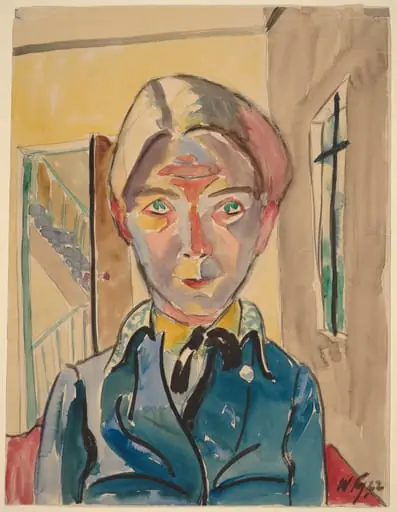 Self-Portrait in Front of Stairs (Selbst vor Treppe)
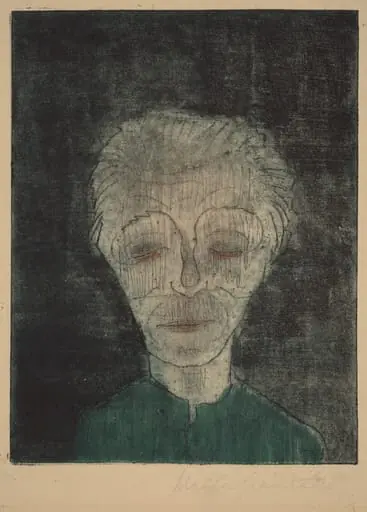 Tired Man (Self-Portrait)
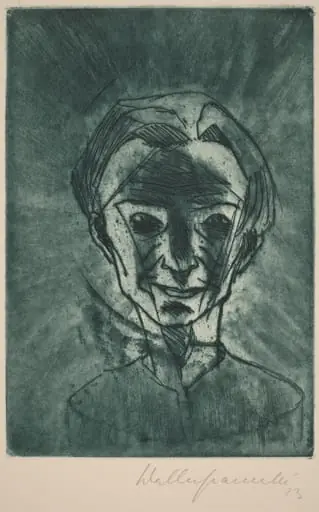 Smiling Head, Self-portrait (Lächelnder Kopf, Selbstporträt)
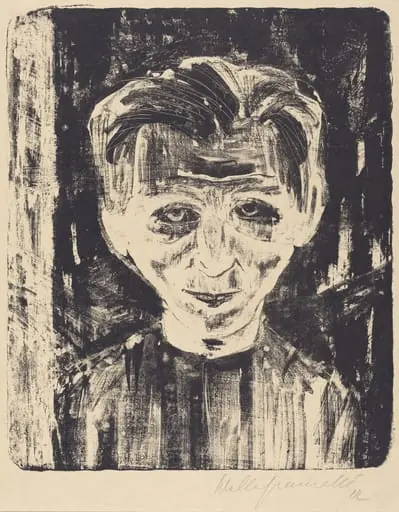 Self-Portrait
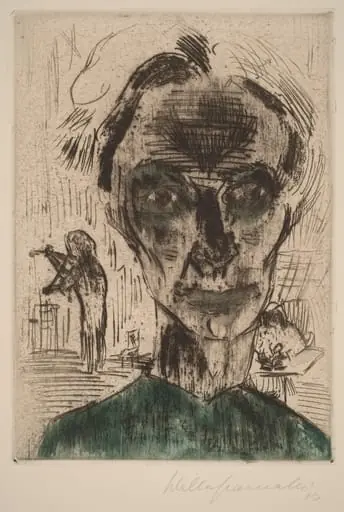 Man in a Room, Self-portrait
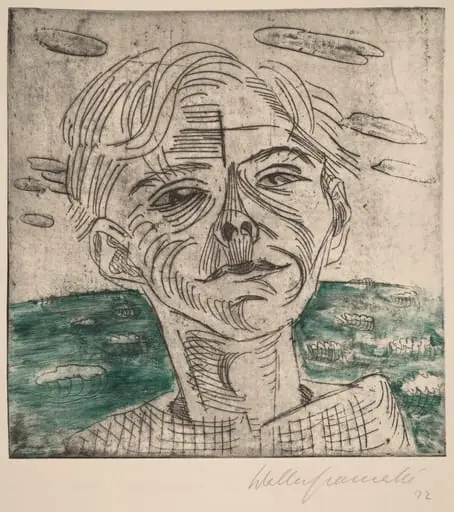 Man at the Sea, Self-portrait (Mann am Meer, Selbstporträt)
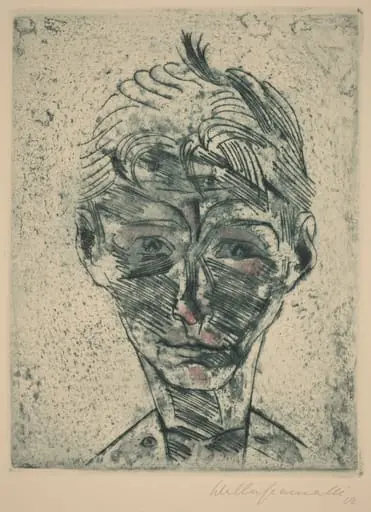 Bust of a Young Man, Self-portrait (Knabenkopf, Selbstporträt)
 The Couple, Self-Portrait with Wife (Das Paar, Selbstporträt mit Frau)