Artwork
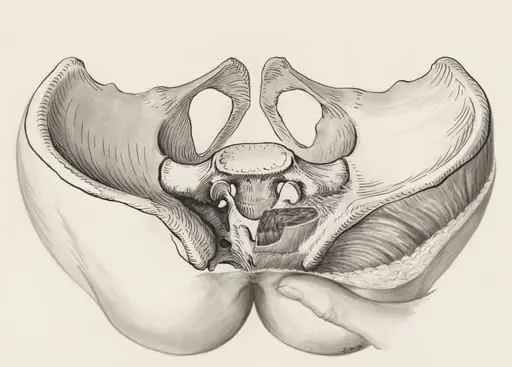
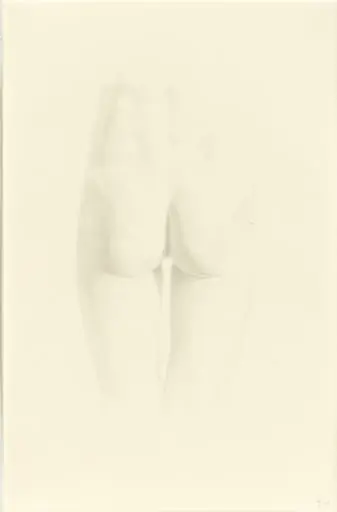
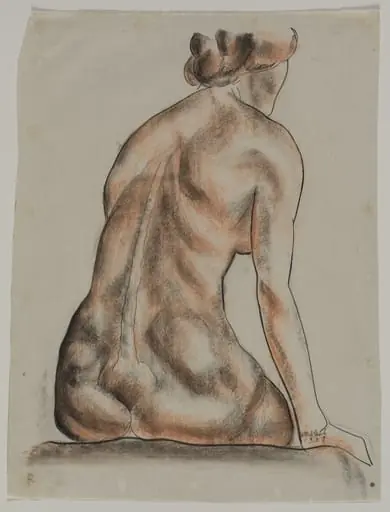
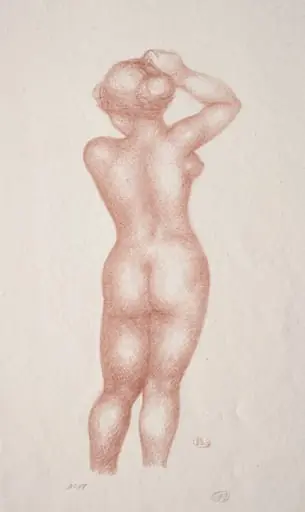
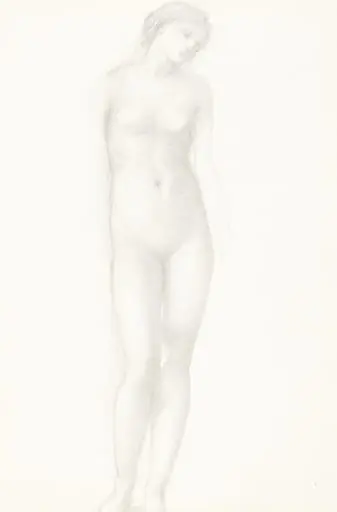
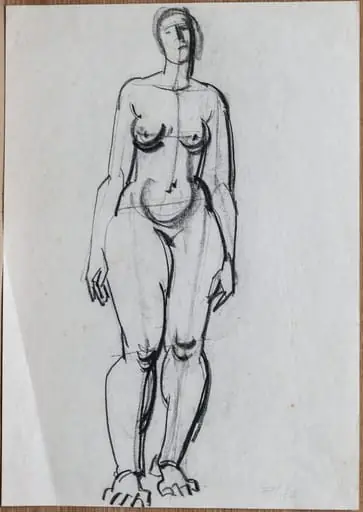
Female lower back and buttocks
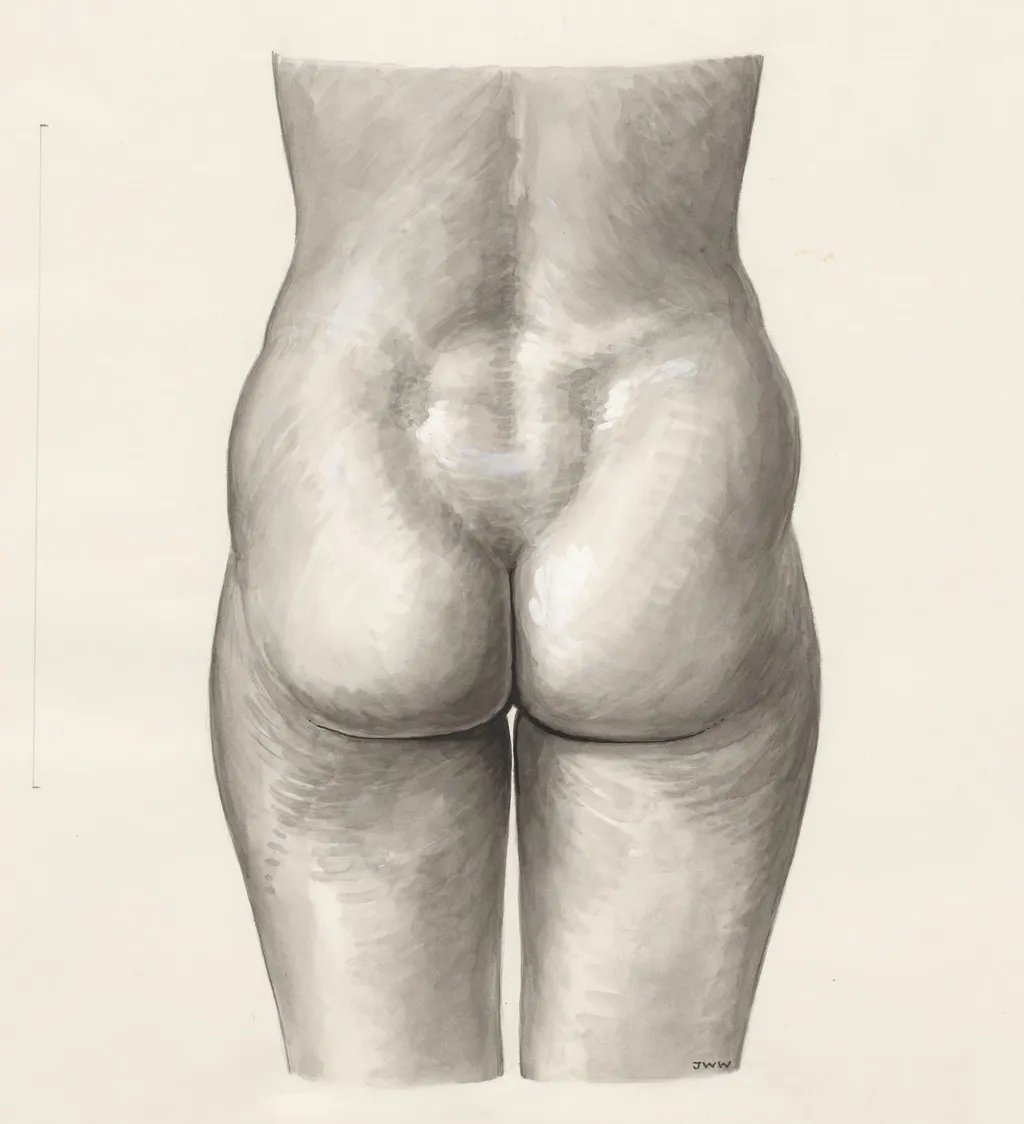
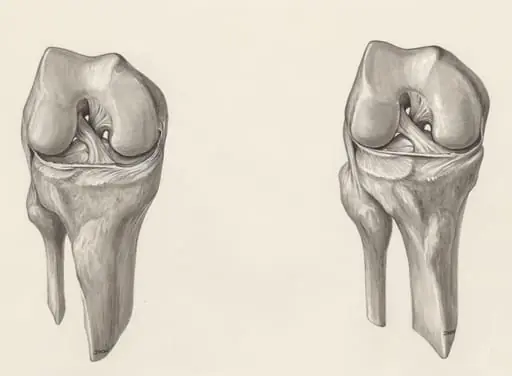
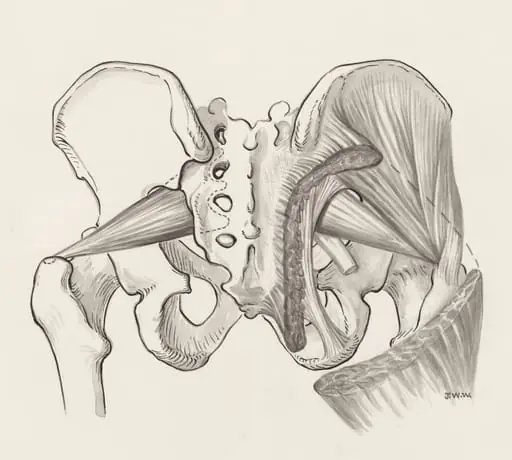
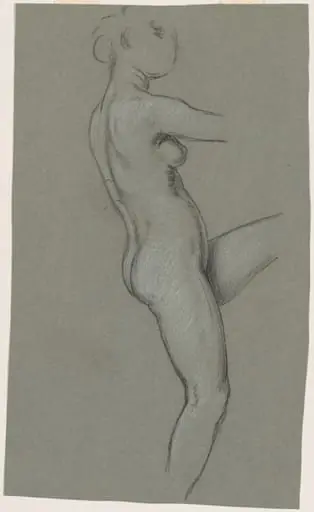
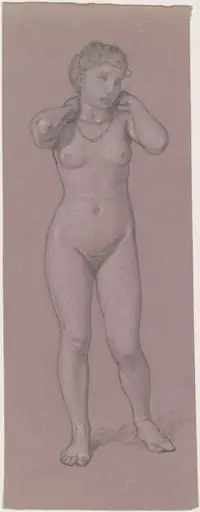
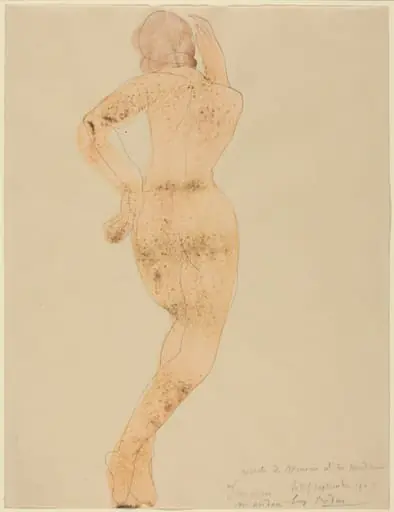
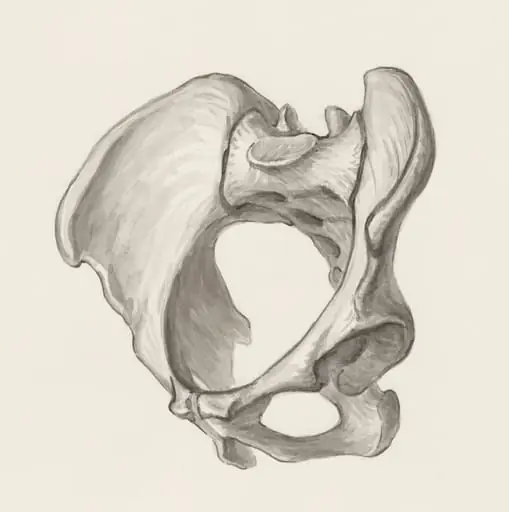
Female lower back and buttocks is a drawing by J Wetselaar-Whittaker. It dates from 1970 and is held in the collection of the Leiden University Libraries. This drawing, attributed to J.
About this work
Overview
It resides in the collection of the Museum of Ethnography, suggesting its use in anthropological or educational contexts rather than fine art display.
This drawing, attributed to J. Wetselaar-Whittaker and dated around 1970, depicts the posterior view of a human lower torso. Executed in a restrained, observational manner, it captures the contours of the back and buttocks with minimal detail. The work lacks contextual elements, focusing solely on anatomical form. It resides in the collection of the Museum of Ethnography, suggesting its use in anthropological or educational contexts rather than fine art display.
Subject & Meaning
The subject is a nude female torso from behind, rendered without identification or narrative. The absence of facial features or personal attributes emphasizes the body as a biological structure. The quiet, unadorned presentation implies an intent to document physical form rather than express emotion or identity. It functions as a neutral visual reference, likely intended for study in disciplines such as anatomy or biological illustration.
Technique & Style
The artist employed light, subtle shading to suggest volume and surface texture, avoiding bold outlines or dramatic contrast. Lines are faint and deliberate, conveying the smoothness of skin with gentle gradations. The legs are positioned straight and slightly apart, creating a stable, symmetrical composition. The style is restrained and methodical, reflecting a focus on accuracy over expression, typical of pedagogical or scientific drawing practices of the period.
History & Provenance
The work entered the Museum of Ethnography’s collection in the late 20th century, likely as part of a broader archive of visual materials used in anthropological or medical training. Its origin as a personal study or classroom exercise is plausible, given its unembellished nature. No documentation of its creation or prior ownership exists publicly, reinforcing its role as a functional, rather than commemorative, artifact.
Context
In the decades surrounding 1970, artists and scientists frequently collaborated in producing anatomical studies to support medical education. Drawings like this one were common in institutions where visual literacy was essential for understanding human form. This piece aligns with a tradition of observational drawing used in biology, physical anthropology, and early medical curricula, where precision outweighed aesthetic ambition.
Legacy
Though unsigned and unpublicized, the drawing contributes to a larger archive of 20th-century anatomical studies that informed both scientific and artistic pedagogy. Its preservation in a museum of ethnography underscores the interdisciplinary value of such works — bridging observation, education, and cultural documentation. It remains a quiet testament to the enduring role of drawing in understanding the human body.
Artist & collection
Artist
This artist made precise studies of the body—drawings and sculptures that cut straight to the bones, muscles, and tissues.