Artwork
Philip II, King of Spain
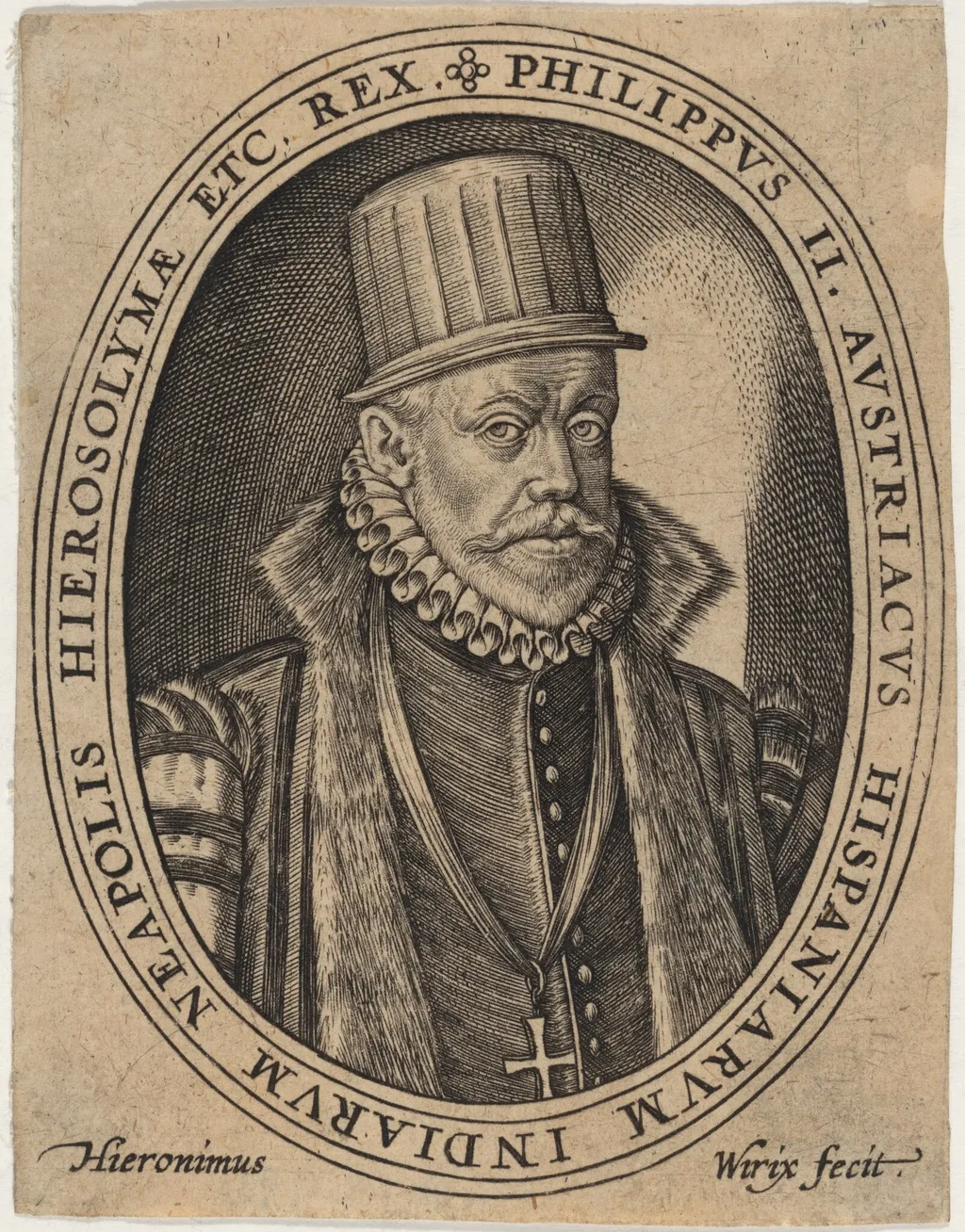
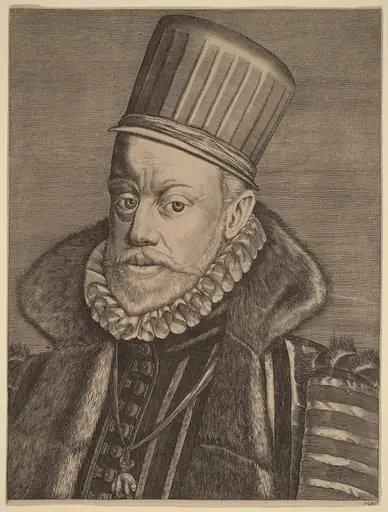
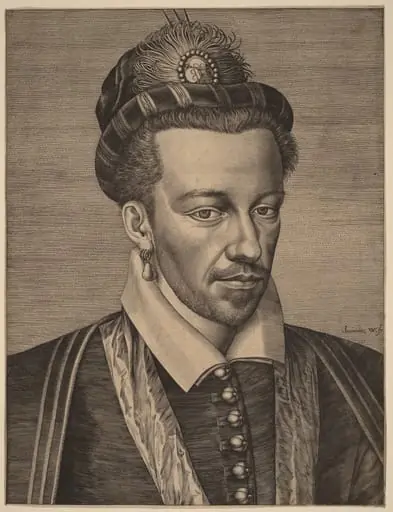
Philip II, King of Spain is an ink print by the Renaissance artist Hieronymus Wierix. It dates from 1586 and is held in the collection of the National Gallery of Art.
About this work
Overview
Executed in fine line work typical of Netherlandish printmaking, the image serves as a formal portrait intended for wide circulation.
This 1586 engraving by Hieronymus Wierix portrays Philip II of Spain, ruler of a vast global empire. Executed in fine line work typical of Netherlandish printmaking, the image serves as a formal portrait intended for wide circulation. Wierix, part of a prominent family of engravers, specialized in reproducing likenesses of political and religious figures, making such images accessible beyond elite circles.
Subject & Meaning
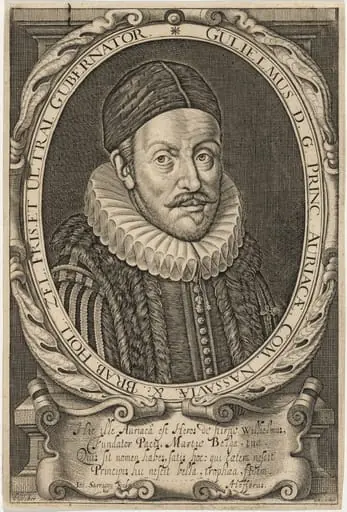
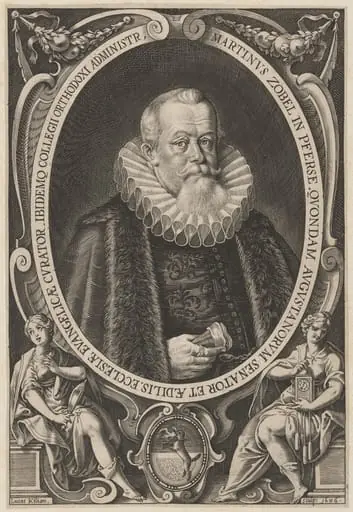
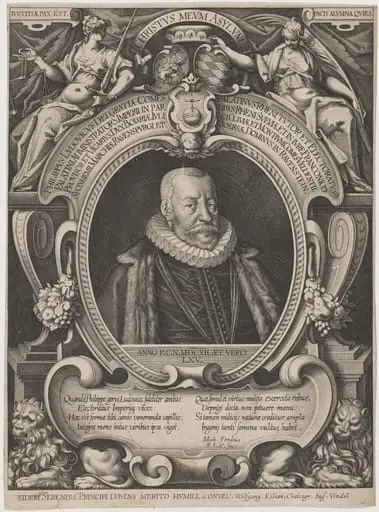
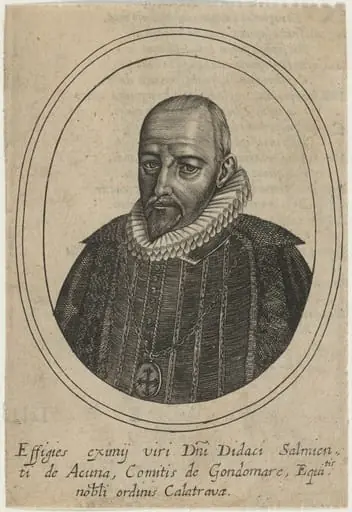
Philip II is depicted with solemn authority, his direct gaze and rigid posture conveying imperial gravitas. The tall hat, elaborate ruff, and prominent cross emphasize his dual role as monarch and defender of Catholic orthodoxy. The absence of ornate surroundings focuses attention on his person, reinforcing the image as a tool of state representation rather than personal expression.
Technique & Style
Wierix employed precise, controlled engraving lines to render texture in fabric, hair, and metalwork. The dark background enhances the figure’s three-dimensionality, while meticulous shading models the face and clothing with subtle gradations. The style reflects Renaissance naturalism, prioritizing accurate detail over idealization, characteristic of Northern European print traditions of the period.
History & Provenance
Created during Philip II’s reign, the engraving likely circulated among European elites and clergy to affirm his image in regions under Habsburg influence. Wierix’s workshop produced numerous such portraits, often based on painted models. Though the original source image is unknown, the print’s survival in multiple institutional collections suggests its enduring use as a political and religious artifact.
Context
In the late 16th century, the Southern Netherlands remained under Spanish control amid religious conflict and rising Protestant resistance. Portraits like this one functioned as visual propaganda, reinforcing loyalty to the Catholic monarchy. Wierix’s work bridged artistic tradition and political messaging, aligning printmaking with the broader project of maintaining Habsburg authority through imagery.
Legacy
Wierix’s engraving exemplifies how reproductive prints extended the reach of official portraiture in pre-modern Europe. His technical precision and adherence to formal conventions influenced later generations of engravers. Though not original in composition, the work remains a significant record of how power was visually codified and disseminated during the late Renaissance.
Artist & collection

Artist
Hieronymus Wierix (1553–1619) was a Flemish engraver, draughtsman and publisher. He is known for his reproductive engravings after the work of well-known local and foreign artists including Albrecht Dürer. Together with…