Artwork
A View of Dublin from Clontarf
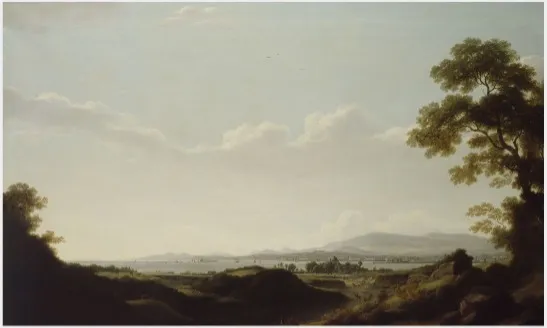
A View of Dublin from Clontarf is an oil painting by William Ashford. It dates from 1798 and is held in the collection of the National Gallery of Ireland.
About this work
Overview
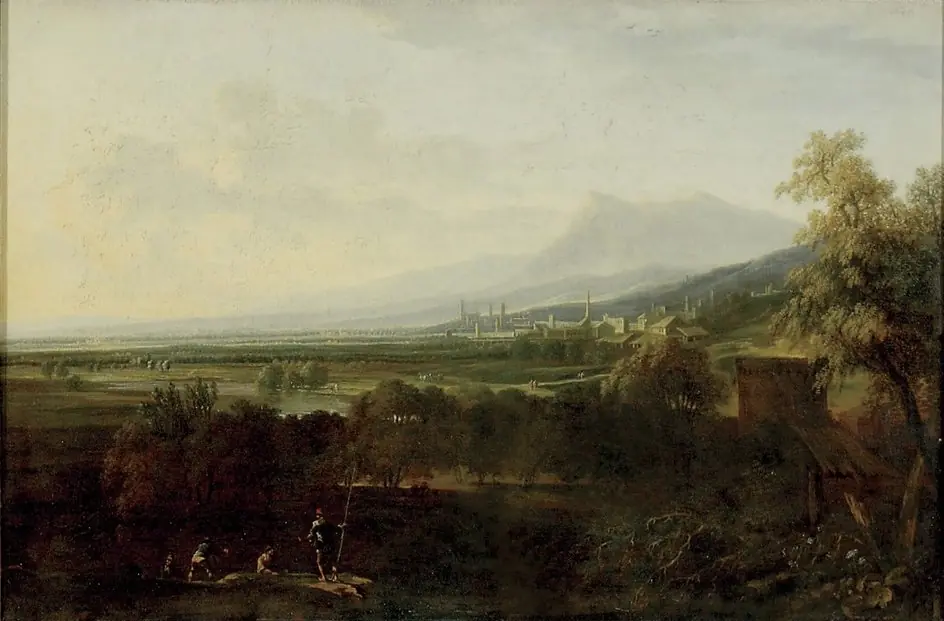
Painted in 1798 by William Ashford, this oil-on-canvas landscape captures a broad vista of Dublin as seen from the coastal area of Clontarf.
Painted in 1798 by William Ashford, this oil-on-canvas landscape captures a broad vista of Dublin as seen from the coastal area of Clontarf. Ashford, an English artist who made Ireland his home from age 18, turned from still life to landscape painting by the 1770s. The work is part of a broader series of Irish views he produced for aristocratic patrons, reflecting a growing interest in topographical representation during the late eighteenth century.
Subject & Meaning
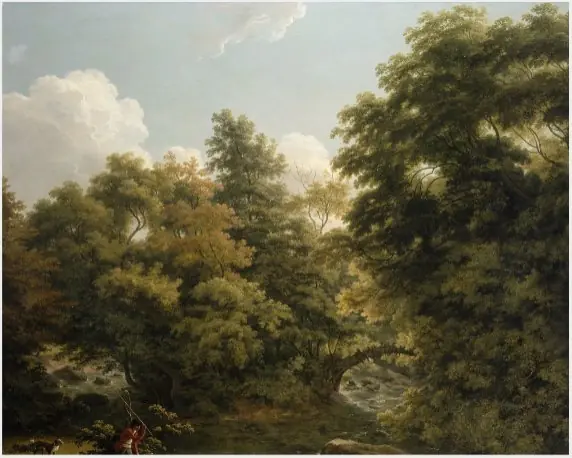
The painting presents a quiet, elevated perspective of Dublin’s skyline, rendered with measured scale against the natural terrain. A dominant tree anchors the right foreground, while a gentle rise on the left frames the view. The city appears distant and subdued, not as a center of activity but as a quiet element within a larger, undisturbed landscape. This composition suggests contemplation rather than celebration, aligning with the era’s romanticized view of nature and place.
Technique & Style
Ashford employs soft tonal transitions and subtle chiaroscuro to model form and space, avoiding dramatic contrasts in favor of atmospheric harmony. The sky, rendered in pale blues and whites, recedes gently behind the city, while the foreground foliage is defined with loose, textured brushwork. His approach blends topographical accuracy with a lyrical sensitivity to light, reflecting both his training in still life and his evolving interest in naturalistic landscape.
History & Provenance
Commissioned during a period of political tension in Ireland, the painting was completed the same year as the 1798 Rebellion. Though its immediate patron is unrecorded, Ashford had previously worked for the FitzWilliam family, suggesting possible aristocratic sponsorship. The work entered the National Gallery of Ireland’s collection in the nineteenth century, where it remains as one of the earliest detailed visual records of Dublin’s urban edge.
Context
In late eighteenth-century Ireland, landscape painting served both aesthetic and documentary purposes. Ashford’s work aligns with a trend among British and Irish artists to record regional scenery for private collectors and emerging public institutions. Unlike grand historical scenes, his views emphasize quiet observation, mirroring Enlightenment ideals of empirical sight and the value of place in a time of social upheaval.
Legacy
Ashford’s painting stands as an early example of Irish landscape art that prioritizes topographical fidelity over idealization. It influenced later artists seeking to depict the Irish countryside with nuance rather than ornament. Though not widely exhibited in his lifetime, its preservation in the National Gallery of Ireland ensures its role as a visual archive of Dublin’s pre-industrial horizon.
Artist & collection

Artist
William Ashford (1746 – 17 April 1824) was an English painter who worked exclusively in Ireland, where he lived from the age of 18, having initially gone there to take up a post with the Ordnance Office.

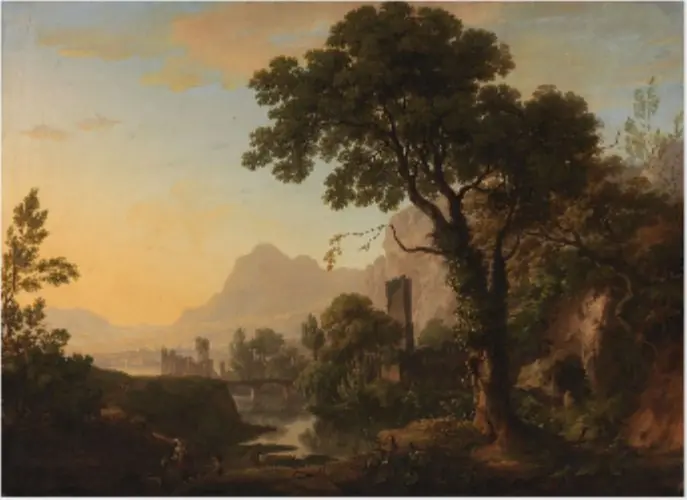 An Idyllic Landscape
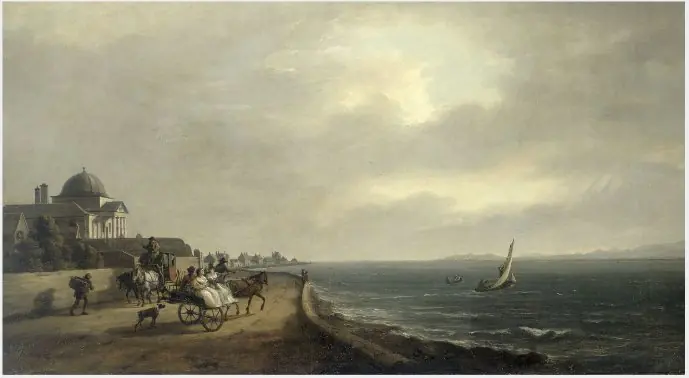 The Royal Charter School, Clontarf, County Dublin
 A Group of Flowers
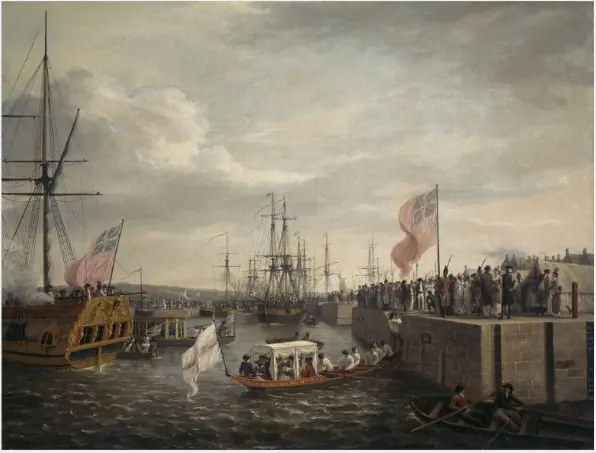 Opening of the Ringsend Docks, Dublin, 23 April 1796, with Lord Camden Conferring Knighthood on Mr John Macartney
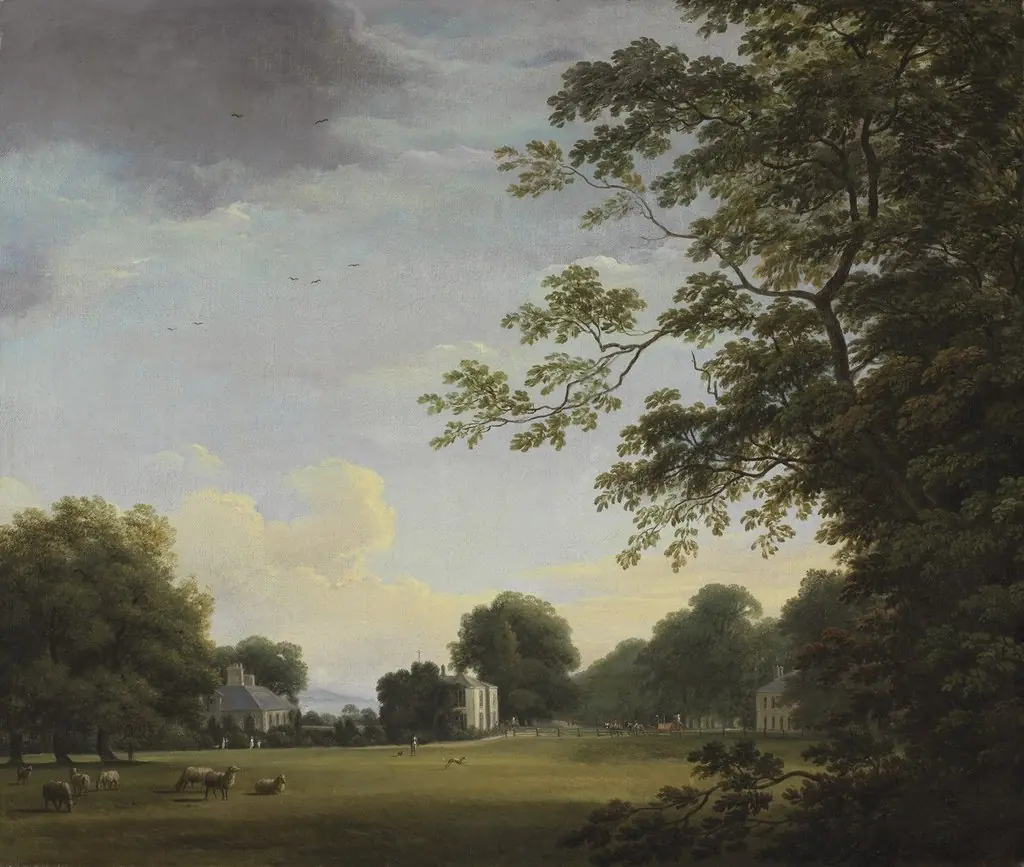 View in Mount Merrion Park
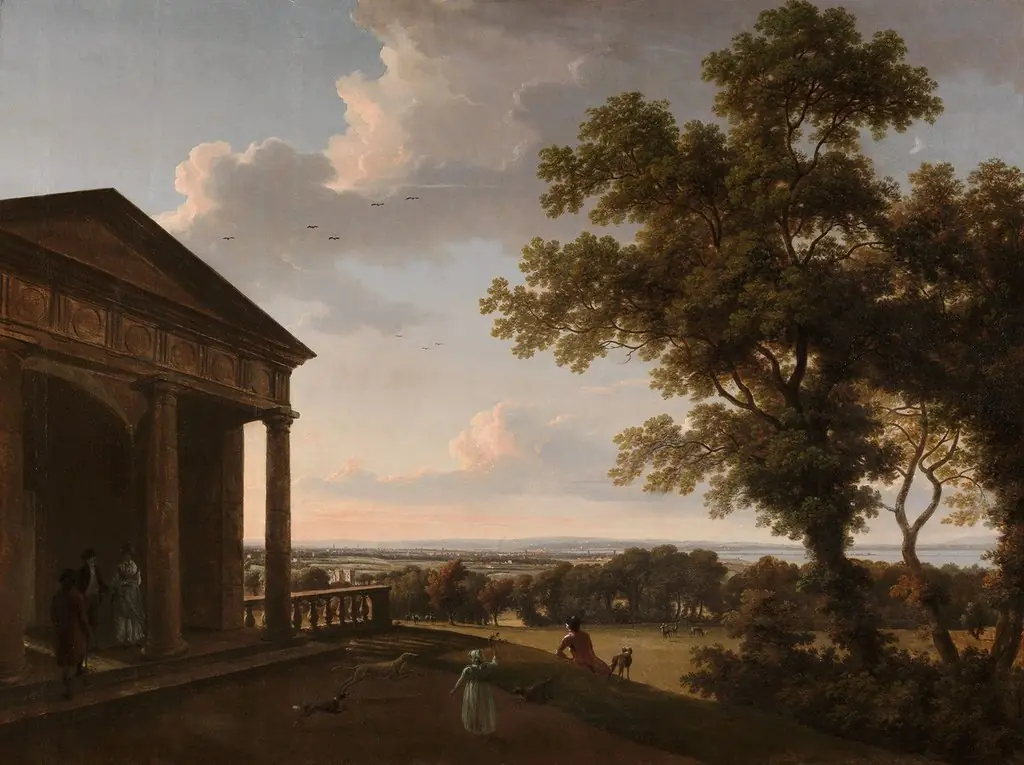 View in Mount Merrion Park (1804)
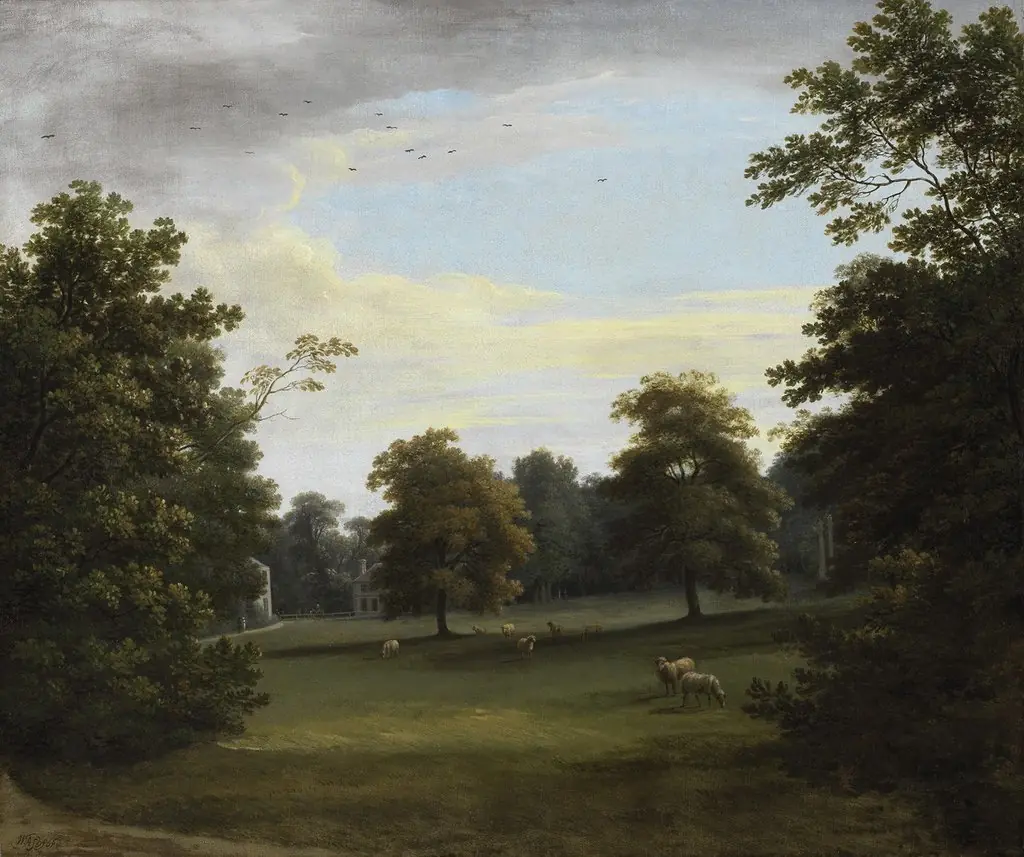 View in Mount Merrion Park
 The River in the Demesne at Charleville