Artwork
View in Mount Merrion Park (1804)
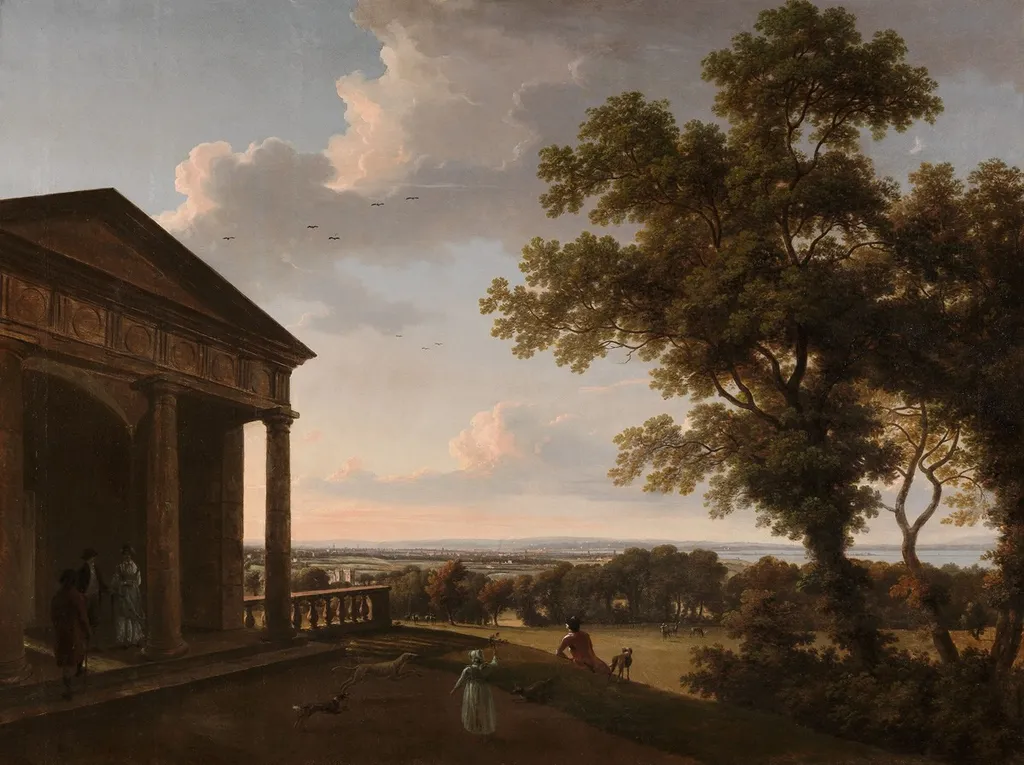
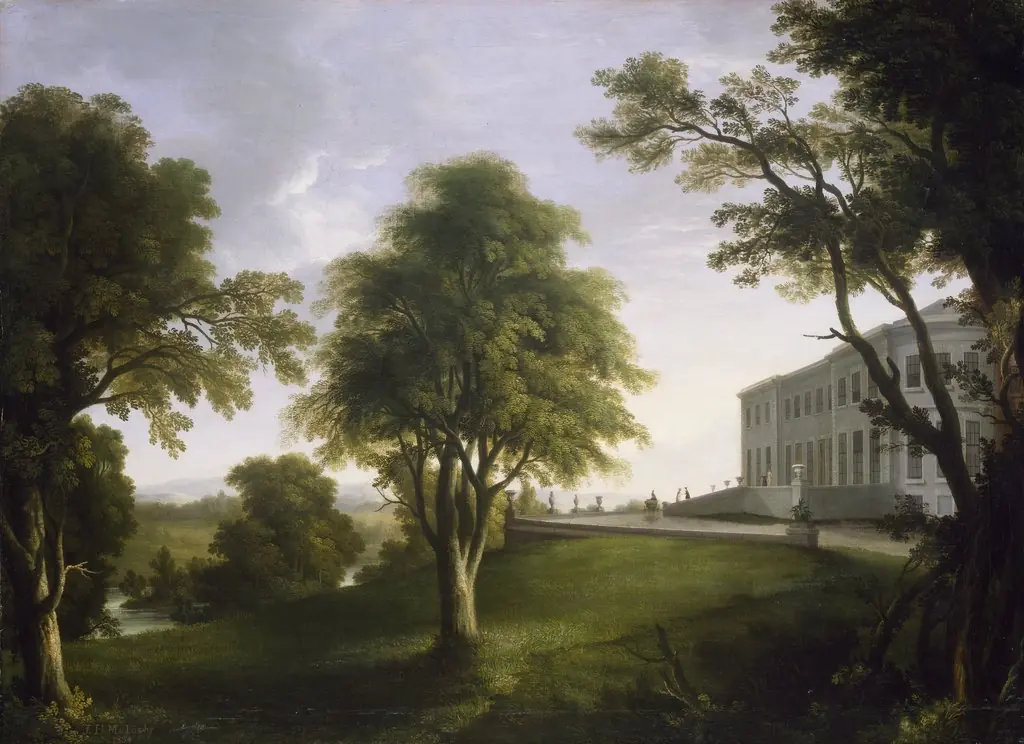
View in Mount Merrion Park (1804) is an oil painting by the British Romanticist artist William Ashford. It dates from 1804 and is held in the collection of the Fitzwilliam Museum. Created in 1804, this oil painting presents a tranquil stretch of Mount Merrion Park.
About this work
Overview
Created in 1804, this oil painting presents a tranquil stretch of Mount Merrion Park. A prominent tree dominates the right side, while a modest building anchors the left. Figures populate the foreground, strolling or seated, against gently rolling hills and a cloud‑filled sky, conveying a calm, leisurely atmosphere.
Subject & Meaning
The composition captures a leisurely park scene, emphasizing the harmony between nature and genteel recreation. The relaxed posture of the figures and the soft, open landscape suggest an idealized vision of rural pleasure, reflecting contemporary tastes for picturesque, harmonious environments.
Technique & Style
Ashford employs a restrained palette of earth tones illuminated by subtle chiaroscuro, giving depth to foliage and architecture. Brushwork is smooth, rendering atmospheric effects in the sky and distant hills, while finer detail defines the tree trunk and human activity, characteristic of early‑19th‑century British Romantic landscape painting.
History & Provenance
Commissioned by the fourth Earl FitzWilliam as part of a series of park views, the work remained within the FitzWilliam collection. It entered the Fitzwilliam Museum’s holdings, where it is presently conserved and displayed as part of the institution’s Irish landscape holdings.
Context
William Ashford, an English-born artist who settled in Ireland at eighteen, was a leading landscape painter of his era. By the time of this work he had exhibited regularly since the 1770s and would later preside over both the Irish Society of Artists and the Royal Hibernian Academy, influencing Irish artistic circles.
Artist & collection
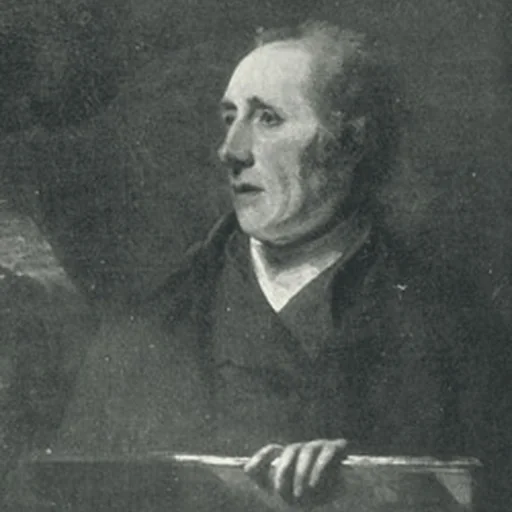
Artist
William Ashford (1746 – 17 April 1824) was an English painter who worked exclusively in Ireland, where he lived from the age of 18, having initially gone there to take up a post with the Ordnance Office.

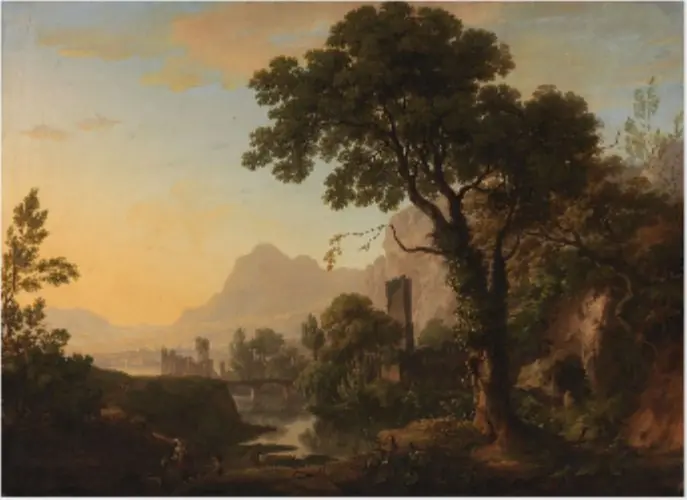 An Idyllic Landscape
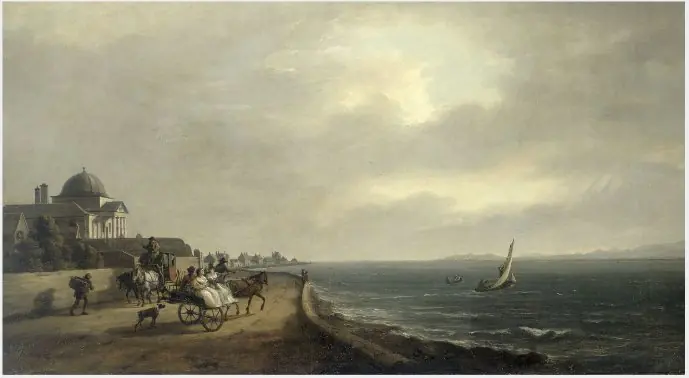 The Royal Charter School, Clontarf, County Dublin
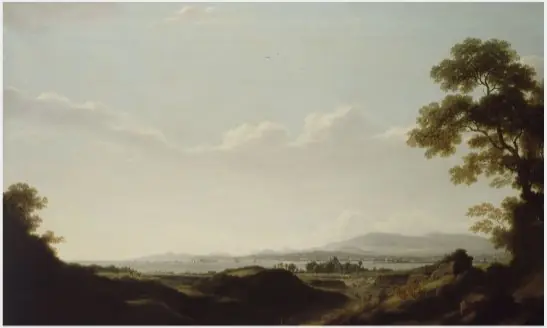 A View of Dublin from Clontarf
 A Group of Flowers
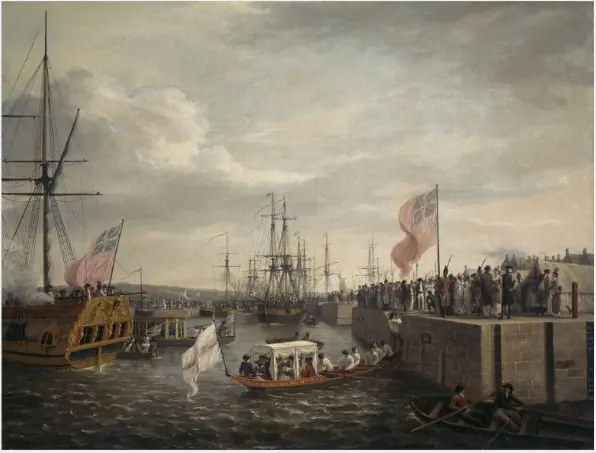 Opening of the Ringsend Docks, Dublin, 23 April 1796, with Lord Camden Conferring Knighthood on Mr John Macartney
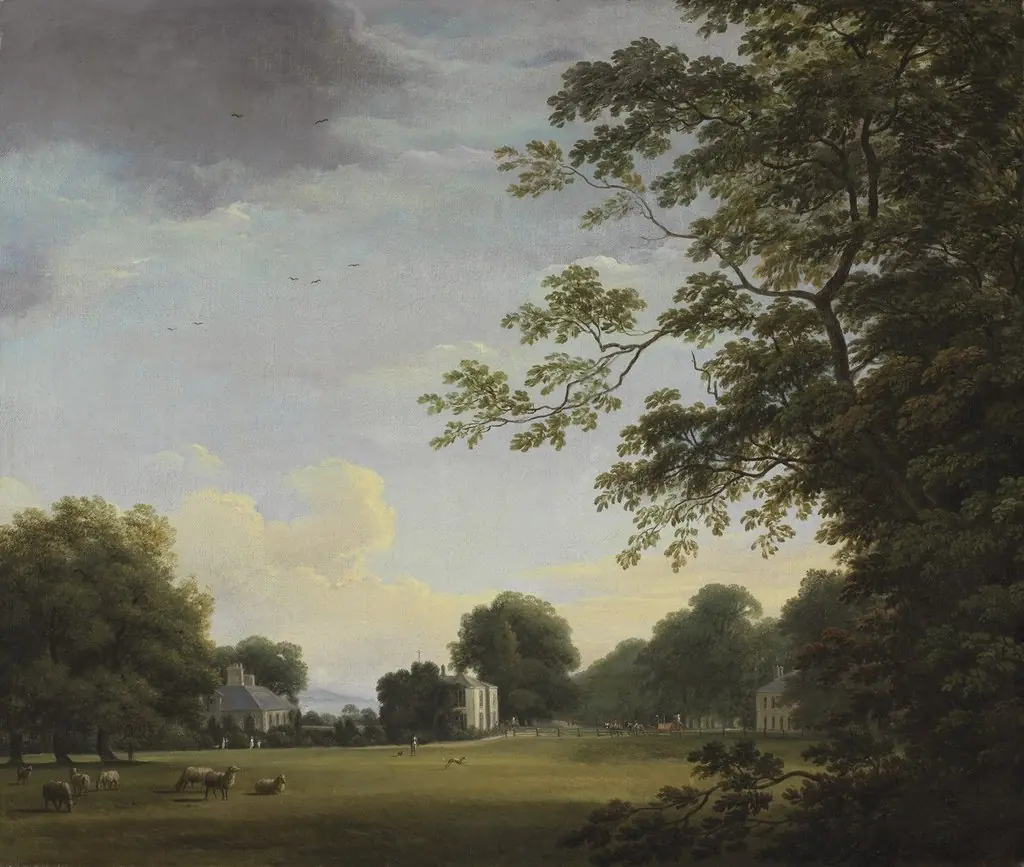 View in Mount Merrion Park
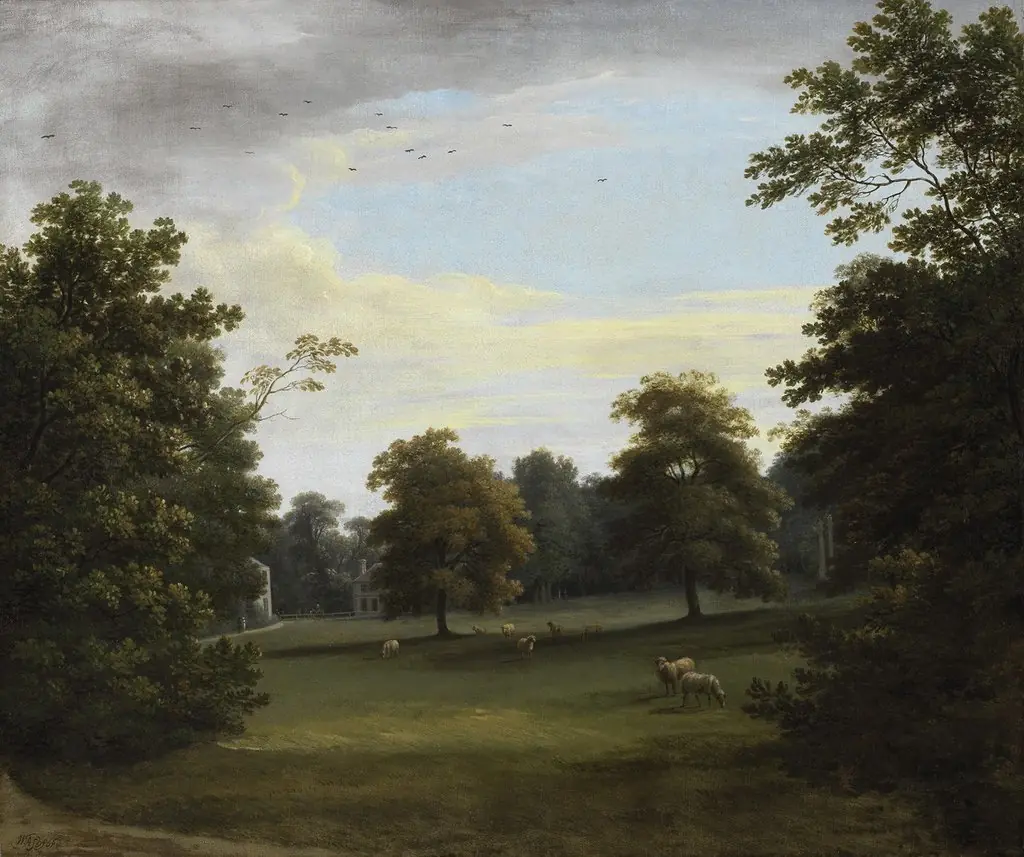 View in Mount Merrion Park
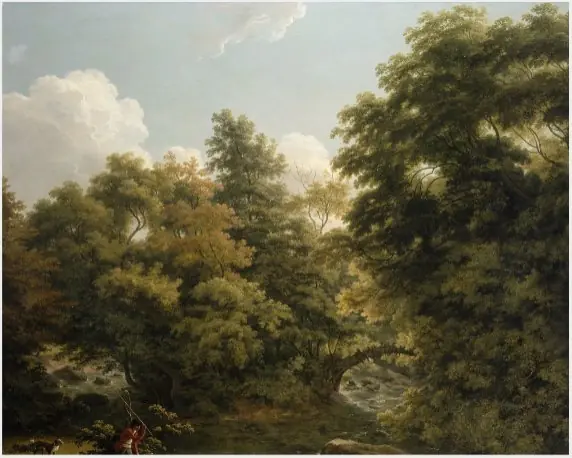 The River in the Demesne at Charleville
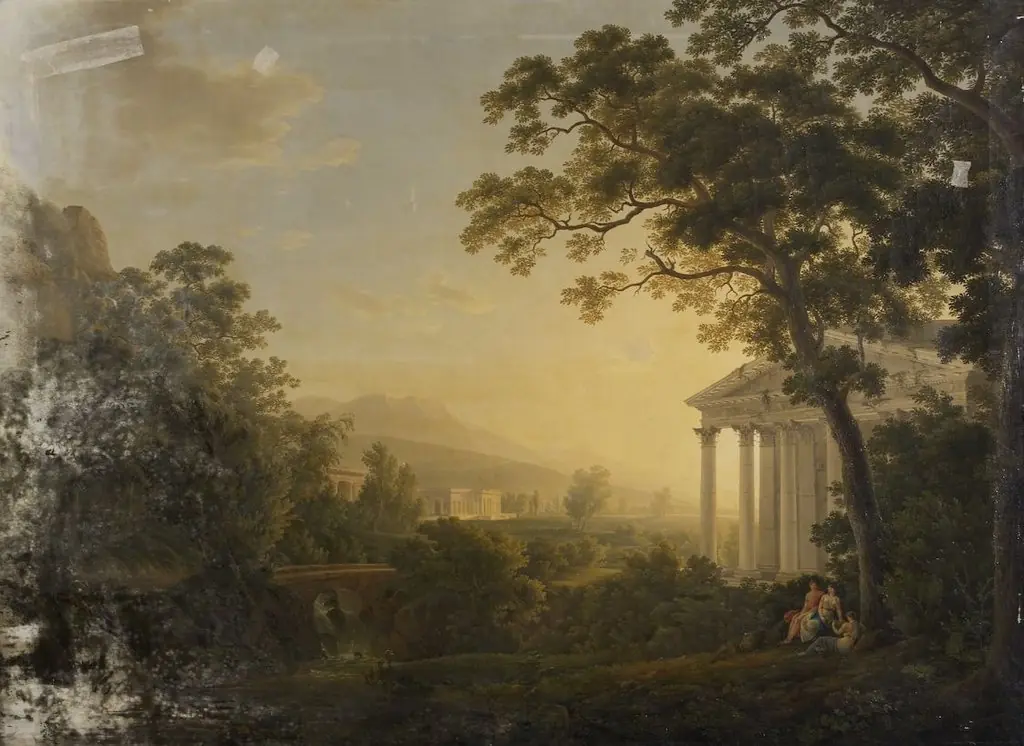 Ideal Landscape with Temple Buildings
 Untitled
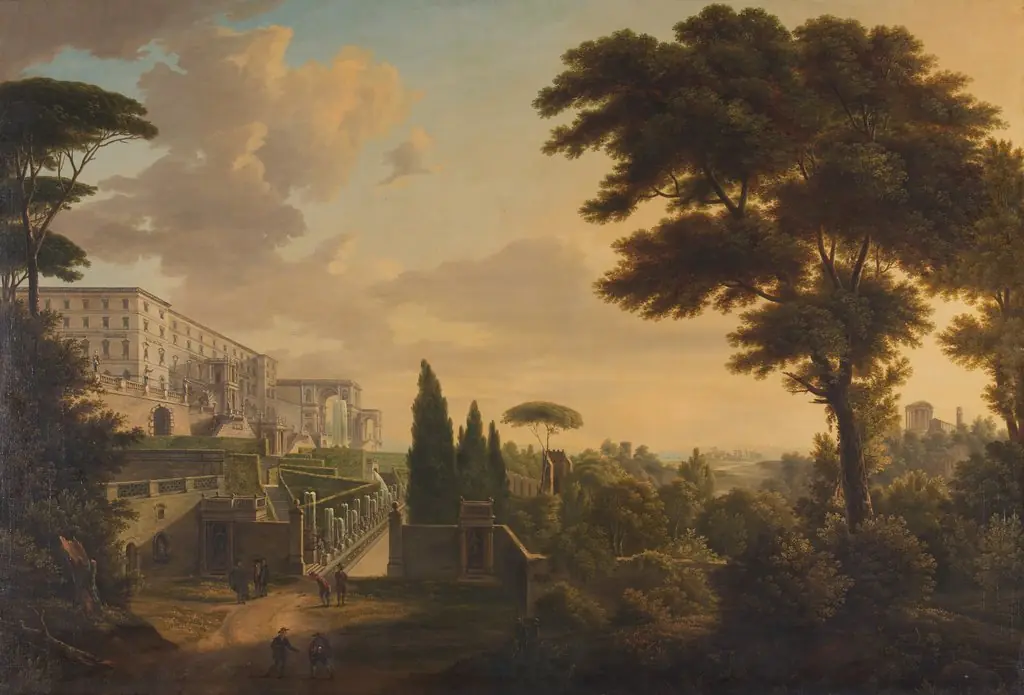 The Villa d'Este in Tivoli
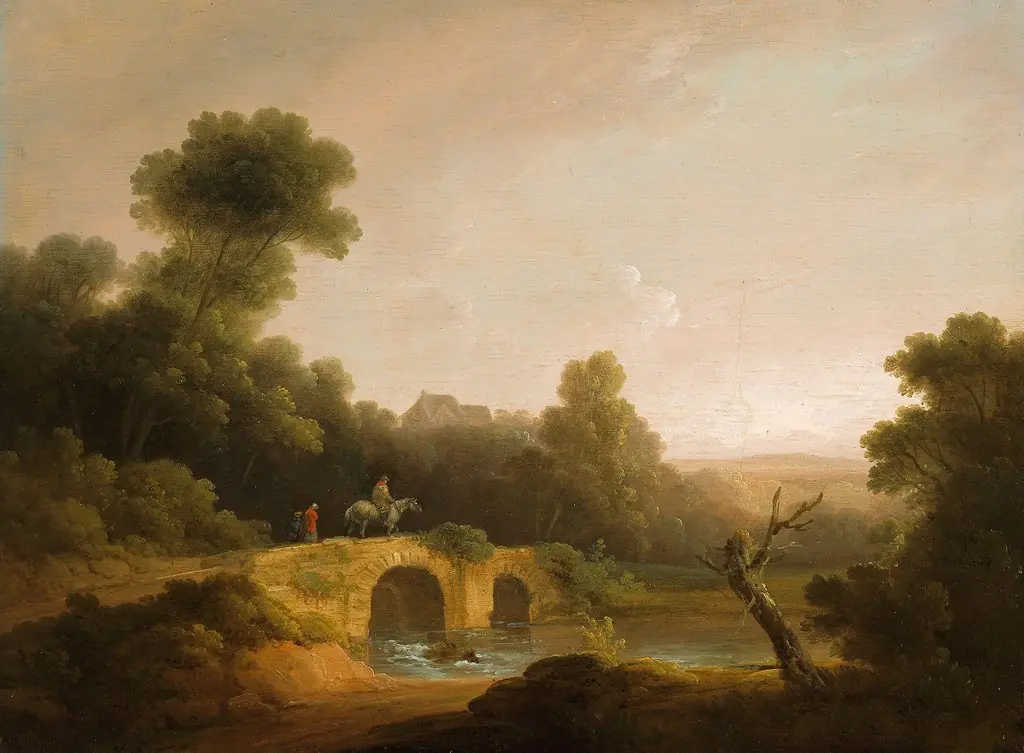 Landscape with Figures Crossing a Bridge
 A Landscape with Curragh Chase, County Limerick
 Landscape with Figures Crossing a Bridge
 Landscape with Hunters
 Arcadian Landscape
 Terrace with a Colonnade
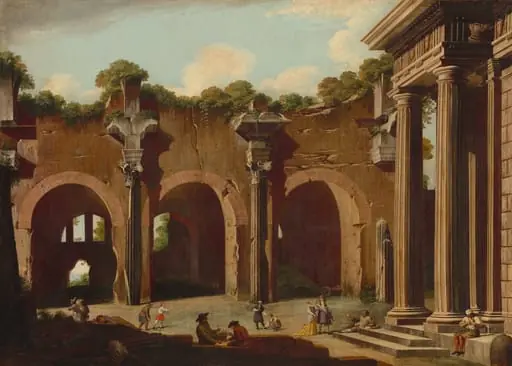 The Basilica of Constantine with a Doric Colonnade