Artwork
The Book of Job: Pl. 7, And when they lifted up their eyes afar off and knew him not
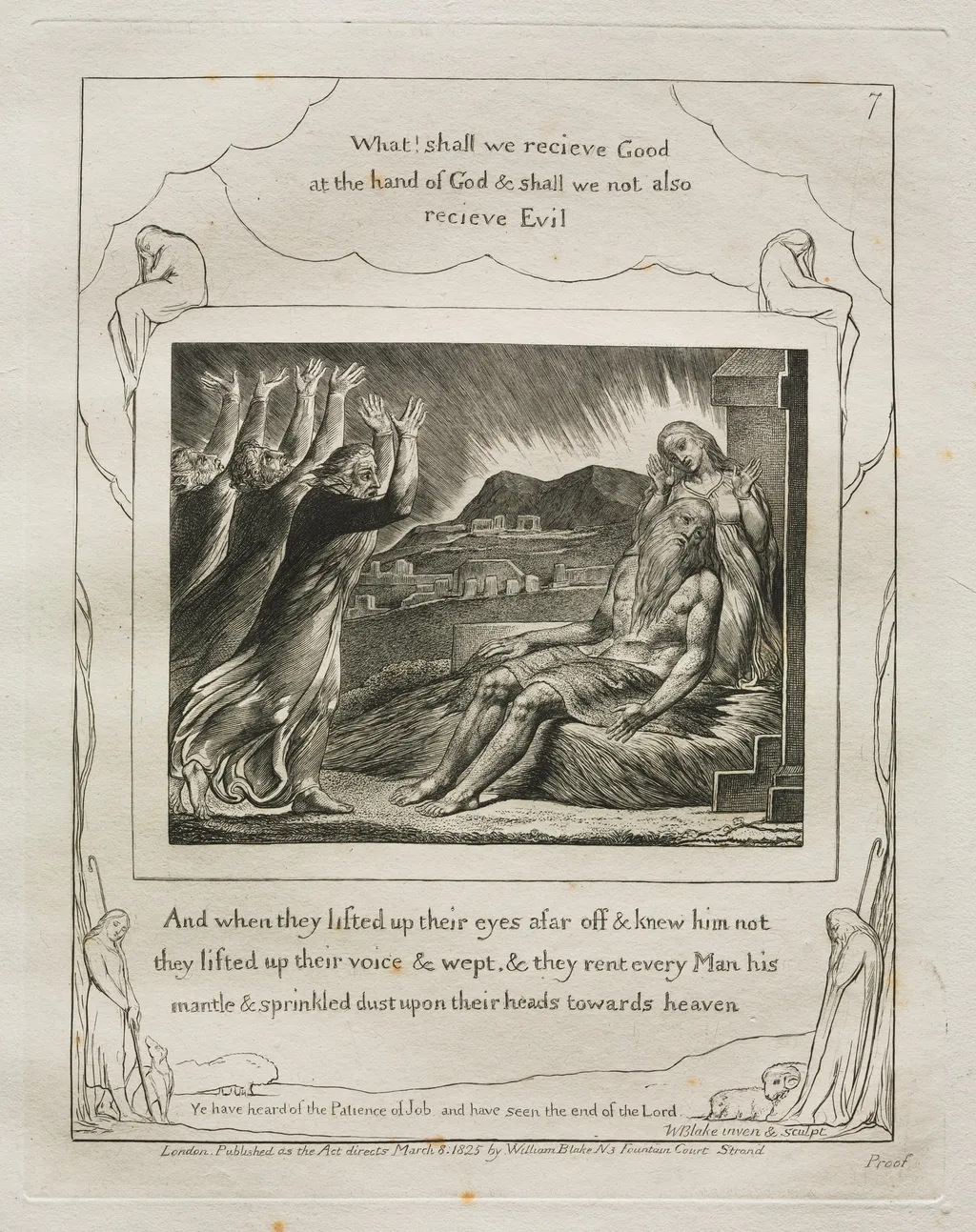
The Book of Job: Pl. 7, And when they lifted up their eyes afar off and knew him not is a work on paper by the Romanticist artist William Blake. It dates from 1825 and is held in the collection of the Cleveland Museum of Art.
About this work
Overview
Executed in intaglio, the work is part of a larger portfolio Blake produced late in life, blending textual and visual elements to convey spiritual struggle.
This engraving is the seventh plate in William Blake’s illustrated series based on the biblical Book of Job. Created in 1825, it captures the moment Job’s friends, having traveled far, finally recognize his ruined state and respond with grief. Executed in intaglio, the work is part of a larger portfolio Blake produced late in life, blending textual and visual elements to convey spiritual struggle. It is now held in the collection of The Cleveland Museum of Art.
Subject & Meaning
The scene illustrates Job’s friends—Eliphaz, Bildad, and Zophar—seeing him for the first time after his afflictions. Their reactions vary: one kneels in anguish, another hides his face, and a third reaches upward, perhaps in prayer or despair. The barren landscape and looming storm reflect inner turmoil, aligning with the biblical theme of suffering and divine silence. Surrounding marginalia include scriptural passages, reinforcing the narrative’s theological weight.
Technique & Style
Blake employed etching and hand-coloring to achieve sharp contrasts between light and shadow, heightening emotional tension. Bold, expressive lines define the figures, while the swirling clouds and jagged terrain suggest instability. The composition is dense with detail: small figures and animals in the borders echo the chaos of the central scene. Text is integrated into the design, not as caption but as visual rhythm, merging poetry with image in his signature method.
History & Provenance
Commissioned by John Linnell, Blake’s patron, the complete series of twenty-two plates was published in 1826. This particular plate was printed from copper plates Blake engraved himself, with colors applied by hand—each copy unique. The Cleveland Museum of Art acquired its version in the 20th century, preserving one of the few complete sets still in public hands. Blake’s original printing process ensured each impression carried subtle variations.
Context
Created during the height of Romanticism, the work reflects the era’s preoccupation with inner experience, divine mystery, and nature’s power. Blake rejected Enlightenment rationalism, favoring visionary expression. His illustrations of Job diverged from conventional biblical art by emphasizing psychological depth over literal narrative. The series emerged from his lifelong engagement with scripture, reimagined through personal symbolism and spiritual inquiry.
Legacy
Blake’s *Book of Job* series is now regarded as a pivotal achievement in British printmaking and religious art. Though largely overlooked in his lifetime, it later influenced Symbolist and modernist artists drawn to its fusion of text, image, and mysticism. The integration of poetry and visual metaphor in this plate helped redefine illustration as a vehicle for philosophical thought, securing Blake’s place beyond mere engraver to visionary artist.
Artist & collection
Artist
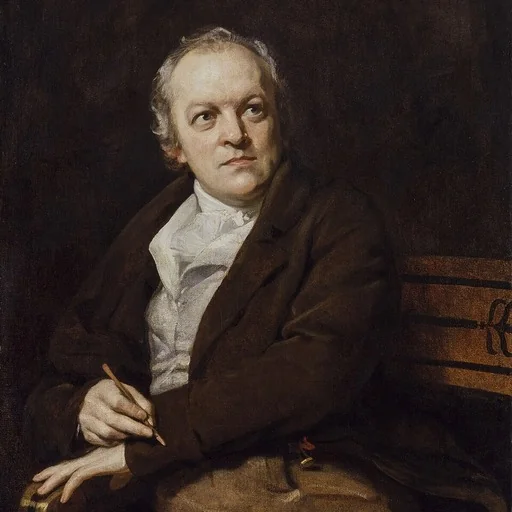
William Blake (28 November 1757 – 12 August 1827) was an English poet, painter and printmaker.

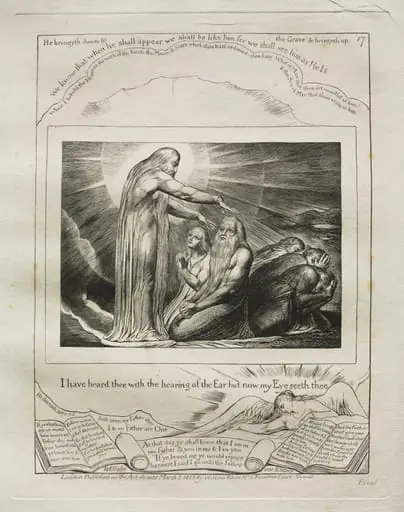 The Book of Job: Pl. 17, I have heard thee with the hearing of the Ear but now my Eye seeth thee
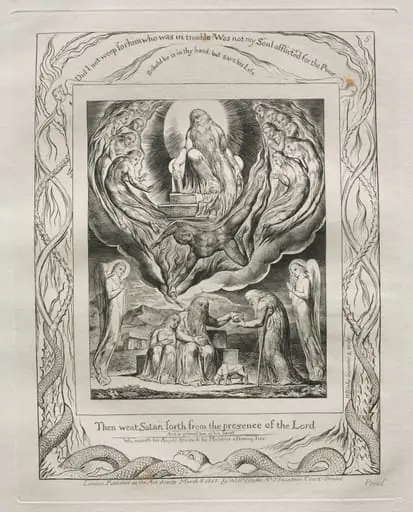 The Book of Job: Pl. 5, Then went Satan forth from the presence of the Lord
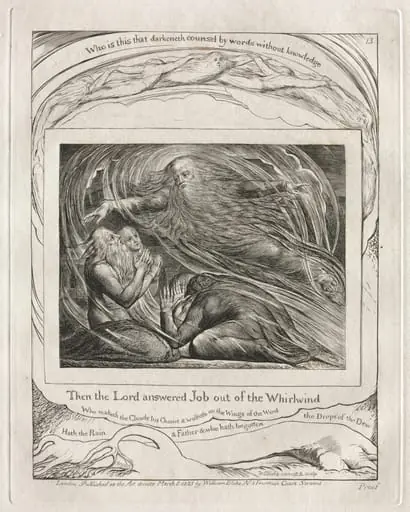 The Book of Job: Pl. 13, Then the Lord answered Job out of the Whirlwind
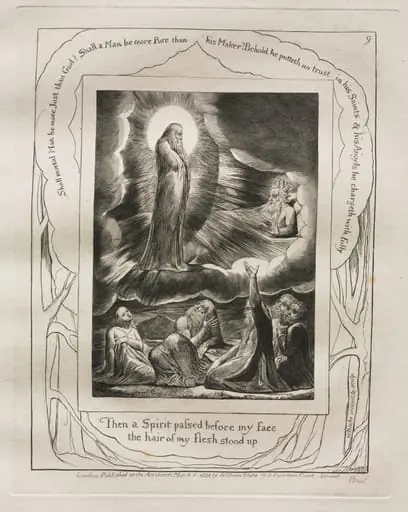 The Book of Job: Pl. 9, Then a Spirit passed before my face
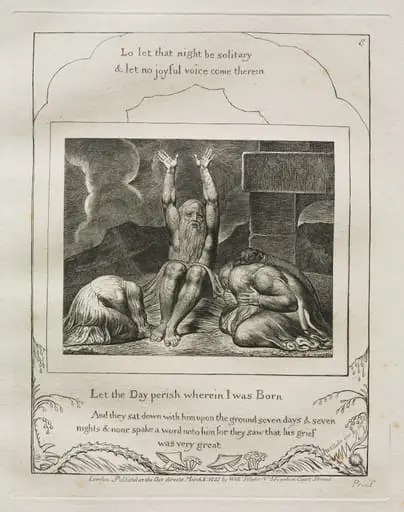 The Book of Job: Pl. 8, Let the Day perish wherein I was Born
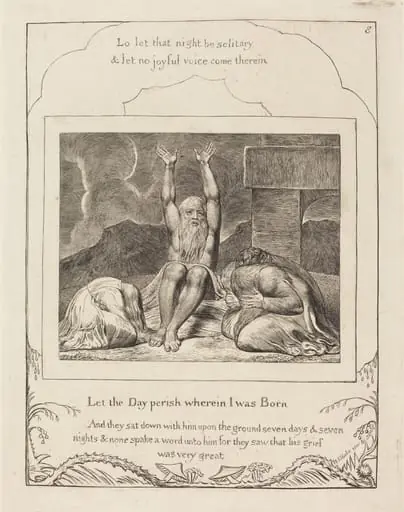 Job's Despair
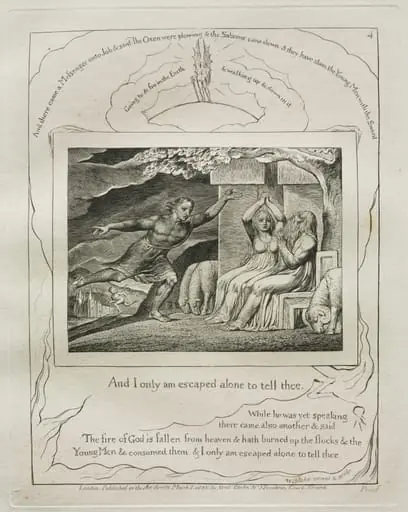 The Book of Job: Pl. 4, And I only am escaped alone to tell thee
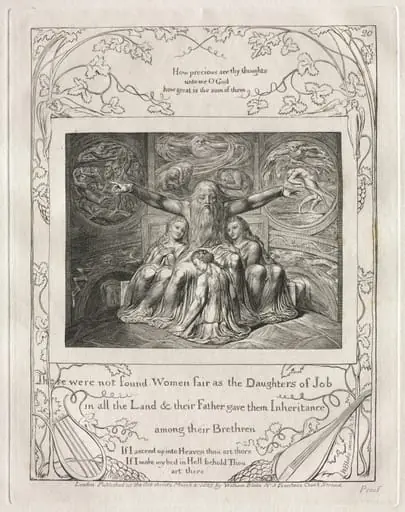 The Book of Job: Pl. 20, There were not found Women fair as the Daughters of Job
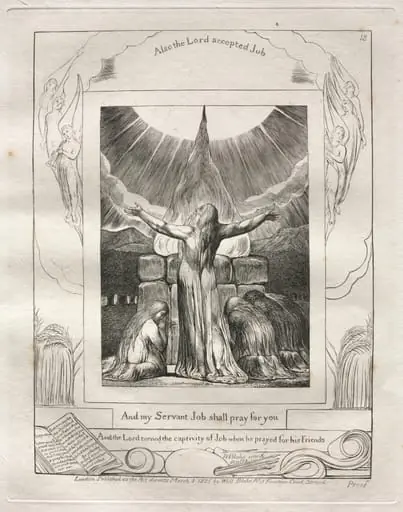 The Book of Job: Pl. 18, And my Servant Job shall pray for you
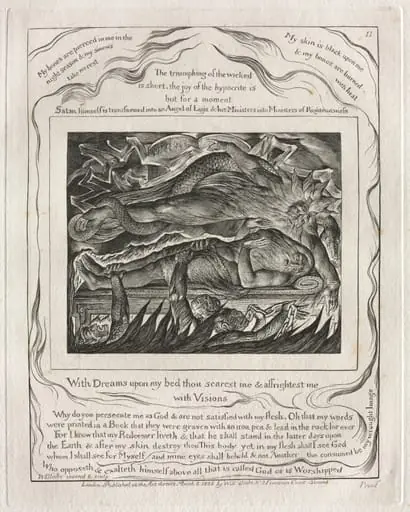 The Book of Job: Pl. 11, With Dreams upon my bed thou scarest me and affrightest me
 The Book of Job: Pl. 21, So the Lord blessed the latter end of Job
 Job's Despair