Artwork
Herodias: Frontispiece, Herodias appeared, coiffed in an Assyrian mitre to which a chin strap was attached to the front
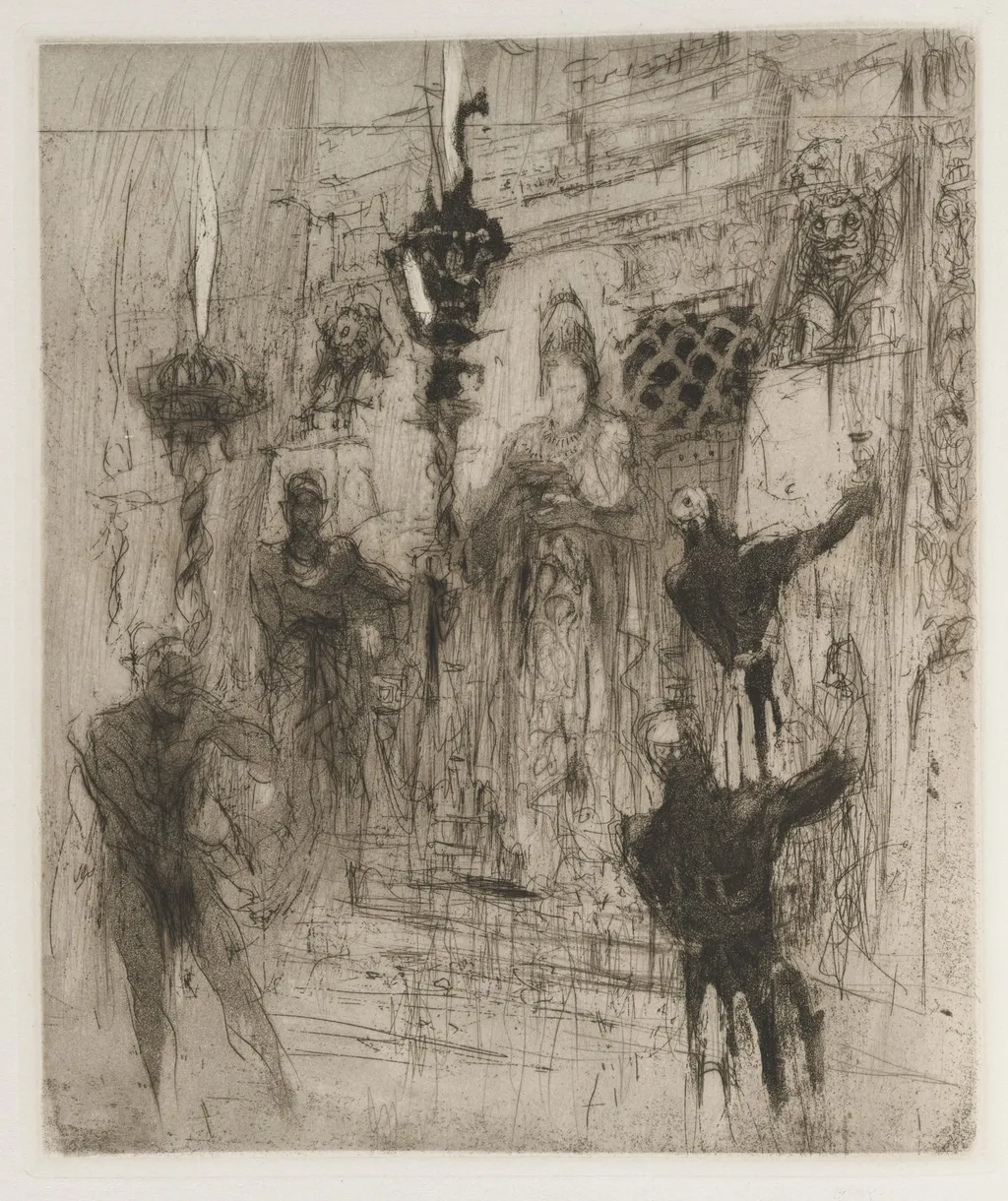
Herodias: Frontispiece, Herodias appeared, coiffed in an Assyrian mitre to which a chin strap was attached to the front is a print by William Walcot. It dates from 1928 and is held in the collection of the Cleveland Museum of Art.
About this work
Overview
Created in 1928 by William Walcot, this print serves as the frontispiece for a publication on Herodias. It depicts the biblical figure as a central, stylized portrait, emphasizing her elaborate headpiece. The work is part of the collection at The Cleveland Museum of Art and reflects Walcot’s interest in historical costume and symbolic representation through graphic art.
Subject & Meaning
Herodias, the biblical figure associated with the beheading of John the Baptist, is portrayed not as a narrative scene but as an emblematic presence. The Assyrian-style mitre with a chin strap evokes ancient Near Eastern royalty, linking her to archetypal power and moral ambiguity. The image invites contemplation of authority, gender, and legacy rather than recounting a specific event.
Technique & Style
Walcot employed precise line work and tonal contrast to render texture and volume, drawing on etching and engraving traditions. The use of chiaroscuro enhances the sculptural quality of the headpiece and facial features, isolating Herodias against a muted background. The restrained palette and sharp delineation reflect early 20th-century revivalist tendencies in graphic design.
History & Provenance
The print was produced as an illustrated frontispiece for a limited-edition publication, likely tied to scholarly or literary interest in biblical figures during the 1920s. It entered the collection of The Cleveland Museum of Art through acquisition, possibly as part of a broader effort to document modern interpretations of classical subjects in print media.
Context
In the interwar period, artists revisited biblical and ancient themes through stylized, often archaeologically inspired forms. Walcot’s work aligns with a trend among illustrators and designers who blended historical reconstruction with symbolic abstraction. This print reflects a broader cultural fascination with antiquity as a lens for modern identity and moral inquiry.
Legacy
Though not widely reproduced, the print remains a notable example of Walcot’s graphic output and his engagement with historical iconography. It contributes to the understanding of how early 20th-century artists reimagined biblical narratives through formal precision and cultural allusion, influencing later illustrative approaches to myth and scripture.
Artist & collection

Artist
William Walcot RE was a Russian-Scottish architect, graphic artist and etcher, notable as a architect of refined Art Nouveau in Moscow, Russia.

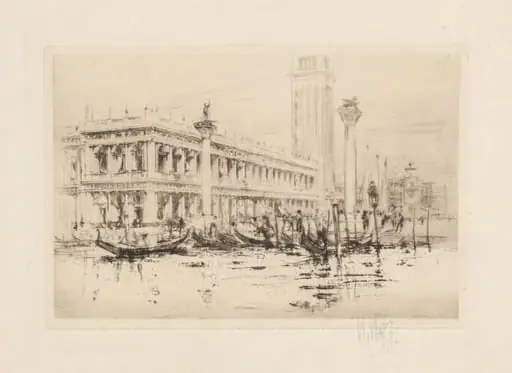 The Venice Set: The Library of St. Mark’s
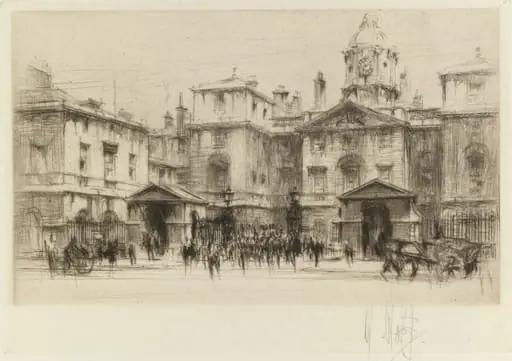 London Set: Horseguards
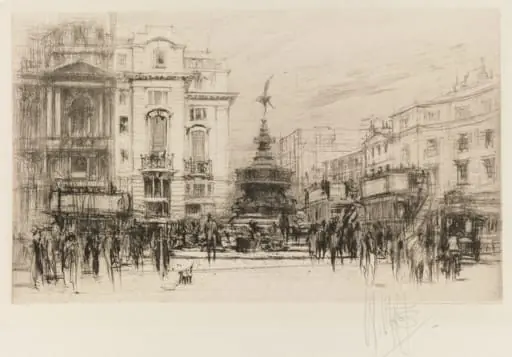 London Set: Piccadilly Circus (with Criterion Theatre)
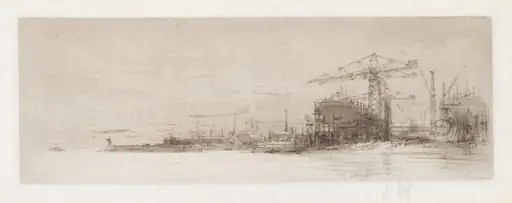 The Clyde from the series The Arteries of Great Britain
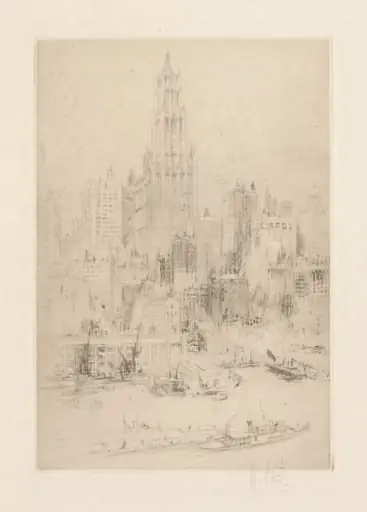 Downtown Manhattan from the East River, with the Woolworth Building
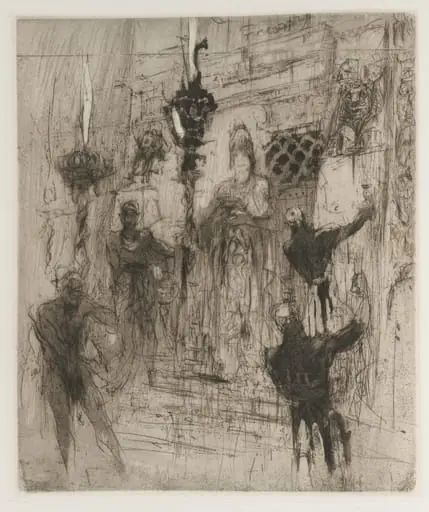 Herodias
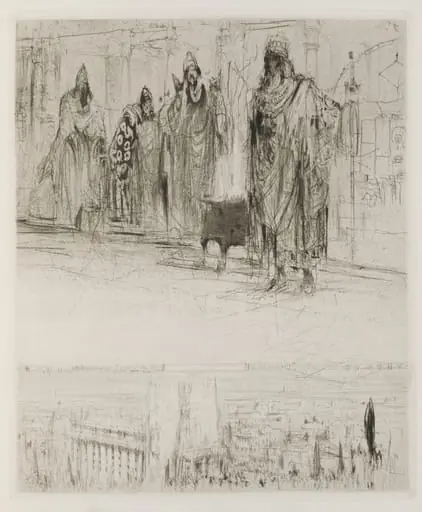 Herodias: Page 13, The tetrarch was awaited by several Galileans, the master of scribes, the chief of the land steward, the manager of the salt mines, and a Jew from Babylon commanding his troops on horse
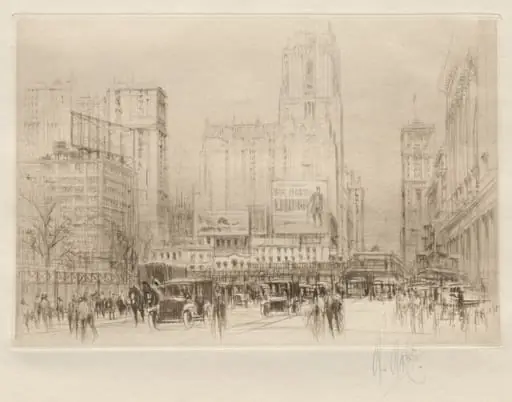 Forty-second Street NY
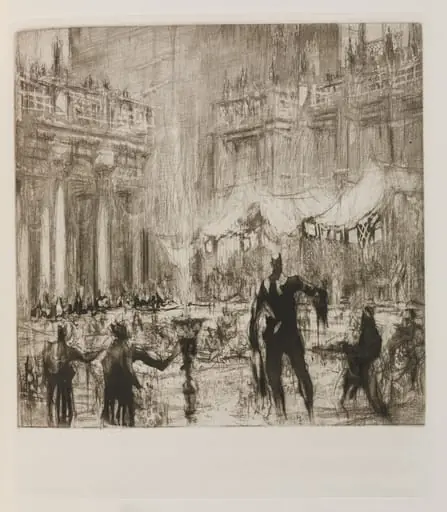 Herodias: Page 45, But now beginning at the farthest end of the banquet hall a murmur of surprise and admiration. A young girl began to enter
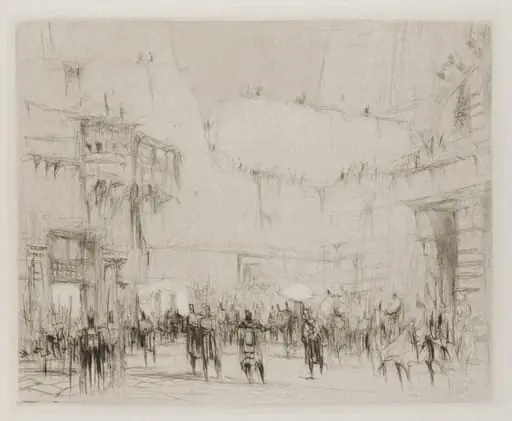 Herodias: Page 19, The ramparts were thronged with people when Vitellius entered the castle gates
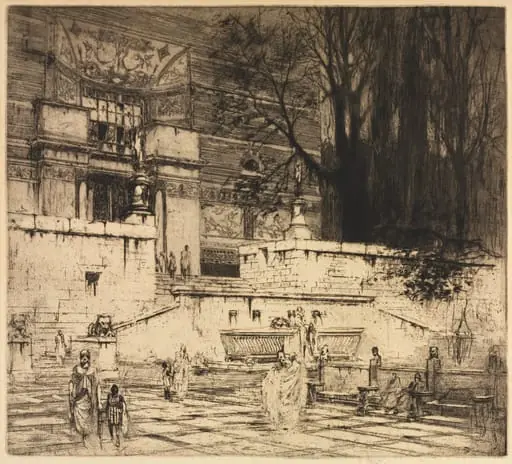 The Days of Ancient Rome: At the House of a Patrician
 Amalfi
 Serenade
 The Barricade (La barricade)
 The Smoking Fire
 Les couloirs du Palais (The Corridors of the Palace of Justice)
 Santa Maria della Tromba
 Etchings of Venice: Laundry