Artwork
Sadrazam or Grand Vizier
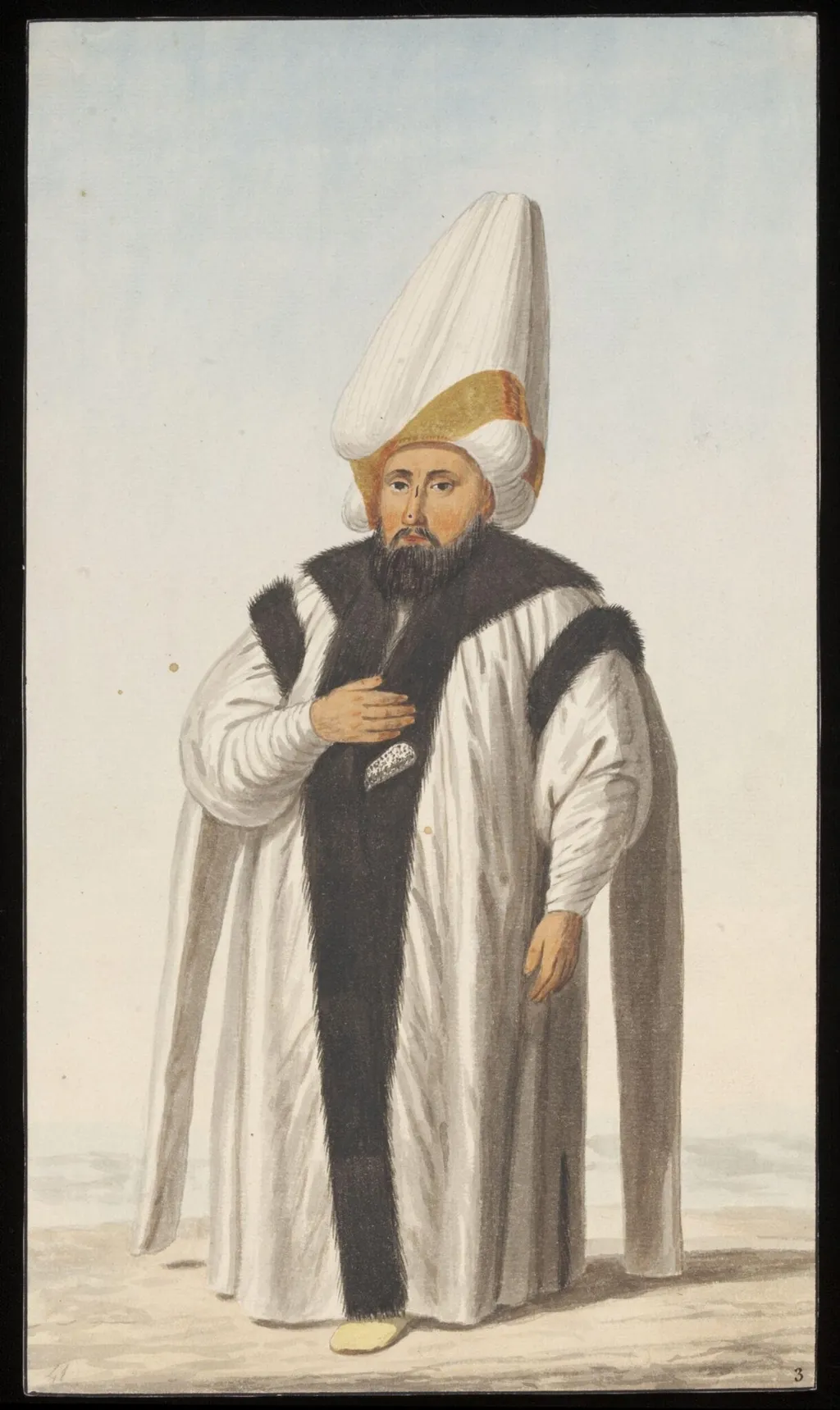
Sadrazam or Grand Vizier is a watercolor work on paper by the Romanticist artist Anonymous Greek artist. It dates from 1809 and is held in the collection of the Victoria and Albert Museum. This water‑colour depicts the Ottoman Grand Vizier, the chief minister who served directly under the Sultan.
About this work
This watercolour shows a Grand Vizier, the Ottoman prime minister. It’s part of a big group of pictures made in 1809 for a British diplomat.
The diplomat, Stratford Canning, wanted records of Ottoman life. He hired a local artist whose name got lost, though some think he worked near Konstantin Kapidagli.
Next time look up the Victoria and Albert Museum.
Overview
This water‑colour depicts the Ottoman Grand Vizier, the chief minister who served directly under the Sultan. Produced in 1809 as part of a larger series, the image records an official Ottoman office for a British diplomatic audience.
Subject & Meaning
The figure represents the highest civilian authority in the empire, illustrating the political hierarchy of early‑nineteenth‑century Turkey. By portraying the Vizier, the series conveys the diplomatic interest in Ottoman governance and courtly protocol.
Technique & Style
Executed in water‑colour with dense, luminous washes, the work blends Ottoman miniature conventions with European linear perspective. The anonymous artist’s handling of light and form reflects a hybrid visual language that merges local tradition with Western representational norms.
History & Provenance
The series was commissioned by Stratford Canning, later Viscount Stratford de Redcliffe, during his first posting to Istanbul in 1808‑1809. After Canning’s death, the original drawings passed to his daughter Charlotte and were acquired by the Victoria and Albert Museum in 1895.
Context
Canning’s mission involved extensive observation of Ottoman institutions, architecture, and customs. To document his findings, he engaged a local painter—believed by Turkish scholars to be associated with the studio of Konstantin Kapidagli—who produced the extensive visual record for the British diplomatic archive.
Artist & collection

![A Pasha travelling with his escort[?], by Anonymous Greek artist](https://artifactworldgallery.com/img/anonymous-greek-artist--a-pasha-travelling-with-his-escort--01de32b8fcf30843-w320.webp)
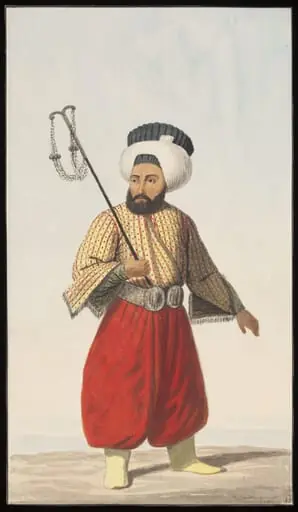
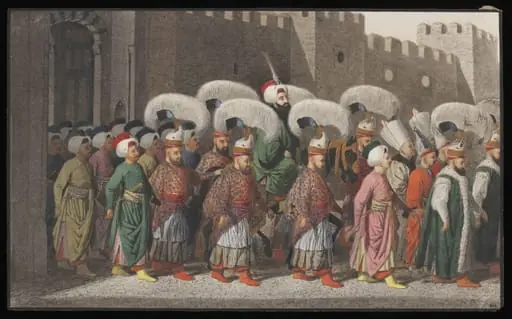
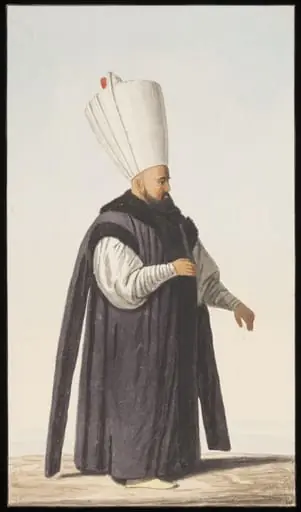
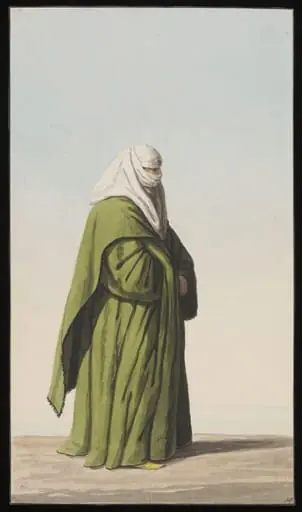
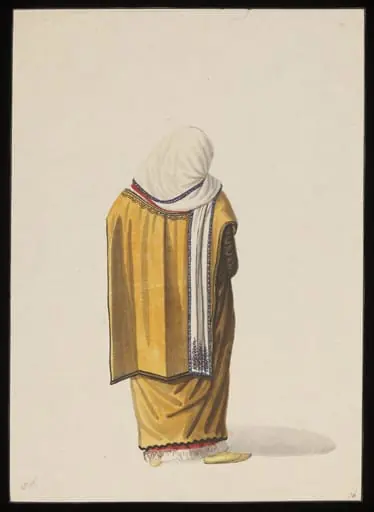
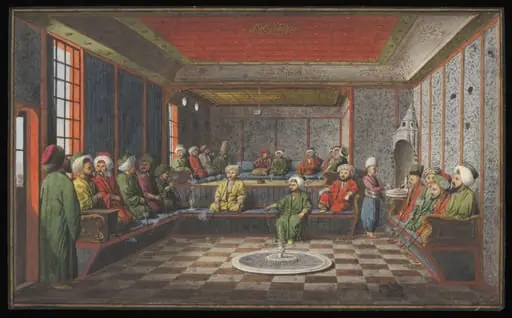
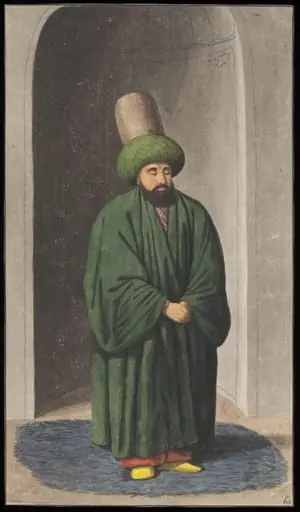
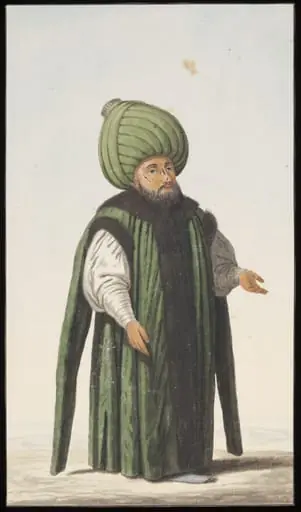 A senior Ottoman official
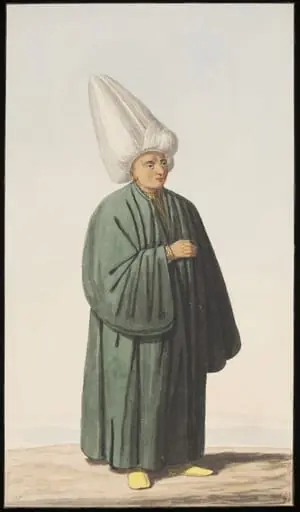 Sarayoglan, or page to the Sultan
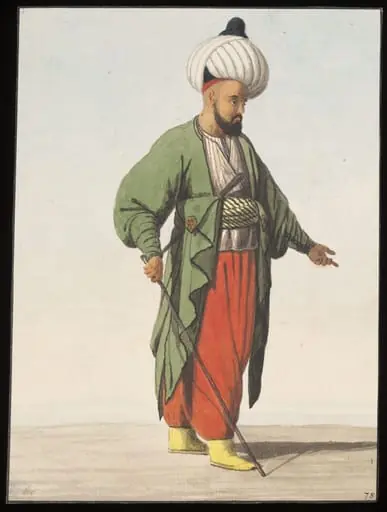 A Turkish official
![A Dervish[?], by Anonymous Greek artist](https://artifactworldgallery.com/img/anonymous-greek-artist--a-dervish--3c8916f5a95abb6a-w320.webp) A Dervish[?]
A Dervish[?]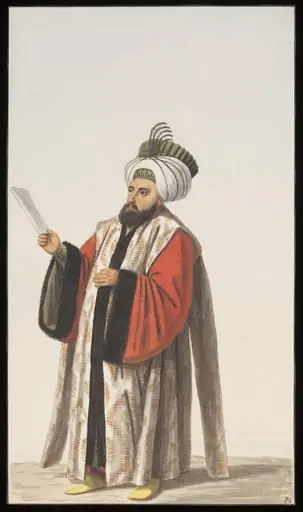 Amedcibey, or Receiver General of provincial correspondence addressed to the Grand Vizier
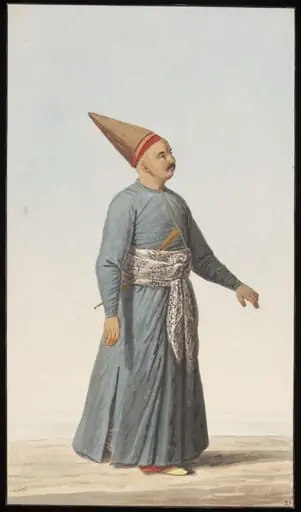 An official in the Sultan's palace
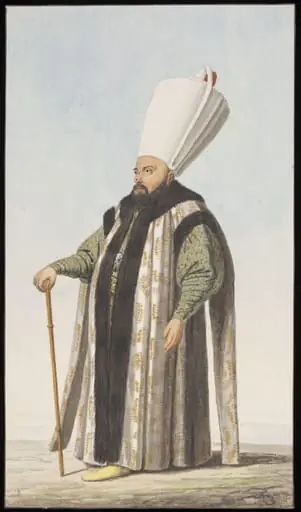 An Ottoman official, possibly a Miri Alem, or leader of troops
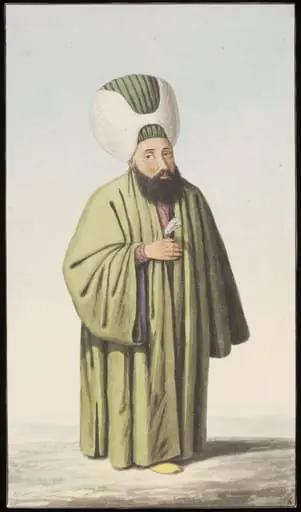 An Ottoman Military officer, possibly the Yeniçeriagasi, or Commander-in-chief of the Janissaries
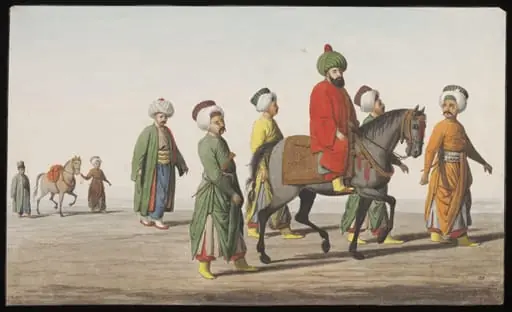 Kaymakam, or Govenor of Istanbul
![An Armenian[?], by Anonymous Greek artist](https://artifactworldgallery.com/img/anonymous-greek-artist--an-armenian--8a9ee8f2d8733d94-w320.webp) An Armenian[?]
An Armenian[?]