Artwork
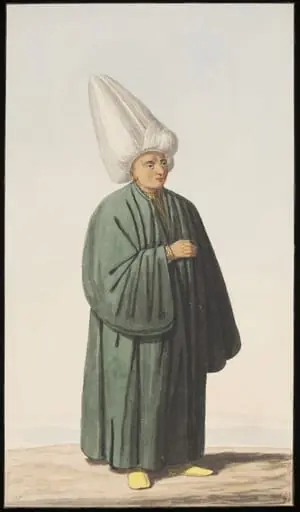
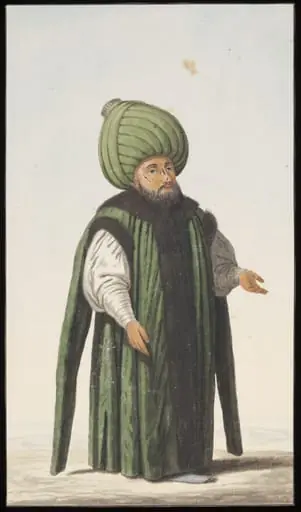
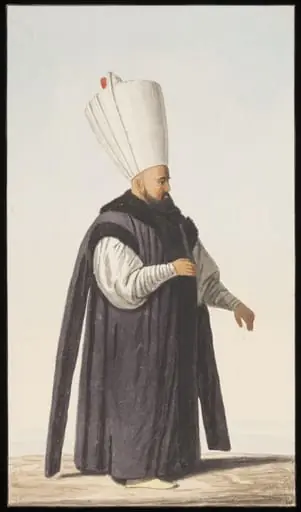
Tercüman, or Dragoman
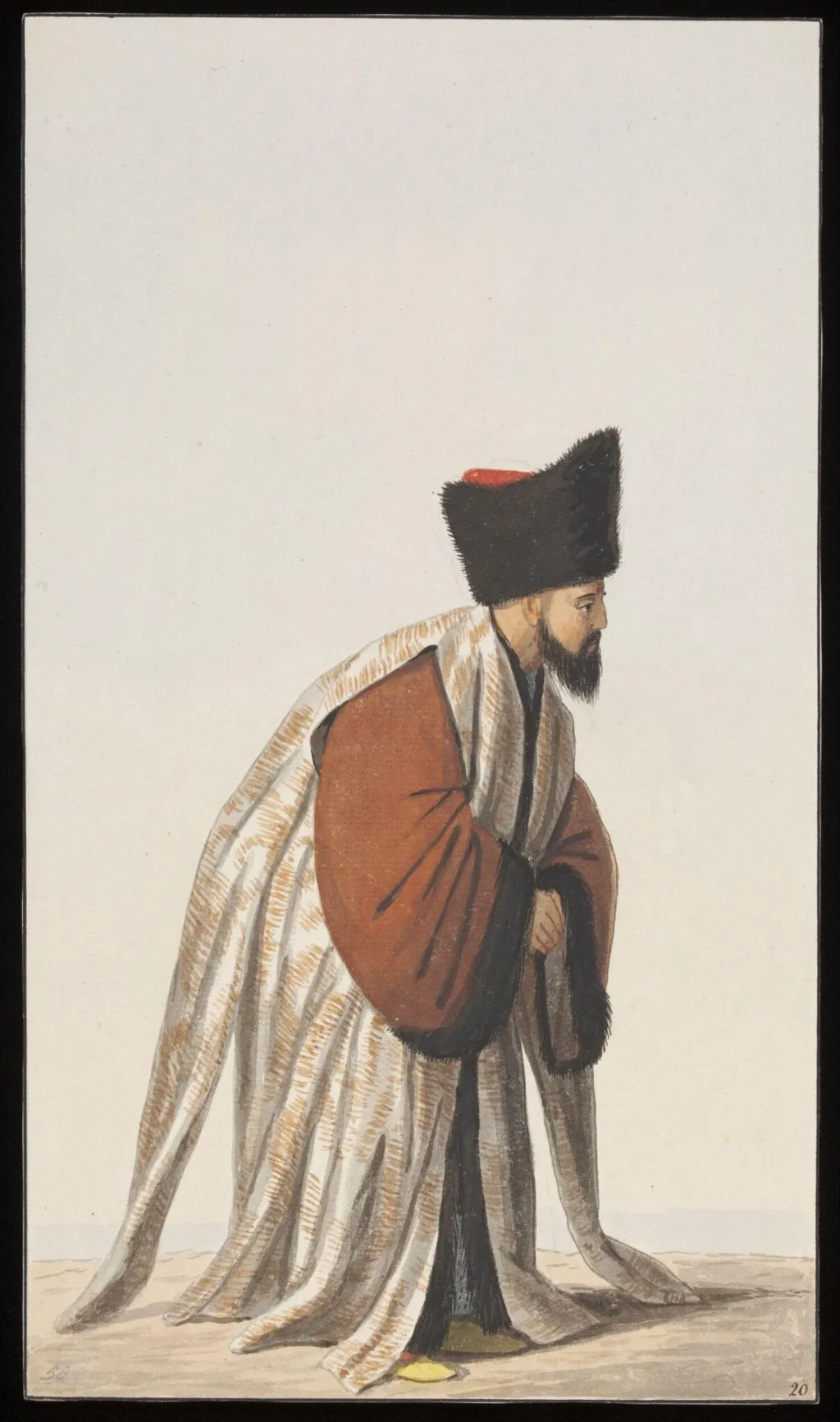
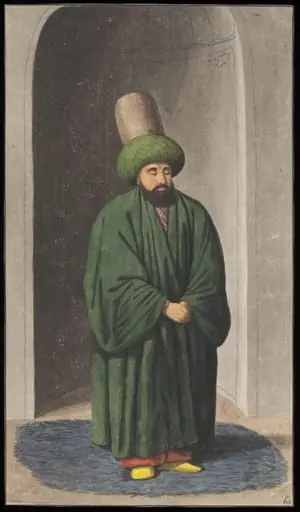
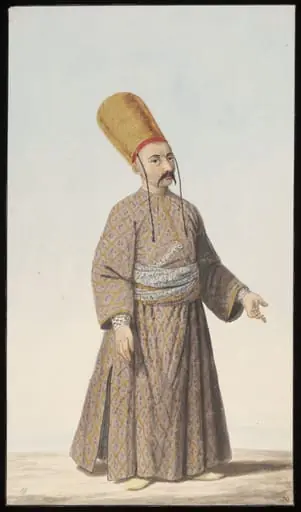
Tercüman, or Dragoman is a watercolor work on paper by the Romanticist artist Anonymous Greek artist. It dates from 1809 and is held in the collection of the Victoria and Albert Museum.
About this work
Overview
Created around 1810, the works were produced by an unnamed local artist, likely connected to the studio of Konstantin Kapidagli.
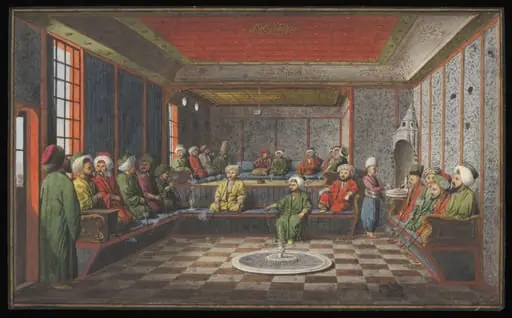
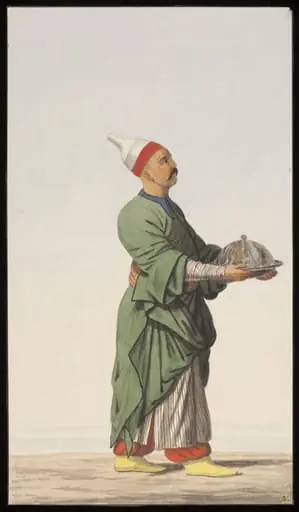
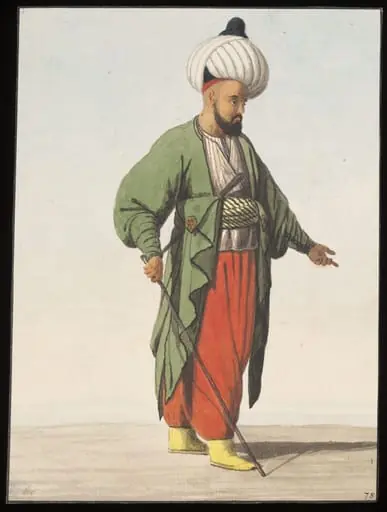
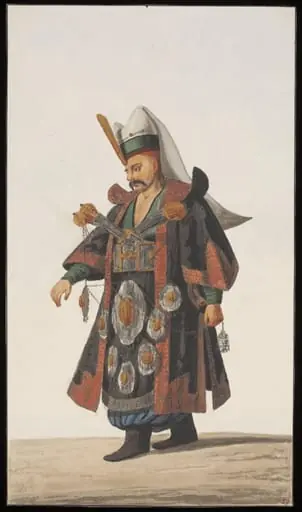
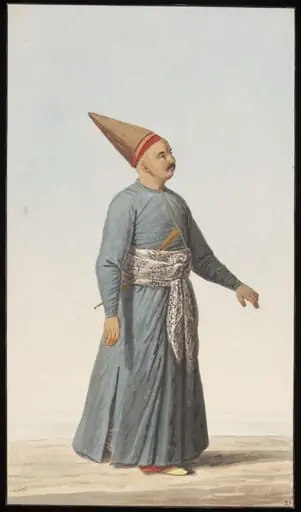
This watercolour is part of a series depicting Ottoman institutions and daily life, commissioned by British diplomat Stratford Canning during his early years in Istanbul. Created around 1810, the works were produced by an unnamed local artist, likely connected to the studio of Konstantin Kapidagli. The series served as a visual record of the empire’s administrative and cultural landscape, compiled at the request of a foreign envoy keen to document what he observed.
Subject & Meaning
The figure portrayed is the First Dragoman, the chief interpreter to the Ottoman Sultan—a pivotal role bridging Ottoman and European diplomatic circles. The image captures not merely a person but a symbol of cross-cultural mediation. Dressed in formal attire, the subject embodies the intersection of Ottoman tradition and the demands of international diplomacy, reflecting the complex power dynamics of early 19th-century Istanbul.
Technique & Style
The watercolour employs rich, layered pigments typical of Ottoman miniature traditions, combined with European linear perspective and spatial depth. The artist blends the detailed brushwork of local practices with Western conventions of realism, creating a hybrid visual language. This synthesis suggests an artist trained in both traditions, responding to the expectations of a European patron while retaining indigenous aesthetic values.
History & Provenance
Stratford Canning acquired the drawings during his tenure in Istanbul, beginning in 1808. After his death, the collection passed to his daughter Charlotte, who donated it to the Victoria and Albert Museum in 1895. The artist’s identity remains unconfirmed, though scholarly consensus points to a Greek or Greek-Ottoman painter linked to Konstantin Kapidagli’s circle. Charles Cockerell’s 1810 visit to the British embassy and his sketches of similar architectural views support the presence of such an artist in the city at the time.
Context
In the early 1800s, European diplomats in Istanbul sought systematic documentation of Ottoman society, often commissioning local artists to produce visual records. These works were not merely souvenirs but tools of political and cultural understanding. The series reflects a moment when Western curiosity about the Ottoman Empire was intensifying, and local artists were adapting their craft to meet foreign demands without fully abandoning their own visual heritage.
Legacy
The drawings remain among the most detailed visual records of Ottoman administrative life from the period. Though the artist’s name is lost, the series influenced later European perceptions of the empire and preserved details of costume, architecture, and office-holding that might otherwise have been overlooked. Their preservation in the V&A ensures continued scholarly access to a unique cross-cultural artistic endeavor.
Artist & collection

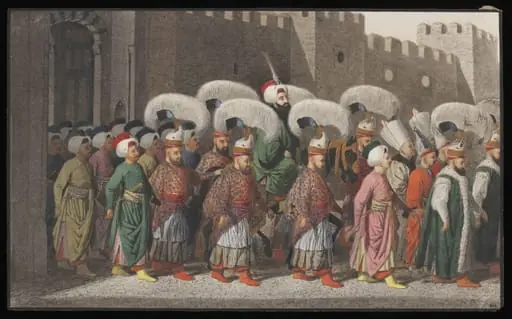
![A Pasha travelling with his escort[?], by Anonymous Greek artist](https://artifactworldgallery.com/img/anonymous-greek-artist--a-pasha-travelling-with-his-escort--01de32b8fcf30843-w320.webp)
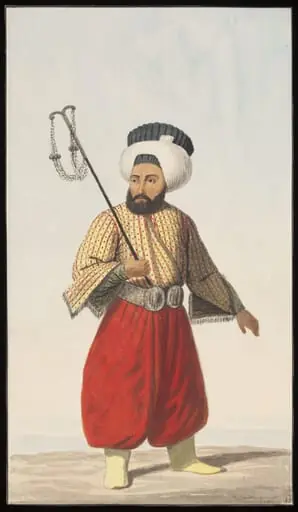
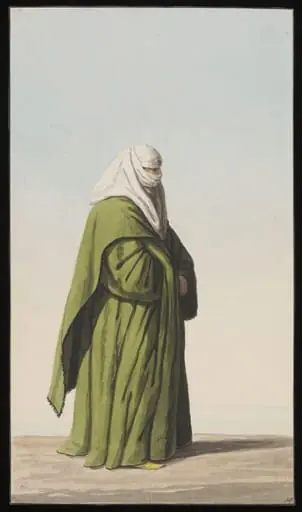
![A Dervish[?], by Anonymous Greek artist](https://artifactworldgallery.com/img/anonymous-greek-artist--a-dervish--3c8916f5a95abb6a-w320.webp)
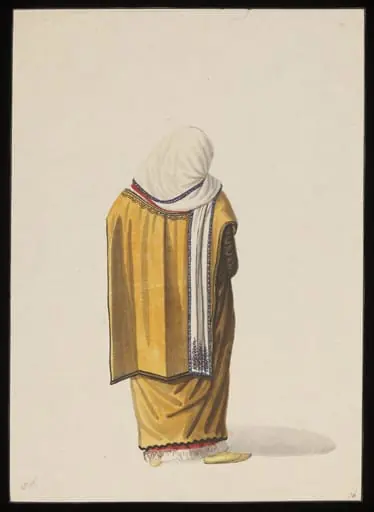
![An Armenian[?], by Anonymous Greek artist](https://artifactworldgallery.com/img/anonymous-greek-artist--an-armenian--8a9ee8f2d8733d94-w320.webp)