Artwork
Le Pont St. Michel
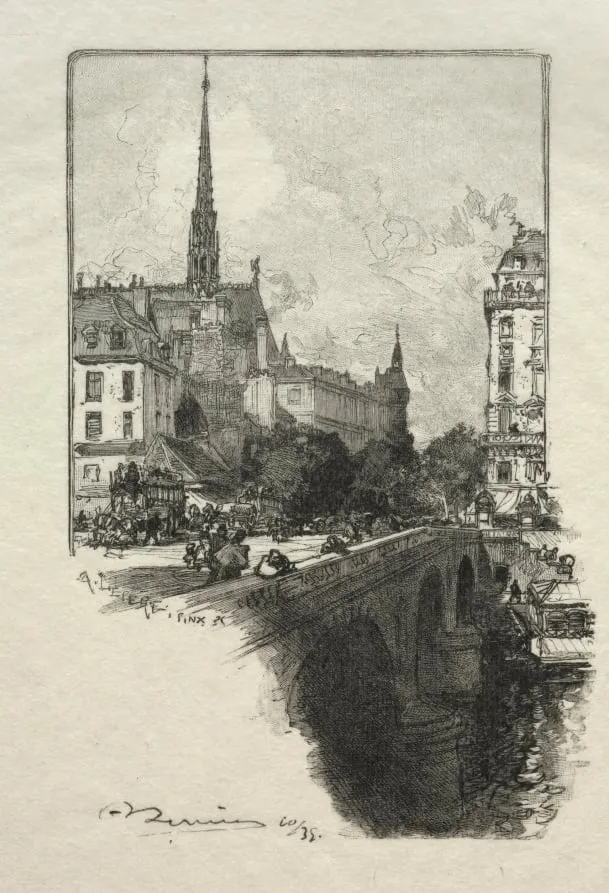
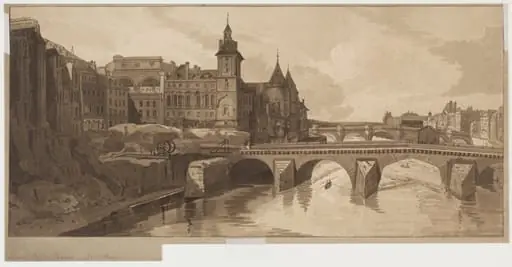
Le Pont St. Michel is a print by the Impressionist artist Auguste Lepère. It dates from 1890 and is held in the collection of the Cleveland Museum of Art. Created in 1890 by French artist Auguste Louis Lepère, *Le Pont St.
About this work
Overview
Lepère, recognized for revitalizing wood engraving as a fine art medium, employed fine, fluid lines to convey motion and atmosphere rather than rigid detail.
Created in 1890 by French artist Auguste Louis Lepère, *Le Pont St. Michel* is a wood engraving that captures a moment of everyday urban life in Paris. Lepère, recognized for revitalizing wood engraving as a fine art medium, employed fine, fluid lines to convey motion and atmosphere rather than rigid detail. The print reflects his commitment to elevating printmaking beyond reproduction into a vehicle for artistic expression.
Subject & Meaning
The scene portrays the Pont Saint-Michel bridge during daylight, teeming with pedestrians moving along its length. Figures cluster near the railing, some seated or pausing, while a church spire rises behind them and a river flows beneath. A building with an ornate balcony anchors the right edge, suggesting the layered architecture of the Left Bank. The composition conveys the rhythm of city life without idealization, emphasizing quiet human activity over monumentality.
Technique & Style
Lepère used wood engraving to achieve subtle tonal variations through delicate, irregular lines and soft smudges. Rather than sharp outlines, he favored loose, sketch-like strokes that suggest movement and texture. The railing’s dense cluster of tiny figures merges into the overall pattern, avoiding individualization in favor of collective energy. This approach prioritizes mood and immediacy over precision, aligning with the aesthetic of late 19th-century print revivalists.
History & Provenance
Lepère was instrumental in the European revival of wood engraving during the 1880s and 1890s, reintroducing the technique as a medium for original artistic work rather than commercial illustration. *Le Pont St. Michel* emerged from this context, reflecting his engagement with Parisian urban scenes and his technical experimentation. The print was likely produced in a small edition and circulated among collectors and artists interested in the renewed legitimacy of printmaking.
Context
In the late 19th century, Paris underwent significant urban transformation, and artists increasingly turned to everyday streetscapes as subjects. Lepère’s work aligned with broader trends in print culture, where etchers and engravers sought to rival painting in expressive depth. His focus on transient moments and public spaces echoed the interests of contemporaries like Degas and Toulouse-Lautrec, though through the quieter, more intimate medium of wood engraving.
Legacy
Lepère’s technical innovations helped reestablish wood engraving as a respected art form in Europe. *Le Pont St. Michel* exemplifies his ability to merge documentary observation with artistic sensitivity, influencing later generations of printmakers who valued the medium’s capacity for nuance and spontaneity. His work remains part of institutional collections, valued for its quiet contribution to the history of modern printmaking.
Artist & collection

Artist
Louis-Auguste Lepère (30 November 1849 – 20 November 1918) was a French painter and etcher. Lepère is also considered a leader in the creative revival of wood engraving in Europe.

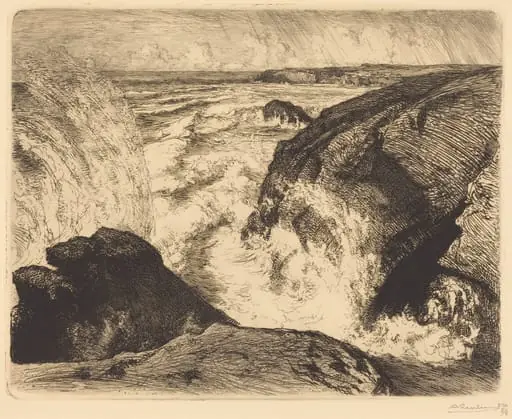
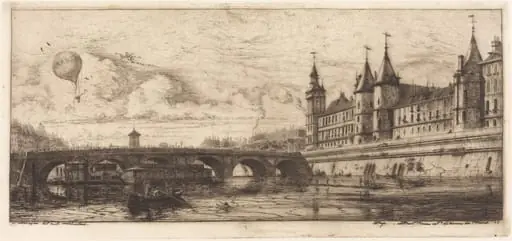 Le Pont-au-Change, Paris
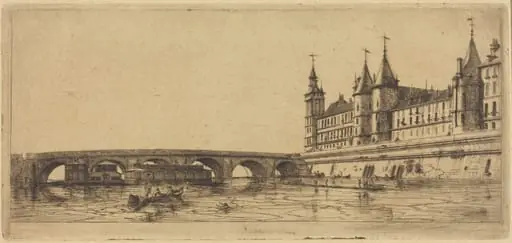 Le Pont-au-Change, Paris
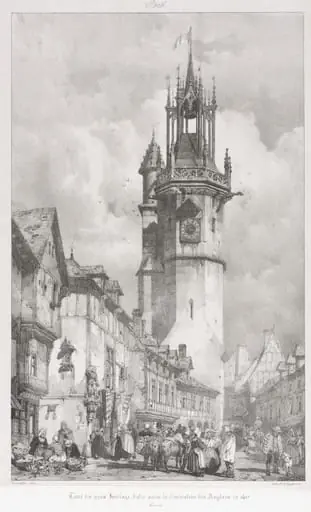 Voyages Pittoresques et Romantique dans l'Ancienne France, Normandie: Tour du Gros-Horlage, Évreux
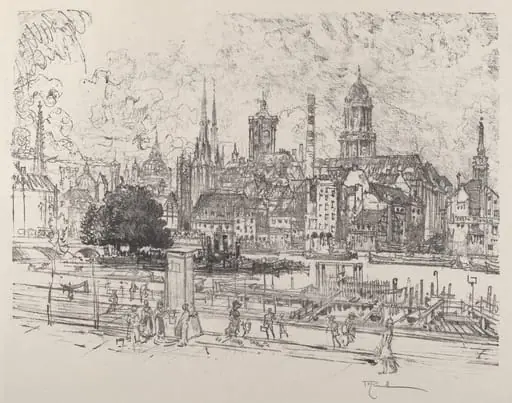 View on the Spree, Berlin
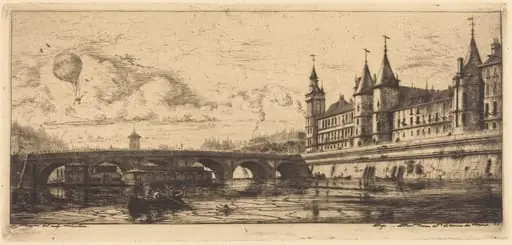 Le Pont-au-Change, Paris
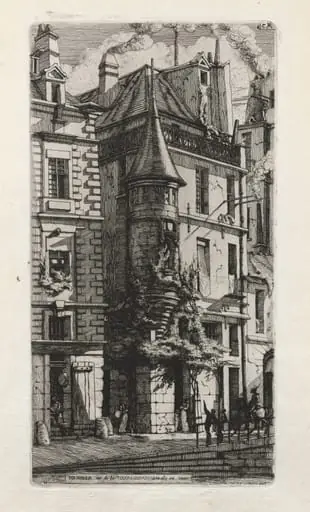 House with a Turret, rue de la Tixéranderie, Paris
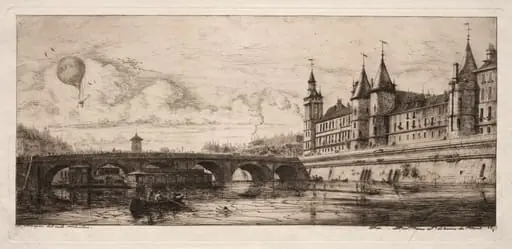 Etchings of Paris: The Exchange Bridge
 Selection of Twenty of the Most Picturesque Views in Paris:View of Pont au Change