Artwork
Rue de la Montagne, St. Geneviève
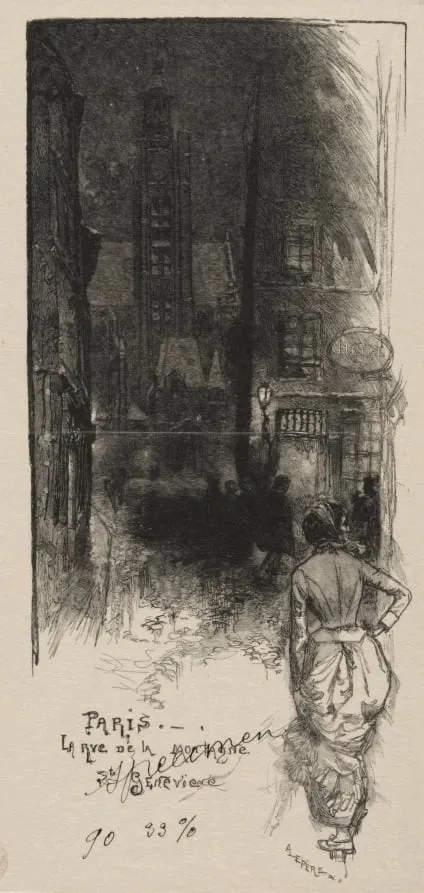
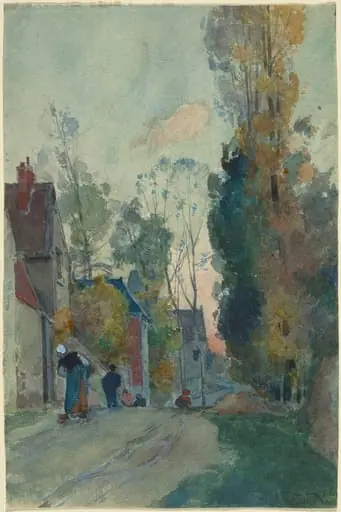
Rue de la Montagne, St. Geneviève is a print by the Impressionist artist Auguste Lepère. It dates from 1886 and is held in the collection of the Cleveland Museum of Art.
About this work
Overview
Created in 1886 by French artist Auguste Louis Lepère, this wood engraving captures a quiet urban lane in Paris’s Montagne Sainte-Geneviève district.
Created in 1886 by French artist Auguste Louis Lepère, this wood engraving captures a quiet urban lane in Paris’s Montagne Sainte-Geneviève district. Lepère, instrumental in the 19th-century revival of wood engraving as a fine art medium, used the technique to achieve subtle tonal gradations. The scene avoids grandeur, focusing instead on an unassuming street corner, reflecting his interest in everyday urban life rendered through meticulous hand-carved lines.
Subject & Meaning
The print portrays a solitary woman walking away down a narrow, shadowed street, flanked by tall, closely packed buildings. Her back is turned, and no other figures are near, reinforcing a sense of solitude. The empty road and looming architecture suggest introspection, as if the viewer has paused momentarily in a private moment of the city. The absence of narrative detail invites contemplation rather than storytelling, emphasizing mood over event.
Technique & Style
Lepère employed wood engraving, carving fine lines into the end grain of boxwood to produce detailed tonal effects. He used dense hatching and controlled contrasts to model form and depth, creating a chiaroscuro effect that enhances the atmosphere. The dark shadows of the buildings stretch across the cobblestones, while the woman’s figure emerges subtly from the dim light. The precision of the medium allows for both texture and emotional restraint.
History & Provenance
The print was made during a period when Lepère was actively promoting wood engraving as a legitimate art form, distinct from commercial illustration. It was likely produced in limited editions for collectors and art societies interested in the revival of traditional print methods. While specific early ownership records are sparse, the work aligns with Lepère’s broader efforts to elevate printmaking within the French artistic establishment of the 1880s.
Context
In late 19th-century Paris, urban transformation under Haussmann’s renovations displaced many older neighborhoods. Lepère’s choice to depict Montagne Sainte-Geneviève—a quieter, historic quarter near the Sorbonne—reflects a sensitivity to places resisting modernization. His focus on shadow and stillness contrasts with the bustling scenes favored by Impressionists, offering a more reserved, almost melancholic view of the city’s hidden corners.
Legacy
Lepère’s work contributed to the renewed appreciation of wood engraving in Europe, influencing later artists who sought to merge technical precision with expressive depth. Though less widely known than his painter contemporaries, his prints like this one are held in major print collections for their craftsmanship and quiet intensity. They remain examples of how traditional techniques could convey modern urban solitude without reliance on color or movement.
Artist & collection
Artist
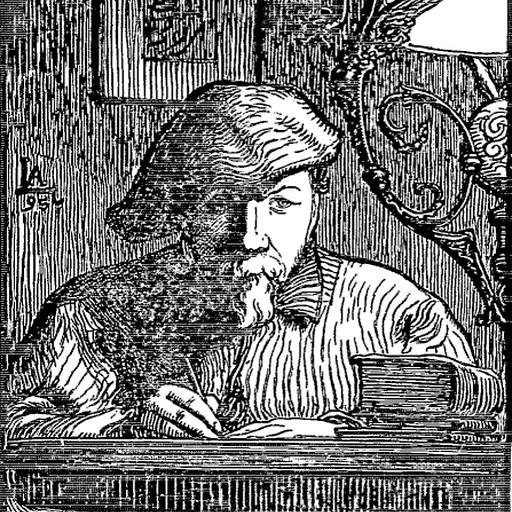
Louis-Auguste Lepère (30 November 1849 – 20 November 1918) was a French painter and etcher. Lepère is also considered a leader in the creative revival of wood engraving in Europe.

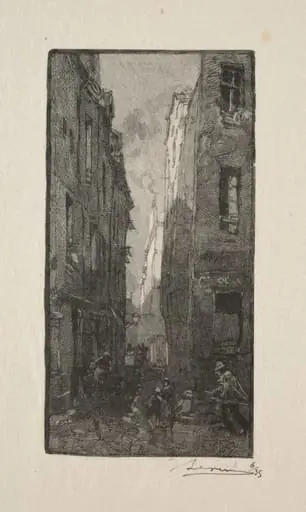 La Rue des Cordiers
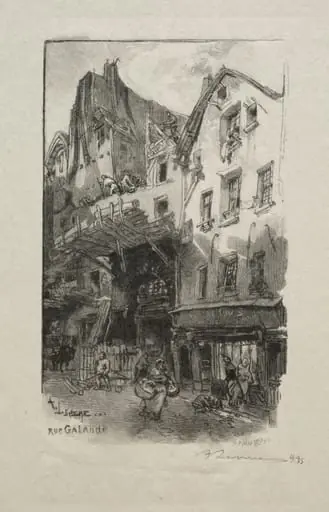 Rue Galande
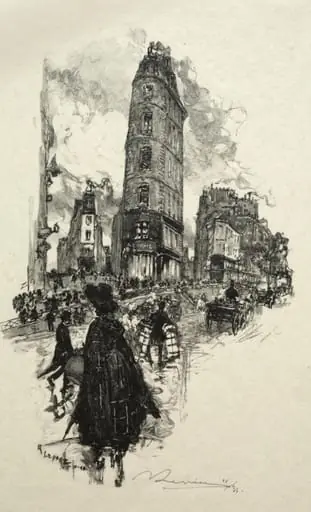 Coin de la Rue de la Lune
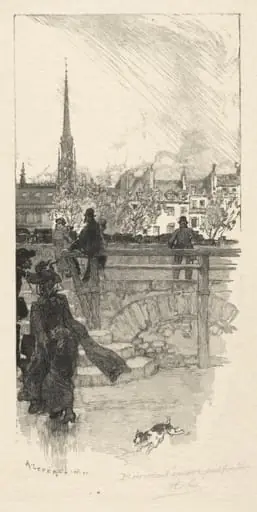 Quai des Grands Augustins, Paris
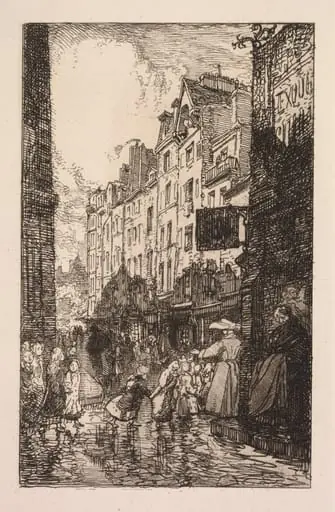 La Biévre, Les Gobelins, Saint-Séverin: Le Quartier Saint-Séverin: La Rue des Prêtres Saint-Séverin
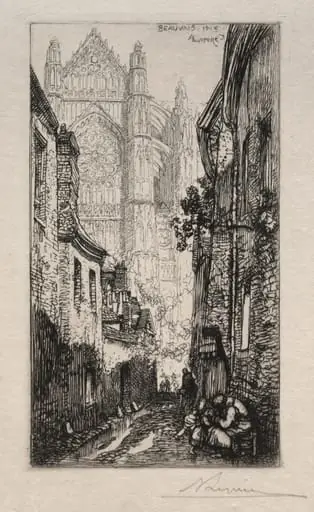 Narrow Street, Beauvais (Une Ruelle, Beauvais)
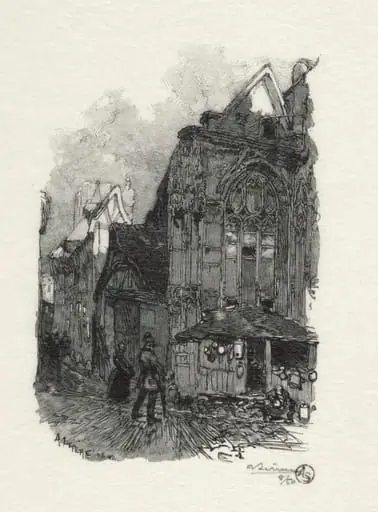 Rouen Illustré: Saint Etienne des Tonneliers
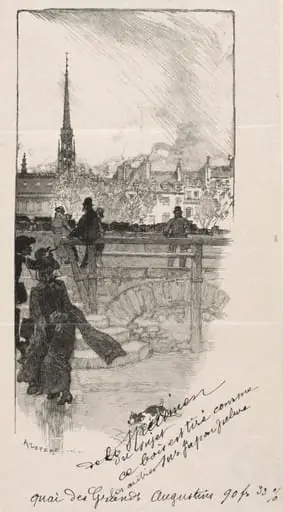 Quai des Grands Augustins