Artwork
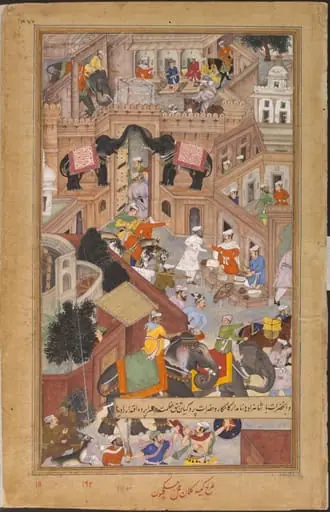
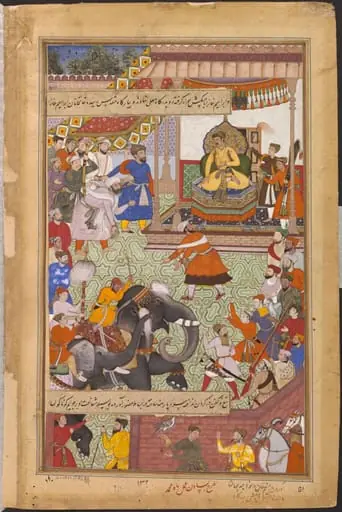
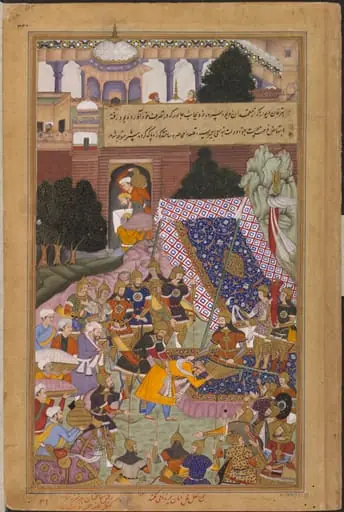
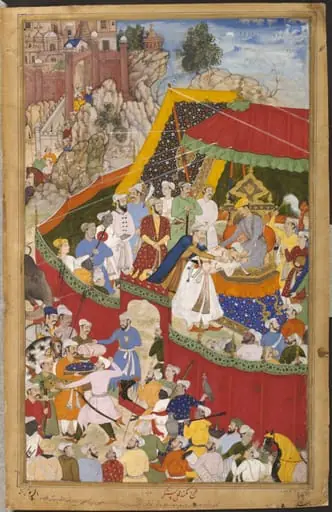
Akbar visits the tomb of Khwajah Mu'in ad-Din Chishti at Ajmer
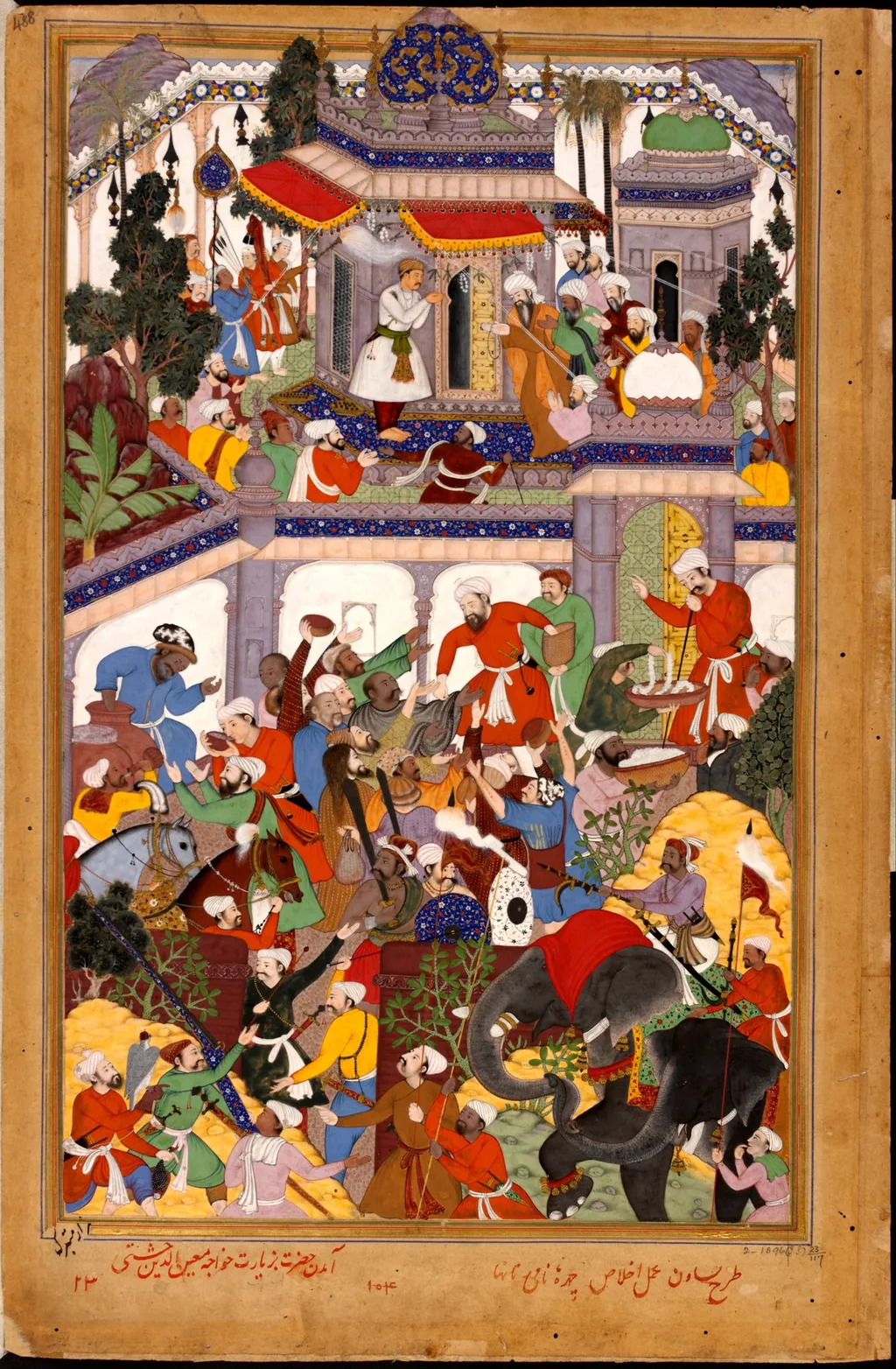
Akbar visits the tomb of Khwajah Mu'in ad-Din Chishti at Ajmer is an unspecified painting by the Mughal Painting artist Basawan. It dates from 1596 and is held in the collection of the Victoria and Albert Museum.
About this work
Overview
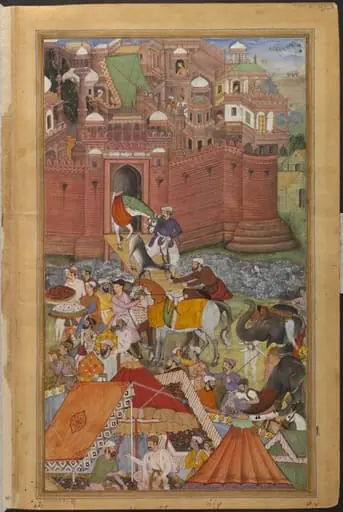
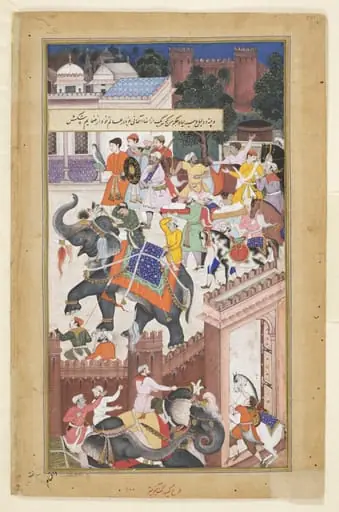
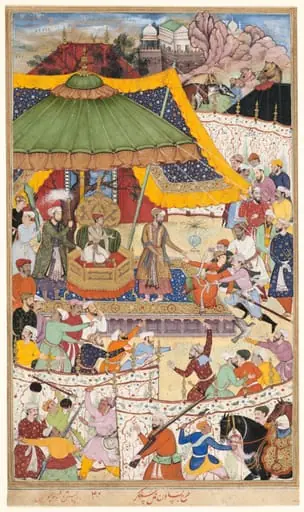
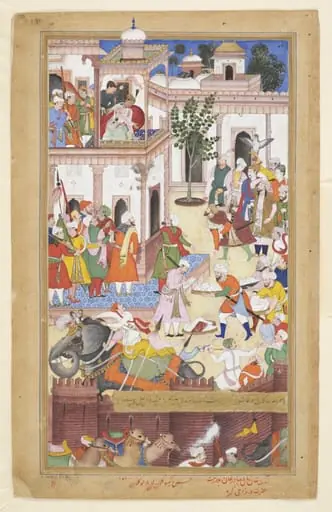
Painted in 1596 by the Mughal artist Basawan, this work depicts Emperor Akbar’s pilgrimage to the tomb of the Sufi saint Khwajah Mu'in ad-Din Chishti in Ajmer.
Painted in 1596 by the Mughal artist Basawan, this work depicts Emperor Akbar’s pilgrimage to the tomb of the Sufi saint Khwajah Mu'in ad-Din Chishti in Ajmer. Executed in opaque watercolor on paper, it belongs to a series illustrating Akbar’s religious journeys. The painting is part of the Victoria and Albert Museum’s collection, where it remains a key example of late 16th-century Mughal court illustration.
Subject & Meaning
The scene captures Akbar paying respects at the tomb of a revered Sufi saint, reinforcing his public alignment with Islamic spiritual traditions. Surrounded by courtiers, clerics, and attendants, the emperor stands on a raised platform, visually set apart yet engaged in a gesture of humility. The inclusion of diverse figures underscores the emperor’s role as a unifying figure across religious and social lines within his empire.
Technique & Style
Basawan employs fine brushwork and layered pigments to render intricate details in clothing, architecture, and landscape. Bright hues of red, blue, and green are applied with precision, creating visual rhythm without overwhelming the composition. Figures are arranged in a shallow, layered space, guiding the eye toward the central figure. The use of naturalistic gestures and varied facial expressions reflects the artist’s attention to individual character.
History & Provenance
The painting was produced during Akbar’s reign as part of an illustrated chronicle documenting his life and policies. It likely originated in the imperial atelier in Fatehpur Sikri or Agra. After the decline of the Mughal court, it entered private collections before being acquired by the Victoria and Albert Museum in the 19th century, where it has remained in public care since.
Context
Akbar’s pilgrimage to Ajmer was both a devotional act and a political statement, affirming his connection to the Chishti Sufi order, which had long influenced North Indian spirituality. The painting reflects the broader Mughal project of synthesizing Islamic, Persian, and indigenous Indian traditions. Such images served to legitimize imperial authority through association with revered religious figures.
Legacy
Basawan’s work exemplifies the sophistication of Mughal painting during its formative phase. The painting’s emphasis on realism, emotional nuance, and spatial depth influenced later court artists. It remains a primary reference for understanding how Mughal rulers used visual culture to articulate religious tolerance and political legitimacy in a pluralistic society.
Artist & collection
Artist
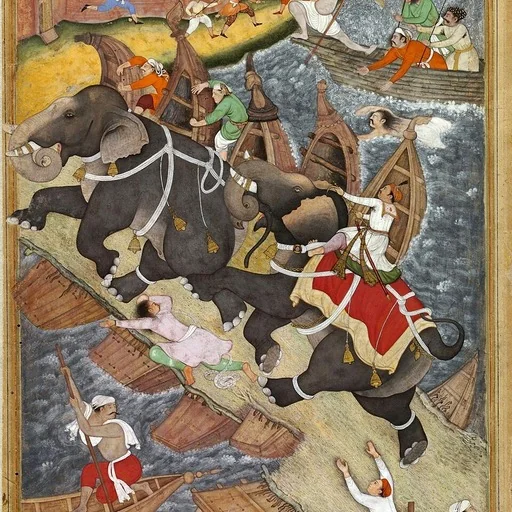
Basāwan, or Basāvan, was an Indian miniature painter in the Mughal style. He was known by his contemporaries as a skilled colorist and keen observer of human nature, and for his use of portraiture in the illustrations…

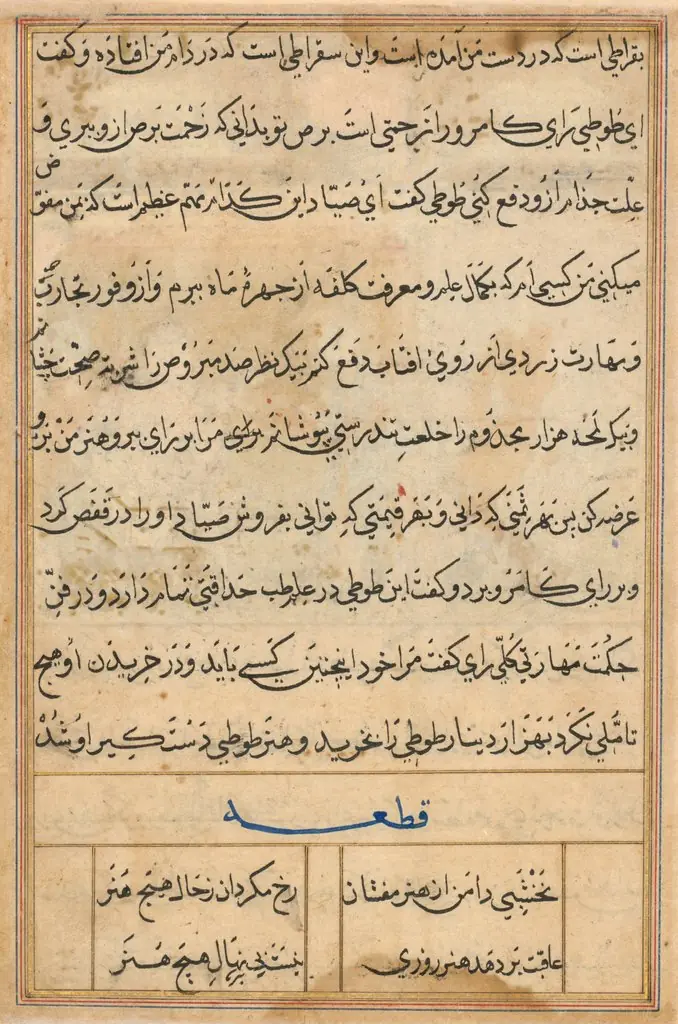 Page from Tales of a Parrot (Tuti-nama): text page
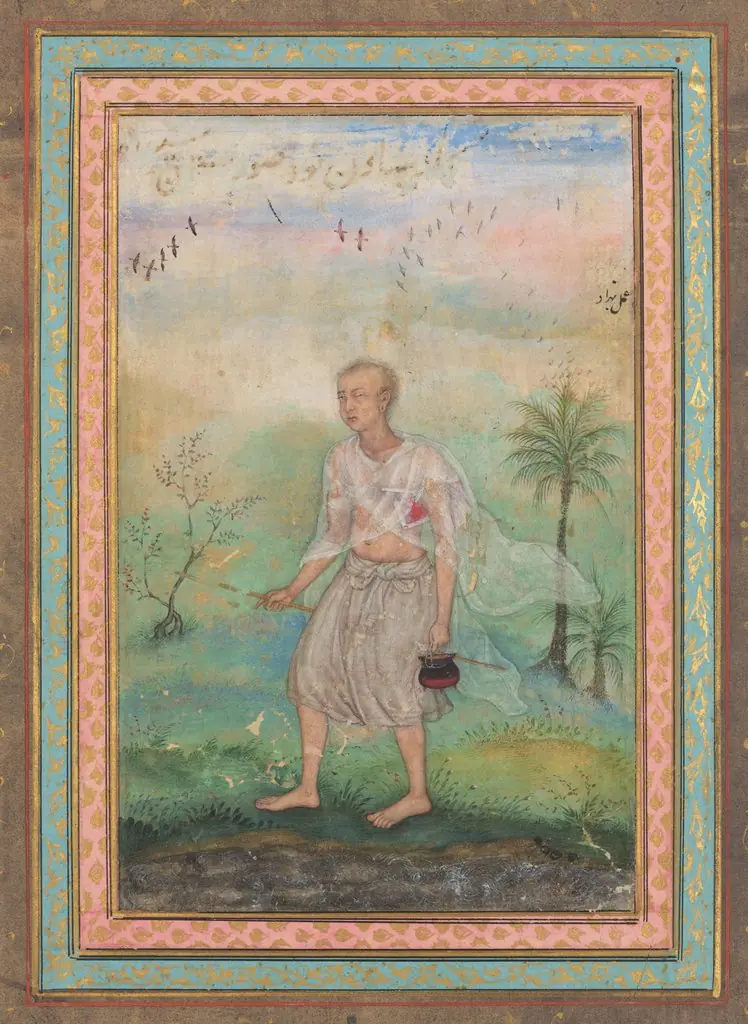 Jain Ascetic Walking Along a Riverbank
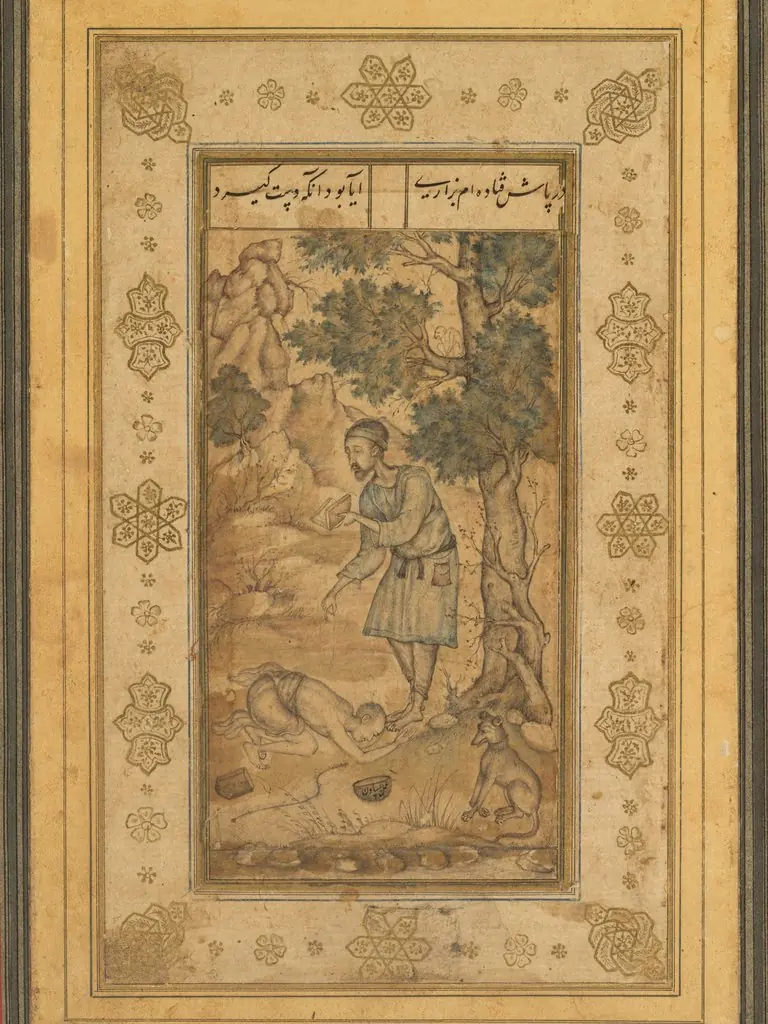 A mendicant bowing before a holy man, from the Prince Salim Album
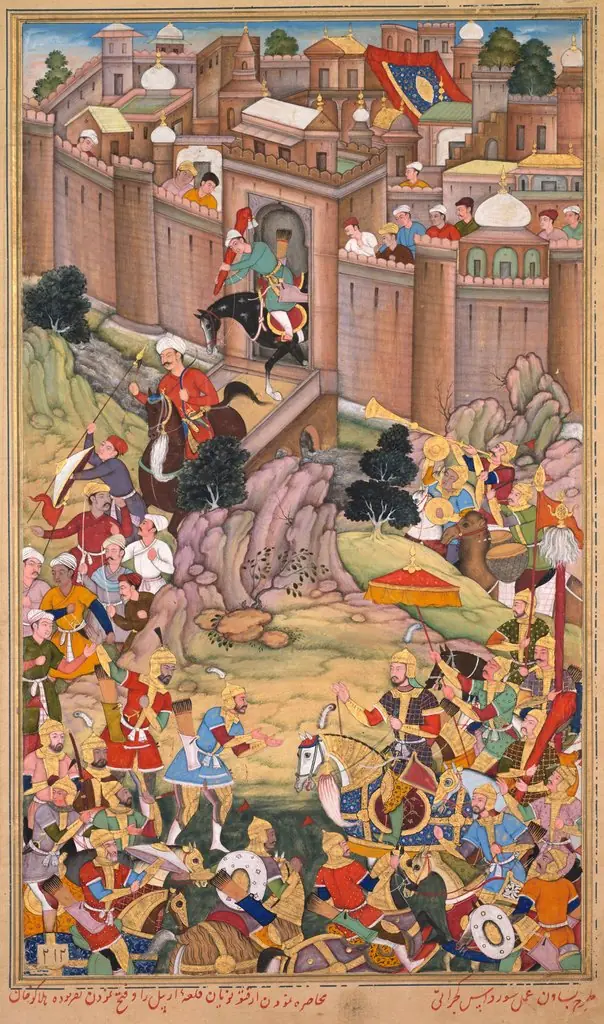 The siege of Arbela in the era of Hulagu Khan, from a Chingiz-nama (Book of Chingiz Khan) of the Jami al-tavarikh (Compendium of Chronicles) of Rashid al-Din (Persian, 1247–1318)
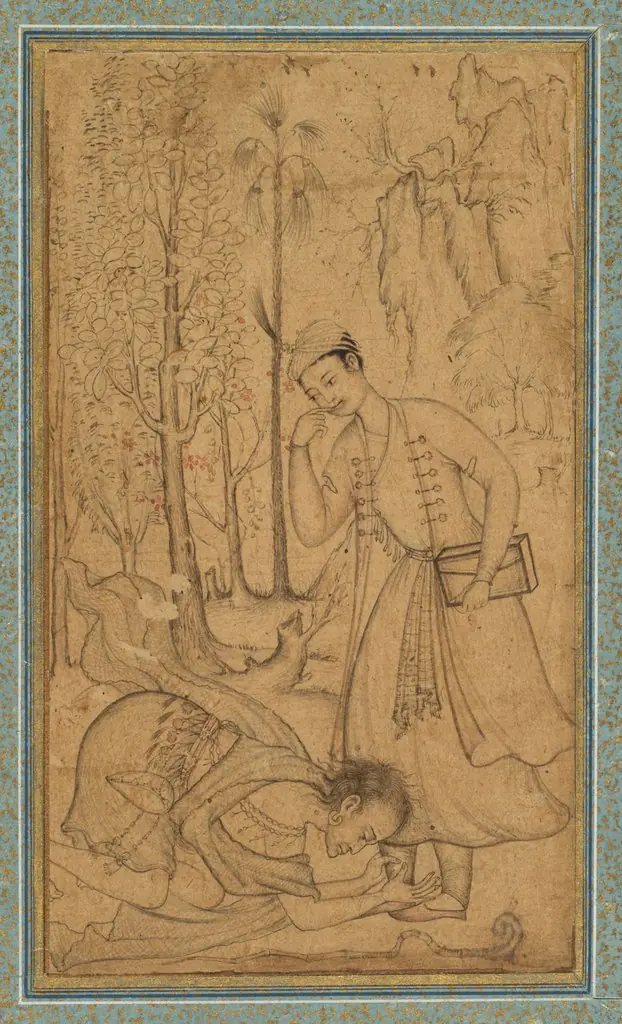 A holy man prostrating himself before a learned prince
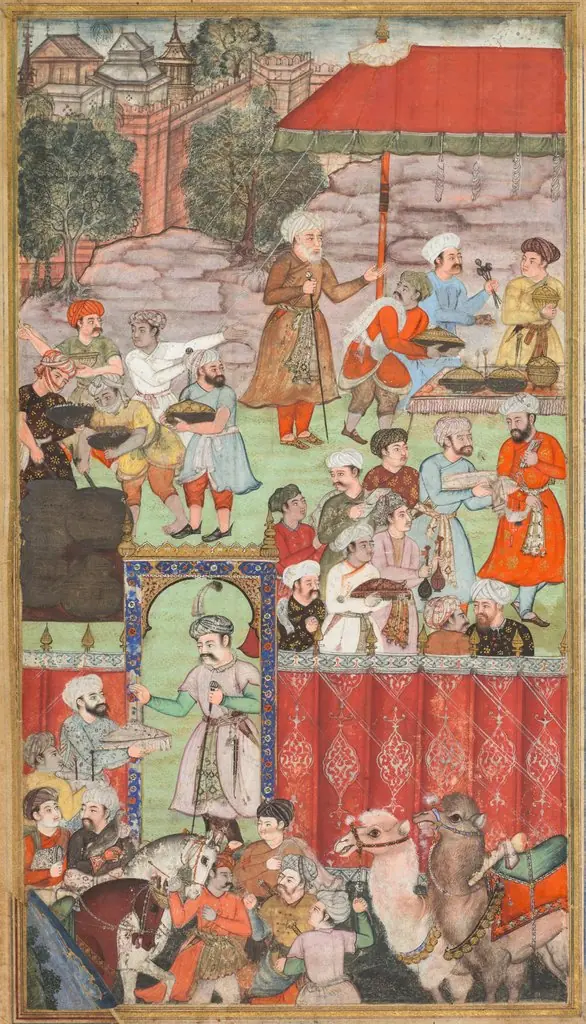 A feast for Babur hosted by his half-brother Jahangir Mirza in Ghazni in May 1505, from a Babur-nama (Memoirs of Babur)
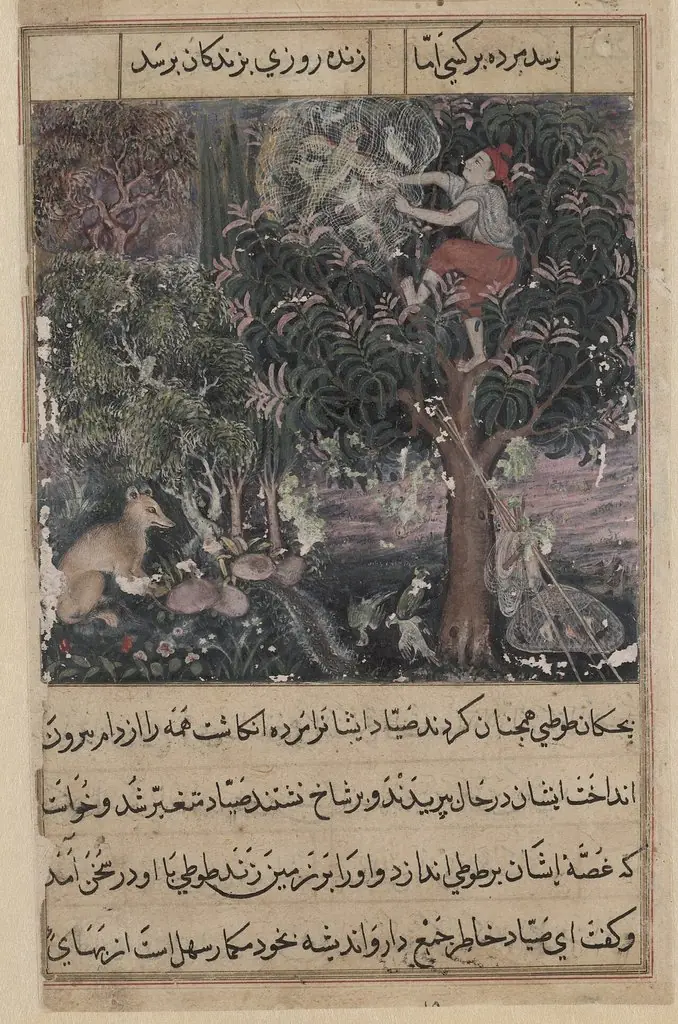 The hunter throws away the baby parrots, who pretend to be dead, and captures the mother, from a Tuti-nama (Tales of a Parrot): Fifth Night
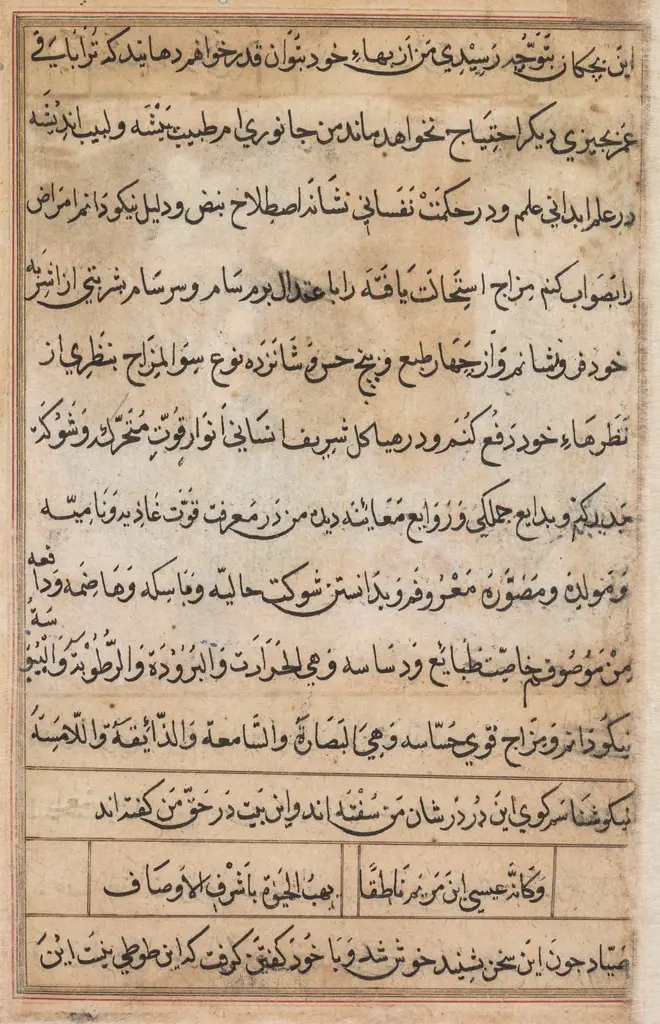 Page from Tales of a Parrot (Tuti-nama): text page