Artwork
Murder Scene
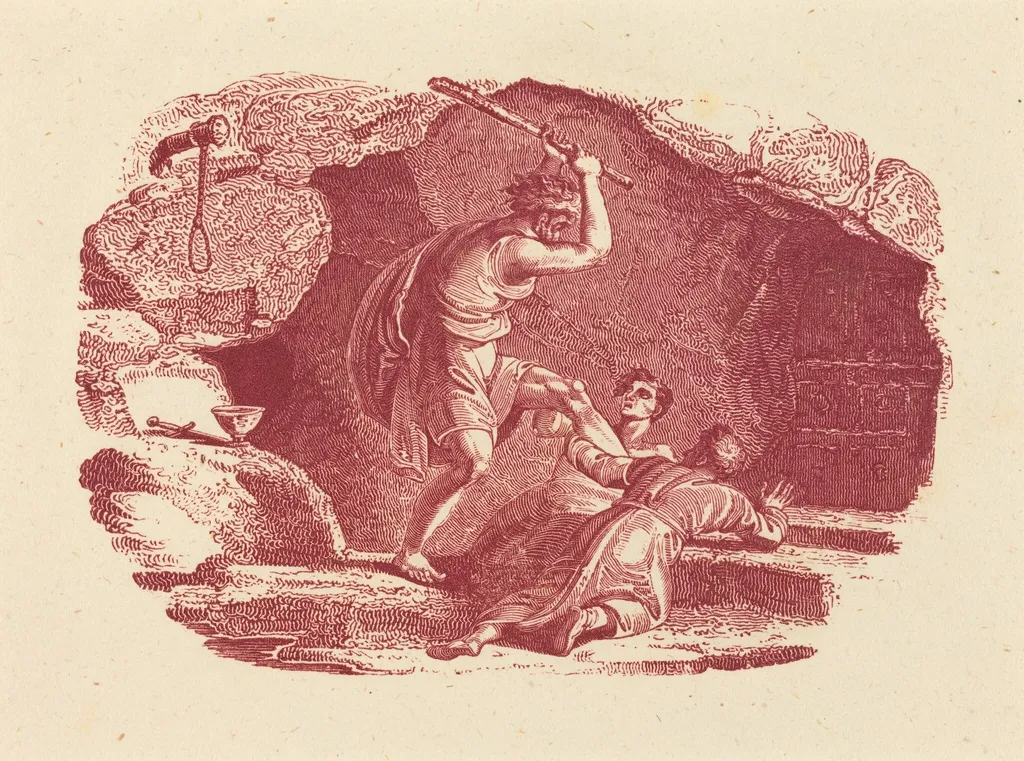
Murder Scene is an ink print by the Romanticist artist Thomas Bewick. It dates from 1790 and is held in the collection of the National Gallery of Art.
About this work
Overview
Created in 1790 by Thomas Bewick, this wood engraving depicts a violent domestic incident rendered in red ink on wove paper.
Created in 1790 by Thomas Bewick, this wood engraving depicts a violent domestic incident rendered in red ink on wove paper. Unlike typical black-and-white prints of the era, the use of red heightens emotional impact. The composition is tightly framed, with minimal space to suggest confinement and urgency. The technique relies on fine, incised lines carved into wood, a hallmark of Bewick’s precision in book illustration.
Subject & Meaning
The scene captures a moment of sudden death: one figure stands over a fallen person, knife in hand, while the victim clutches their chest. A dog investigates the body, adding an element of unintended witness. The absence of other figures or context intensifies the isolation of the act. The image suggests a private tragedy, possibly a crime of passion, rendered without moral judgment but with stark immediacy.
Technique & Style
Bewick employed fine-line wood engraving, carving details into the end grain of boxwood to achieve remarkable clarity. Swirling, dense lines create shadow and movement, compressing the space and amplifying tension. The choice of red ink—unusual for the medium—draws the eye to the violence, contrasting with the paper’s pale surface. This method was standard in 18th-century book illustration, valued for its reproducibility and detail.
History & Provenance
The print was produced during Bewick’s most active period as a book illustrator, likely for a literary or journalistic publication. Its survival as a standalone sheet suggests it may have been removed from a broader narrative context, such as a crime pamphlet or sensationalized tale. No definitive record of its original publication exists, but its style aligns with contemporary broadsheets aimed at a broad, literate public.
Context
In late 18th-century Britain, printed images of crime and violence were common in popular media, serving both moral instruction and public fascination. Bewick, known for naturalistic animal illustrations, occasionally turned to dramatic scenes for commercial projects. This work reflects a broader trend in print culture where visual shock was used to engage readers, particularly in urban centers with rising literacy rates.
Legacy
Though not among Bewick’s most celebrated works, this engraving exemplifies his mastery of narrative compression and technical control. It influenced later illustrators who sought to convey emotion through minimal detail and controlled contrast. The use of color in monochrome print media, though rare, foreshadowed experimental approaches in 19th-century graphic journalism and political satire.
Artist & collection


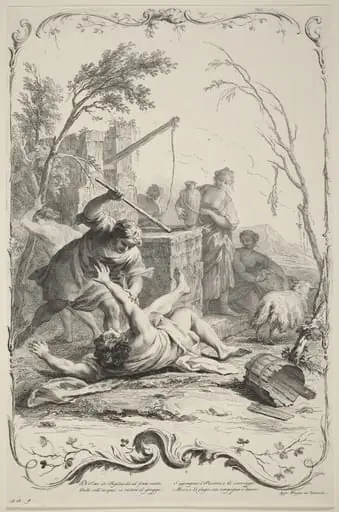 Moses Striking a Shepherd
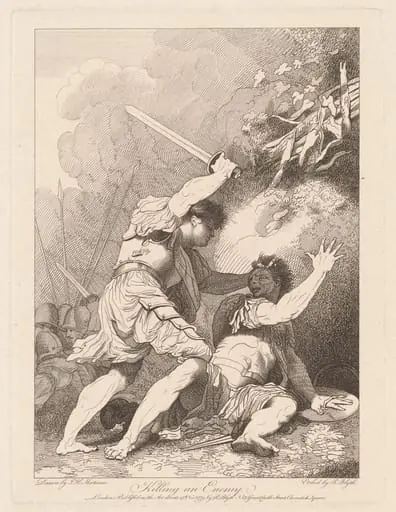 Killing an Enemy
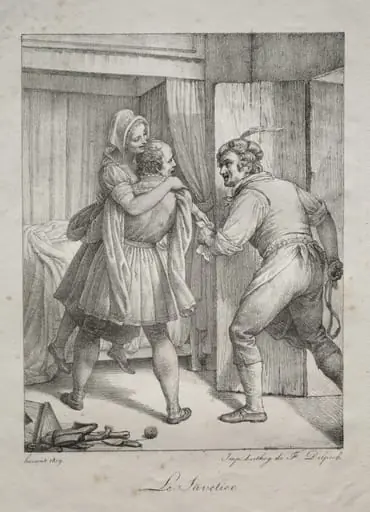 The Cobbler
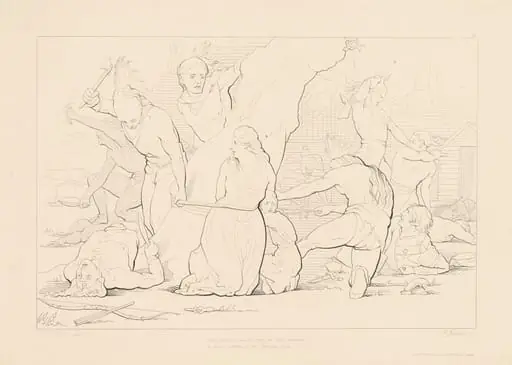 And from the Tree, We With Her Child Unbound
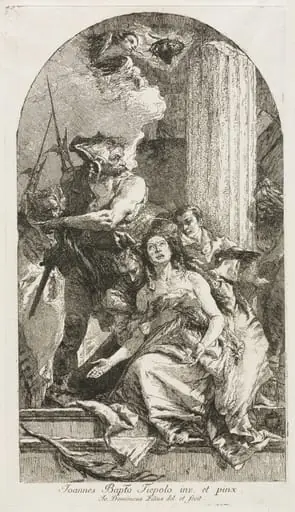 Martyrdom of St. Agatha
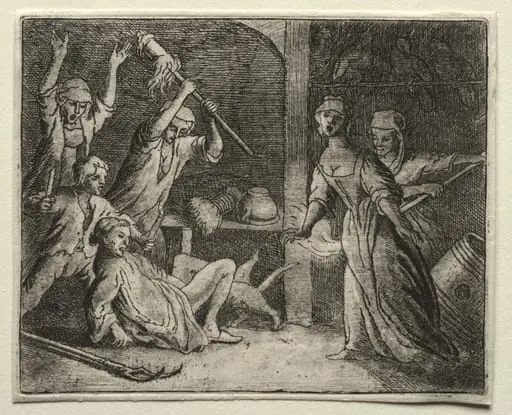 Reynard the Fox: The Cat is Trapped
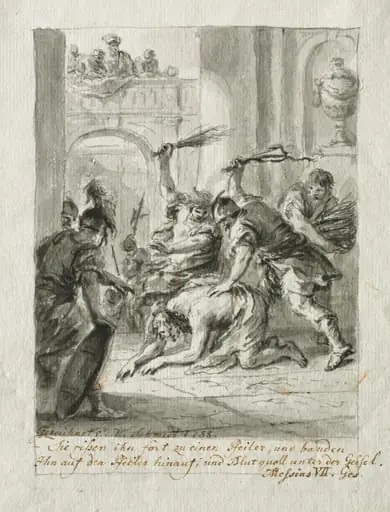 The Flagellation
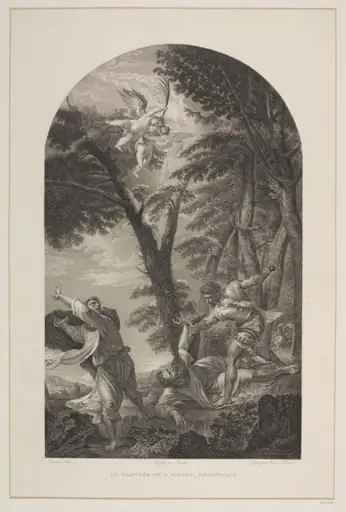 Martyrdom of St. Peter the Dominican
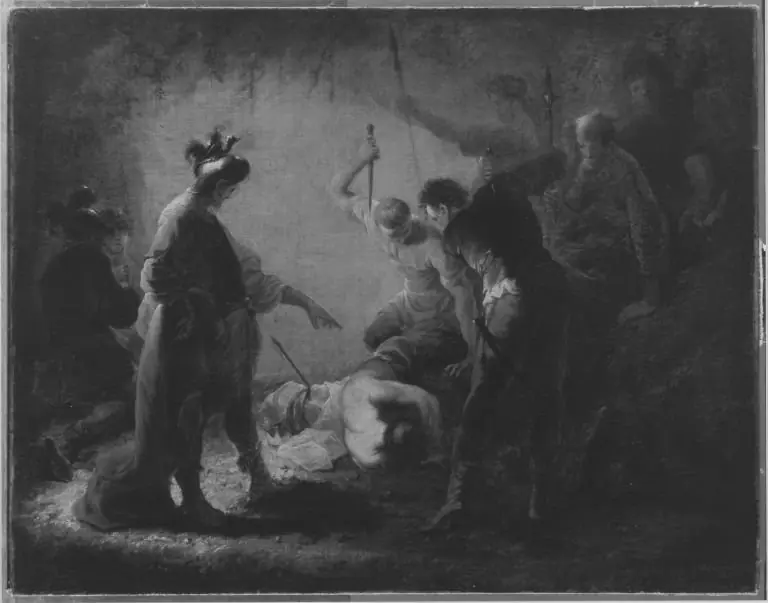 Die Ermordung des hl. Severus
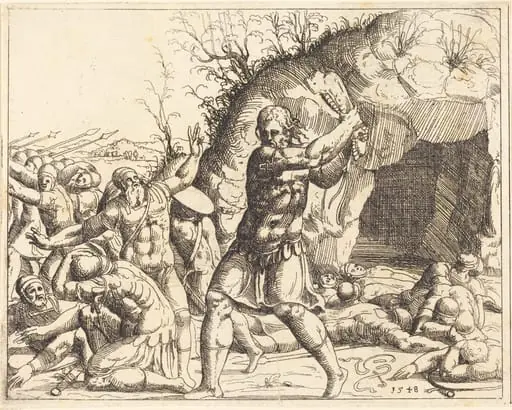 Samson Slays the Philistines
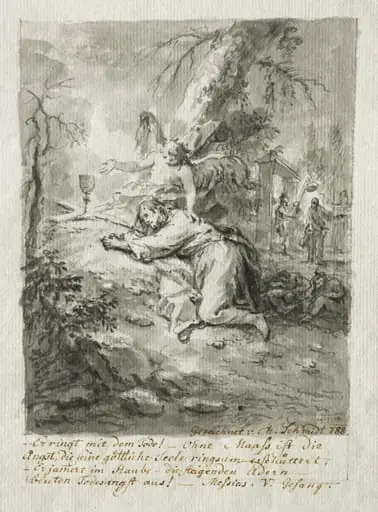 Christ on the Mount of Olives, The Flagellation, Christ Crowned with Thorns, The Crucifixion
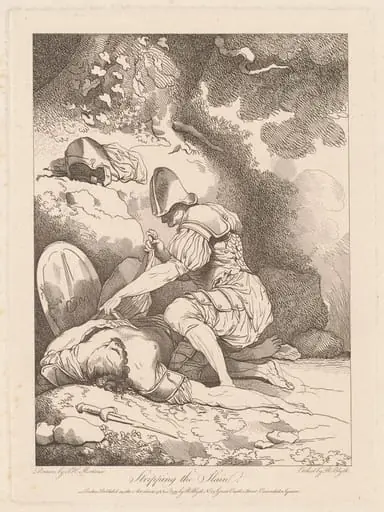 Stripping the Slain