Artwork
John Caspar Lavater
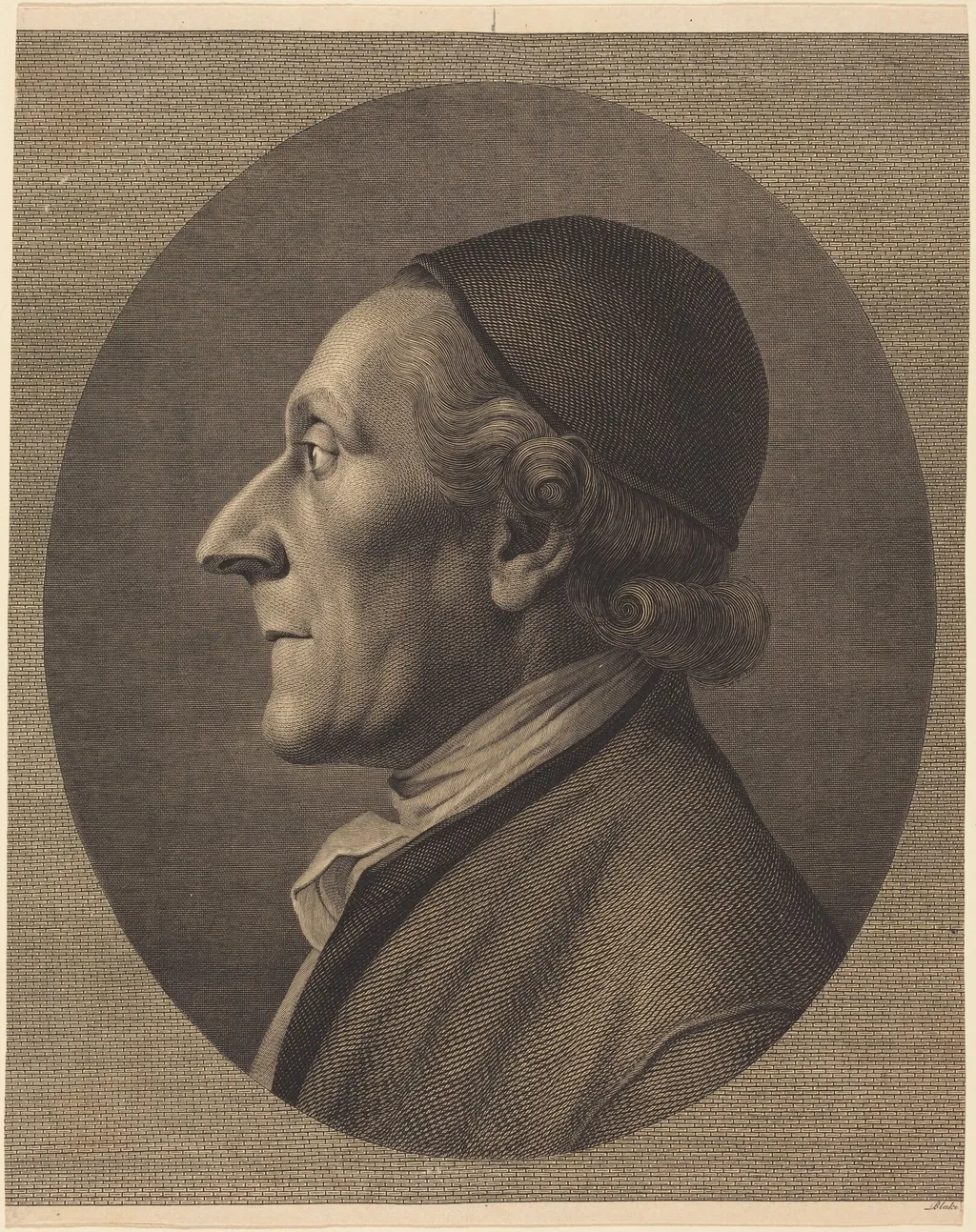
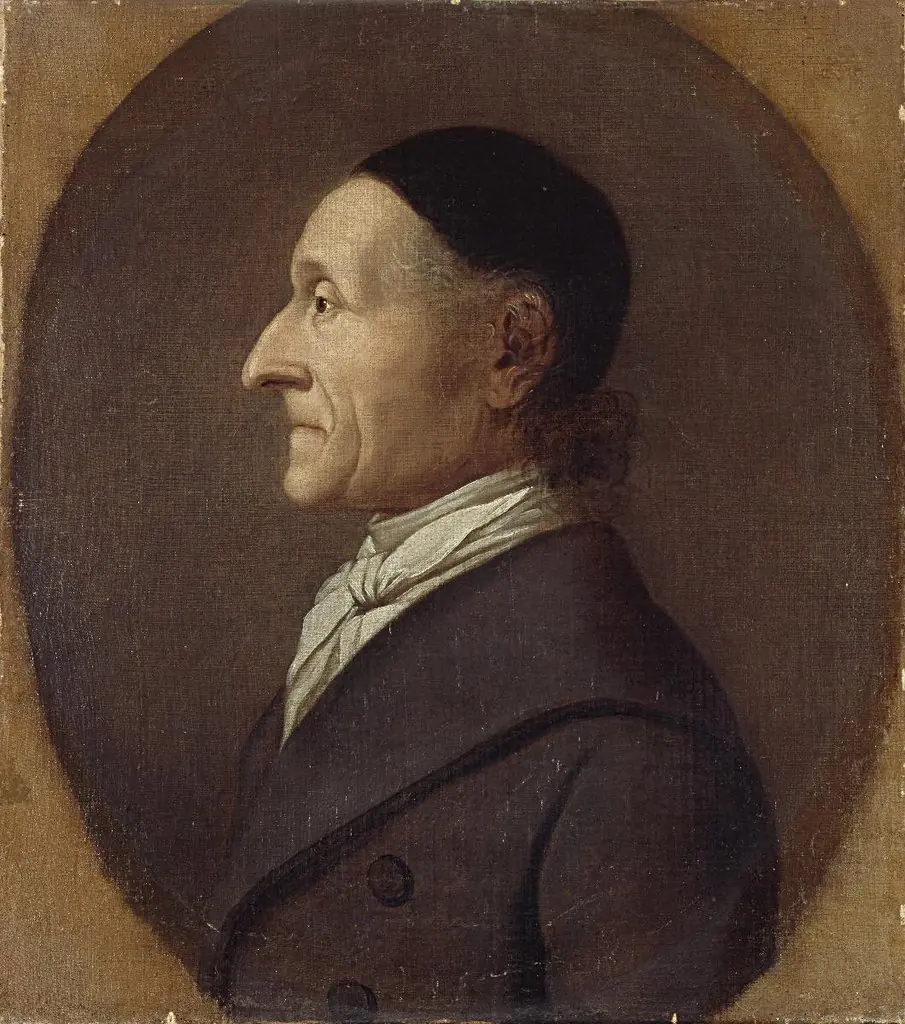
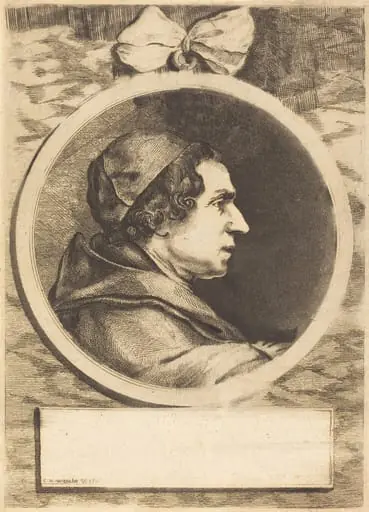
John Caspar Lavater is an ink print by the Romanticist artist William Blake. It dates from 1794 and is held in the collection of the National Gallery of Art.
About this work
Overview
In 1794 William Blake produced an etching and engraving depicting the Swiss physiognomist John Caspar Lavater. The work shows Lavater in profile, his head and shoulders rendered in stark black ink on paper. The composition is limited to the figure against an unadorned background, emphasizing the sitter’s facial features and the texture of his hair and clothing.
Subject & Meaning
Lavater, known for his studies of facial character, is presented with a pronounced nose and tightly curled hair, elements that echo his own theories about the link between appearance and personality. By portraying him in a straightforward, almost clinical manner, Blake underscores Lavater’s scientific reputation while allowing the viewer to contemplate the visual language of physiognomy.
Technique & Style
The image combines etching and engraving, processes that involve incising lines into a metal plate with a needle and acid, then printing the inked design onto paper. Blake’s characteristic linear approach is evident in the densely layered, crisp lines that define the hair, clothing folds, and facial contours, giving the portrait a texture reminiscent of a finely drawn drawing.
History & Provenance
Created during a period when Blake was expanding his printmaking to include symbolic and imaginative subjects, this portrait reflects his broader artistic investigations. Though primarily known for his poetic and visionary works, Blake’s foray into portraiture here situates him within the late eighteenth‑century London print market, where such single‑sheet prints were circulated among intellectual circles.
Artist & collection
Artist
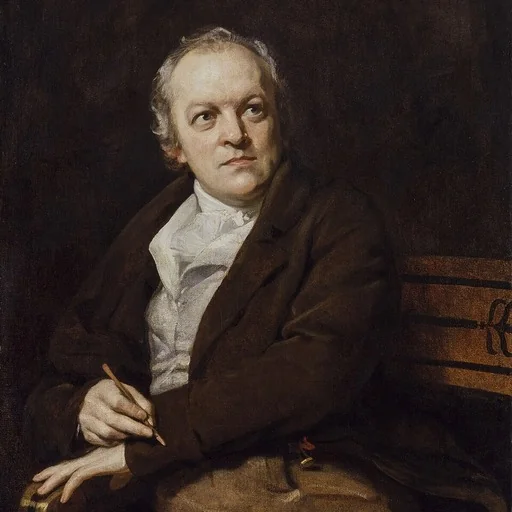
William Blake (28 November 1757 – 12 August 1827) was an English poet, painter and printmaker.